Critical Insights:
Pressure and Flow Control |
|
|
|
Pressure and flow are two of the primary process variables encountered in chemical manufacturing facilities, and their precise and accurate control often forms the baseline for safe and efficient process operations. There are a number of highly effective technologies and devices used for controlling pressure and flow. The articles below from Chemical Engineering offer insights into these critical components for process control.
|
|
 |
|
Mary Page Bailey
Senior Editor, Chemical Engineering
|
|
|
|
Coriolis Flowmeters: Insights for Selection and Upgrade
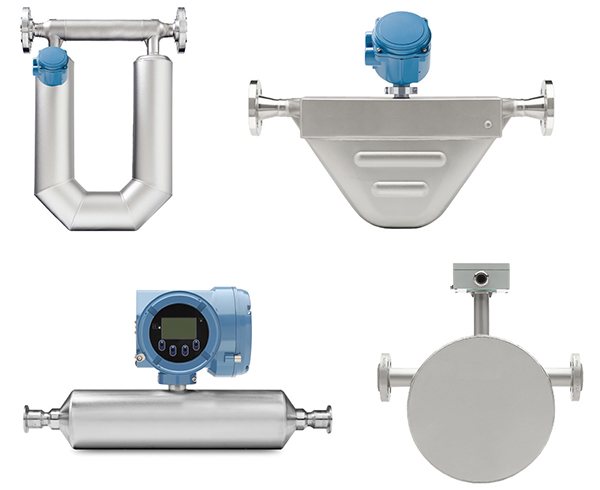
Coriolis meters have long been a mainstay in the chemical process industries (CPI), providing highly accurate mass-flow measurements for raw-material charges, combustion control feeds and countless other process flows. These meters also measure both density and temperature, allowing them to be used for reactor split detection, and to measure inferred variables, such as acid or base concentration, oil-water ratios and many others. [Read More] |
Field Calibration of DP Flowmeters: Best Practices
Utilizing an orifice plate installed in a pipe and accurately measuring the differential pressure (DP) to calculate flow is one of most common methods in the chemical process industries (CPI). DP technology is unique among flow measurement technologies in that the relationship between the flowrate is the square root of the input pressure. This phenomenon presents some challenges to both the vendors that supply DP transmitters and to the technicians that need to calibrate these transmitters. While new technology available to measure flow can deliver amazing results, and differential pressure flow measurement is widely utilized across many industry sectors, proper use and calibration of these instruments remains important. [Read More] |
From our sponsor
| Unlock 15+ Years of Chemical Engineering Insights, Podcasts, Videos & More |
|
|
Join today for instant access to 15+ years of Chemical Engineering archives, podcasts, exclusive videos, event sessions, and more. Whether you’re a professional, researcher, or student, our membership gives you the tools and insights you need to stay ahead in the industry. Choose from three membership levels tailored to your career goals.
|
|
|
Preventing Clogs in Low-Flow Coriolis Mass-Flow Controllers
Advanced material and catalyst research, as well as critical dosing and additive applications in the chemical process industries (CPI) require precise, accurate and reliable measurement and control of critical process-fluid flows. Manufacturers need low-flow liquid mass flow controllers that deliver repeatable results to ensure the exact amount of fluid is delivered. For many low-flow liquid applications, Coriolis-type flowmeters and flow controllers provide superior accuracy independent of fluid properties, such as density or viscosity. However, even the most precisely engineered instruments can deliver faulty or unreliable results if there are fluid contamination and poor filtration preceding the Coriolis flowmeter or controller. Understanding the sources of clogs and contamination in low-flow liquid-delivery systems, as well as proper filtration systems and techniques can help sustain accuracy and control in these applications. [Read More] |
Measuring Differential Pressure: Mechanical or Electronic?
Differential pressure (DP) measurements are used in many branches of the chemical process industries (CPI) for a variety of measuring tasks. Besides mechanical measurements via active pressure lines or chemical seals, electronic differential pressure measurements are now also available. But what is the optimum solution for the user? This article explains the operating mode for both, as well as the differences between the two systems. The main focus is on the measuring accuracy and selection criteria. A few practical examples are also presented. [Read More] |
Gas Handling: Process Control for Compressible Flow
Gas-handling operations are common in almost every sector of the chemical process industries (CPI). Some examples are obvious, and others not as much so. Process plants may have heating, ventilation and air conditioning (HVAC) systems for recirculating air; auxiliary steam systems for heating unit operations; or even compressed air for pneumatic valve and tool operation, among others. While controlling parameters such as flowrate and pressure in a gas-handling process may be an intuitive goal, the methods of achieving it may not be. [Read More] |
|
|