Blending is a fundamental chemical unit operation, and there are a handful of common ways to implement it. Blending applications can be either manual or automated, and can be carried out either as a batch or continuous process. There are advantages and drawbacks to each blending approach, and the information provided in this one-page reference can offer direction in selecting from among them.
Table 1 outlines the key pros and cons for the different types of blending systems.

Batch blending
Manual batch blending is the most flexible option and has the lowest capital cost. It is possible to make a wide array of mixtures and conduct a large number of reactions in the same tank using this approach. The main downsides are that manual batch blending is relatively slow and labor-intensive. Additionally, because operators weigh the raw materials, human error and variability are factors. To speed up the process and mitigate the risk of human error, automating a blending system is an option.
Automating a batch blending system involves higher capital costs, due to the added instrumentation, automated valves, programming and required bulk storage (Figure 1). Advantages include significantly reduced cycle times and manpower requirements, thereby increasing throughput and reducing operating expense. Changing a blending formulation can be straightforward if no new ingredients are required. Automated blending can offer a “sweet spot” between manual batch and continuous inline blending, in terms of costs and throughput.
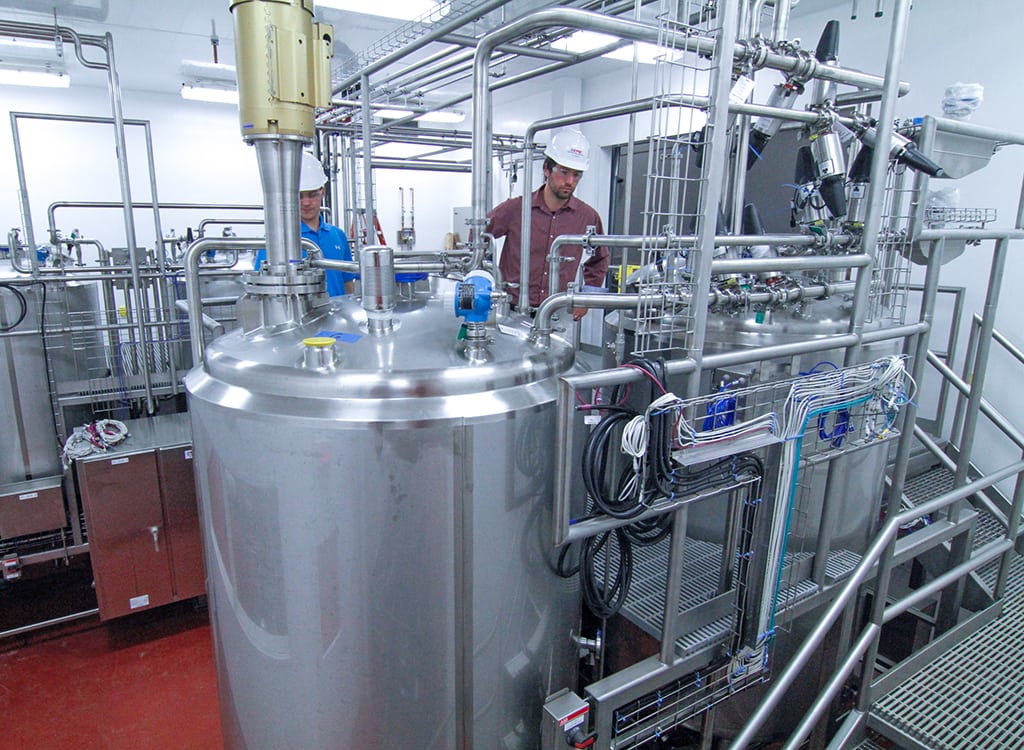
Figure 1. An automated batch blending process is shown here
Continuous blending
Continuous inline blending is almost always a fully automated process. It has major advantages over the previously mentioned methods, but is more restrictive with regard to the types of applications in which it can be employed. If properly sized, continuous blending equipment does not require mix tanks or final product storage. This allows for less in-process inventory, reduced working capital and plant footprint.
Continuous inline blending is also the least flexible of these options when it comes to recipe changes. Making small adjustments to the ratio of the ingredients is easy, but major changes cannot be made without hardware and software adjustments. This being said, with a clear vision of the desired end result, it is possible for a single inline blending system to be capable of making many different mixtures of coloring, fragrance or flavor as easily as selecting a new recipe.
Questions to consider
Each blending application has its own specific challenges to consider. Is there a minimum amount of time required for an additive to dissolve? Is the viscosity of the material too high for some methods? Is the heat of dissolution or reaction negligible or high enough that it must be carefully accounted for? Many factors must be considered and balanced for each individual application, and in many cases, it may be useful to consult an expert before settling on a solution. Hopefully, this information has your project headed in the right direction.
Editor’s note: Content for this Facts at your Fingertips column was provided by Stephen Benbrook, process development engineer at EPIC Modular Process Systems, Inc. (4142 Meramec Bottom Rd., St. Louis, Mo.; Phone: 314-845-0077; Website: www.epicmodularprocess.com; Email: sbenbrook@epicsysinc.com).
Disclaimer: Although the information and recommendations set forth herein are presented in good faith, EPIC Systems, Inc. and its subsidiaries make no representations or warranties as to the completeness or accuracy thereof. No representations or warranties, either express or implied, or merchantability, fitness for a particular purpose or of any other nature are made hereunder.