A new approach to advanced recycling combines heterogeneous catalysis with electromagnetic induction, enabling the conversion of polyolefin-rich waste streams into versatile materials. Developed by bobine (Strasbourg, France; www.bobine-chemistry.com), this fully electric technology can help decarbonize the production of olefins like ethylene and propylene by eliminating steam-cracker furnaces, all while utilizing post-consumer and post-industrial waste as its feedstock.
“Induction directly and selectively heats the catalyst — precisely where the reaction takes place — thereby avoiding heat loss and targeting the exact location where the heat is needed. This represents a major differentiator for petrochemical players in the production of recycled polyolefins: a higher conversion yield and notable decrease of energy consumption. As a fully electric process, the technology significantly reduces the carbon footprint compared both to conventional fossil-based production routes and to other chemical recycling technologies,” explains Vincent Simonneau, CEO of bobine.
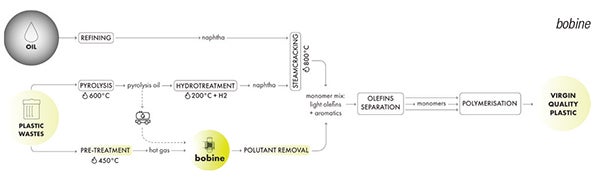
With its patented technology, the company has specifically targeted feedstocks that are typically designated as “difficult to recycle,” especially plastics that are not suitable for mechanical recycling, including streams that are mixed or highly contaminated. “Our technology is capable of converting these low-quality plastic streams, which would otherwise be destined for landfill or incineration, into virgin-quality polymers that are food-contact compliant,” states Simonneau. When compared to traditional steam-cracking and pyrolysis methods for olefins production, bobine reports that its technology can reduce production costs by over 40%, while cutting energy demand by 60% and raising conversion rates by 45%.
So far, bobine has demonstrated its technology at the pilot scale with a 100-kg/d throughput. Construction of a 1-ton/d pre-industrial demonstration unit is currently underway. The facility will be co-operated with Michelin. This unit is expected to start up in 2027, helping to de-risk the technology ahead of commercial deployments at the industrial scale. Commercial deployments are targeted for 2030.