Advanced technologies employing artificial intelligence (AI) and deep-learning models can reshape product inspection and quality control in bioprocesses, but users must understand both the capabilities and limitations of such digital platforms for optimal implementation
Artificial intelligence (AI) has revolutionized the pharmaceutical industry, permeating every aspect from drug discovery to drug manufacturing. With its ability to analyze vast amounts of data, AI has become an invaluable tool in enabling the biopharmaceutical industry to bring safer and more reliable drugs to the market. Notable applications of AI in biomanufacturing, such as deep learning models and digital twin technology, can be implemented in visual inspection processes — all of which can provide drugmakers and biomanufacturers with increased productivity and improved efficiency (Figure 1). While these technologies are redefining the standards of drug development and manufacturing, they also come with drawbacks that drug manufacturers must overcome to reap the ultimate benefits of adopting these cutting-edge technologies.
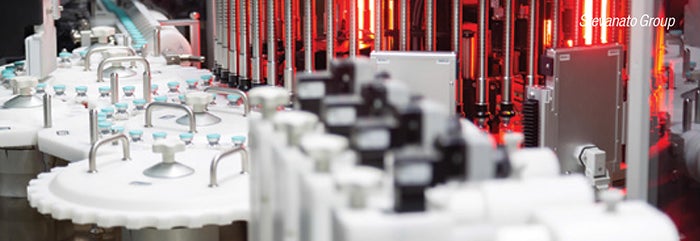
FIGURE 1. Optical inspection is one of the major applications where AI and deeplearning technologies are frequently being applied in biomanufacturing processes
The evolution of visual inspection
While manual inspection continues to be the gold standard for detecting defects across the drug manufacturing lifecycle, this process is time-consuming and labor-intensive. The market continues to demand a higher volume output. To address these limitations, drug manufacturers turned to automated inspection systems that incorporated advanced vision software and machine learning algorithms. The implementation of visual inspection equipment has significantly impacted the quality-control (QC) process for drug manufacturers, because it is essential in ensuring drug and container quality before the product gets distributed to the patient. These systems can efficiently inspect containers, detect defects, reduce false rejects, and ensure product integrity with high accuracy, significantly increasing manufacturing capacity.
By automating the inspection process, pharmaceutical manufacturers can improve productivity, reduce errors and enhance overall product quality. These systems can swiftly analyze images and identify even the tiniest defects or imperfections that may not be easily detectable by the human eye. By doing so, they provide a level of precision that surpasses manual inspection, ensuring that no potential issues are overlooked during the production process.
Manual inspection remains the regulatory standard today. However, the industry is seeing a pattern of increasing automation, using traditional rule-based algorithms and applying deep-learning models, as AI continues to permeate the industry. Every automated inspection system is challenged against manual inspection to prove efficacy, and this will also be the benchmark to be reached and surpassed by automation. The use of AI-powered vision equipment not only can enhance the efficiency of defect detection, but also reliability, allowing for a more precise analysis of inspection data. Moving forward, we foresee human inspection and AI continuing to work together, leveraging real-time data to improve production knowledge.
Deep learning for inspection
Deep learning has emerged as a powerful tool within the biomanufacturing industry, offering substantial benefits in terms of quality control and inspection performance. Particularly, when applied to visual inspection, deep-learning algorithms can significantly enhance accuracy and efficiency throughout the biomanufacturing lifecycle. By leveraging extensive training on large datasets, deep-learning models can detect subtle defects and anomalies (Figure 2).
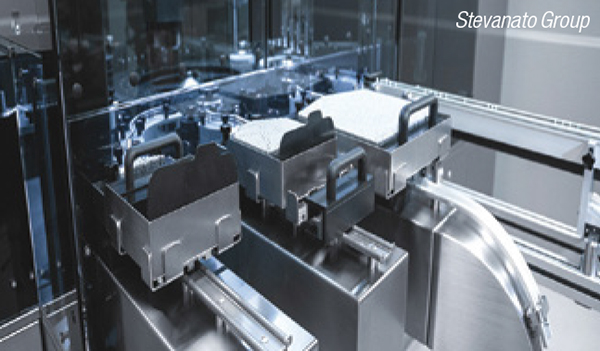
FIGURE 2. Deep-learning models are being implemented in quality-control schemes to quickly detect product defects and learn about manufacturing patterns
This not only improves the overall product quality but also reduces the number of false rejects and reduces the need for manual re-inspection of “grey” items that do not meet quality standards. From manufacturing data, it can be seen that false rejects can be reduced tenfold, to less than 1%, and the detection rate can also be improved because of deep learning, yielding up to 99.9% accuracy. As a result, deep learning helps streamline the inspection process, saving both time and resources, and leading to a reduction in the total cost of ownership (TCO) for manufacturers. These robust systems can adapt to variations within production without the need to constantly adjust the inspection recipe, ensuring consistent performance and eliminating the costs associated with frequent modifications.
Being such a nascent technology, the main roadblock with deep-learning technology is the scarcity of defect examples to “train” the technology, especially with new products that have just entered production. This has sparked discussions within the industry around how to effectively validate the learning process and identify an effective way forward that pharmaceutical companies can adopt. Neural networks, which lie at the core of the deep learning process, possess the ability to continuously learn and adapt. However, this adaptability can make them seem like proverbial “black boxes,” making it challenging to ensure that they abide by the predefined acceptable levels of performance. To address this concern, the practice of “freezing” the neural network is being widely considered as the preferred method of validation. By freezing the network at certain points during its learning, researchers and developers can evaluate its performance and check that it respects the identified appropriate levels of operation.
With its ability to enhance quality, increase inspection performance, and reduce operational expenses, deep learning has the potential to provide significant benefits to the pharmaceutical industry.
Digital twins
Further to the enhancements that visual inspection technology and deep-learning algorithms provide, digital twin technology offers yet another transformative approach in the field of biomanufacturing. By creating a virtual replica of real-world assembly processes, a digital twin enables risk prediction, minimizes errors and reduces delivery time.
Digital twin technology also applies real-time data to replicate complex supply chain processes, enabling drug manufacturers to identify potential weak spots and plan contingencies even before they occur. By leveraging machine learning and AI, the digital twin can analyze historical data patterns, compare them with real-time data, and predict the likelihood of future issues. As a result, maintenance teams can move from traditional, time-based maintenance schedules to condition-based strategies, intervening precisely when needed. Predictive maintenance minimizes downtime, prevents costly breakdowns, extends the lifespan of assets and optimizes maintenance costs by focusing efforts on critical areas. This approach not only enhances operational efficiency, but also boosts overall productivity and ensures a more reliable and sustainable operation of complex systems.
While digital twin technology can be extremely beneficial, the associated maintenance requires consistent money, time and effort from drug manufacturers. If a digital twin is not maintained properly, the effort to create the digital twin is voided, because it is no longer an exact replica of the process. For example, many errors across the biomanufacturing lifecycle are a result of outdated data, which can cause major delays as drug manufacturers need to spend time identifying the inaccurate data. To combat this, drug manufacturers can work with a partner that facilitates the implementation of infrastructure that collects, monitors and interprets data to ensure processes are running smoothly.
Overall, the implementation of digital twin technology in biomanufacturing holds the potential to significantly improve quality, increase operational efficiency and mitigate production issues.
Unleashing the power of AI
The integration of visual inspection technology, deep learning and digital twin technology has significantly enhanced accuracy and performance in biomanufacturing. Visual inspection technology enables the detection of even subtle defects, ensuring product integrity and safety. Deep-learning algorithms, when trained on extensive datasets, bring unparalleled precision and efficiency to quality control processes, reducing false rejects and minimizing manual re-inspections. Additionally, digital twin technology offers a virtual replica of the manufacturing process, facilitating predictive analysis, risk mitigation and resource optimization.
The combination of these technologies can lead to improved accuracy, increased productivity and streamlined operations in biomanufacturing, ultimately enhancing the quality and reliability of biopharmaceutical products. As these technologies continue to evolve and be integrated into processes, we can expect even greater advancements and innovations in the field, further solidifying their critical role in shaping the future of biopharmaceutical production. The companies that are best able to leverage these new capabilities will emerge as the victors, as AI continues to develop and shape the world we know. ■
Edited by Mary Page Bailey
Author
 Riccardo Butta is the president of the Americas at Stevanato Group (Website: www.stevanatogroup.com), a global provider of drug containment, drug delivery and diagnostic solutions to the pharmaceutical, biotechnology and life sciences industries. He holds an M.S. degree in mechanical engineering from Politecnico in Milan, Italy, and a degree in business management and innovation from MIP in Milan. Butta was formerly the senior vice president of Flex Health Solutions. At Flex, he was responsible for the global commercial organization of a business unit providing contract design, manufacturing and logistics services to the healthcare industry. His primary focus was on medical devices, drug delivery solutions, diagnostics and life-sciences equipment.