Covestro AG (Leverkusen, Germany) and Allmed, an international blood purification specialist, announced a partnership to jointly investigate the recycling of used artificial kidney filters. The study will explore the potential to recover polycarbonate from medical devices for use in new materials with recycled content.
The collaboration seeks to develop a circular economy model for medical devices by proving both technical feasibility and economic viability while navigating the complex regulatory landscape of medical waste management. In cooperation with additional partners in the United Kingdom – including Allmed’s distribution partner Kimal, a leading regional hospital trust and a specialized recycler – Allmed and Covestro are now preparing for their first recycling trials.
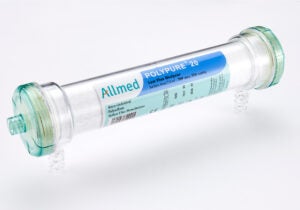
Covestro, Allmed and Kimal are working on making blood-purification devices more circular (Source: Covstro)
“The circular economy in healthcare is still emerging – but it holds tremendous potential. With this feasibility study, we want to demonstrate that even complex applications like artificial kidney filters can be circular and become a valuable source of high-quality polycarbonate recyclate instead of being incinerated or sent to landfill,” says Lily Wang, Global Head of Engineering Plastics at Covestro.
Allmed is equally committed to ambitious sustainability goals: “Blood purification devices are essential for life-saving treatments but also require significant resources. Our ambition is to show that high medical performance and ecological responsibility can go hand in hand,” explains Ahmed Sorour, Chief Executive Officer at Allmed.
Matt Press, Chief Executive Officer of Kimal Group added: “We are very proud that Allmed had chosen Kimal and the UK market to be at the forefront of this fantastic and groundbreaking initiative.”