Thoughtful design can help reduce safety risks at process plant sites by proactively eliminating possible hazards and modifying personnel behaviors
Safety is an important value in any organization, but is particularly important in the chemical process industries (CPI) when the design, construction, operation and maintenance of manufacturing facilities is concerned. No company or organization wants to have personnel injured, or to cause damages, and no entity wants to find itself in a situation where lawsuits are filed against it.
The design profession has an important role in ensuring safety because many risks can be “engineered” to be eliminated or reduced. The designer’s knowledge, expertise and values can be leveraged to ensure that a facility can be safely constructed, operated and maintained. While personal protective equipment (PPE) is of critical importance to preventing and minimizing injuries, worker behavior can be just as important a factor in whether or not injuries occur, and modifying worker behaviors through design decisions can be a very effective way to prevent and minimize injury.
For design professionals, a central safety concept is striving to be proactive. Spending resources to prevent injuries is far more cost-effective than paying for the physical and emotional pain, the lost time and medical care from an injury after it occurs. Designing with proactive safety principles in mind can produce a facility or process with fewer hazards and lower risk. And a design that eliminates, reduces or mitigates hazards and risks upfront is an inherently safer design. This article provides a set of tips and best practices to consider in designing plants and process units that proactively increase safety and reduce risk. These are only some of the items to be considered for a safe design. Specific applications will likely require additional considerations.
Process and plant design
Design professionals should consider providing input into the construction planning, checkout and commissioning planning, as it pertains to safety, as well as into operations and maintenance procedures. The following recommendations are designed to help start off a project with a safe design foundation.
Match design basis to service. A smart beginning point is to develop a design basis that is consistent with the service. This includes the following items:
- The basis should include minimum, normal and maximum flowrates, temperatures, and pressures for the process. Note if these conditions cycle frequently and if the process is continuous or batch. Determine the design capacity, annual operating hours, and seasonal variation
- Use appropriate design standards and materials of construction for the materials, process conditions, and equipment. Consider the materials’ properties: flammability, corrosivity, reactivity and health hazards in designs and specifications
- Consider a “requirements exchange” and a risk analysis early in the design process. These documents can be updated as the design progresses. A requirements exchange refers to a meeting (or series of meetings), where the client (including operations and maintenance staff) state their needs for the project. This could include requirements on process performance, the need for specific operations (for example, an ability to put certain control loops in manual control during startup or shutdown), or maintenance requirements (such as a backup for certain equipment, access to equipment for making adjustments, or additional valves to allow for equipment removal without extensive draining)
- Develop P&IDs (piping and instrumentation diagrams) or PFDs (process flow diagrams) to describe the process for design requirements. P&IDs and PFDs are important for correct operations and maintenance
- Develop electrical area classification (also known as hazardous area classification; HAC) layouts that include routine, intermittent or emergency venting of hazardous or flammable materials. HAC layouts provide the electrical installation requirements for equipment, devices, conduits and junction boxes
- Work toward developing a design that can be started up or shut down safely. Consider backup power and uninterruptable power supplies to prevent loss of control or emergency shutdowns
- Develop the requirements for field analytical equipment. This includes proper sampling location, instrument location and venting. Factor in the length of the sampling line to avoid lag time in the analysis. Do not forget to consider gas-cylinder storage and access
- Design adequate pipe and vessel pressure reliefs (from liquid/vapor expansion from internal temperature and sun exposure).
- Design adequate pipe and equipment supports, considering pipe and vessel movement from thermal expansion and equipment vibration
- Design foundations and structures considering the full weight of vessels with contents, platform loading, wind and snow loads, earthquake, seasonal weather conditions and soil-bearing capacity
- If appropriate consider fire protection systems, and protect structural steel from fire impingement with applied fire protection
Safe operation and maintenance
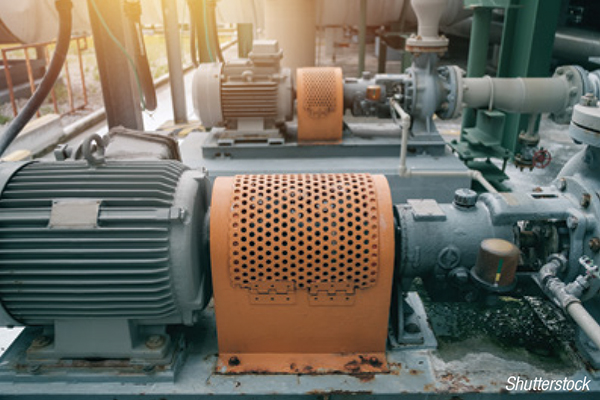
FIGURE 1. Safe access to equipment, such as the pump with shaft guard shown here, reduces risk during maintenance activities
When the plant or process eventually begins operation, personnel will need to move in and around the process equipment, so it is desirable for designers to think about how operators and maintenance personnel can safely access equipment and monitoring and control devices (Figure 1). It is more cost effective to consider and plan for operations and maintenance during the design phase than to make changes for safer maintenance and operation after the design and layout are completed. This includes the following considerations:
- Consider access to valves, instruments and equipment, including clearance for swing areas for cabinets and doors. A design that allows access will minimize the number of pre-startup punch list items. For example, the following guidance should be considered: maintain a minimum clearance of three feet of workspace (increase clearance if equipment is needed for work); ground-level access is preferred over access at elevation; minimize “head knockers” by routing elevated pipe or conduits higher than head space or providing “walkover” platforms; provide for adequate platforms, while taking into account the work requirements; and stairs are generally safer than ladders (Figure 2)
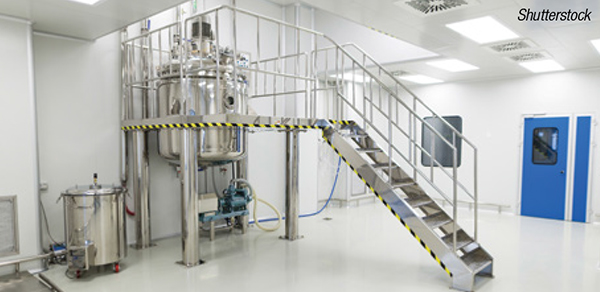
FIGURE 2. When platforms, such as the one shown here, are required, it is safer to use stairs over ladders
- Provide guidance for equipment, vessel, pipe, valve and cabinet labeling, including flow direction for pipes. Permanent tags or labels are better than marker or paint-stick labeling
- Design adequate lighting and power sources for operations and maintenance, so that dark areas are minimized and the need for extension cords is avoided
- Consider redundancy in components, particularly for critical items. An in-line spare will allow a planned repair, instead of an unplanned shutdown. The storage locations for spare parts and equipment should be considered also
- Ensure adequate isolation of equipment and instrumentation. Use double block valves and bleeds (to vent). Also, design a safe path for the vented or drained materials.
- Consider the lifting and space requirement for equipment removal (pumps, valves, filters). If appropriate, design for davits or overhead rails
- Consider the personal and vehicle traffic flow and space equipment and facilities accordingly. Pave paths for personnel and vehicles. Consider parking requirements for operations and maintenance
- Provide adequate egress (two ways in and out) and consider the potential hazards, so an egress path will not be blocked by a hazard
- Evaluate and minimize noise. Size equipment and pipelines to reduce equipment rotational speed or velocities, and use insulation and design for noise abatement
Building and site considerations. Site layout can also have an impact on safety and risk reduction. Here are a set of considerations related to site layout that can help reduce safety risks:
- Minimize the potential inventory of raw materials, intermediates and products that are required to be stored on site at a given time. In addition to quantity, try to minimize the energy required during storage, including for temperature and pressure
- Consider the appropriate spacing of equipment, buildings and setbacks from property lines at the site
- Include lighting protection, wind and snow, and earthquake design requirements
- Consider physical site-security requirements (including fencing, access control, security cameras)
- Design closed-loop fill/vapor systems as feasible. Closed-loop filling systems provide a vapor return line from the vessel being filled back to the vessel that is being emptied (Figure 3). The objective is to prevent vapor from venting to the atmosphere. This setup has both safety and environmental benefits
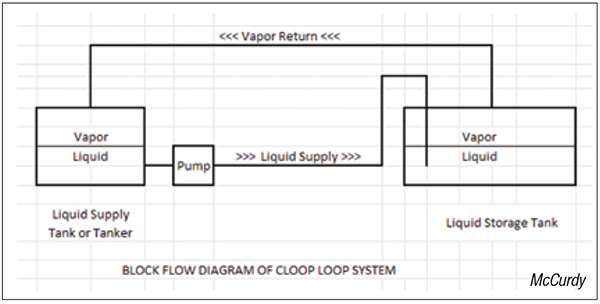
FIGURE 3. A closed-loop filling system, like the one shown in the diagram, provides a vapor return line from the vessel being filled to the vessel being emptied
- Enclose or winterize equipment
- Evaluate rain and storm-water runoff drainage
- Consider the appropriate containment for liquid vessels. This includes the size for full volume and rain accumulation. Evaluate rainwater accumulation and means to drain, either with sumps or drains. Designers should also take into account how to access the contained equipment
Construction planning. Produce a design that allows the planning needed for a safe installation on a realistic schedule. Effective and thorough construction planning will reduce the need to rush work, work extra hours or take shortcuts with the construction procedures. The following are some specific considerations related to construction planning:
- Produce clear construction drawings and conduct interdisciplinary reviews to minimize clashes (for example, foundation misalignment with pipe layout, or conduit runs that hit pipe runs)
- Produce a design that allows pre-fabrication where applicable, so work can be done under controlled conditions
- Provide input into a daily risk analysis or job safety analysis (JSA) during construction activities
- Before performing piping or electrical tie-ins, consult with the owner’s personnel so the appropriate isolation and de-energizing tasks are performed. Use equipment and valve lock-out procedures that include the appropriate communications and controls
- Minimize the complexity of lifted loads, both in weight as well as lifting equipment or materials in close proximity to hazards (including electrical power lines, existing process equipment and offsite facilities)
- When several crews are working on site at the same time, consider the risks of “simultaneous operations,” so crews stay out of each other’s work areas
Commissioning.The engineering professional should participate in pre-start-up walk-arounds with construction, design, operations and maintenance team members with the following objectives:
- Evaluate trip and pinch points, head knockers, valves that can be brushed open, and so on
- Do not forget bollards and other devices to protect piping and equipment from impact, both from internal or external traffic
- Develop a punch list and prioritize the items as “before” or “after” startup. These are items that were missed in design or construction, such as vents, or drains, equipment guards, steps, handrails, and labeling. Some items might be discretionary if not required for the project to be safe, meet standards or perform as designed.
For control rooms. Control-room design can also help reduce potential risks and increase safety.
- Consider automation with process information available in a control room or remote site. Remote automation reduces the need to operate equipment outside
- Consider control-panel heights relative to the ceiling heights. Conduits will generally be run either from overhead (or under the floor). In each case, adequate space for construction and maintenance is required
- Consider the control room layout and allow space for workstations, enclose door swings and wall penetrations
- Size the heating, ventilation and air conditioning (HVAC) systems of the facility to include control-system heat load
- Design for sufficient power receptacles to minimize the use of extension cords
PPE and job safety
The use of PPE is now a minimum standard. Depending upon the work environment, the standard issue hard hat, safety glasses and steel-toed boots has expanded to include work gloves, goggles and facemasks, hearing protection, fire-resistant clothing and a host of atmospheric monitors.
Job-safety analysis. As design professionals gain experience, techniques for proactively eliminating hazards and reducing personnel risks through design decisions become more instinctive and intuitive. However, a systematic and comprehensive approach to assessing risks can help identify risks that could potentially result in unplanned incidents and potentially negative health consequences. A JSA can identify potential risks to personnel, as well as potential safeguards to eliminate or mitigate them. A comprehensive JSA might address the following:
- “Line of fire” injuries from tools, equipment, vehicles, lifted loads and so on
- “Fall” injuries resulting from slips, trips and falls from elevated-height positions
- Thermal injuries from contact with hot surfaces or flames
- Hazardous-materials exposure (via direct contact, inhalation or ingestion)
Hazard and risk assessments
Hazard and risk assessments, both within and outside the facility can be an important tool in increasing safety through design. Hazard and risk assessments are important early in the design progression, so the requirements that affect safety can be included early on, and design changes would not require great expense. Guidance would include the following recommendations:
- Design enough instrumentation, valves and check valves to control and isolate the process
- Consider the locations of vents (both routine and emergency), and factor these locations into personnel areas and electrical classifications
- Include the appropriate winterization of plant assets
- Consider permitting requirements, both current ones and in those in the future
Based on the results of hazard and risk assessments, safety systems with redundant instrumentation should be chosen for critical systems. For critical controls, consider dual, redundant instruments that use different technologies or working principles. For pressure-relief systems, ensure that they are of adequate size or volume, and that they are redundant in nature.
For more on hazard assessments, see the “Facts at your Fingertips” column on hazard-identification methods.
Edited by Scott Jenkins
Author
 Alan McCurdy is a senior project manager, recently retired from Valdes Engineering Company. McCurdy (Email: amccurdy@aol.com) has over 40 years of experience in project management of engineering design projects from concept to design and procurement and construction to startup. Projects include petroleum refining, chemicals and natural gas utilities. McCurdy holds a bachelor’s degree from Carnegie Mellon University and a master’s in business administration degree from the University of Louisville.