Distillation is a critical separation tool for many applications in the chemical process industries (CPI), and the intelligent design of a distillation column can have a large impact on eventual process performance and efficiency. This reference sheet outlines the design process for distillation columns and defines several key design factors in this area.
Column design process
Distillation column design is best accomplished using process simulation software, such as Aspen HYSYS or a similar program. Balancing the key design factors shown in Table 1 starts by sizing the column for maximum superficial vapor velocity (vapor factor Fs).
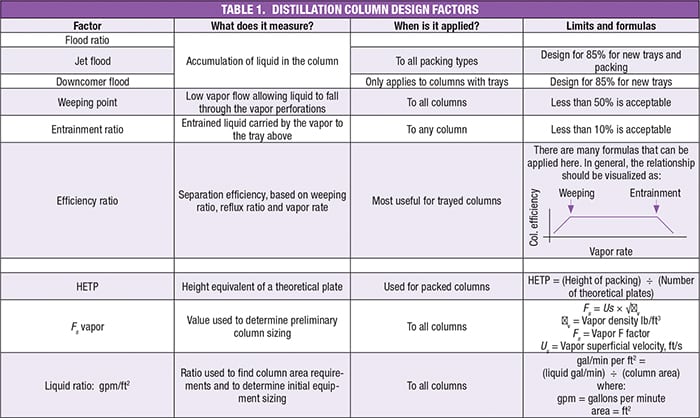
Once a working design is established, engineers should check the ratio between flowrate (gallons-per-minute; gpm) and column area (gpm/ft2). The next step should be to ensure that flood ratio, weeping point, reflux ratio, and efficiency ratios are all within reasonable parameters.
For basic categories of column internals, the appropriate ratio ranges are shown in Table 2. Column designers should use these ranges as a guide to ensure that the appropriate column design and packing have been selected.

Best practices for factors
For the flood ratios, the limit is 100%. A good rule of thumb for new column designs is to keep the limit closer to 85%. Turndown is a vapor-pressure balancing act — the objective is to maintain appropriate vapor velocities but also allow the ability to turndown without having to worry about weeping or dumping, which can crash the column outright.
Entrainment ratio relates to physically carrying liquid from one tray to the one above it with vapor velocity. This ratio should be minimized wherever possible. The higher the amount of reflux in the column, the larger the required column size, but the purer the distillate will be.
Other factors not covered here, such as feed location, exact packing type, control scheme and so on will affect the final design of the column. Column design is the art of balancing these factors to achieve an optimized design that can be confidently built and operated with long-term return on investment.
References
1. Terry Tolliver, retired senior fellow Solutia/Monsanto
2. Kister, H. Z., “Distillation Design,” McGraw-Hill, 1992.
3. Couper, J. R. and others, “Chemical Process Equipment Selection and Design,” 2nd Ed., Elsevier, Amsterdam, 2004.
Editor’s note: The content for this edition of Facts at your Fingertips was provided by EPIC Systems, Inc. (St. Louis, Mo.; www.epicmodularprocess.com). If you have additional questions or comments, please email Stephen Benbrook: sbenbrook@epicsysinc.com
Disclaimer: Although the information and recommendations set forth herein are presented in good faith, EPIC Systems, Inc. and its subsidiaries make no representations or warranties as to the completeness or accuracy thereof. No representations or warranties, either express or implied, or merchantability, fitness for a particular purpose or of any other nature are made hereunder.