Combining microscopy and machine-learning techniques leads to faster, more precise analyses of critical coating materials
When the SR-71 Blackbird aircraft was designed to soar at three times the speed of sound, engineers faced an extreme challenge: managing the heat generated by such speed. To tackle this, the SR-71 relied on thermal barrier coatings (TBCs), which protect key components in aerospace and other machinery from the heat generated by intense speeds. But how can engineers accurately assess the durability of these coatings after years of harsh conditions?
TBCs are multilayer systems made up of a ceramic topcoat, a bond coat and thermally grown oxides, all designed to withstand extreme temperatures. Over time, repeated thermal cycling can degrade these coatings, compromising their structural integrity and performance. As a result, precise characterization is essential to assess their durability and improve their design. In this use case, analyzing a TBC from the afterburner of an SR-71 after 15,000 h of service provided valuable insights into how these materials deteriorate over time.
Unlocking these insights required a combination of advanced microscopy and machine-learning techniques. Using cutting-edge technologies from Thermo Fisher Scientific Inc. (Waltham, Mass.; www.thermofisher.com), the team achieved unprecedented precision in characterising the TBC.
Preparing to succeed
First, the TBC sample needed to be prepared. Traditionally, preparing TBC samples for analysis involves several steps, including cutting, embedding, grinding and polishing, which are time-consuming and reliant on manual expertise. If the TBC is made up of multi-material layers of varying densities, this further complicates the sample preparation process. To overcome these challenges, a more efficient and automated approach was sought in the case of the SR-71 TBC.
The CleanMill™ Broad Ion Beam System (Figure 1) was used to prepare the sample, using ion milling technology for quick surface polishing without introducing any artifacts into the material. This allowed the sample to be prepared in just 90 minutes — a significant reduction compared to the twelve hours required by conventional methods. By ensuring a pristine sample surface, this approach significantly improved the accuracy of analysis.
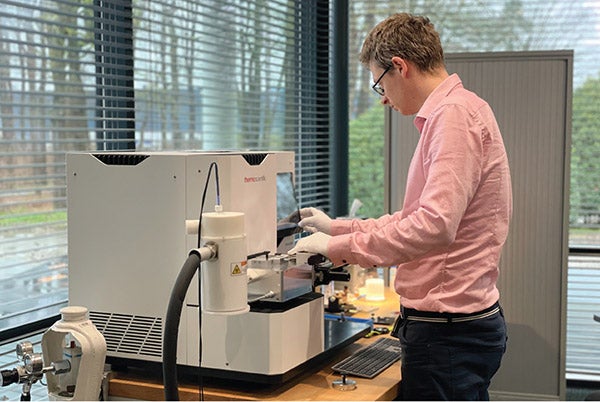
FIGURE 1. Ion milling technology was used to quickly and effectively prepare samples for analysis
Layer-by-layer analysis
After the sample was prepared, the next step was to characterize the material composition of the TBC. While traditional techniques using a scanning electron microscope (SEM) provide high-resolution images, they often lack the capability to fully analyze material composition across large areas, especially in the complex and layered structure of a TBC.
This is where the Apreo™ ChemiSEM analytical system played a pivotal role, integrating elemental analysis directly into the imaging workflow. This approach allowed for real-time elemental mapping, providing a more comprehensive view of the topcoat’s chemical composition. A large-area energy-dispersive X-ray spectroscopy (EDS) analysis confirmed that the topcoat exhibited elemental diffusion and phase formation after such a lengthy service time, revealing uneven layer interfaces that were not visible using the SEM image alone. This detailed chemical characterization demonstrated that the original structure, likely manufactured with yttria- and magnesia-stabilized zirconia, had undergone significant modification, with elemental segregation of magnesium oxide (MgO) and zirconium dioxide (ZrO2) in different regions.
While the ChemiSEM significantly enhanced the analysis, it had its own limitations in resolving subtle compositional variations within the topcoat. To overcome this, a line-scan analysis was conducted across areas with different MgO/ZrO2 ratios. This approach provided precise quantification of elemental changes, revealing how MgO and ZrO2 redistributed over time and how these alterations affected the material’s stability. By combining SEM, EDS and line-scan analysis into a single approach, the team achieved a more complete understanding of the chemical and structural evolution of the TBC, informing strategies to improve its long-term durability under extreme conditions.
Understanding the bond coat
When it came to the bond coat, EDS characterization was vital to gain insights into the elemental distribution of this layer. Quantitative mapping was useful here, but it could not provide sufficient information about the number of distinct materials present, their compositions and the extent to which elemental interactions influenced phase formation in the bond coat.
ChemiPhase, a key feature of ChemiSEM technology, enabled a more thorough analysis of the bond coat by automating phase identification. This consisted of collecting EDS spectra at each pixel and creating a detailed dataset that was processed using statistical analysis to distinguish different material phases. This approach provided a deeper understanding of the bond coat’s composition and the interactions between its elements.
Backscattered electron (BSE) imaging indicated variations in material composition based on grayscale contrast, which were confirmed and expanded upon using ChemiPhase to precisely identify and quantify each phase present. The analysis revealed that the γ-phase was the most dominant, while the ß-NiAl and γ’-Ni 3 Al phases showed significant oxidation due to prolonged exposure to high temperatures and repeated thermal cycling. Cracks and pores in the topcoat further exacerbated oxidation by allowing oxygen to infiltrate the bond coat (Figure 2). Notably, aluminum oxide, often found at the interface between the bond and top coats, was widely distributed throughout the bond coat, evidencing significant material degradation.
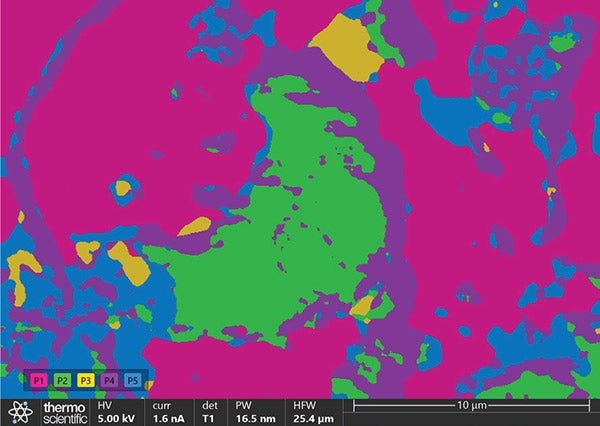
FIGURE 2. Analysis of the bond coat showed that infiltration of oxygen through the topcoat led to considerable material degradation
By automating phase identification and quantification, ChemiPhase eliminated the need for time-consuming manual point analyses and data averaging. This streamlined approach provided critical insights into material degradation and diffusion processes, ultimately improving the characterization of thermal barrier coatings in extreme conditions.
The value of machine learning
In order to further enhance analysis efficiency, the team applied machine-learning techniques to automate image analysis. This involved training convolutional neural networks (CNNs) using phase information from ChemiSEM data acquisition to identify patterns for segmentation and recognize similar phases in other regions of the sample. Unlike traditional methods that would have required manual feature extraction, these deep CNNs were able to capture complex image details automatically.
Thermo Scientific’s Avizo™ 3D Pro Software was used for deep-learning model training, leveraging compositional phase data obtained from SEM and EDS analysis. The model training process took just a few minutes and could be applied to various phases for automatic phase extraction from new images. The model’s predictions were first compared with known EDS maps to ensure accuracy, with deviations within±4% deemed accurate.
The team used a Bayesian classifier to generate predictions and probability values, which were then used to train CNNs. After training on a portion of the cross-section, the model was able to accurately analyze the entire SEM image. Machine learning therefore significantly streamlined the time-to-results, allowing for rapid yet precise analysis on a large scale.
Future implications
The analysis of the SR-71 Blackbird’s TBC after 15,000 h of service revealed crucial insights into material degradation under extreme conditions. By combining advanced sample preparation, high-resolution imaging, elemental mapping and machine learning, the team achieved efficient and precise characterization of the TBC’s structure and composition.
The success of this approach opens the door to further research and innovation in the field of materials science for aerospace and other sectors requiring extreme temperature operations. With continued advancements in AI and microscopy technologies, future generations of TBCs can be better optimized for challenging conditions, ultimately improving the performance and longevity of critical components in high-temperature environments. ■
Acknowledgement
All images provided by Thermo Fisher Scientific
Author
 Britta Siefer is a senior sales account manager for Electron Microscopy in Industry and Materials Science at Thermo Fisher Scientific (Email: britta.siefer@thermofisher.com, Phone: +49 174-1890-288). Siefer studied chemistry at the University of Essen and has accumulated over 20 years of experience in quality assurance, product management and scientific instrumentation sales. Throughout her career, she has worked with a range of organizations supporting analytical solutions and laboratory technologies. In her current position, Siefer partners with clients to deliver innovative microscopy solutions that drive progress in industrial and materials science research.