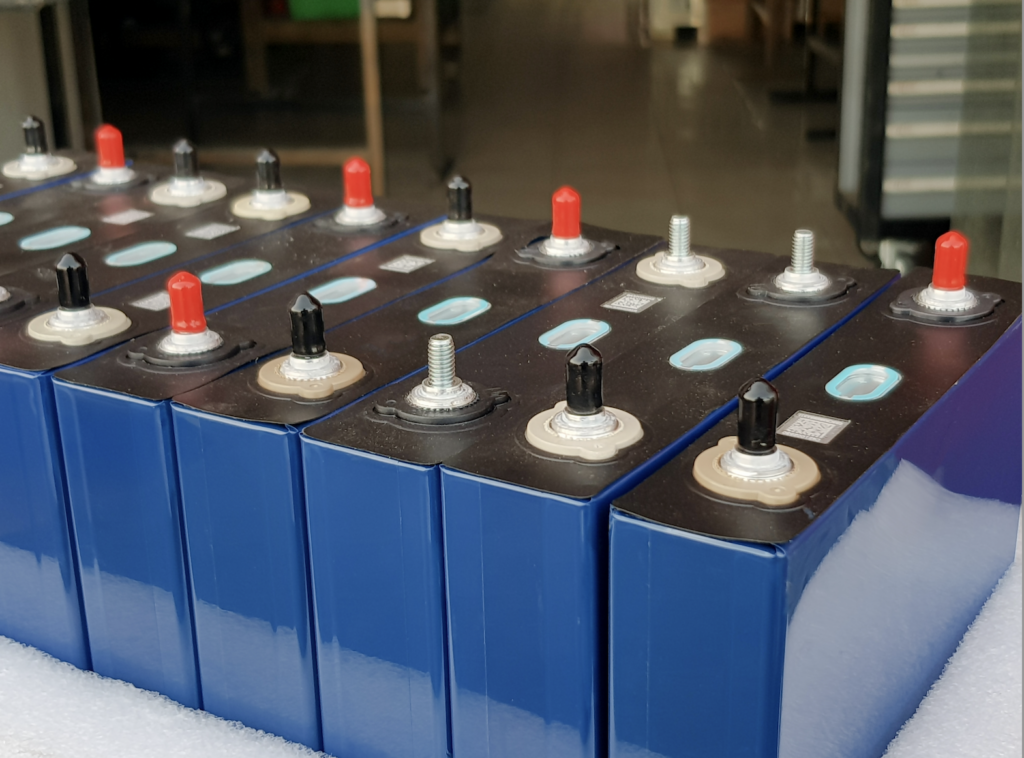
The battery industry has spent much of the past decade focused on chemistry. New cathode formulations, silicon-rich anodes, lithium metal, solid electrolytes and alternative materials continue to push the boundaries of energy density, charging speed and safety. Those advances deserve the attention they receive, but they represent only one part of the commercialization challenge. A battery’s chemistry is ultimately only as valuable as the manufacturing process that can produce it consistently, economically and at a commercial scale.
Source: Shutterstock
Manufacturers are preparing for the next generation of electric vehicles, grid storage systems and high-performance computing infrastructure, and attention is beginning to shift from laboratory performance to industrial execution. Engineers are asking different questions than they were five years ago. Can existing production lines accommodate new materials? How much energy does the manufacturing process consume? What environmental controls are required? How easily can a factory adapt as battery chemistries continue to evolve? These considerations influence decisions about facility design, capital investment and production strategy long before a battery reaches the market.
That shift has renewed interest in dry electrode processing alongside the conventional wet-coating methods that have dominated lithium-ion battery manufacturing for decades. Conversations around dry processing often focus on eliminating solvents or reducing energy consumption. While both are important advantages, they are part of a broader engineering conversation about manufacturing architecture. The production process itself affects everything from factory footprint and permitting requirements to process control, operating costs and the ability to accommodate emerging battery chemistries. As the industry continues to diversify beyond conventional lithium-ion systems, manufacturing flexibility — the ability to adapt production lines as battery materials and chemistries evolve — is becoming a valuable design objective.
A process built around solvents
Conventional lithium-ion battery manufacturing relies on a wet coating process that has been refined over decades of commercial production. Active materials, conductive additives and polymer binders are combined with a solvent to create a slurry, which is coated onto a current collector before passing through large drying ovens to remove the solvent. The coated electrode is then calendared to achieve the desired density and thickness before continuing through cell assembly. Every stage of this workflow has been optimized through years of experience, and today’s battery factories are designed around this manufacturing sequence.
That maturity has helped the industry scale, but it also means the manufacturing process carries infrastructure requirements that are easy to overlook when discussions focus on battery performance. Many cathode production lines rely on N-methyl-2-pyrrolidone (NMP), a solvent that requires specialized handling because of environmental and occupational safety considerations. Facilities must incorporate solvent recovery systems, ventilation equipment and emissions controls while dedicating significant floor space to drying ovens that operate continuously throughout production. These supporting systems become integral parts of the factory rather than ancillary equipment, influencing building design, utility demand, permitting and long-term operating costs.
Production volumes increase, and those requirements scale alongside them. Drying equipment represents a significant share of both energy consumption and manufacturing footprint, particularly in high-volume facilities. None of these considerations diminish the success of wet processing, which has enabled the commercial production of billions of lithium-ion cells worldwide. They do, however, prompt an important engineering question as manufacturers plan the next generation of battery plants: which elements of the traditional process remain essential, and which deserve to be reconsidered as new materials and production priorities emerge?
Understanding dry electrode processing
Dry electrode processing has gained attention in recent years because it removes one of the most resource-intensive portions of conventional battery manufacturing. Rather than dispersing active materials and conductive additives in a liquid slurry, the dry process blends powders mechanically before forming and laminating the electrode onto the current collector. While the specific techniques differ among manufacturers, the underlying objective is consistent: simplify production by eliminating solvent handling and the infrastructure that accompanies it.
From an engineering perspective, the significance extends well beyond removing a single ingredient from the production line. Solvents influence nearly every downstream manufacturing decision, from environmental permitting and air handling to factory layout and utility demand. Once those requirements are reduced, engineers gain greater flexibility when designing production facilities, particularly as companies evaluate domestic manufacturing sites where permitting timelines, construction costs and available utilities can vary considerably.
Dry processing also changes the way engineers think about process control. Conventional wet coating requires careful management of slurry rheology, coating thickness, drying temperature and solvent evaporation rates, with each variable affecting electrode uniformity. Those parameters have been optimized through decades of production experience, but they also introduce multiple opportunities for variation. Dry processing replaces many of those considerations with different engineering challenges involving powder flow, particle distribution, binder activation and lamination consistency. Success depends on achieving uniform electrode structures without relying on solvents to aid material dispersion.
For engineers accustomed to wet coating operations, this represents a different manufacturing philosophy rather than simply a modified version of an existing process. Material handling becomes important, as does equipment capability for maintaining consistent powder characteristics throughout production. Advances in process monitoring, precision feeding systems and in-line quality inspection will continue to play an important role as dry electrode manufacturing expands commercially. The discussion, therefore, should not be framed around one process replacing another, but around understanding which manufacturing architecture best supports the intended application.
Manufacturing decisions become more complex as chemistries diversify
The rapid pace of battery development has introduced an additional challenge for manufacturing engineers. Production facilities are expected to support technologies that continue to evolve while remaining economically viable over operating lifespans measured in decades.
Today’s production landscape already includes lithium iron phosphate (LFP), nickel-rich cathodes, silicon-containing anodes and several emerging lithium-metal designs. Solid-state batteries are beginning to move beyond pilot programs into early commercial applications, bringing new opportunities, as well as new manufacturing considerations. Each chemistry presents different sensitivities related to particle morphology, moisture exposure, interface stability and electrode structure. As a result, manufacturers need to evaluate more than how a battery performs, but also whether their production platforms can accommodate future material systems without extensive redesign.
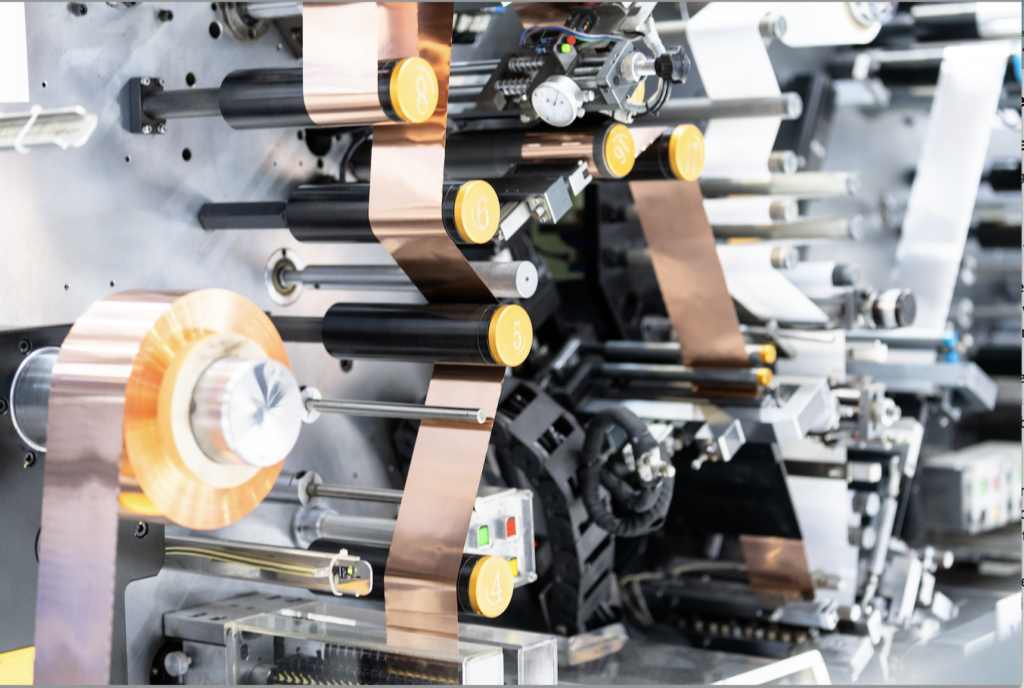
This is one reason manufacturing flexibility has become an important consideration during facility planning. Retrofitting a production line designed around solvent-intensive processing can require significant capital investment if future chemistries introduce different material handling or environmental requirements. Engineers are therefore placing greater emphasis on manufacturing platforms that reduce process complexity while remaining adaptable as battery technology continues to mature.
Source: Shutterstock
Solid-state batteries provide a useful example. Much of the public conversation has focused on improvements in energy density, charging performance and safety. Those characteristics contribute to their appeal, but commercialization depends equally on the industry’s ability to manufacture cells with predictable quality, acceptable yield and competitive production costs. Many solid electrolytes are considerably more sensitive to contamination and moisture than conventional liquid electrolyte systems, requiring tighter process control throughout manufacturing. Decisions surrounding electrode fabrication become significant because they influence not only battery performance, but also the practicality of scaling production to automotive volumes.
Manufacturers are evaluating production strategies for solid-state batteries and other advanced chemistries, and the manufacturing process itself becomes part of the technology decision. The ability to simplify production, reduce supporting infrastructure and accommodate evolving materials may ultimately influence adoption rates just as much as incremental improvements in electrochemical performance.
Factory design extends beyond the production line
One of the most practical distinctions between wet and dry electrode manufacturing emerges during factory design. Engineers responsible for planning new production facilities must account for much more than electrode fabrication equipment. Utility requirements, building infrastructure, environmental controls, permitting and long-term costs all influence project feasibility.
In conventional wet processing, solvent recovery systems, drying ovens and associated ventilation equipment occupy a substantial portion of the manufacturing footprint. These systems require significant energy while adding complexity to facility design. Air handling equipment, emissions controls and fire-protection systems become integral components of the production environment, particularly when handling solvents that require specialized environmental safeguards.
Eliminating those systems can reduce both factory complexity and utility demand, allowing engineers greater flexibility when configuring production lines. Simpler process flows may also shorten construction timelines by reducing the amount of supporting infrastructure that must be designed, installed and commissioned before manufacturing begins. These considerations are becoming relevant as governments encourage domestic battery production through grants, tax incentives and industrial policy intended to strengthen regional supply chains.
The current tariff environment further reinforces these considerations. Tariffs increase the cost of imported battery materials and components, and manufacturers are placing renewed emphasis on domestic production capacity. Building additional manufacturing capability, however, involves more than securing equipment. Production facilities must be designed so they can be permitted, constructed and operated efficiently within local regulatory frameworks. Manufacturing approaches that reduce environmental permitting complexity may therefore offer practical advantages when expanding domestic production.
None of this means that dry processing eliminates every engineering challenge. For example, powder handling requires careful control to maintain material consistency, while achieving strong adhesion and uniform electrode structures without solvents demands precise process engineering. But with any manufacturing technology, successful implementation depends on understanding where new challenges replace older ones. Engineers evaluating production platforms should therefore compare entire manufacturing systems rather than individual process steps.
Process architecture will influence the next generation of battery manufacturing
Much of the public attention surrounding batteries continues to focus on chemistry because chemistry produces measurable improvements in performance. Manufacturing engineers recognize that commercial success depends on an additional set of variables: throughput, yield, reproducibility, capital efficiency and reliability. Those characteristics determine whether laboratory advances become commercially viable products.
Electrode manufacturing sits near the center of that equation because it influences production cost, material utilization and factory design simultaneously. Improvements in cell chemistry may increase energy density or extend cycle life, but those gains must ultimately be supported by manufacturing processes capable of delivering consistent quality at an industrial scale. Production is expanding across electric vehicles, stationary storage and emerging applications such as AI infrastructure, and the manufacturing architecture supporting these technologies will receive greater scrutiny from both industry and policymakers.
Instead of viewing dry electrode processing solely through the lens of sustainability or energy savings, engineers should evaluate it as an alternative manufacturing platform with distinct characteristics. Questions surrounding process control, facility design, equipment compatibility, production flexibility and long-term scalability deserve the same level of attention as electrochemical performance. Those considerations become important as manufacturers invest in facilities expected to support multiple generations of battery technology. ♦
Edited by Mary Page Bailey
Author
 Richard Qiu is the president of LiCAP Technologies (CONTACT INFO). He is an accomplished senior executive and general manager with more than two decades of experience in strategy, business development, sales and marketing, new product development and global market expansion. He has played key roles at several notable technology startups and growth-stage companies. At LiCAP Technologies, he leads the development and commercialization of innovative, solvent-free electrode manufacturing solutions for batteries and other energy storage applications. With a background in management consulting at McKinsey & Company, Qiu has built a career driving growth and innovation across dynamic industries.