Biocompatible materials are designed and engineered to be introduced into the human body, either temporarily or permanently, as part of a medical device, to bring about therapeutic medical benefits. Biocompatible materials include various types of metals, ceramics, polymers and composite materials. This one-page review provides an overview of materials commonly used for biomedical applications.
Key properties
Before any material can be introduced to the human body, its potential for eliciting adverse effects must be assessed and understood. For regulatory approval of medical devices, one key source of testing guidelines is the International Organization for Standardization (ISO; Geneva, Switzerland; www.iso.org) ISO 10993 Series of standards (Biological Evaluation of Medical Devices) [1]. Here are some of the important properties for which these medical-device materials are evaluated.
Cytotoxicity. Cytotoxicity testing is designed to evaluate whether the materials and components of a medical device can cause harm to surrounding cells and tissues.
Immunogenicity. Biocompatible materials should not cause an immune response in which the body treats the medical device as a foreign body. Careful consideration of the surface of the material is important here.
Thrombogenicity. Any synthetic materials that come into contact with blood should be hemocompatible, meaning they should not allow protein adsorption and platelet adhesion. This could trigger the formation of blood clots, leading to other high-risk complications.
Biostability. Biocompatible materials should not corrode with exposure to bodily fluids, and should remain chemically inert for extended periods.
Sterilizability. Biocompatible materials should withstand sterilization processes without undergoing changes in their properties and makeup.
Mechanical stability. Biocompatible materials should have the strength, elasticity, wear resistance and possess other relevant mechanical properties to function for extended periods in living beings.
Material categories
Medical devices and components that perform a therapeutic function can be made from a number of different materials and combinations. Here are some of the key categories.
Metals and alloys. Several types of metal alloys are used in medical applications, including titanium, stainless steel, chromium, vanadium and aluminum. Properties like high strength-to-weight ratio, corrosion resistance and ability to form a stable oxide layer are prized in this area. The most common metal used for medical devices is titanium, and specifically the Ti-Al6-V5 alloy (90% Ti, 6% Al and 5% V) (Figure 1). A higher-purity variant known as Ti-Al6-V5-ELI is often cited as more desirable for load-bearing, long-term orthopedic implants (hip, knee and spine, for example), as well as for cardiovascular devices.
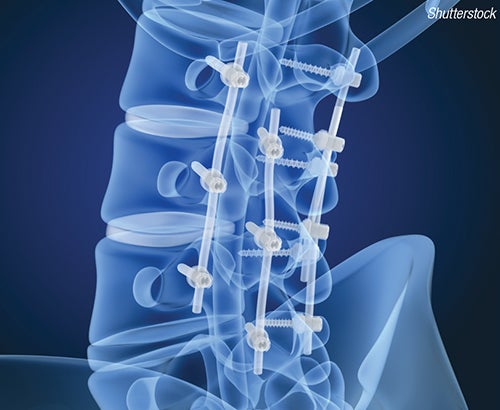
FIGURE 1. Titanium alloys are often used to make screws and plates for orthopedic applications
Ceramics and glasses. Ceramic materials are also used for joint-replacement implants, because of their excellent wear resistance, chemical inertness and hypoallergenic properties. Materials like alumina (Al2O3) and zirconia (ZrO2) are common bioceramics because they exhibit low wear rates, producing minimal particles, and have good long-term stability [2]. They can also be used in combination with other materials, such as biodegradable polymers, to deliver drugs and promote tissue regeneration. Some ceramics are bioresorbable, so they are used in bone grafts and as coatings in metallic implants to enhance osteointegration. Hydroxyapatite (HA) and tri-calcium phosphate (TCP) are examples of bio-resorbable ceramics.
Polymers. A range of polymers are used as materials of construction for medical devices, including implants, tubing and sutures. For implants, such as orthopedic and dental devices and spinal-fusion cages, polyetheretherketone (PEEK) and ultrahigh-molecular-weight polyethylene (UHMWPE) and polyphenyl sulfone (PPS) are used. For tubing, catheters and artificial organs, polyvinyl chloride, polypropylene, silicone rubber and polyurethane are common. Polylactic acid (PLA) and polycaprolactone (PCL) are examples of bioresorbable polymers for internal sutures and meshes.
Composites. A number of materials combining two or more of the previously mentioned types are common in biomedical applications. Alumina/zirconia composites, such as zirconia-toughened alumina (ZTA) exhibit high hardness, wear resistance and chemical inertness for long-lasting orthopedic and dental implants. Polymer-ceramic composites, such as combinations of PEEK with HA, can improve oseointegration. Combinations of HA with PLA or PCL, can help promote bone growth while providing structural support. Metal-ceramic-polymer composites and carbon-fiber reinforced composites are also found in medical uses.
References
1. International Organization for Standardization, Biological Evaluation of Medical Devices, ISO 10993:2025, www.iso.org.
2. Vaiani, L., Bocaccio, A. and others. Ceramic Materials for Biomedical Applications: An overview on properties and Fabrication Processes, J. Functional Biomaterials, 14(3) March 2023.