By applying concentrated mechanical force, high-impact tank-cleaning systems can overcome the limitations of traditional cleaning methods in certain applications
Tank cleaning in specialty chemical manufacturing isn’t just routine maintenance. It directly affects product quality, production schedules, worker safety and the bottom line. The financial impact of ineffective cleaning is especially serious for specialty chemical manufacturers. A single contamination event can destroy an entire batch, resulting in significant costs from lost product and delayed shipments. Manual cleaning exposes workers to caustic chemicals and often requires confined space entry, demanding time-consuming safety protocols to be put in place (Figure 1). Long cleaning cycles between batches eat into production capacity and require large quantities of energy, water and chemicals, all of which are becoming increasingly expensive.
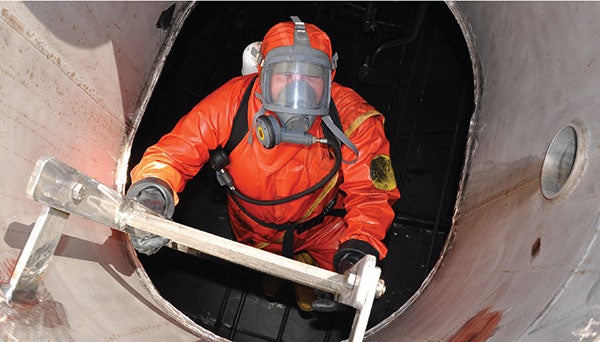
FIGURE 1. Some tank-cleaning activities require personnel entry, which introduces safety risks
There are also considerable environmental and utility costs. Solvent-heavy cleaning can create hazardous waste that is expensive to dispose of. Hot-water cleaning burns through energy. And as discharge regulations get stricter, treating or disposing of contaminated effluent keeps getting more expensive.
High-impact cleaning technologies can tackle these challenges using mechanical force instead of relying solely on chemicals. This article will explore why mechanical tank-cleaning approaches may work where conventional methods do not, and also will provide a practical framework for deciding where such technologies are suitable.
Specialty chemical challenges
Specialty chemicals create unique cleaning challenges. Understanding why these materials are so hard to remove is the first step to choosing the right cleaning approach.
Polymers, adhesives and coating formulations are particularly stubborn when it comes to residues and cleaning. High-molecular-weight compounds form extensive networks that bond strongly to metal surfaces. Unlike simple organic solvents that rinse away easily, these materials create layered deposits that resist dissolution (Figure 2).
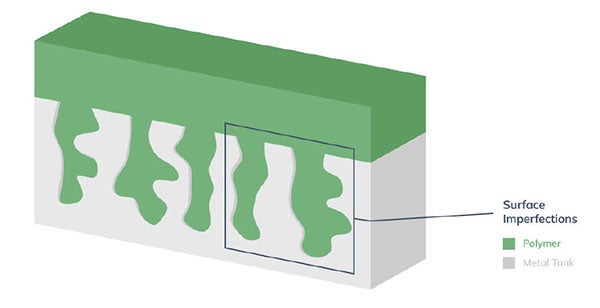
FIGURE 2. High-molecular-weight products form residues on metal surfaces that are extremely difficult to remove
Many residues soften with heat, but never fully liquefy at safe cleaning temperatures. They become tacky and spread rather than flowing away. Hot-water cleaning often makes things worse, not better.
Cured adhesives and coatings create cross-linked structures that are essentially insoluble. Once polymerization is complete, no amount of solvent will dissolve them. They must be physically removed.
Pigments and fillers add another layer of complexity. Titanium dioxide, carbon black and similar additives create abrasive residues that do not dissolve in solvents and resist spray-ball cleaning. The particles get lodged in surface imperfections and create sites where future fouling starts.
Why conventional methods fail
Understanding why traditional cleaning methods don’t work helps explain why alternative options are necessary. Static spray balls distribute cleaning solution but deliver minimal impact force. They are designed for rinsing and light soil removal, not breaking down tough deposits. The droplets lack the kinetic energy to overcome the adhesion forces holding residues to tank walls.
Solvent flooding can dissolve some residues, but this process often needs enormous volumes, long contact times and creates lots of hazardous waste. More importantly, many modern specialty chemicals are designed to resist solvents — that is often their main feature. An adhesive formulated to withstand common industrial solvents won’t dissolve easily, if at all.
Hot-water cleaning provides some thermal energy, but often makes thermoplastic residues stickier instead of removing them. Heating large quantities of water is energy-intensive and can cause scaling problems in hard-water areas.
Manual cleaning methods often work well, but can be dangerous, labor-intensive and inconsistent. They require confined-space entry with all the associated risks. Workers get exposed to chemicals and temperature extremes. And results depend on operator technique and thoroughness.
These methods rely mainly on chemical dissolution or thermal softening. They do not provide enough mechanical energy to physically break down deposits that are engineered to resist exactly these attacks.
A mechanical alternative
High-impact tank cleaning takes a fundamentally different approach. Instead of relying on chemical dissolution or thermal softening, these systems use concentrated mechanical force to physically break down and remove deposits.
The key is delivering high-velocity fluid jets in precise patterns that cover the entire tank. Rotary impingement cleaning uses spinning jet heads that project fluid streams at pressures typically from 3 to 12 bars, though some systems can reach as high as 250 bars.
Unlike static spray balls that spray fluid in all directions at once, rotary heads concentrate the available pressure into focused jets. The cleaning relies on kinetic energy transfer. When a high-velocity jet hits a surface, it delivers impact force proportional to the fluid velocity squared. This means that doubling the velocity provides four times the impact energy — this is far more effective than just increasing flow volume.
The kinetic energy of a concentrated water jet exceeds the adhesive strength holding the residue to the tank wall. The material can be chemically inert and still yield to physical force. The mechanical energy is orders of magnitude greater than what chemical cleaning provides. Even when some chemical help is useful — mild detergents for oily residues, for example — the mechanical action does the actual work.
Such mechanical systems are capable of complete coverage due to controlled, indexed rotational patterns and speed, which can be adjusted for tank geometry and residue type (Figure 3).
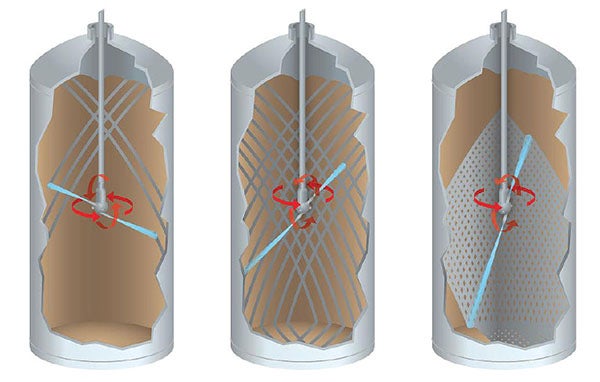
FIGURE 3. Indexed rotation in controlled patterns ensures that the full tank area can be covered
The cleaning occurs via several simultaneous effects. Direct impact force physically breaks the bond between residue and tank surface. The high-velocity stream lifts edges of deposits and encourages removal. Fluid penetrates into cracks and interfaces, undermining adhesion. Repeated impacts erode material away and flushing carries loosened debris away before it can settle again.
Optimizing impact pressure
One of the key advantages of high-impact cleaning is the ability to adjust operating parameters to match specific residue types. Understanding how to optimize pressure, flow and cycle time ensures effective cleaning while minimizing resource consumption.
Hard, brittle deposits like dried polymers or cured coatings respond best to higher impact pressures. The concentrated force fractures the material and breaks the bond with the tank surface. These residues benefit from the maximum pressure your system can deliver.
Soft, tacky residues require a different approach. Lower pressures with higher flowrates work better because they flush material away without smearing it across the tank surface. The goal is to lift and transport the residue rather than trying to fracture it.
Pigmented formulations with abrasive particles need sustained impact to dislodge particles from surface irregularities. Multiple cycles at moderate pressure often work better than a single high-pressure cycle, giving the jets time to work material loose progressively.
Temperature can provide supplementary benefits without the problems of pure hot-water cleaning. Warm water (40–60°C) reduces the viscosity of some residues, making them easier to remove mechanically. The mechanical action remains primary, with temperature as a supporting factor.
Working with equipment suppliers during trials helps identify the optimal parameters for specific residues. Document these settings as cleaning recipes that operators can select based on the product being cleaned. This ensures consistent results across different shifts and operators.
Building the business case
Understanding the financial impact of high-impact cleaning helps justify the capital investment and set realistic expectations for returns.
What to measure. A good place to start is to document current cleaning costs comprehensively. Many facilities underestimate the true cost because they only track obvious expenses like chemicals. A complete picture includes water consumption and discharge costs, energy for heating water or running agitators, chemical purchases, labor hours, including preparation and inspection time, waste disposal fees and any outsourced cleaning services.
For each cleaning cycle, calculate the total cost across all these categories. Then multiply by the annual number of cleaning operations. This baseline figure becomes your comparison point for evaluating new technology.
Don’t forget the hidden costs. Production downtime during cleaning represents lost capacity that could generate revenue. Inconsistent cleaning that leads to batch rejections costs far more than the direct material loss. Safety incidents from confined space entry carry both direct costs and potential regulatory consequences.
Calculating returns. When evaluating trial results, measure the same cost categories under the new system. The difference represents your direct savings per cleaning cycle. Multiply by annual cleaning frequency to determine annual savings.
If cleaning time reduces significantly, calculate the capacity gain. How many additional batches could you produce with the time saved? What is the contribution margin on those batches? This represents the productivity value of faster cleaning.
Safety improvements have real financial value. Eliminating confined-space entries reduces safety administration costs. Insurance providers may offer premium reductions when manual tank entry is no longer required. While difficult to quantify precisely, avoiding even one serious incident more than justifies most equipment investments.
Simple payback period equals the total capital investment divided by annual savings. Industry experience shows that facilities with frequent cleaning requirements and expensive current methods typically see payback in under a year. Operations cleaning daily with solvent-intensive protocols may see returns in a matter of months.
Integration with CIP systems
For facilities with existing clean-in-place (CIP) infrastructure, high-impact cleaning devices can be retrofitted relatively easily. The key considerations are matching the cleaning head’s pressure and flow requirements to your CIP system capabilities, ensuring adequate drainage capacity for the increased flowrates during cleaning, and coordinating with your CIP control system for automated operation.
Most modern cleaning heads can be controlled through standard CIP automation, with programmable cycles for different products. This allows users to maintain centralized control while gaining the benefits of mechanical cleaning. Working with suppliers who understand CIP integration ensuressmooth implementation.
Evaluation and implementation
Successfully implementing high-impact cleaning technology requires systematic evaluation and attention to critical success factors.
High-impact cleaning delivers the most value in some specific scenarios. The technology suits facilities dealing with stubborn residues, like polymers, adhesives, coatings and pigmented formulations, that resist conventional cleaning. Operations with frequent cleaning requirements (daily or multiple times per day) accumulate savings quickly. Facilities with safety concerns about confined-space entry or chemical exposure can also gain substantial risk-reduction benefits. And operations where cleaning time limits production capacity can achieve meaningful throughput improvements.
Some important questions to consider include the following:
- Are you using substantial volumes of solvents or aggressive chemicals for tank cleaning?
- Does manual cleaning require confined-space entry or expose workers to hazardous conditions?
- Are cleaning cycles taking too long and therefore limiting production capacity?
- Do you experience inconsistent cleaning results or occasional contamination issues?
- Are current cleaning methods creating substantial waste streams or approaching discharge limits?
How to proceed
Before committing to equipment, establish baseline performance metrics from your current operations. This documentation becomes essential for both equipment selection and post-implementation verification of return on investment (ROI).
Conduct demonstration trials with your actual residues. Before committing to full implementation, demand on-site trials testing your actual residues in your actual tanks. Use “worst-case” conditions with maximum buildup or difficult formulations. Measure water consumption, chemical usage and cycle time. Verify cleaning effectiveness through visual inspection and analytical testing if needed. Document any adjustments required to achieve satisfactory results. Gather operator feedback on ease of use.
Measure performance against your specific requirements. Define specific benchmarks the trial must meet: cleaning effectiveness verified visually or analytically; maximum acceptable cycle time; maximum water and chemical consumption; operator acceptance; and any regulatory or quality system requirements.
Document trial results thoroughly with photographs, analytical data and detailed cost calculations (Figure 4). This documentation supports the capital approval process and provides baseline expectations for ongoing performance.
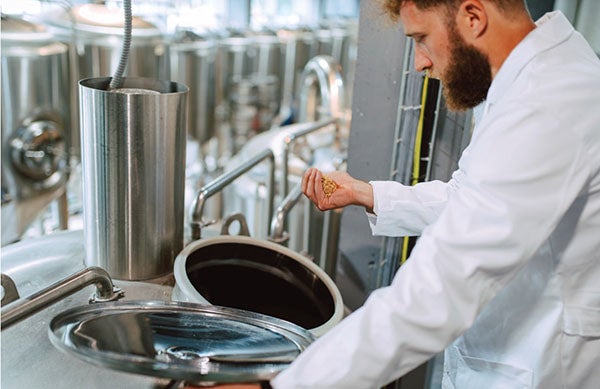
FIGURE 4. Trial runs for cleaning technologies should mirror typical operations as closely as possible, and it is critical that trial results are thoroughly documented via photos and collection of relevant analytical and experimental data
Calculate ROI using real trial data, not theoretical projections. Use actual consumption and performance data from trials to calculate direct cost savings. Include capacity gains if reduced cleaning time enables additional production. Quantify risk-reduction benefits where possible. Calculate simple payback period as total capital investment divided by annual savings.
Most facilities can build a compelling business case based on trial results rather than vendor projections.
Critical success factors
Following evaluation, there are several critical factors that can determine implementation success.
Proper equipment selection and sizing is fundamental. Match cleaning-head design to your tank geometry and residue types. Ensure pressure and flow capabilities suit your application. Verify materials of construction are compatible with your chemicals. Confirm control and automation capabilities meet your needs.
Adequate utility infrastructure must support the system. Verify that available water pressure and flow capacity meet equipment requirements. Account for pressure drops through piping and elevation changes. Ensure drainage capacity handles cleaning effluent flowrates. Confirm electrical power is available where needed.
Operator training and procedure development ensure consistent performance. Provide comprehensive training covering operating principles, safety procedures, standard operating procedures and troubleshooting. Develop clear, documented procedures with photographs and diagrams. Ensure all operators who will use the equipment complete training before independent operation.
Validation for regulated applications requires formal protocols. For pharmaceutical or food-contact chemical applications, develop cleaning validation protocols including worst-case residue identification, acceptance criteria for cleanliness, analytical methods for residue detection and required number of validation runs. Execute validation runs according to protocol. Create validation reports documenting results and conclusions. Even for non-regulated applications, verification testing builds confidence and establishes performance baselines.
Ongoing performance monitoring maintains effectiveness. Establish key performance indicators, such as: cleaning cycle time; water and chemical consumption per cycle; and quality metrics like inspection results, equipment reliability measures and cost per cleaning cycle. Review these metrics monthly or quarterly to identify trends and opportunities for further improvement.
Real-world applications
Looking at how high-impact cleaning performs in actual specialty chemical facilities provides context for evaluating the technology. These examples illustrate results for different residue types and operational scenarios.
Titanium dioxide pigment tank cleaning. A specialty coatings manufacturer had serious problems cleaning tanks used for white pigment formulations containing titanium dioxide (TiO2). This highly abrasive material created stubborn deposits that conventional methods could not shift. The existing cleaning protocol was labor-intensive and resource-heavy. Workers started with an initial rinse using flexible hoses to remove loose material. Then came manual scrubbing with brushes while standing inside the tank. After that, they filled the entire vessel with soap and water and ran the internal agitator for 48 h. Finally, they drained it and did a final inspection.
Each cleaning cycle consumed enormous quantities of water, chemicals and energy. With multiple large tanks being cleaned daily, the wastewater went into two 125-m3 effluent pits before discharge. These pits almost filled to the brim every day. When effluent needed dilution to meet discharge requirements, they regularly overflowed into containment areas.
A rotary jet cleaning head was evaluated for the operation. The facility ran trials using a “worst-case scenario” — a white pigment tank that had not been cleaned in several weeks (Figure 5). The results showed that water and electricity usage dropped to about one-tenth of original levels. Detergent consumption fell by more than half as mechanical action needed less chemical help. Manual entry was completely eliminated, removing confined-space risks entirely. The massive reduction in effluent volume meant waste tanks no longer approached capacity or overflowed. The production manager said “the tank had never been so clean,” despite the much shorter automated cycle. The facility also added a cyclone separator to improve effluent quality further, reducing particulate levels by over 95%.
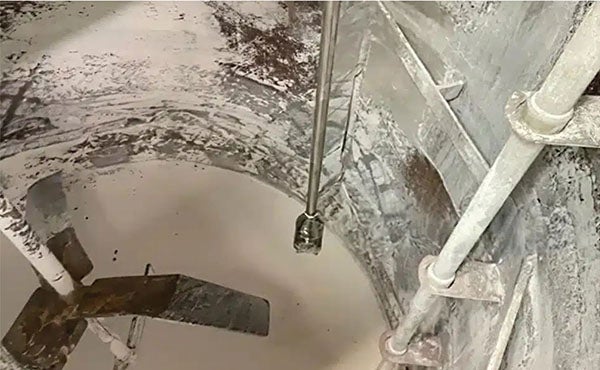
FIGURE 5. Titanium dioxide creates particularly recalcitrant deposits within tanks, so potent cleaning techniques are often required
IBC cleaning for adhesives. A contract manufacturer of specialty adhesives used intermediate bulk containers (IBCs) to store and transport finished products. After each use, the IBCs needed thorough cleaning before refilling to prevent cross-contamination between different adhesive formulations.
The company had been sending contaminated IBCs to an external cleaning service, which was quite expensive. They also kept a larger fleet than necessary to account for the time containers spent at the cleaning facility.
Attempts to clean IBCs in-house were frustrating. Manual cleaning with hoses and brushes was lengthy and hard work. Even with the time investment, results were inconsistent. This created potential contamination risks when reusing containers.
The company tested a rotary-jet cleaning head designed specifically for IBC cleaning. The system cleaned IBCs 25–50% faster than manual cleaning, with cleaning times of 4–8 min, depending on residue amount and type (Figure 6). Every container was cleaned to the same repeatable standard using less water than manual methods.
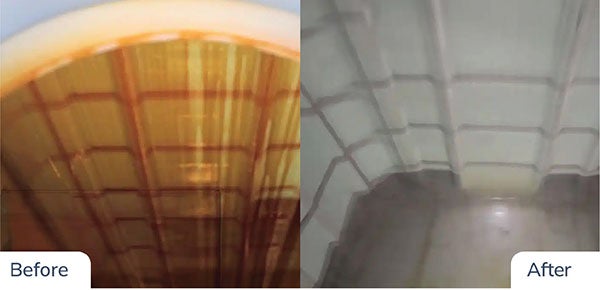
FIGURE 6. Adhesives manufacturing operations present unique tank-cleaning challenges for which conventional manual-cleaning techniques are often not suitable
Pre-set cleaning cycles freed up workers to do other tasks while the automated system ran, improving overall productivity. The company brought the entire IBC cleaning process in-house, completely eliminating the cost of sending containers to their supplier. The success led them to buy a second cleaning head for increased throughput and redundancy. ■
Edited by Mary Page Bailey
Acknowledgement
All images provided by author
Author
 Richard Packman (Phone: +44 1844 700267; Email: info@intanktech.co.uk; Website: www.tankcleaningtechnologies.co.uk) is the managing director and a founding director of inTank Technologies, a U.K.-based specialist in tank cleaning, mixing, pumping and valve technology for the process industry. Established in April 2004, the company was founded by Packman following his tenure as U.K. business unit manager at Alfa Laval. With over two decades of experience, he is an expert in his field and often leads technical sessions on tank cleaning and CIP, sharing his expertise across the industry.