A PFAS-remediation project using sustainably manufactured granulated activated carbon for drinking water demonstrates how PFAS adsorption performance can be combined with reduced costs and environmental impact
As thousands of public water systems across the country make plans to reduce per- and polyfluoroalkyl substances (PFAS) in drinking water to below maximum contaminant levels (MCLs) set in 2024 by the U.S. Environmental Protection Agency (EPA; Washington, D.C.; www.epa.gov), the PFAS treatment industry is actively responding to demand. While activated carbon is a long-proven, leading technology for PFAS removal, there are many new enhancements and innovations that provide a range of options for municipal water treatment plants (Figure 1).

FIGURE 1. PFAS removal has become a key aspect of modern municipal water-treatment facilities, and new technologies offer more options for achieving it
One such innovation is CarbPure GAC, a granular activated carbon (GAC) from Arq Inc. (Greenwood Village, Colo.; www.arq.com). CarbPure GAC offers the reliable PFAS removal capabilities that GAC is known for with added benefits that come from its shape, adsorption capacity, domestic sourcing and proprietary pre-washing process. Recently, a water treatment facility in EPA Region 4 (Southeast U.S.) conducted product testing that revealed the ability of this GAC to outperform competitive products.
PFAS removal testing
Arq Inc. established a partnership with a municipal water treatment plant in EPA Region 4, a surface water-treatment facility that serves over 90,000 customers. Like many other public water treatment systems, the plant is expanding its operations to include treatment of PFAS to meet the EPA compliance deadline of June 2029 — a date that may be extended to June 2031, according to a recent EPA announcement [1] (Figure 2).
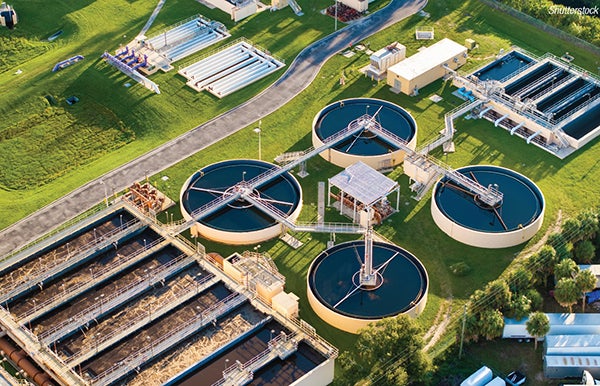
FIGURE 2. Municipal water treatment plants in the U.S. are exploring PFAS-remediation solutions in anticipation of EPA compliance deadlines for PFAS in the next few years
To kick off this effort, the municipality conducted a rapid small-scale column test (RSSCT) to qualify GAC products for the installation of new dual-cell gravity-filter GAC adsorption facilities at two existing water treatment plants — one that draws water from a lake, and one that draws water from a river. The RSSCT tested Arq’s CarbPure GAC 1240 alongside two other competing GAC products.
RSSCT of GAC Products
To ensure that the samples had enough PFAS to achieve an analytical level, the samples were spiked with regulated PFAS that were above the MCLs. For perfluorooctanoic acid (PFOA) and perfluorooctane sulfonate (PFOS), both of which have an MCL of 4 parts per trillion (ppt), the initial concentrations were 13 and 34 ppt, respectively. For perfluorononanoic acid (PFNA) and perfluoro hexane sulfonic acid (PFHxS), both of which have MCLs of 10 ppt, the initial concentrations were 18 ppt and 34 ppt, respectively. It should be noted that regulations of PFNA, PFHxS and two other PFAS compounds (hexafluoropropylene oxide dimer acid; HPFO-DA; and perfluorobutane sulfonic acid; PFBS), while originally included in the EPA regulation, may be rescinded, according to the same announcement regarding the extended compliance deadline (Ref. 1). The EPA has confirmed that MCLs for PFOA and PFOS will remain at 4 ppt.
The RSSCT simulated between six months to a year of treatment operations. Water samples were taken intermittently over several weeks using an EBCT (empty bed contact time) of 20 minutes. This resulted in approximately 40,000 bed volumes tested for each activated-carbon product, with samples taken every 5,000 bed volumes. The EPA Region 4 facility used a third-party independent laboratory to conduct the testing.
Enhanced adsorption
CarbPure GAC is a granular activated carbon product made from bituminous coal that is designed to adsorb PFAS and other contaminants from water. However, three primary characteristics of CarbPure GAC set it apart from similar competitive products. First, the product particles have a uniform spherical shape that may provide benefits, such as low dust, low abrasion and more efficient packing that results in a lower pressure drop.
Next, CarbPure GAC is manufactured through the reagglomeration of domestically sourced virgin feedstock that provides exceptional kinetic adsorption capacity. This enhanced adsorption capacity often results in longer media life.
Finally, CarbPure GAC’s proprietary manufacturing process includes pre-washing to reduce arsenic and other trace impurities that are characteristic of GAC made from bituminous coal. Arq’s patented bituminous-coal-waste purification process results in reduced GAC-leachable arsenic concentrations, which benefits drinking-water treatment plants by reducing the wash water and pre-rinse time required during startup to achieve MCLs for arsenic. Internal product testing has shown up to a factor of three reduction in GAC-column prewash water volume generation, as compared to the industry standard for bituminous-coal-based GAC.
With lower pressure drop, easier handling, less water needed for pre-washing and longer media life, the CarbPure GAC allows water-treatment facilities to reduce their operational costs for media changeouts, water use and energy consumption.
Test results: 2X media life
PFOA was deemed to be the limiting factor in the RSSCT, as it was the first regulated compound to break through any of the media. Product testing showed that CarbPure GAC lasted on average more than twice as long before PFOA breakthrough compared to two competing products. For the lake-water source, CarbPure GAC lasted approximately 30,000 bed volumes before PFOA breakthrough, while competing product 1 lasted 14,000 bed volumes and competing product 2 lasted 12,000 bed volumes. For the river-water source, CarbPure GAC lasted approximately 19,000 bed volumes, while competing product 1 lasted 12,000 bed volumes and competing product 2 lasted 9,000 bed volumes.
Media life has direct and significant impacts on operational costs for water treatment, including the cost of media, media changeout labor and downtime, and media disposal. Results from this testing show that plants can expect about two times the media life from CarbPure GAC when compared to other GAC products, when PFOA is the limiting factor.
These test results can help guide design engineers and GAC users to write media specifications for new plants to ensure that the plant maximizes the life of its media while realizing significant economic and sustainability benefits.
Edited by Scott Jenkins
Reference
1. U.S. Environmental Protection Agency, EPA announces it will keep maximum contaminant levels for PFOA, PFOS, EPA press release, March 14, 2025.
Authors
 Micala Mitchek is a principal research and development engineer at Arq Inc. (8051 E. Maplewood Ave., Suite 210, Greenwood Village, CO 80111; Email: micala.mitchek@arq.com) with nine years of experience in new activated-carbon product design and field-application development. Mitchek applies a strong fundamental scientific understanding to tuning activated carbon products to selectively remove specific environmental contaminants with emphasis on PFAS, coal-combustion residual inorganics, total organic carbon and taste and odor molecules. Mitchek received a B.S.Ch.E. from Colorado State University and a master’s degree in environmental engineering from the Colorado School of Mines.
 Ariel Li is the technical director of GAC Products & Applications at Arq Inc. With 13 years of experience in activated-carbon product development, application and commercialization, she has successfully launched five impactful product platforms targeting fluegas mercury capture and municipal drinking water treatment. Li also specializes in scaling new activated-carbon technologies from laboratory prototyping to pilot and commercial manufacturing.