An advanced membrane-chamber filter press improved material recovery and operating efficiency while lowering operating costs at a facility for the recycling of construction materials
In today’s world, where resource conservation and sustainable practices are more important than ever, the RCO Recycling Center in Eastern Switzerland is setting a new industry benchmark. As one of the most advanced wet-mechanical processing plants in the region, RCO specializes in reclaiming valuable materials from excavation and demolition waste. The goal is to maximize material recovery, minimize environmental impact, and create a more sustainable construction industry.
Among the key processes at the facility is sludge dewatering, where water is removed from residual sludge, which contains potentially valuable materials. This article discusses the challenges associated with the conventional dewatering system previously employed at RCO, and the installation of an advanced membrane-chamber filter press (Figure 1) from MSE Filterpressen GmbH (Remchingen, Germany; www.mse-filterpressen.com). Engineered to deliver high-performance sludge dewatering, this state-of-the-art system is redefining how recycling facilities handle complex filtration challenges.
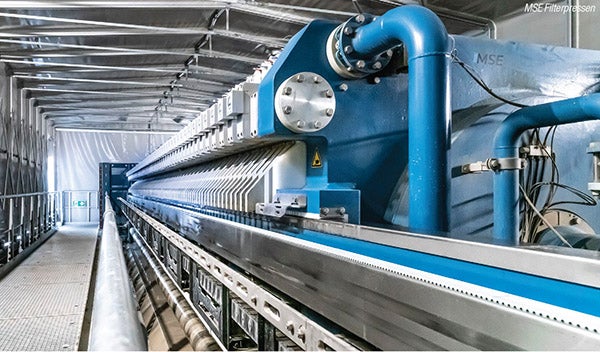
FIGURE 1. An advanced membrane-chamber filter press improved the sludge-dewatering process at a recycling plant in Switzerland
The dewatering challenge
Recycling mineral-construction waste is a highly specialized process. At RCO, materials undergo wet-mechanical processing, where fine particles, residues and contaminants must be separated efficiently. A major challenge in this process is sludge dewatering — extracting water from the residual sludge, while ensuring that the resulting filter cake is stable, dry and reusable.
These are the general challenges faced by RCO:
• High moisture content in the filter cake, leading to increased disposal and handling costs
• Inefficient water recovery, resulting in higher demand for fresh process water
• Throughput limitations, affecting overall recycling capacity
To overcome these challenges, RCO sought an advanced and automated filtration solution — one that could increase efficiency, improve resource recovery and reduce operating costs.
Membrane-chamber filter press
MSE Filterpressen developed a custom-engineered membrane-chamber filter press tailored to the unique demands of RCO’s fully automated recycling process. Key technical features of the membrane filter press include the following:
• Membrane chamber technology for optimized sludge dewatering
• Intelligent automation, reducing manual intervention and cycle times
• Dual-sided feed system, ensuring uniform sludge distribution
• Real-time residual moisture measurement, enhancing process control
• Integrated remote monitoring, improving system reliability
The installation of an 85-ton filter press was no small feat. The filter-press system had to be precisely positioned 6.5 meters above the ground level, which requires careful planning and execution. Heavy-duty mobile cranes were used to ensure millimeter-accurate placement, demonstrating the precision and expertise involved in integrating such an advanced system into an existing facility. Additionally, given that the RCO facility is located in a small village, measures were taken to minimize traffic impact during transport and installation.
Benefits of the new system
Thanks to its high-pressure filtration capability, the system achieves a much drier filter cake, reducing both disposal volumes and costs (Figure 2). Additionally, the extracted water is recirculated, significantly lowering overall water consumption.
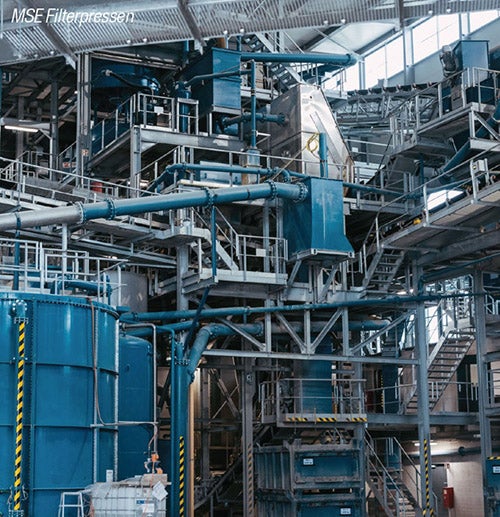
FIGURE 2. The membrane-chamber filter press achieves a drier filter cake than current methods
Beyond its technical advantages, the new system also plays a critical role in enhancing sustainability and optimizing processing at RCO.
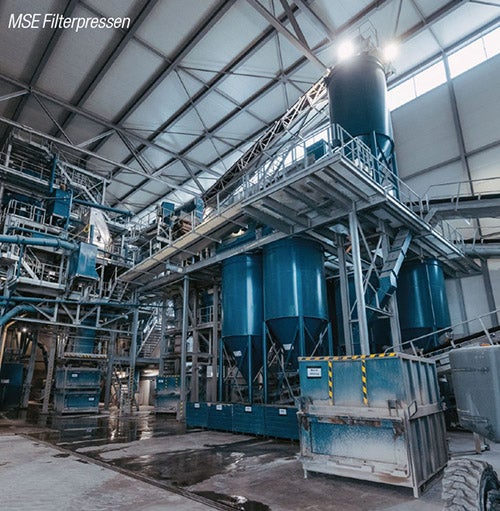
FIGURE 3. The new filtration process has significant sustainability benefits
Sustainability. By improving water recycling rates and reducing the need for freshwater intake, the facility minimizes its environmental footprint. Additionally, the drier and more stable filter cake is now better suited for further reuse, including applications in cement production and landfill construction. This ensures that valuable materials remain in the production cycle rather than being discarded as waste.
Process optimization. To further enhance filtration efficiency of the membrane filter press, MSE Filterpressen GmbH implemented i-Plate technology, developed in collaboration with LENSER Filtration GmbH (Senden, Germany; www.lenser.de). This system uses real-time sensors embedded in the filter plates to monitor moisture levels and dynamically adjust dewatering parameters. The results include the following:
• Consistently optimized cycle times, reducing energy consumption
• Adaptive filtration, ensuring efficiency, even with fluctuating sludge compositions
• Improved process stability, reducing maintenance requirements
The i-Plate technology allowed greater process control, improved resource efficiency and lower operational costs at the RCO facility.
Improving future recycling
The successful integration of MSE’s membrane-chamber filter press at RCO underscores how cutting-edge filtration technology can drive efficiency and sustainability in construction recycling. Through advanced dewatering, intelligent automation and resource optimization, RCO has set a new industry standard for the recycling of mineral waste. This project highlights how innovation, collaboration and smart engineering can pave the way for a more sustainable and resource-efficient future.
Edited by Scott Jenkins
Author
 Ricardo Valerio Rumé is chief technology officer and co-managing director of MSE Filterpressen GmbH (Am Eisengraben 3, 75196 Remchingen, Germany; Phone: 07232 3650-0; E-Mail: info@mse-filterpressen.de; Website: https://mse-filterpressen.de), a German engineering company specializing in high-performance filtration systems. With a background in automotive engineering and a passion for industrial innovation, he leads the development of advanced filter-press solutions for challenging applications in mining, chemicals, battery recycling and environmental sectors. His focus lies in combining process efficiency, automation and safety to drive sustainable progress in solid-liquid separation.