Electrification of industrial processes using heat pumps is moving from niche applications toward the mainstream, but challenges to their implementation remain
Decarbonization initiatives have focused attention on the production of process heat for industrial operations without the combustion of fossil fuels. Among the strategies for industrial decarbonization is to use electric-powered heat pumps to generate process heat that replaces the need for combustion of fossil fuels. Over the past few years, industrial heat pumps (IHPs) have matured by a significant margin, and are now capable of covering a significant swath of the low- and medium-temperature process heat demand in the chemical process industries (CPI). Several examples of recent developments illustrate the potential of heat pumps as a tool to decarbonize industrial operations. These examples show improving economics compared to conventional gas-fired alternatives and improved coefficients of performance (COP).
However, despite maturation and real-world examples, IHPs still have relatively small penetration into the market for process heat so far, and there remain several critical engineering and economic challenges facing their widespread adoption. This article looks at developments in the area of IHPs, focusing on challenges, opportunities and real-world examples.
IHPs for decarbonization
According to the International Energy Agency (IEA; Paris, France; www.iea.org), the chemical manufacturing industry is the largest industrial energy consumer and the third-largest industry in terms of direct CO2 emissions. The industry is highly dependent on fossil fuels both as an energy source and a feedstock for chemical production. In addition, high energy requirements make chemical emissions hard-to-abate in many cases. And because chemical products appear in around 95% of manufactured goods, any net-zero CO2 emissions initiatives must involve decarbonization of this sector (Figure 1).
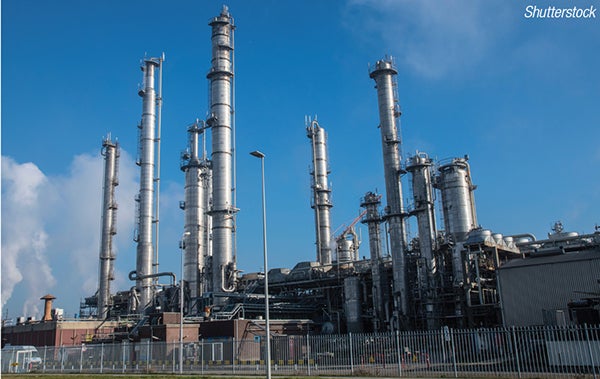
FIGURE 1. Chemical manufacturing is energy-intensive, but electric-powered heat pumps for certain applications can advance decarbonization
One decarbonization pathway that has been gaining traction in some areas is the use of electric-powered IHPs to replace fossil-fuel combustion as a source of process heat for operations. “Low-to-medium pressure steam networks [in the CPI] typically operate between 180 and 200°C and 10–15 bars pressure,” explains Khaled Shawky, research analyst at Energy Solutions Intelligence (Salalah, Oman; www.energy-solutions.co). For applications requiring heat under 200°C, IHPs can act as direct “drop-in” replacements for gas boilers without requiring complex, unit-by-unit thermal integration, Shawky says. “The market is shifting from early adoption to mass commercialization, driven heavily by E.U. ETS [European Union Emissions Trading System], carbon pricing and geopolitical pressures.”
Currently, the dominant technology for IHPs is mechanical vapor recompression (MVR), an open-loop system where a process vapor is used as the working fluid. Rather than losing the latent heat from the vapor, it is drawn into a compressor, where its pressure and temperature are increased for further use. “MVR is the undisputed dominant architecture for high-temperature CPI applications (evaporation/distillation),” Shawky says, and “MVRs routinely achieve high coefficients of performance (COPs) ranging from 3.0 up to 11.0 or more.”
COP, a measure of a heat pump’s efficiency, is determined by dividing the useful heat (or cooling) output by the electrical energy input. The maturation of IHP technologies in recent years has allowed COPs of 2.5 to 6, making IHPs more attractive than many other strategies for electrification based on resistive heat.
However, even at high COPs, IHPs are not fundamentally decarbonizing unless the electricity that powers them is emissions-free (wind, solar, nuclear, hydroelectric and so on) (Figure 2).
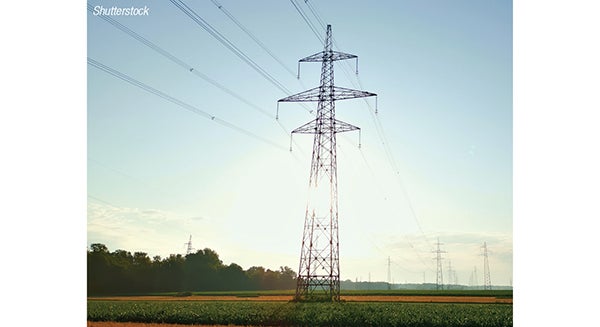
FIGURE 2. Decarbonization with IHPs depends on electrical source
IHP economics
Within the CPI, between 30 and 45% of heat demand falls below 200°C, Shawky says, creating a potentially massive total addressable market for IHPs. Despite this, “Current penetration [of IHPs] is highly fragmented,” Shawky says. “In mature markets like the E.U., IHPs currently cover only about 1.5% of total industrial heat consumption, capturing a mere 7% of recoverable waste heat potential.”
A major factor in whether or not IHPs can be cost-competitive with fossil-fuel combustion comes down to the “spark spread,” (the ratio of electricity cost to natural-gas prices). “For an IHP to reach operational cost parity, the spark spread must be strictly lower than the unit’s COP multiplied by a gas boiler’s efficiency,” Shawky explains.
“Outside of regions with historically cheap, abundant hydroelectric or wind power (Norway, for example), IHPs struggle to beat gas boilers purely on raw levelized cost of heat (LCOH) due to spark spreads floating between 3.0 and 5.0,” Shawky says.
So for the moment, IHP economics in most places depend on a combination of highly optimized internal waste-heat recovery with carbon taxes or subsidies for capital expenditures to achieve parity with natural-gas-fired process heating. Carbon cap-and-trade systems, like the E.U. ETS, with an €80–€150/ton cost of CO 2, for example, can artificially compress the spark spread.
A key strategy for the use of IHPs is the “waste-heat upgrade” model, referring to the concept that upgrading waste heat is easier and more economical than using ambient air. “Extracting heat from a 60°C industrial cooling stream to reach 150°C requires significantly less mechanical work from the compressor than pulling from 10°C ambient air,” Shawky explains. “Furthermore, CPI waste heat often presents as latent heat, allowing isothermal extraction that avoids temperature-glide mismatches and exponentially boosts the COP.”
Project examples
IHP projects at chemical manufacturing sites have been demonstrated. The following are some notable ones.
• BASF (Ludwigshafen, Germany; www.basf.com). The German chemical giant has been a leader in IHPs, with two large-scale heat pump projects ongoing. One project involves Everllence’s (www.everllence.com; formerly MAN Energy Solutions) oil-free compressors to upgrade cooling-water waste heat into 150 tons/hr of high-pressure process steam. It requires about 50 MW of electricity to generate 120 MWth (resulting in a COP of about 2.4), slashing 100,000 tons of CO2 emissions annually. Another project involves partners GTK GmbH (formerly GIG Karasek; Gloggnitz, Austria; www.gtk-solutions.com) and PILLER (Moringen, Germany; www.piller.de). In this case, the heat pump uses electricity from renewable sources to produce up to 500,000 tons of CO2-free steam per year, delivering a thermal output of around 50 megawatts. The steam will primarily be used for the production of formic acid. In this way, up to 98% of the greenhouse gas emissions generated annually in this process can be avoided. For more information, Chem. Eng., November 2025, pp. 39-40.
• Evonik (Essen, Germany; www.evonik.com). Specialty chemical maker Evonik is also innovating in the IHP space. At Evonik’s Herne site, large-scale heat pump will upgrade industrial waste heat from 25°C water from chemical cooling towers to 130°C for injection into the municipal district heating network.
• TASTE Project (Dow and TNO). Dow Chemical (Midland, Mich.; www.dow.com), in partnership with TNO (Netherlands Organization for Applied Scientific Research; The Hague, the Netherlands; www.tno.nl) is developing an IHP based on thermoacoustic technology (to avoiding standard vapor compression). The heat pump is designed to upgrade 120°C waste heat to 180°C steam, targeting the exact threshold where traditional refrigerants degrade.
• HP4INDUSTRY. (hp4industry.ehpa.org). Launched in January 2026, this multi-partner E.U. consortium project is specifically focused on designing and validating replicable heat pump solutions for industrial process sectors. It is an example of European industry moving from one-off demonstrations toward standardized, deployable packages.
• Covestro (Dormagen, Germany; www.covestro.com) installed a large steam compressor at its Dormagen site operating on heat-pump principles (recovering and reusing waste heat from production). It is expected to save hundreds of GWh annually and cut more than 40,000 ton/yr CO2.
IHP challenges
As IHP technology and engineering advance, several critical barriers to adoption, some having to do with capital equipment, while others involve electrical grid infrastructure and thermodynamics.
First, there is a disparity in capital expense. Gas-fired boilers cost €50–100/kWth in capital expenses, compared to IHPs, which demand €200–1,600/kWth.
Also, replacing gas boilers with large-scale electric heat pumps requires new electricity-generation capacity from the local grid. Shawky says aging plants face grid-upgrade delays of four to seven years.
In addition, Shawky points out that IHPs require rigorous thermodynamic “pinch analysis” to map the plant’s grand composite curve. “Extracting or rejecting heat at the wrong points merely recycles energy without reducing primary utility demand,” he says.
Finally, Shawky points out a somewhat overlooked barrier: that of the shifting regulatory landscape for refrigerants used in heat pumps. “Strict updates for fluorine-containing gases and looming bans on per- and polyfluoroalkyl substances (PFAS) are forcing the industry away from traditional synthetic hydrofluorocarbons (HFCs) and hydrofluoroolefins (HFOs) as refrigerants, and toward natural refrigerants (including ammonia, CO2, hydrocarbons). This shift introduces severe new engineering hurdles, including toxicity, extreme operating pressures and ATEX flammability compliance within chemical plants.
Scott Jenkins