Specialty chemicals company Kuraray drastically accelerated decision-making and resource allotment by leveraging an AI-driven platform in its R&D division
Materials discovery has long been the backbone of the chemical process industries (CPI), driving advances in resins, specialty chemicals, advanced fibers, activated carbon and catalyst development. Traditionally, however, innovation in these areas has been slowed by fragmented knowledge and trial-and-error approaches that consume significant time and resources.
Fortunately, new computational tools and advanced simulation methods employing artificial intelligence (AI) for materials discovery are starting to transform this landscape. These technologies provide a more effective means to investigate intricate molecular systems and evaluate the most promising candidates. By becoming less dependent on expensive and time-consuming laboratory experimentation, AI-driven materials discovery enables researchers to concentrate on the most significant breakthroughs (Figure 1). This can facilitate quicker innovation and accelerate discoveries from concept to application.
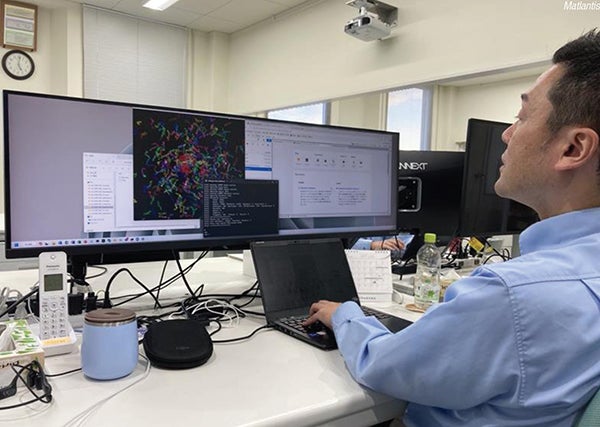
FIGURE 1. Integrating AI-powered tools into R&D pipelines can help companies to accelerate materials discovery at quantum-level speed and scale
A specialty chemical company, Kuraray Co., Ltd. (Tokyo; www.kuraray.com), a global manufacturer of chemicals and resins, has been effectively integrating advanced digital technologies into its research and development (R&D) activities. From polymer design to catalyst development, leveraging AI in materials research has reduced Kuraray’s time needed for materials discovery.
Limits of traditional simulation
Many companies in the chemical processing sectors are looking toward a major transition in the industrial landscape, where digital-first and AI-driven R&D approaches are becoming vital for businesses to maintain their competitive edge.
Global competitors continue to integrate automation and data-centric modeling into their operations, not just to increase the rate of discovery, but also to obtain more accurate insights that inform production practices. For Kuraray, adopting AI-driven solutions not only keeps the company aligned with industry developments, but also positions it to help shape the future of the sector.
With this vision in mind, the company’s R&D division has been tackling the challenge of speeding up the development of a wide range of materials core to its business.
Although traditional simulation methods can facilitate catalyst development, Kuraray’s earlier methods were not fast enough to satisfy the current demands of materials discovery and market evolution. Traditional techniques, such as laboratory testing and standard simulation methods like density functional theory (DFT), were often too slow and resource-draining, meaning that conducting physical experiments proved to be quicker. Those tools also had limited applicability and were only able to simulate a restricted set of materials, requiring manual tuning for which Kuraray’s scientists simply did not have time.
“Our strategy involves combining advanced digital tools with our scientific expertise to make research more efficient and responsive,” said Nozomu Sugoh, general manager of the Research and Development Division at Kuraray. “By streamlining the development process, we can focus on solving the practical challenges our customers face and deliver results faster than ever before.”
To address these challenges, Kuraray turned to Matlantis Corp. (Tokyo; www.matlantis.com), an AI-powered technology platform that enables atomic-scale simulations millions of times faster than traditional methods, unlocking new possibilities for key materials, such as catalysts.
The core technology of the platform is a neural network trained on 62 million quantum-level calculations, which supports DFT-level accuracy at up to 20-million-times faster speeds, allowing high-precision calculations in a fraction of the time. Virtual testing of thousands of material candidates is possible in just hours, dramatically accelerating innovation and reducing time-to-market. Quantum precision across 96 elements (hydrogen to curium) provides the insights needed for confident decision-making.
Deploying the Matlantis platform allowed Kuraray scientists to deliver results in months instead of years, maintaining accuracy to produce chemically valid outcomes for the materials that Kuraray tests.
Transforming catalyst testing
While traditional simulation tools hindered the rapid screening of numerous catalysts due to excessively long computation timeframes, with Matlantis, Kuraray was able to successfully address challenges specific to synthesizing materials that possess intricate molecular configurations.
As a result, Kuraray simulated 13 ideas for enhancing catalysts with Matlantis and concluded that none were viable, which helped the company avoid allocating — and in this case, wasting — significant resources on experimental testing. What would typically require two to three years of traditional methods was accomplished in just a month and a half. To Kuraray, one thing became clear: AI-driven simulation leads to significant efficiency improvements.
In the chemical, energy and advanced materials industries, organizations face pressure to innovate more rapidly while still adhering to strict safety and compliance regulations.
Global supply chains are shifting and influencing sustainability and customer demands. Being able to adapt swiftly and shorten time-to-market can be crucial for either retaining market dominance or lagging behind. Consequently, AI platforms like Matlantis serve not only as R&D enhancers, but also encourage business flexibility.
Shorter development timelines, meanwhile, help deliver on corporate sustainability objectives and efficient resource management. Condensing years of experimental trials into weeks or months reduces energy use, diminishes the environmental impact of R&D processes, and minimizes the volume of raw materials needed for testing (Figure 2).
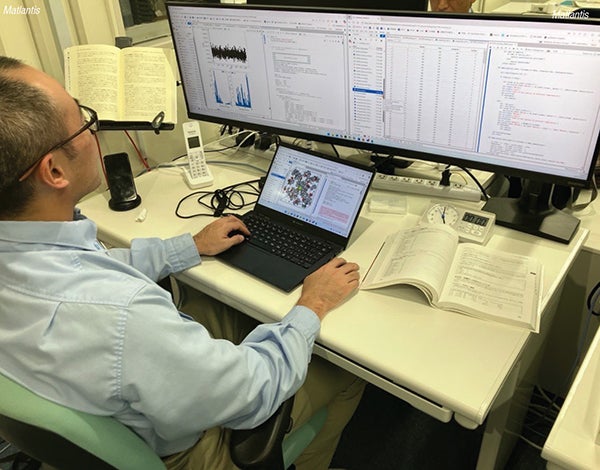
FIGURE 2. Condensing years of experimental trials into weeks or months cuts energy consumption, lessens the environmental footprint and personnel hours required for R&D activities and reduces the amount of raw materials needed for testing
This accelerated process reduced costs and resource requirements, and ultimately enabled Kuraray’s R&D teams to focus on the most valuable leads, accelerating the overall development cycle.
Sugoh noted the advantage AI simulation gave to the company: “AI simulation is transforming how we approach materials discovery. By enabling rapid evaluation of complex molecular structures and prioritizing the most promising candidates with tools like Matlantis, we expect to accelerate R&D and bring new, high-performance materials to market faster than ever before.”
New benchmarks for innovation
Matlantis’ mission is to empower researchers to explore complex materials at unprecedented speed and precision. This work with Kuraray clearly illustrates how AI-driven simulations can transform R&D workflows, helping teams quickly identify the most promising candidates to make faster and more confident decisions.
This collaboration also shows how combining deep domain expertise with advanced AI platforms can establish a new benchmark for innovation, and it is one that other R&D-forward organizations will increasingly look to follow. ■
Edited by Mary Page Bailey
Author
 Ryo Matsushima is the global sales manager at Matlantis (Email: ryomatsushima@jp-matlantis.com), where he leads international go-to-market efforts for the company’s cloud-native AI‑driven atomistic simulation platform. Based in Tokyo, his role focuses on expanding Matlantis’ reach across global markets, including North America, Europe and Asia. Matsushima’s leadership spans building customer-facing momentum and forging strategic relationships as Matlantis scales internationally through alliances with global leaders, such as the Mitsubishi Corporation, ENEOS and NVIDIA.