Compressors play a significant role in project to reduce carbon dioxide emissions at BASF facility in Germany
The “green” transformation is becoming increasingly important across the chemical process industries (CPI), and a key strategy for lowering CO2 emissions from industrial processes is the use of industrial waste heat. An illustrative example of the potential for employing waste heat to lower CO2 emissions comes from an ongoing project involving a large-scale heat pump, among the most powerful in the world, being built at the BASF (Ludwigshafen, Germany; www.basf.com) headquarters facility. BASF has identified decarbonization as a focus for its operations.
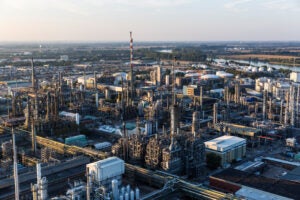
FIGURE 1. An aerial view of the Steamcracker II facility is shown here at the BASF verbund site in Ludwigshafen, Germany
The heat-pump system at BASF’s main facility aims to use waste heat from one of the largest production plants at the chemical site (Steamcracker II) as a thermal energy source for generating CO2-free steam. The use of this emission-free steam in formic acid production has the potential to reduce the greenhouse gases emitted by the process by 98% in the future.
Compressors can efficiently raise waste heat vapor to a higher temperature, allowing the energy to be used directly in production, which increases efficiency and reduces CO₂ emissions. This, in turn, boosts both competitiveness and sustainability.
The project is being realized at BASF together with plant manufacturer GKT Solutions GmbH (formerly GIG Karasek; Gloggnitz, Austria; www.gtk-solutions.com). A key component of the waste-heat-utilization project is GKT Solutions’ CompriVAP system, which combines proven components — namely a plate falling film evaporator, flash tank and a compressor cascade from PILLER Blowers & Compressors GmbH (Moringen, Germany; www.piller.de) — into a pioneering overall technological concept. CompriVAP has a hybrid design that produces completely oxygen-free steam and uses pure water as a safe and environmentally friendly working medium. Its flexible operation with infinitely variable partial-load capacity and electricity-price-optimized start-stop cycles enables economical operation, while intelligent condition monitoring increases availability and reduces maintenance costs.
Advanced compression system
Efficient compression of vaporous waste heat to a usable temperature level is important for heat-pump function. The project team developed an innovative steam-compression system is designed for both the efficiency and quality of steam generation. In a first step, waste heat is used in a flash cycle to generate flash steam under vacuum conditions. This steam is then compressed to a pressure above atmospheric pressure by six VapoFlex compressors (Figure 2) from PILLER arranged in series (line 1).
A key requirement for the downstream process is to avoid ingress of even minimal quantities of atmospheric oxygen. For design reasons, meeting this strict process requirement is a complex undertaking for the system and compressors and connecting pipelines in the vacuum area. To fulfill the requirement, a concept involving an intermediate heat exchanger, in the form of a customized plate falling-film evaporator from GKT Solutions, was selected. This prevents atmospheric air from entering the downstream process. The newly acquired live steam in the intermediate heat exchanger, which is above atmospheric-pressure conditions, is then compressed to the required pressure and temperature level by five additional VapoFlex compressor units arranged in series (line 2).
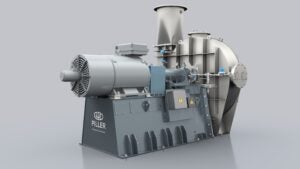
FIGURE 2. Six VapoFlex compressors, arranged in series, were instrumental in utilizing the waste heat for steam production
The inlet temperature is 57°C, and the outlet temperature is 190°C. The coefficient of performance (COP) for the full system is 3, indicating that 1 kW of electricity produces 3 kW of heat.
The result is the generation of up to 60 tons of steam per hour, or 500,000 tons of steam per year.
Besides the technologically advanced machines with impeller diameters of up to 2.25 m, the system is equipped with a modern operating-point-monitoring system. The operator is informed when limits are reached or exceeded, so that maximum machine availability can be realized.
Delivery of the full system, comprising a total of 11 compressor stages, and including the electrical drive systems and the corresponding accessory components, is scheduled for mid-2026.
Christoph Böhnisch, CEO at PILLER, says: “Our VapoLine® compressors are already being used in many heat-recovery projects throughout the world. However, the BASF project is something really special for us. Seeing our expertise in the pilot project in Germany and working together to shape the transformation fills the entire company with pride.”
Reduced CO2 emissions
The BASF facility expects to reduce CO₂ emissions by up to 100,000 tons per year as a result of this project. It is considered by the company to be an important step on its road to net-zero CO2 emissions by 2050. Thanks to the scalability and adaptability of the overall system, numerous applications with various waste heat sources are possible. The BASF project shows the great potential of industrial waste heat utilization and can inspire other industrial process industries to implement similar solutions for CO₂ reduction.
This project opens new paths in the sustainable provision of process heat in the course of the industrial transformation.
Edited by Scott Jenkins
Authors

Oscar Sgrott, Dr. Ing., is the head of process and systems engineering at PILLER Blowers & Compressors GmbH (Moringen, Germany; www.piller.de) after taking the role in 2026. Prior to that, he worked for six years as a process engineer at PILLER, where he made significant contributions to the further development of technological solutions. He earned his bachelor’s and master’s degrees in chemical engineering from FURB – University of Blumenau. He then earned his doctorate in multiphase flow at Otto von Guericke University Magdeburg, Faculty of Process and Systems Engineering. With his solid scientific training and extensive practical experience, Dr. Sgrott embodies the connection between research and industrial application. In his current role, he drives the further development of efficient and sustainable process solutions.

Kerstin Stumpf-Trautmann has served as global head of marketing & communication and press spokesperson at PILLER Blowers & Compressors since 2025. In this role, she is responsible for the company’s international brand management and communication strategy. Previously, she held various senior marketing and communications roles and made significant contributions to the strategic positioning and further development of brands and organizations. Her focus lies on the intersection of strategy, growth, and transformation. With a clear understanding of brand management, communication, and digital technologies, she develops marketing approaches that resonate emotionally while delivering measurable results. For more information about the project, click here.