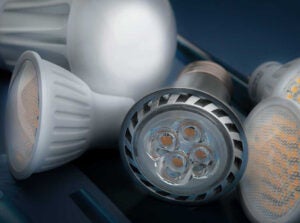
The Therma Tech product portfolio has been expanded with eight new thermally conductive grades that leverage natural graphite to deliver high thermal conductivity and cost efficiency for applications such as LED lighting, heat sinks and heat exchange systems. Natural graphite offers a lower product carbon footprint and typically requires less energy to produce than synthetic graphite, while still maintaining thermal conductivity performance. This expansion addresses the growing demand for efficient heat management across multiple end markets while including select grades with post-industrial recycled (PIR) content options to support sustainability goals.
Source: Avient
As electrification accelerates across transportation, industrial equipment, appliance, and electronics sectors, engineers face mounting pressure to manage heat more efficiently, more cost-effectively, and with less weight. Metal components, such as aluminum heat sinks and die-cast enclosures, remain a standard approach — but they carry inherent limitations: added mass, susceptibility to corrosion, complex manufacturing processes, and constrained design freedom. For original equipment manufacturers (OEMs) and product designers pursuing lightweighting strategies, metal-to-plastic conversion in thermal-management applications is an active engineering priority. The expanded Therma-Tech portfolio features several key attributes to help address the thermal management challenges facing engineers across transportation, appliance, electronics, and healthcare end markets. High thermal conductivity is enabled by natural graphite-based technology, delivering performance competitive with more costly specialty filler systems The portfolio achieves improved cost efficiency compared to existing high-performance thermally conductive technologies — making polymer-based thermal management viable for mid-tier production volumes and cost-sensitive applications Thermal performance and design flexibility is maintained from existing Therma-Tech grades, enabling drop-in evaluation against current metal or thermally conductive polymer specifications Furthermore, the grades are compatible with standard injection molding processes, limiting the need for specialized manufacturing equipment. — Avient Corp., Cleveland, Ohio