Nova Minerals Corp (Caulfield, Victoria, Australia) has announced the completion of engineering and design for its Estelle antimony pilot processing plant in Alaska.
Engineering and design covers the Whiskey Bravo front-end processing site, Port MacKenzie beneficiation plant, Port MacKenzie refinery, and supporting infrastructure.
The site’s antimony trisulfide production is engineered to meet U.S. military-grade quality specifications using a proprietary cleaner hydrometallurgical processing method.
The pilot plant is a critical first step in fast-tracking domestic antimony production in Alaska. With a modular design that enables future expansion through the addition of refining circuits — including antimony trioxide and antimony metal production — the facility will serve as a scalable processing hub for feedstock from Estelle, as well as regional and global projects.
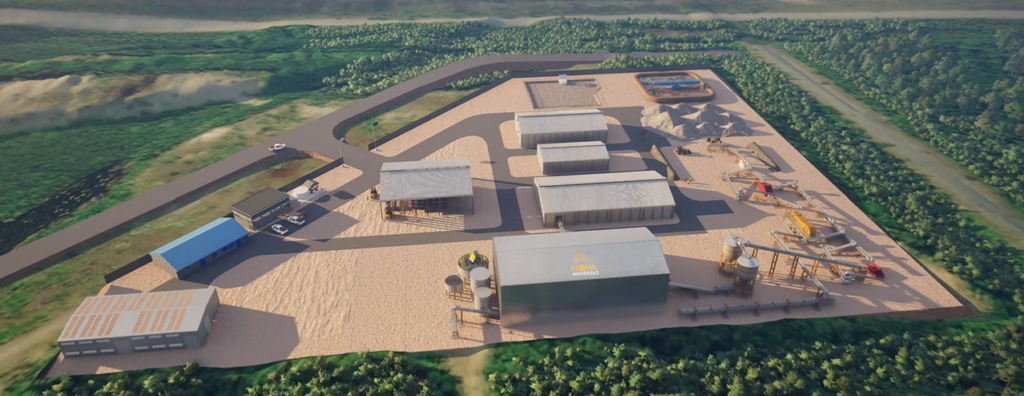
3D rendering of the proposed Port Mackenzie antimony pilot plant (Source: Nova Minerals)
Construction is expected to commence this quarter. Process plant equipment procurement is underway, with key components now delivered or in transit to the project site to support construction in the coming months. The initiative represents a major step toward building a secure, fully integrated American antimony supply chain, addressing the U.S.’s current lack of domestic antimony refining capacity at a time when China has banned exports of the strategic mineral.
Nova Minerals CEO, Mr. Christopher Gerteisen, commented: “We continue to make rapid progress on the antimony project and remain ahead of schedule, with another major milestone now completed. The engineering and design plan has been developed based on extensive metallurgical test work and process flowsheet development. With this work complete, and procurement of key equipment now finalized, the project has entered the execution phase. Ore extraction and construction of the process plant are next steps as we continue progressing toward near-term antimony production.”
The Estelle antimony processing pilot plant has been designed to treat stibnite-bearing material and produce an antimony trisulfide product suitable for sale or further downstream use. The project is structured around two principal locations:
- Whiskey Bravo Site – front-end processing, including crushing, screening, ore sorting, concentrate storage and load-out.
- Port MacKenzie Processing Facility – crushing, screening, ore sorting, beneficiation, refining, product recovery, utilities, reagent systems, infrastructure and logistics
After collecting bulk sample material from two locations (Stibium and Styx) within the Estelle Project claims, the material will be transported to Whiskey Bravo for crushing and initial sorting. Select sample material will then be transported via air or snow road to Port MacKenzie for further processing.
Processing at Port MacKenzie will include concentration and refining of the antimony ore using a proprietary cleaner hydrometallurgical processing method to make the final antimony trisulfide product.
The refined antimony product will then be filtered, dried, and bagged for shipment.
With engineering and design complete, Nova has advanced to procurement and construction readiness, with major equipment packages progressing and over 40 containers currently on route to Port Mackenzie for delivery in the coming weeks.
The project has capitalized on a unique opportunity to acquire key equipment from a recently decommissioned, modern beneficiation circuit with a limited operating history from a North American processing facility. The equipment is well suited to the proposed antimony pilot plant flowsheet and is expected to reduce procurement lead times, improve capital efficiency, and accelerate the transition from engineering to construction and operational readiness.
Major equipment items procured include:
- Crushers
- Ball mill (Figure 3)
- Ore sorters (Figure 4)
- Screens (Figure 6)
- Flotation cells (Figure 5)
- Conveyors