With the world’s population projected to reach around 9.8 billion by 2050, the pressure on agricultural systems to deliver higher yields – despite increasingly degraded soil conditions and finite nutrient resources – continues to mount.
For fertilizer producers, the challenge is threefold. Firstly, there’s the need to develop multi-nutrient fertilizers that respond to varying soil deficiencies and farming needs. Secondly, production has to be increased while also reducing emissions of dust and off-gas. And thirdly, this all has to be achieved against a backdrop of ageing machinery that has already been pushed past its original design capacity.
For many producers, IPCO’s Rotoform granulation system has already proved to be the ideal solution. And the recent introduction of a new high-capacity system for fertilizer finishing promises to accelerate this move towards more effective multi-nutrient products.
Controlled, consistent pastillation
Used and trusted in fertilizer plants across North and South America, Europe, Asia and Australia, the Rotoform system offers an environmentally friendly pastillation process, eliminating the need for recycling, crushing or bulk cooling.
This low-emission, low-energy pelletization solution produces high-quality granules with excellent handling and storage properties, making it ideal for new installations, upgrade projects, removing bottlenecks, or the production of special fertilizer products.
The system operates on a simple but highly controlled process. A liquid fertilizer melt is deposited onto a continuously running stainless steel belt in the form of uniformly sized droplets. As these droplets travel down the belt, cooling water sprayed onto the underside extracts heat, converting them into solid pastilles with high mechanical strength and consistent shape.
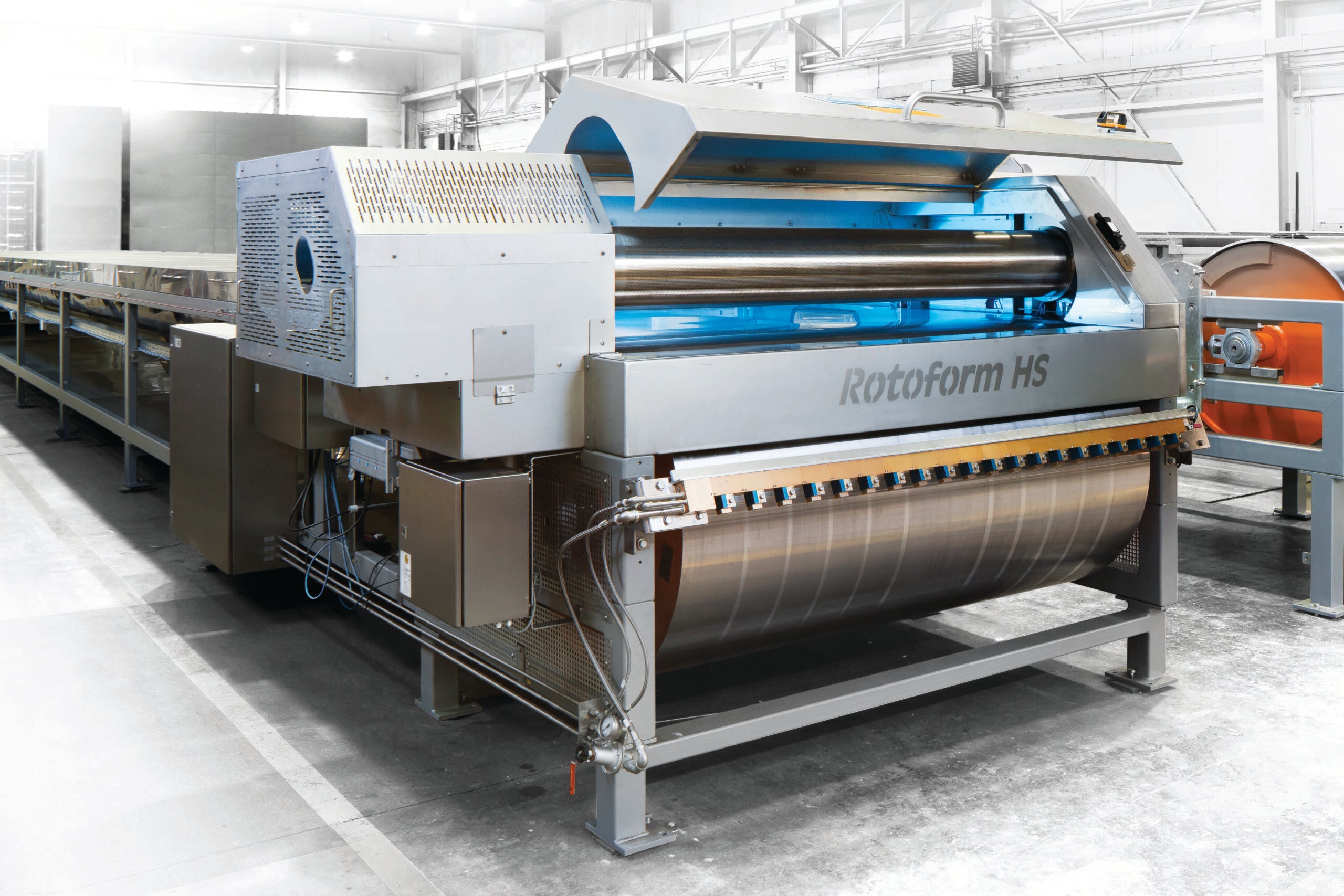
One of the key environmental advantages of this process is the separation between cooling water and product: there’s no direct contact, eliminating the risk of cross-contamination and minimizing water usage. In addition, the Rotoform system generates virtually no dust or off-gassing, ensuring a safe, clean working environment with very low emissions.
Rotoform technology offers significant advantages over traditional prilling or granulation methods:
- Consistent particle size:Adjustable between 1–5 mm
- High crushing strength:Suitable for both agricultural and technical-grade products
- Low emissions:Negligible dust and vapor generation
- Low power consumption:Efficient use of energy and cooling water
- Minimal waste:No need for crushing, screening, or recycling
Superior handling of NPK and other mixes with Rotoform XG
The Rotoform principle has undergone constant evolution since it first launched, with the development of a whole range of models designed for specific applications. The recently introduced Rotoform XG, specifically developed for fertilizer finishing, has been designed to handle of low viscosity melts containing solid particles.
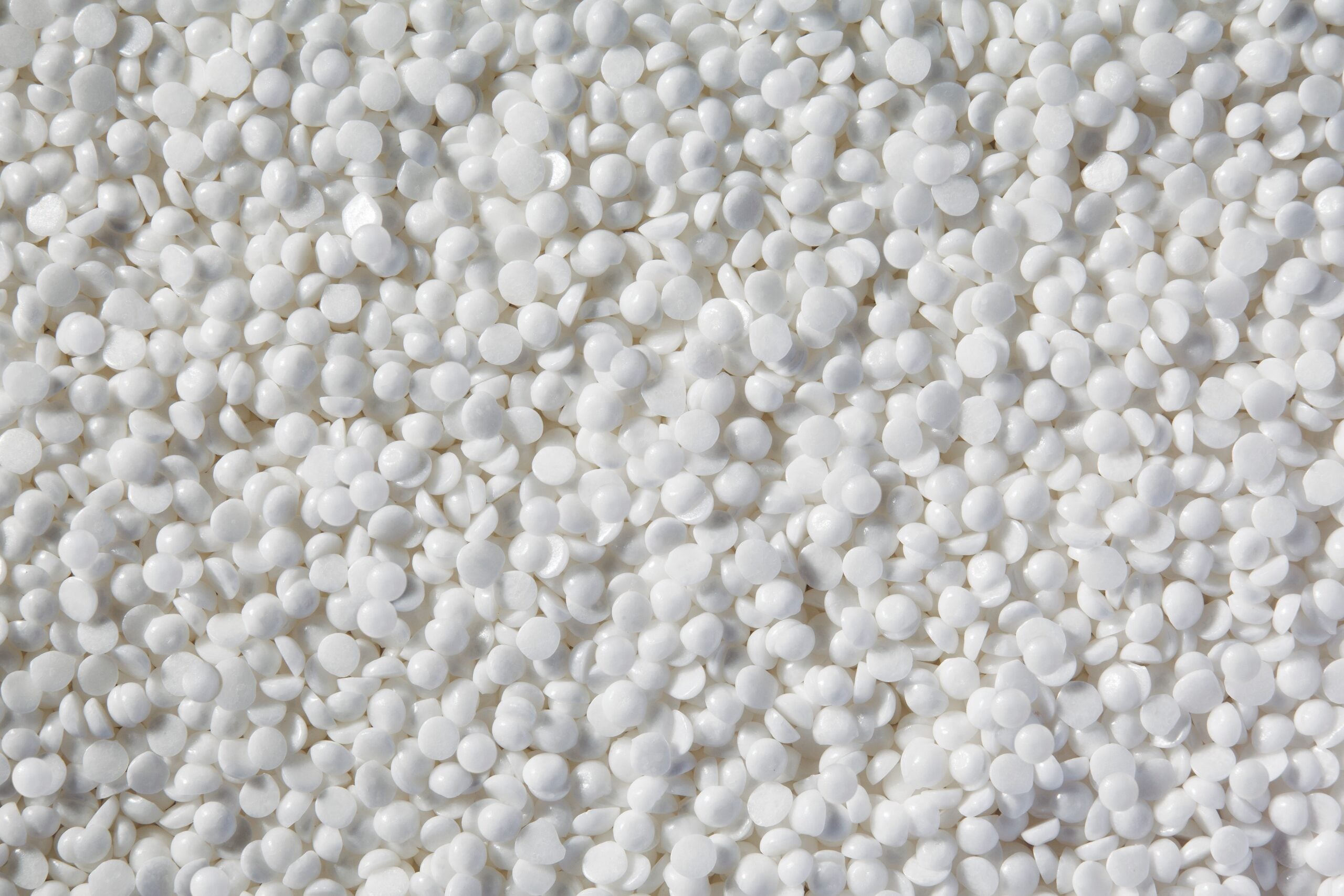
Suitable for applications such as sulphur bentonite and urea mixes as well as NPK and other fertilizers, the XG model can convert solid-containing product melts into consistent, high quality pastilles from 2-4 mm diameter. It is also able to process other products containing solid additives or contaminant particles up to 200 μm in size. The XG has a throughput capacity of up to 10 t/h depending on the product, more than twice that of IPCO’s base model Rotoform.
This new system also incorporates innovations including a sliding base frame that allows the Rotoform to be pulled out for easy access, and a floating stator that makes cleaning and maintenance much easier. A bearing system with fewer parts and increased wear resistance further reduces maintenance requirements.
IPCO can supply upstream solutions including blending and grinding units to combine liquid and solid products into suspensions, enabling the production of specialty urea products such as:
- Urea + sulphur
- Urea ammonium sulphate (UAS)
- Urea + potassium
- Urea blended with micronutrients
Other special fertilizers that can be produced on these systems include ammonium nitrate, calcium nitrate, magnesium nitrate, and sulphur bentonite. Precise dosing and mixing capabilities mean that producers can tailor nutrient ratios to specific crop needs or soil deficiencies.
The Rotoform system has the additional benefit of supporting quick changeovers with minimal downtime, enabling agile response to market demands. This opens the door to value-added products that can command premium pricing in competitive agricultural markets.
IPCO’s engineering teams can deliver full end-to-end solutions, from upstream mixing and dosing systems to downstream handling, storage, and bagging.
Scalable, modular design for every plant size
For operations where requirements exceed that the capacity of a single Rotoform XG, multiple Rotoform lines can be run in parallel to achieve throughput levels of more than 2,500 mtpd. The modular nature of the system means that lines can be activated or shut down based on demand, improving operational efficiency and reducing overhead during low-production cycles.
For companies looking to test new formulations or evaluate the system’s performance under real-world conditions, a complete Rotoform-based production line is available for customer trials at the company’s Productivity Center close to Stuttgart, Germany. Here, customers can run pilot batches using their own materials, validating performance, evaluating emissions, and optimizing product quality before scaling to full production.