 Most hydrogenation projects begin with a familiar mandate: a promising Business Case, challenging timelines, and a facility that has to robustly & safely run multiple products under strict GMP rules.
The real challenge is not design itself, rather defining a reactor that truly fits the project for the chemistry, batch strategy, cleaning requirements and of course the regulatory framework associated with this operationally exacting industry.
This short article outlines a practical method for doing just that.
Start with the Process Envelope, not the formula
Successful projects begin with well‑defined User Requirements and whilst it’s great to know the desired operational parameters like pressure, temperature, viscosity, hydrogen uptake, heat‑release behaviour, catalyst characteristics, other key essentials like safety & productivity, process flexibility, consideration of hygienic construction (i.e. GMP Readiness) and heat transfer concepts, are crucial to building a reactor that performs consistently across campaigns and supports a stable, compliant operation.
A deeper understanding of the three interconnected fundamentals of Safety & Process Flexibility, Mass Transfer & Heat Removal and Cleanability will accelerate your concept development towards a viable reactor design.
Design for Multi‑Batch, Multi‑Product Operation
Few facilities today run a single product at a single scale. A reactor that performs well at one fill level or viscosity but falters in smaller campaigns quickly becomes a bottleneck. Early in the design phase, define the operating window you need to cover:
- Reaction chemistry
- Minimum and nominal batch sizes
- Viscosity range
- Catalyst slurry properties & dosing approach
- Solvent families
- Pressure/temperature envelopes
The key is specifying the required performance over the full operating range and validating proposals with data or modelling that reflects it. Reactor geometry, nozzle placement, baffles, and impeller stack height can then be tuned to keep performance consistent across that window.
Heat Transfer: Balancing Performance and Cleanability
Heat removal in hydrogenation is a critical design constraint: hydrogenation reactions are generally exothermic demanding fast, uniform cooling. Internal heat exchangers can add valuable surface area but may also create cleaning challenges.
Mass transfer (MT), heat transfer (HT), selectivity and catalyst lifetime are intrinsically linked to each other.
Homogenous Mixing à Low Gradients (temp, concentrations) à Mass Transfer à Heat Transfer
When everything works as it should the reaction is optimised for performance whilst being repeatable, predictable and with high selectivity.
There needs to be a safe transfer to into Production scale and balance between;
- Mass Transfer i.e. getting enough hydrogen in solution per unit time
- Heat Transfer i.e. balancing a higher productivity vs. a higher heat transfer requirement
- Cleanability i.e. finding the sweet spot between performance HT capacity vs. yield quality
Before ruling in or out internal coils, the best approach is to evaluate all options objectively.
Using thermal modelling, cleanability assessments, and process‑specific calculations, jacket performance, internal coil concepts, and alternative geometries can be compared side by side.
When a coil‑free design is preferred, the achievable (but necessarily reduced) heat‑transfer capacity is defined by the physics of the system, so batch‑time implications are understood early.
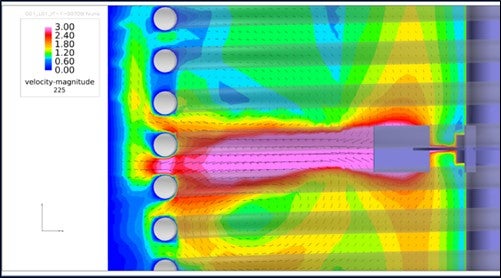
Figure 1: Heat Transfer Calculation by EKATO
Where internal coils are not selected, heat transfer can be enhanced through:
- High‑efficiency external jacket designs matched to vessel geometry
- Agitator‑driven flow patterns that minimise hot spots
- Integrated thermal modelling ensuring stable temperature profiles across batch sizes
This balanced approach ensures each reactor achieves the required thermal performance while maintaining the cleanability, GMP compliance, and operational reliability essential in modern hydrogenation campaigns.
Mixing Is the Heart of Hydrogenation
For Hydrogenation agitation determines outcomes. The right mixing system maintains catalyst suspension, driving efficient mass transfer which links to heat transfer, whilst stabilising the reaction across changing viscosities and fill levels.
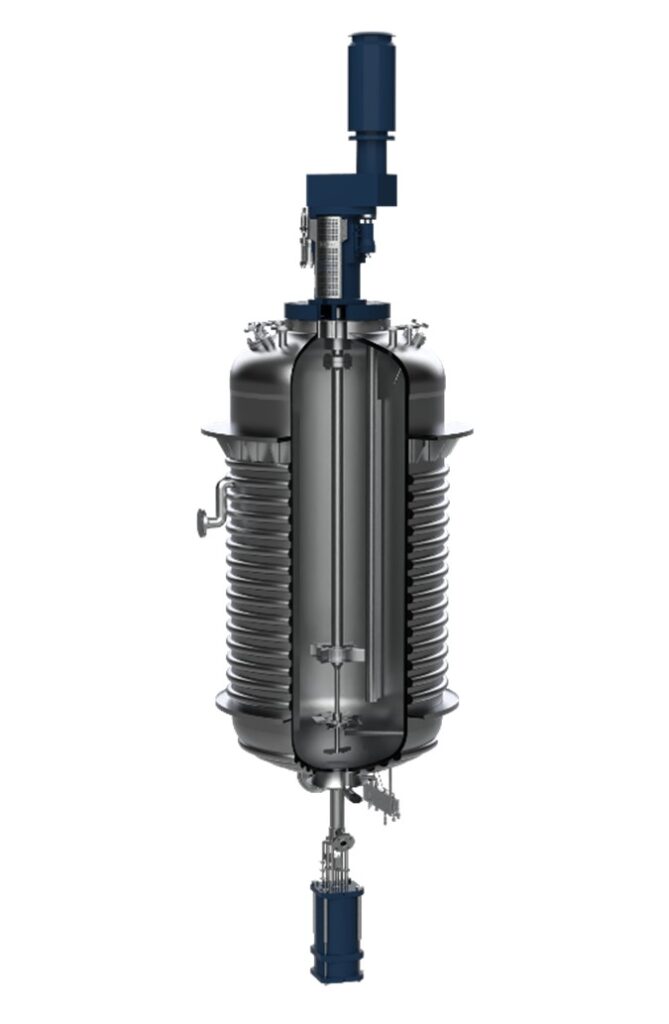
Figure 2: Typical Hydrogenation Reactor
In practice, high performance comes from a good mixing strategy. Some points to keep in mind would be:
- Hydrogenation impeller arrangements maximise gas-/liquid interfacial area.
- Self‑aspirating systems can intensify dispersion.
- Axial‑flow impellers create homogeneous suspensions for optimised heat removal
- Stacked impellers help with variable batch sizes for multi‑product campaigns
- Try to avoid sacrificing mass‑transfer performance in conjunction with other priorities
- Adapt the design for your expected batch sizes
- Emptying & Filling is important i.e. bottom clearances and vessel geometry matter
- Vessel internal, i.e. baffles interact with mixing
A well‑engineered agitator does more than mix: it stabilises the process.
Cleanability: proved, not assumed
In a multi‑product environment, cleanability is critical. It dictates campaign changeover time, validation effort, and ultimately compliance. If the process design approach described above is done, a 3D design can be created which in turn leads to early CIP simulations.
Two tools make the difference:
- CIP Modelling: simulate spray patterns, flow velocities, shear, drain paths, and potential “shadow” zones around internals, evaluate nozzle types and locations prior to manufacture while changes are still cheap.
- Riboflavin Testing: a UV‑tracer tests on bespoke equipment demonstrates whether all internal surfaces are reached and rinsed effectively after fabrication.
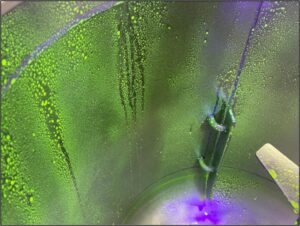
Figure 3: Riboflavin Testing by EKATO
Figure 3: Riboflavin Testing by EKATO
The goal is straightforward: design out cleaning risks early and verify cleanability before the reactor ships. Doing both steps typically see smoother IQ/OQ, faster validation, and fewer ´surprises´ during the first campaign.
Practical Guidelines for Your Next Project Meeting
A focused checklist can help align internal teams and benchmark supplier proposals. This list aims to standardise proposals and quickly distinguish robust engineering from generic offerings.
Process Envelope
CONFIRM key operating ranges (P/T, viscosity, uptake, batch size) for meaningful design
Heat‑Transfer Study
DEFINE cooling/heating duty & how cleanability is ensured.
Mixing Strategy
ENSURE impeller choices work across the operating window, supported by data or modelling.
Cleanability Plan
CHECK CIP coverage expectations, agree how riboflavin testing will confirm results.
Multi‑Product Readiness
PROVE consistent performance under varying fills, solvents, viscosities, and slurry behaviours.
Qualification Path
CONFIRM which FAT/SAT tests and which documents will support IQ/OQ and validation.
Where EKATO Fits
This approach is how EKATO works in practice: start with clear process requirements, compare design options transparently, and engineer the reactor around the defined operating envelope. Heat Transfer trade‑offs are quantified with the customer; cleanability is validated through early CIP modelling and riboflavin testing at FAT; and impeller configurations are selected to ensure stable mass transfer and temperature control across the full operating window.
For teams planning their next hydrogenation reactor, we can support you, from early feasibility and modelling through fabrication, FAT, and Commissioning, with one consistent objective: a reactor engineered to your requirements and ready for validation.
For More Information, visit our website: https://www.ekato.com/products/process-plants-and-units/hydrogenation-plants-and-hydrogenation-reactors/