Enhanced thermal coupling and physical pipe conditioning techniques combine the accuracy of traditional thermowell-inserted thermometers with the application flexibility of non-invasive temperature measurement methods.
Temperature is one of the most critical process variables in these environments, and its accurate measurement is fundamental for control, safety, and productivity. Measuring temperature effectively in chemical processes has traditionally entailed an ongoing balancing act between accuracy, and application flexibility and convenience. Meanwhile, plant personnel have many responsibilities, including maximizing production efficiency, ensuring personnel safety, maintaining product quality, and upholding regulatory requirements.
For applications with high-precision requirements, one of the only feasible conventional measurement methods was via direct contact with process media or using a thermowell for a protective layer. This did not present an issue during plant construction, but it added layers of complexity and inconvenience during retrofits, especially in situations where continued plant uptime was needed. While these methods were sometimes best-suited for the application, they often raised challenges both in the design phase and during operations.
Pipe-surface temperature offered a nonintrusive avenue for measurement, but until recently, these solutions were only available with less accurate methods. Algorithmic electrical compensation was the most accurate because it accounted for the influence of ambient surroundings outside of the pipe on the sensor’s measurement, but while this methodology offered convenience, its applicability was still limited to scenarios where a level of measurement uncertainty was acceptable.
Therefore, traditionally, applications required a tradeoff between operational flexibility and confidence in measurement accuracy, and until recently, plant personnel had to weigh requirements for accuracy against the negative impacts of process shutdowns and downtime losses to determine the best approach. Today, however, physics-based design enhancements are easing the decision tug-of-war, combining the accuracy of conventional thermowell-installed sensors with the simplicity of non-invasive retrofits or new installations.
Temperature measurement instruments and applications
Traditionally, obtaining a highly accurate temperature reading inside of a pipe required direct contact with the process media. This was achieved by using an invasive sensor inserted directly in the pipe, or more commonly into a thermowell — a permanent, sealed tube protruding into the process flow — exposing the sensor directly to the process media. Thermowells protect sensors from fluid pressure, flow and corrosive effects, but they introduce challenges during design and operation.
Installing a thermowell can be both costly and time-consuming, requiring shutting down or diverting the process, cutting into the pipe, welding a flange or fitting and conducting inspections to ensure integrity (Figure 1).
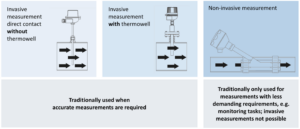
FIGURE 1. Traditionally, chemical processors relied on invasive instrumentation when high-precision measurement was required
This can cause downtime and introduce potential leak points, which are especially risky when handling high pressure, high temperature, and/or hazardous process media. Furthermore, high flow velocity applications subject the thermowell to vortex-induced vibrations, which can cause mechanical failure and a breach of process containment. Thermowell maintenance also requires a complete process shutdown.
To address these challenges, engineers can deploy non-invasive surface-mount sensors, which are strapped to the outside of a pipe. These solutions can be much simpler and safer to implement, requiring mere minutes for installation or relocation, without the need for process interruption, drilling or welding. This makes them ideal for retrofits or adding temporary measurement points, or for use on small-diameter pipes where invasive measurement is impractical.
Most surface-mount sensors, however, have limitations in accuracy since they do not measure the temperature of the process media directly. Instead, they read the temperature at the external pipe wall, which continually loses heat to the environment.
Some non-invasive sensors employ electrical compensation, using an algorithm and two separate sensors: one to measure the pipe’s surface temperature and the other to measure the ambient air temperature. These two readings are then used to calculate an estimated internal process media temperature, compensating for heat loss based on thermal properties of the pipe and process media.
While this lessens the accuracy conundrum, real-world conditions are never completely stable, and the rate of heat loss can change dramatically and unpredictably due to changes in air temperature, wind speed, rain and other environmental conditions. Compensation algorithms cannot reliably account for these dynamic variables, and slow response times further hamper precise process control. As a result, these non-invasive sensors are typically relegated to less critical monitoring tasks, while direct contact of thermowell-installed sensors are required for high-precision applications.
Accuracy through physics: thermal temperature sensors
Addressing these and other issues, non-invasive temperature measurement innovations are shifting away from electrical compensation in favor of physics-based design, which focuses on an enhanced thermal coupling to achieve accurate measurement with comparable response time to sensors in a thermowell (Figure 2). Instead of calculating estimated heat loss through the pipe, this new method minimizes it through substantive thermal connection to the process media, effectively rendering the pipe wall itself an extension of the sensor.
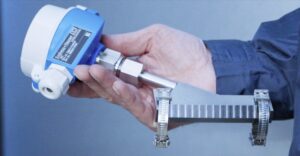
FIGURE 2. Non-invasive thermometers with enhanced thermal coupling elements approach the accuracy of conventional thermowell-installed sensors, while providing non-invasive instrumentation safety and flexibility
This is accomplished through five key principles for accuracy.
- Large contact area. Design capitalizes on a pipe wall’s greater contact area with the process medium compared to the tip of a thermowell, which enables the pipe’s temperature to adapt to and represent the process media’s temperature with high fidelity.
- Better heat transfer via a coupling element. The key to effectiveness lies in the mechanical makeup of the thermal coupling element. This component must be precision-engineered to match curvature, size, and other pipe properties. Made from high-performance materials with optimized geometry and wall thickness, the element creates a direct thermal bridge between pipe surface and the sensor. A heat transfer material is used to fill microscopic imperfections on the pipe surface, ensuring a continuous conductive path for thermal energy.
- No air gap. In traditional thermowell installations, a small air gap often exists between the inner wall of the thermowell and the measurement sensor insert, creating insulation that slows response time and dampens temperature changes. Non-invasive coupling designs eliminate this source of error by ensuring direct and gap-free contact between the sensor and the coupling element (Figure 3).
- Optimized sensor choice. Small sensor inserts—on a 3mm order of magnitude—are used to reduce thermal mass of the sensor, enabling quick reaction to temperature changes transferred from the pipe wall.
- Insulation. To minimize environmental influence, the pipe should be insulated at least four inches upstream and downstream of the measurement point. This ensures ambient factors like wind and rain are physically blocked from influencing the pipe wall temperature measurement.
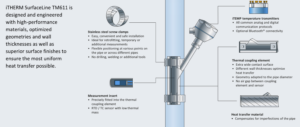
FIGURE 3. Non-invasive mounting designs ensure direct contact between the sensor and the coupling element
By addressing measurement challenges using physics, this approach creates a thermally stable and reliable system for direct measurement, rather than estimation. These provisions thermally optimize the pipe to mirror the temperature of the process media inside it.
Success in demanding applications
The benefits of this physics-based approach are demonstrated in some of industry’s most challenging environments.
Offshore crude oil refining
Seeking a reliable solution for retrofit and temporary sensor installation, an offshore oil platform operator installed a non-invasive thermometer with enhanced thermal coupling element on an 18-inch pipe, fully exposed to variable wind and ambient temperatures. Alongside it, the company installed a traditional invasive thermowell-situated sensor, and a high-end non-invasive sensor with electrical compensation for process value output.
The company conducted 1-day, 10-day, and 30-day trial periods, and the readings tracked the invasive thermowell’s readings almost perfectly under all conditions (Figure 4). By contrast, the electrically compensated sensor showed significant deviations, especially during overnight temperature drops and periods of high wind, in which its compensation algorithm was unable to keep up with environmental changes.
This test provided definitive datapoints for the value and reliability of a flexible physics-based design.
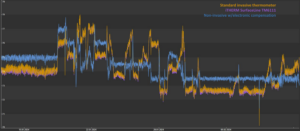
FIGURE 4. 30-day results, in which the non-invasive sensor reliably follows the temperature development of the process media (as measured by the thermowell-installed sensor, orange line) under all circumstances, while the non-invasive sensor with electrical compensation (blue line) is affected by environmental influences
Power plant steam line
In power plants, operators are often required to maintain stable temperature on primary steam pipelines while units are in standby mode. In one such application, the existing invasive sensor on the line was housed in a massive thermowell — required to reliably withstand high-velocity steam — but its large thermal mass resulted in slow response times, confounding precise temperature control. Because of the slow feedback, the control system was injecting too much water.
To address this shortcoming, plant personnel replaced the existing thermometer with a geometrically-optimized sensor and thermal coupling element, requiring just minutes to clamp on and install in place (Figure 5).
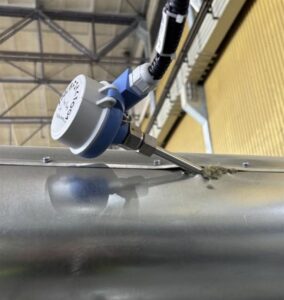
FIGURE 5. This non-invasive thermometer with enhanced thermal coupling element can be installed or relocated in minutes with no drilling or welding required
Its significantly lower thermal inertia facilitated faster response times, enabling the control system to operate more smoothly and alleviate water injection overshoot. The design also empowered the team to adjust the sensor location to optimize control loop performance.
Improving efficiency with process instruments
The refinement from algorithmic electrical compensation to physics-based design in non-invasive temperature sensors is enhancing productivity throughout the process industries. While processors were once required to compromise between the simplicity of surface sensors and the accuracy of thermowell-inserted thermometers, these advancements now provide the best of both approaches.
Non-invasive industrial temperature sensors with enhanced thermal coupling elements provide accurate and reliable temperature data with fast response time. Additionally, they improve plant safety by eliminating leak points, reduce installation and maintenance costs by removing the need for process shutdowns and welding, improve reliability, and increase productivity and uptime. By prioritizing mechanical and thermal design, these modern sensors elegantly solve the long-standing accuracy versus simplicity tradeoff challenge for temperature measurement.
Edited by Scott Jenkins
Acknowledgement
All figures courtesy of Endress+Hauser
Author
 Greg Pryor is the Product Marketing Manager at Endress+Hauser USA for Temperature and Systems Products. He has national responsibilities for the strategic direction of the temperature business unit including product portfolio management, technical and application support and marketing and business development for temperature and systems products. He has a BBA in marketing from Texas A&M University. Based out of Houston, TX, Greg has over 20 years of experience in temperature measurement instrumentation.