A novel flare-stack configuration utilizing plasma technology has transitioned from the research stage to a commercial-scale operating site
Amidst ambitious sustainability goals and the drive toward “net zero” emissions, engineering and research teams across the globe are developing and evaluating a wide range of technologies to help reduce their carbon footprint. From CO2 capture to circular raw materials to novel gas-destruction methods, the drive toward lower emissions is also fueling a boom of innovation.
In 2023, a team of researchers and engineers from The Lubrizol Corp. (Wickliffe, Ohio; www.lubrizol.com) and the University of Nottingham (www.nottingham.ac.uk) published research findings on the development and operation of a plasma-based “electric flare stack” in the journal Industrial & Engineering Chemistry Research. Combining non-thermal plasma with a vanadium co-catalyst, the technology demonstrated effective pollutant destruction while mitigating many of the environmental burdens of traditional combustion-based flare stacks.
In subsequent years, a related but distinct plasma technology was adapted for larger‑scale operation at Lubrizol’s manufacturing plant in Hamburg, Germany. This adjacent approach has enabled the site to achieve a carbon content target of just 50 mg CO2 per cubic meter of air (Figure 1). Work is now progressing to apply this capability to more difficult‑to‑abate VOCs, in collaboration with additional European partners.
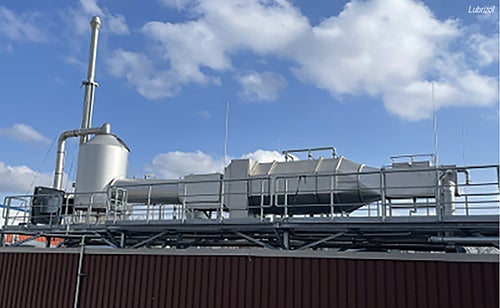
FIGURE 1. The plasma-based vent treatment system was installed in Hamburg, Germany
Plasma-based destruction
In the search for new methods to address air pollution from industrial operations, nonthermal plasma has been positioned as a promising pathway. It can effectively degrade volatile organic compounds (VOCs) and other pollutants of concern via collisions with its high-energy electrons. The sustainability benefits are clear — plasma is generated electrically, meaning that these processes can be powered from renewable sources, such as wind or solar, whereas traditional flare systems require high temperatures and large volumes of natural gas. Electrical operation also enables much faster startup times when compared to conventional flare systems, which must achieve steady-state operation conditions prior to full-scale operation.
The collaboration between Lubrizol and University of Nottingham started off very small, with the partners simply evaluating the effectiveness of an integrated plasma system for air-pollutant destruction, and determining if it could reach the efficiency required for environmental permitting at commercial manufacturing facilities.
Lubrizol worked with its subject-matter experts focused on flare stacks and boilers to develop a scope for the system, with the target of achieving greater than 99.9% destruction efficiency. Concurrently, Lubrizol was in the early phases of evaluating the deployment of plasma-type flare technologies into its processes. But the plasma technologies alone could not achieve the necessary selectivity for conversion to CO2 so that only a single-gas outlet would come from the flare stack. Looking at the catalysis side of the equation, the high selectivity needed for pure CO2 could be achieved through the use of a synergistic vanadium oxide (V2O5) catalyst in conjunction with non-thermal plasma treatment.
Early work carried out with the University of Nottingham examined the breakdown of isobutylene as a simulated vent gas within a non‑thermal plasma environment. This achieved a high isobutylene conversion, but was unselective and produced a mixture of CO and CO2 due to partial oxidation. However, when combined with a V2O5 co‑catalyst, the system enabled complete oxidation, resulting in full isobutylene conversion with very high selectivity towards CO2.
Industrial installation
Lubrizol’s Hamburg site proved ideal for deploying a landmark early-development plasma technology. The site was already looking at new ways to mitigate gas emissions while also planning to replace its flare stacks.
The plasma system currently installed in Hamburg represents the first stage of a multi-step exhaust-air treatment process, which includes additional cleaning stages, such as a scrubber, an ultraviolet (UV) ray chamber and an active-carbon catalyst bed. In this setup, the plasma acts as a pre-treatment, initiating chemical degradation processes in the vent air to enhance the overall effectiveness of downstream purification steps.
The installation in Hamburg replaced a platinum catalytic system that required the vent gases to be heated to 300°C from an inlet temperature of about 35°C at an airflow rate of 300 m3/h — hence, daily consumption of natural gas was approximately 610 kWh (61 m3), which only served two of the site’s three manufacturing halls.
In contrast, the newly installed plasma flue handles an exhaust air flow of 1,000 m3/h, effectively covering all three manufacturing halls in Hamburg. With a daily power consumption of approximately 160 kWh, the plasma system offers a significantly more energy-efficient solution compared to the former catalytic setup.
Next steps
The next generation of plasma‑catalyst flue technology, developed through the ongoing collaboration with the University of Nottingham, is currently under development. In parallel, the team is evaluating the applicability of the system to a broader range of carbon‑containing vent streams, including saturated hydrocarbons and alcohols. Building on the successful deployment at the Hamburg site, Lubrizol is now assessing opportunities to deploy similar plasma‑based flare systems at additional European manufacturing locations.
Edited by Mary Page Bailey
Author
 Gary Walker (Email: gary.walker@lubrizol.com) is a Technical Fellow for sustainable chemistry at The Lubrizol Corp. He has over 20 years of experience in the chemicals industry, with special focus on research and development activities surrounding colloids, surface chemistry, surfactants and more. He holds both Fellow and Chartered status with the U.K.’s Royal Society of Chemistry and holds a Ph.D. in organic chemistry from the University of Nottingham.