Artificial intelligence (AI) and machine learning (ML) are hot topics across manufacturing, but real-world adoption of predictive maintenance technology varies across the chemical process industries (CPI).
Deloitte estimates that unplanned downtime costs industrial manufacturers approximately $50 billion annually, while poor maintenance strategies can reduce a plant’s productive capacity by 5–20%. Other oft-cited industry estimates put the average manufacturer at approximately 800 hours of equipment downtime per year, or more than 15 hours per week. Yet the business case for predictive maintenance can look very different from one facility to the next.
Industries such as mining, pulp and paper, power generation, chemical processing and cement operate equipment in demanding environments where an unexpected failure can have an immediate and significant impact on production. When an unscheduled shutdown costs tens of thousands of dollars or more, knowing the potential for equipment failure in advance has significant value.
This also explains why predictive maintenance has gained traction faster in some applications than others. For plants that already have effective preventive maintenance programs and relatively low consequences from an unexpected equipment failure, the value is less immediate. But in operations where a single failure can stop a process for hours, the economics are much easier to justify.
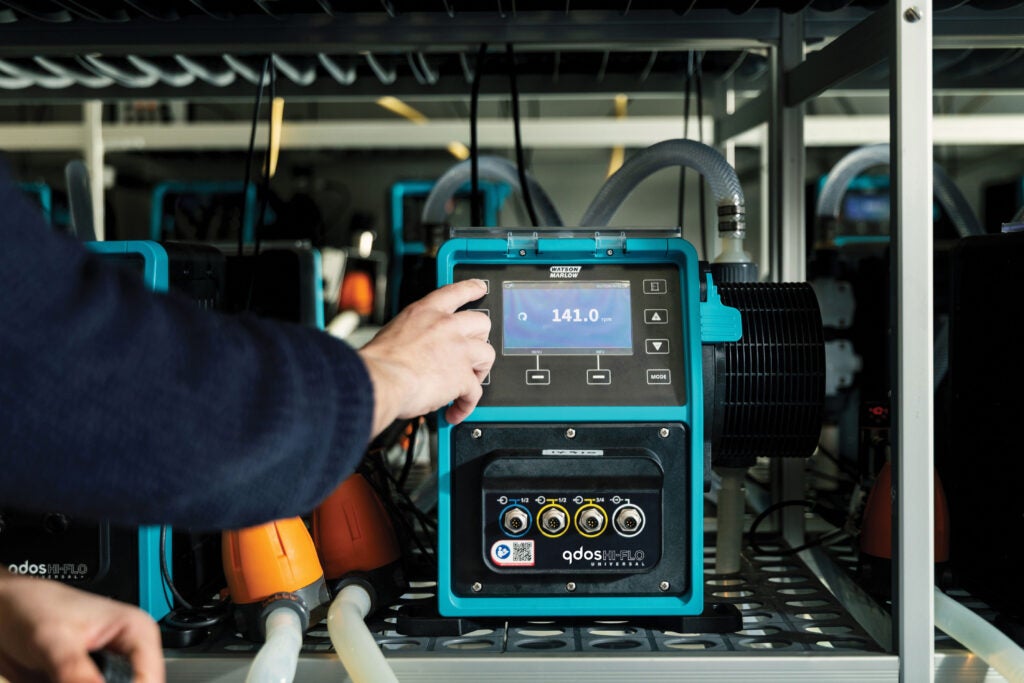
Source: Watson-Marlow
The crushing cost of downtime: What does an unexpected failure really cost?
Such costs go far beyond replacing a damaged component. An unplanned shutdown can mean lost production, idle operators, emergency maintenance, overtime, expedited parts, product loss and the time required to bring the process back online.
The consequences can be especially significant in mining and other heavy-duty applications. Unplanned downtime can cost between $50,000 and $200,000 per hour depending on the asset and operation, including lost production, emergency repairs and secondary impacts.
Consider equipment that is beginning to show signs of deterioration on Monday while the plant has a scheduled maintenance window on Saturday. Without visibility into that issue, the equipment may fail on Wednesday and force an emergency shutdown. But if operators can identify the change early enough, they may be able to continue operating safely until Saturday and address the issue during the planned outage. And this shifts the conversation entirely from emergency response to scheduled intervention.
Heavy-duty process industries and predictive maintenance adoption
Heavy-duty process industries frequently operate equipment continuously, thus placing demanding loads on pumps, motors and other process equipment.
One illustrative example is a pump feeding a process stream in a mining or cement operation. The material being handled can gradually build up in the suction line, restricting flow. Left unaddressed, the restriction can shorten component life or eventually contribute to an unexpected shutdown.
Monitoring changes in pressure can provide an earlier indication that operating conditions aren’t normal — instead of waiting for a pump to fail, the maintenance team can investigate the cause and potentially schedule a system flush during the next planned outage.
Pressure is only one example. Depending on the equipment and failure mode, indicators can include flow, vibration or motor temperature. An increase in motor temperature, for example, may indicate that equipment is being asked to work harder than expected. Changes in flow can signal deterioration in pump performance or other process conditions that warrant investigation.
Predictive maintenance begins with understanding the process.
Delivering clear value from the field
Predictive maintenance can provide value in two related ways: reducing the likelihood of shutdowns and allowing plant personnel to make better use of their time.
Many plants operate with maintenance and engineering teams that are already stretched across multiple responsibilities. Traditionally, personnel may need to perform routine checks simply to confirm that equipment is operating normally.
Connected monitoring can send information to a plant control system, programmable logic controller (PLC) or supervisory control and data acquisition (SCADA) system and alert personnel when a condition requires attention. A good mindset for plant operators is to assume everything is okay until it isn’t.The value of monitoring is that personnel do not have to spend their time continuously checking a system that is operating normally; they can be alerted when something changes.
This level of connectivity doesn’t remove the need for experienced plant personnel. It just allows them to spend less time checking equipment that is operating normally and more time addressing the systems that really need their attention.
Data from the U.S. Department of Energy show that a predictive maintenance program can cut maintenance costs by 25–30% and reduce downtime by 35–45%.
Start with the failure mode
You’ve got to understand the process. One of the easiest mistakes is to begin with the technology. Adding pressure sensors, vibration monitoring or AI analytics because those capabilities are available doesn’t necessarily make a process more reliable. Operators should first identify the failures they are trying to prevent.
If line clogging is the primary concern, pressure changes may be important indicators. If motor overheating tends to precede a failure, temperature may be more relevant. If mechanical wear produces a measurable vibration pattern, vibration monitoring may provide the earliest useful warning.
There is no single set of measurements that will work across applications. Even within the same industry, equipment and operating conditions can vary enough to change which data are useful.
Determine whether the economics support it
Operators should consider more than the replacement price of the component. Cost calculations should include lost production, labor, wasted material, emergency repairs, expedited parts and the time required to restart the process. Nobody’s sitting around waiting for that failure. When an unexpected problem occurs, people have to stop the work they are already doing and redirect their time toward the emergency. That disruption is part of the true cost of downtime.
A facility where an unexpected failure creates little process disruption may find that an established preventive maintenance schedule is enough. A facility where the same type of failure shuts down a high-value process for several hours may reach a very different conclusion.
Decide how the data will be used
Plants also need a plan for collecting, transmitting and acting on the data.
Some facilities may bring equipment data directly into their existing PLC or SCADA environment. Others may use external monitoring platforms. Each approach raises practical questions about connectivity, data access and cybersecurity.
Remote or underground installations may have limited cellular connectivity. Other facilities may have policies restricting external access to operating data. If outside specialists are expected to analyze equipment performance, the plant must determine how they will securely receive the information they need.
These considerations should be addressed before deploying monitoring technology rather than after sensors have been installed.
Turn alerts into maintenance actions
An alert that operating conditions have changed should connect to a defined response: inspect the system, flush a line, order a replacement component or add a task to the next scheduled maintenance window.
That requires both technology and process knowledge. Engineers and maintenance personnel need to understand what a change in pressure, temperature, flow or vibration means for the equipment being monitored.
AI and ML can eventually help identify patterns across larger datasets and refine predictions as more operating history becomes available. Basic condition monitoring and defined alarm thresholds can also provide visibility when they are tied to a well-understood failure mode.
What other sectors can learn from heavy industries
Start with the operation rather than the technology: identify where unplanned downtime causes the greatest disruption. Understand how those assets typically fail. Determine whether there is a measurable condition that changes before failure. Then calculate whether identifying that change earlier creates enough value to justify the monitoring, integration and training required.
That same approach can be applied in industries such as food and beverage, where margins can be tight and maintenance teams are often responsible for keeping a large number of systems operating reliably. The individual cost of a failure may differ from that of a mine or chemical plant, but the underlying calculation remains the same.
Predictive maintenance also becomes more valuable as plants accumulate operating data.
The result is a more targeted maintenance strategy, with work performed when equipment condition indicates it is needed and planned around the operating schedule wherever possible.
For plants considering predictive maintenance, the most practical first step is a downtime cost analysis. Choose a critical process or piece of equipment and calculate the full cost of an unexpected failure. Then identify the failure modes that drive that downtime and determine whether pressure, flow, vibration, temperature or another measurable condition can provide meaningful advance warning.
For some applications, the existing preventive maintenance approach may already be the right answer. For others, the cost of a single avoided shutdown may make the case for predictive maintenance clear. ♦
Edited by Mary Page Bailey
Author
 Mike St. Germain is Customer Insights Sector Lead at Watson-Marlow, a leading provider of fluid technology solutions. He leads strategy and customer engagement across process industries, with expertise in chemical feed systems and fluid management. He focuses on aligning product innovation with real-world industrial needs, helping customers improve reliability and simplify operations.