Petroleum refiners are taking steps to support and increase operational flexibility and business agility as logistical challenges and economic headwinds build, and policy certainty is difficult to find
Amid the current economic climate, business agility and operational flexibility have emerged as top objectives for petroleum refiners across several regions. Economic conditions have been relatively challenging in 2025 and early 2026 in several ways, including softening demand from end-use markets, changing trade policies and regulatory scrutiny, among others. The economic headwinds have been amplified by the recent bombing of Iran by U.S. and Israeli forces, which are disrupting supply-chains and logistics for crude oil, refined products and chemicals (see Sidebox 1: Energy Market Shocks, below at the end of this article).
In addition to economic uncertainty, the petroleum refining sector is also faced with challenges having to do with workforce demographics and evolving demand patterns for refined products. In the longer term, questions remain about how petroleum refineries can navigate ongoing decarbonization, energy-transition and digitalization activities as they develop strategies to address the costs of benefits of sustainable future operations (see Sidebox 2: Decarbonization Planning, below at the end of this article).
As a response to the current conditions, many refiners are investing in small-scale, targeted upgrades to refinery assets in an effort to enhance flexibility in both feedstock sourcing and product output.
Targeted capital projects
A higher degree of feedstock and product flexibility allows refiners to adjust product slates, process crude oils with a wider range of properties efficiently and profitably, and respond quickly to changing market conditions (Figure 1). This improves utilization of refinery capacity, enables better capture of margins under volatile conditions and increases resilience in situations in which demand for different refined products changes unevenly. For example, gasoline demand has been softening, while jet fuel and distillates maintain comparatively stronger demand.
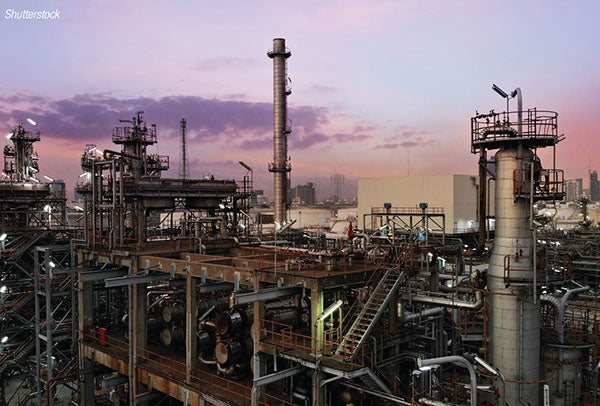
FIGURE 1. At facilities with a greater degree of feedstock and product flexibility, owners and operators can respond more quickly to market conditions
“The particular economic environment at this moment (low profits and bottom-of-cycle economics) do not allow for the implementation of any project that is not absolutely necessary for the survival of the company,” says Ioana Floru, an executive in the chemicals and energy business (www.linkedin.com/in/ioana-floru-1568655/).
Generally, company leaders seem to be exercising tighter capital discipline and focusing on targeted capital projects that require relatively modest outlays, and that are capable of faster returns on investment. This area of focus has also emphasized revamping existing assets, rather than putting money into new builds.
“In today’s environment, refiners are choosing optionality over scale — preferring multiple, smaller upgrades that keep their options open,” states a recent report by engineering, procurement and construction (EPC) firm Worley (Houston, Tex.; www.worley.com) [1].
Targeted projects, typically involving between $25–50 million in spending, are designed to deliver measurable gains without locking in long term capital, the Worley report suggests. They can be implemented quickly and are reversible and scalable, which is “ideal for a market where demand signals are mixed and policy direction remains uncertain,” the report says.
Rich Hill, Worley Consulting vice president of fuels and chemicals, says “investment has slowed primarily due to economic and policy uncertainty, rather than lack of long-term demand. Feedstock price volatility, cost inflation and limited-duration tax credits or incentives have complicated project economics.”
For facility investments in the petroleum-refining sector, both brownfield projects and new builds come with advantages and disadvantages. Brownfield projects can face integration constraints and reduced design flexibility, while new-build assets offer optimized design and future-proofing, but this comes at the cost of higher capital intensity, longer timelines and greater exposure to market and regulatory risk, Hill says.
Hill explains further: “Modifying existing assets typically requires less capital, shorter schedules and lower permitting risk, while allowing refiners to leverage existing infrastructure and workforce expertise.”
Investment areas
Motivation for approaches that focus on flexibility includes a range of factors, including divergence in demand profiles for refined products, the oversupply of petrochemicals and the potential for efficiency improvements.
“Gasoline demand is structurally declining in many markets, while jet fuel, sustainable aviation fuel (SAF) and petrochemical demand show more durable long-term growth,” says Worley’s Rich Hill. “We are seeing refiners respond through flexibility, selective investments, and portfolio optimization, rather than broad capacity expansion”
Global diesel demand is projected to be fairly flat, Hill says, but renewable diesel projects require long-term regulatory incentives to be economic, making large renewable projects harder to justify in the near term.
In the U.S., Worley is seeing refiners concentrate investment in three areas, Hill says: 1. Alkylation to increase octane, and, in some cases, convert refinery propylene to alkylate due to the global oversupply of petrochemicals; 2. Increasing jet fuel production to meet global demand; and 3. Capitalizing on geographic demand/supply imbalances.
Meanwhile, in other regions, projects are focused on energy efficiency and residue upgrading, reflecting local refining maturity and energy prices, Hill notes.
In addition, projects motivated by efficiency, digitalization and decarbonization are also in the mix in some situations. “There remains meaningful opportunity in incremental efficiency projects,” says Hill, such as improved heat integration, waste-heat recovery, advanced process control and energy-management systems. “These initiatives can deliver measurable cost and emissions reductions without requiring major unit replacements, but tend to be focused in regions with high energy prices and/or material CO2 emission regulations.”
For digitalization technologies, investment is concentrated in areas that have shown proven efficiency gains, rather than those for which the gains may be more speculative.
“The fastest payback typically comes from advanced process-control upgrades, predictive maintenance, planning and scheduling tools and energy-optimization platforms that leverage existing data and infrastructure,” Hill comments.
Leading artificial intelligence (AI) use cases include predictive maintenance, real-time process optimization, blending and quality control, energy management and supply-chain optimization. “These applications directly support reliability and margin improvement,” Hill says.
And where they are incentivized, selective investments in decarbonization strategies and equipment are also being considered.
Business agility
The need for investment in feedstock and product flexibility is one important aspect of future success in the sector, and business agility is another component. Agility, from both a commercial standpoint, and from a capital-projects standpoint, has to do with a facility’s ability to reposition itself easily, without an excessive degree of corporate overhead and procedures. From this perspective, medium-sized companies or joint ventures between large companies can be more effective at taking advantage of opportunities. This is because these types of entities can access cheaper funding than would be available from banks through their corporate shareholders, Ioana Floru explains, but they are able to “function often without the weight of corporate ‘deadweight.’” Specifically, “in domains of activity where regulations change a lot (low-carbon fuels for example), agility is absolutely everything,” Floru says. “If it takes five years for a company to decide whether or not to build a project, the regulatory environment will have changed completely by the time the company finally decides to invest.”
“The same agility is required commercially: given the size of projects, often one company (even a large multinational company) does not have the risk appetite to invest alone. Therefore, commercial and manufacturing partnerships are going to be the name of the game,” she says. These partnerships are likely to tend more toward those that involve business links vertically across the value chain. For example, a producing company partnering with a brand owner that sits several steps down the value chain and has a final-customer-facing business model.
Workforce demographics
Despite increasing reliance on automation and use of AI technologies to maintain top operational performance, workforce challenges have not abated.
“Workforce challenges have shifted toward aging demographics, knowledge retention, and digital skill gaps,” Worley’s Hill says (Figure 3).

FIGURE 3. Workforce challenges have continued despite an increasing reliance on automation and the introduction of artificial intelligence tools
Chemicals executive Floru continues on the theme of workforce challenges: “The lack of solid basic skills within the European and U.S. working-age population is a significant concern. As older-generation technical mid-level folks (such as technicians, foremen, shift leaders and so on) retire, it leaves the remaining workforce less technically trained than predecessors, and with less practical experience.
She highlights the impacts this dynamic can have for maintenance and reliability of refinery and petrochemical assets. “This means that equipment failures that would have been anticipated in the past, won’t be detected now, and the solidity and speed of repairs is much lower.”
Also, failures may have to be repaired multiple times because personnel lack the technical skills, such as in electrical and instrumentation; analytics and chromatography, mechanical and rotating equipment.
Sidebox 1: Energy market shocks
Falllout from U.S. and Israeli bombardment of targets in Iran, and subsequent retaliatory strikes by Iran’s military against neighboring countries in the Middle East has disrupted global energy markets by effectively restricting shipping through the Strait of Hormuz.
As of press time for this article, the situation was fluid, with a temporary ceasefire stlll in place and peace talks possible, but with shipping through the strait still restricted and future control of the strait unclear. The complex situation on the ground in the region suggests that supply-chain disruption and uncertainty are likely to continue for a significant period.
“Conditions in the Strait of Hormuz remain far tighter than they appear on paper, says Sean Heinroth, EY Parthenon Principal, Oil & Gas and Chemicals, Ernst & Young LLP (London, U.K.; www.ey.com). “Even where transit is permitted, many shippers, insurers and crews remain cautious, and traffic is still well below normal levels.” (Figure 2)
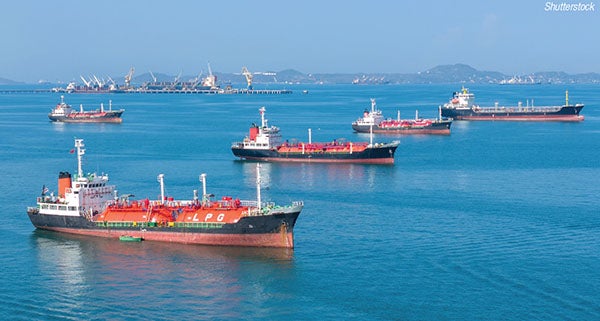
FIGURE 2. Restrictions of shipping through the Strait of Hormuz have disrupted global crude-oil markets and affected exports of refined product and chemicals
In an opinion piece published April 8 by the New York Times [2], Harvard University historian Jamie Martin commented on the question of whether the war’s impact would be short-lived, or long-lasting. “The lessons from history are sobering: In an interdependent global economy, the shock of the outbreak of war can produce long-term instabilities overnight, many of which become apparent only over time,” Martin wrote.
“Importantly, oil and gas flows don’t snap back the moment passage resumes,” explains EY’s Heinroth. “Tanker positioning, inspections, insurance coverage, storage availability and downstream scheduling all take time to reset after a disruption. As a result, any return to prior shipping patterns is likely to be gradual rather than immediate, driven less by physical access and more by confidence around enforcement, insurance costs and in the durability of the ceasefire. In that context, supply‑chain disruptions are likely to persist even if the strait is nominally open.”
The reliably with which oil can reach markets is prompting refiners and chemicals companies to “shift from price forecasting to operational scenario planning to stress‑test logistics, storage and contractual flexibility.” Heinroth says.
Thus far, the impact of the shipping restriction has been felt in different ways, depending on the geographic region.
“Many Asian refineries are highly optimized for medium-to-heavy sour-crude grades from the Middle East and cannot easily substitute alternative barrels without sacrificing yields, efficiency or margins, Heinroth says, so “Disruptions through Hormuz therefore translate quickly into refinery run cuts, inventory draws, and competition for replacement barrels from Russia, the Americas or West Africa — often at higher cost and with longer transit times. Europe is somewhat less exposed to crude availability, but is heavily exposed to refined product shortages, particularly diesel and jet fuel.”
“The U.S., by contrast, is relatively insulated on crude supply due to domestic production, though it remains exposed to global product tightness and price transmissions. In this environment, leadership teams are evaluating not just what alternative barrels are available, but the trade-offs they’re willing to accept in the short-term,” Heinroth explains.
Widening economic effects
Although media attention has focused more on crude oil, the disruption from the effective closure of the Strait of Hormuz and uncertain future has also affected exports of refined products and chemicals. Fallout from the conflict will be felt indirectly throughout the global economy.
Heinroth points out that the current disruption differs in important ways from “conventional” oil shocks. This disruption is “a multi‑channel event that combines energy price pressures with supply‑chain and logistics disruptions and heightened financial‑market volatility.”
“While the U.S. is relatively insulated from the direct energy supply impact given its domestic production base, the shock directly affects refined products critical to the physical economy, particularly diesel. Diesel cost inflation feeds into transportation, agriculture and industrial activity, raising the risk of second‑round inflation and margin compression across sectors,” Heinroth notes.
“Unlike a demand‑led slowdown, this shock originates in supply chains and logistics, making it more persistent and harder for monetary or fiscal policy to quickly offset. And because U.S. industry is deeply integrated into global supply networks, some of the impact is likely to be imported over time through higher costs for intermediate and finished goods from regions more exposed to energy and petrochemical disruptions.”
The most telling indicators are not headline crude prices, but physical and structural signals: tanker transit volumes through Hormuz, war risk insurance costs, freight rates, refined product inventories and regional crack spreads for diesel and jet fuel, Heinroth says.
Any refinery outages, either planned and unplanned, will amplify volatility, as will policy responses such as export restrictions or emergency stock releases. Together, these metrics provide a clearer picture of whether the system is stabilizing or drifting toward a deeper supply-driven slowdown.
Crack spreads (crude-to-product price differentials) have surged in general, with diesel cracks well above historical norms and jet fuel margins spiking globally due to the supply disruption and constrained refinery output.
“This divergence underscores that the crisis is as much a refining and logistics shock as it is a crude supply shock,” Heinroth says.
Persistently high diesel, gasoline and jet fuel prices make all road shipping, air travel and manufacturing more expensive, so if the conditions remain long term, “demand erosion would likely accelerate through economic slowdown rather than immediate consumer behavior changes.” ❏
Sidebox 2: Decarbonization planning
Climate-change concerns continue to drive widespread and diverse decarbonization efforts, and a global energy transition appears to be progressing, albeit at a variable and uneven pace. The pursuit of an energy system free of fossil fuels will necessarily require the continuation of legacy fossil infrastructure, even as carbon-free alternative energy systems start to replace them. This mid-transition situation, where the world’s economic activity depends simultaneously on two parallel energy networks that do not necessarily complement each other, has significant dangers for safety, environmental health and justice that have been underappreciated, according to recent research by Josh Lappen and Emily Grubert at the University of Notre Dame (South Bend, Ind.; www.nd.edu).
“Mid-transition, neither fossil fuels nor renewables are sufficient to fulfill all energy requirements,” Lappen says, so “we will be partially dependent on two systems simultaneously for a long time, and these two systems are not designed to share — they’re not complementary to each other.” [3]
The research, published in a January issue of the journal Science [4], states that too little attention has been paid to “the challenges and emergent behaviors associated with the decline of legacy fossil energy systems.” The researchers identified risk of collapses in service availability as specific elements of fossil infrastructures reach what they call “minimum viable scale (MVS),” — a level of throughput “past which existing physical, financial and managerial infrastructures can no longer effectively operate as expected.”
Several categories of MVS can come into play in the context of the petroleum refining sector. Physical MVS has to do with the throughput and operational limits that are emergent properties of the physical systems themselves, Lappen explains. There is also economic MVS, which involves how the long-term maintenance and operations of facilities is financed. Finally, there is managerial MVS, where constraints emerge because of operational cultures and decision-making boundaries. “An example of this that many people are familiar with, but that is rarely considered in the context of energy-system planning and climate policy, is anti-trust laws — in many cases, it is illegal for the operators of fossil-fuel assets to coordinate with each other,” Lappen remarks.
“Evidence of widespread minimum viable scales should motivate a paradigm shift in system and decarbonization planning,” the researchers write.
As key nodes within a wider network of fossil energy assets, including oil production wells, crude pipelines and refined product pipelines, the world’s petroleum refineries play a critical role in supporting the energy transition and constitute a binding physical constraint on energy services. The researchers point out the interdependency of the supplies of a particular refined petroleum product and the design details of a specific subset of refineries. They also point out that many refinery components have minimum limits (turndown capacities, “below which operation becomes unsafe, unreliable, inefficient, or lower-quality.”
Citing information compiled by the American Fuel and Petrochemical Manufacturers (AFPM; Washington, D.C.; www.afpm.org) [5], the researchers say that these component-specific turndown limits aggregate into an average refinery-wide minimum viable scale of approximately 65–70% of capacity. This value represents “a high value that challenges assumptions of long-term linear decline in petroleum product provisioning. Further, because many areas of the U.S. lack the infrastructure necessary to support seamless exchange of refined products across existing supply boundaries, even a single refinery closure could produce serious local supply or price shocks despite wider availability of excess capacity.”
Lappen and Grubert describe the risks associated with uneven demand for different refinery products. “U.S. refinery design typically prioritizes gasoline production, with coproducts depending on which types of crude the refinery can accept and which process units it contains. Gasoline demand is forecasted to drop faster than demand for many other petroleum products, suggesting that refinery design could lead to increased price or curtailed supply of some of those products (jet fuel, for example) long before current decarbonization models suggest,” they write.
While it is possible to lower turndown capacity by tailoring equipment, feedstocks and additives, doing so would require costly new capital investment or operational expenses. “In the context of declining demand, refiners are progressively less likely to make major new investments — a risk that is exacerbated by refineries’ intensive maintenance demands. Do you make new capital investments without the confidence that it will return to profitability?” the researchers ask.
Turnarounds could also exacerbate the risk of sudden refinery closures, which “can create price or supply shocks, given that direct coordination among actors often qualifies as illegal collusion under U.S. law,” the researchers state.
There’s a need for better communication between plant engineers and policy makers, Lappen says.
“Specific, detailed efforts to coordinate and manage energy service provision will be needed to support declining energy systems through the mid-transition period,” Lappen and Grubert write. “Such coordination can mitigate severe safety, reliability and economic transition risks — many of which are predictable — while enabling faster progress toward more just, more sustainable approaches to energy service provision.”
Coordination of efforts in this area could facilitate the effective repurposing of fossil sites, reducing the impacts of closure and establishing new revenue streams to support both fossil remediation and energy transition, the researchers say, and public versus private ownership schemes should be investigated. ❏
Scott Jenkins
References
1.Worley, Small bets, big shifts: How U.S. refiners are quietly repositioning for the future, Nov. 2025, www.worley.com/en/.
2. Martin, J., I Studied the Economic Fallout from World War I. This Could be Worse Than We Expect, New York Times guest essay, April 8, 2026.
3. Grubert, E. and Hastings-Simon, S., WIRES Climate Change, Vol. 13 (3), May/June 2022.
4. Lappen, J. and Grubert, E., Fossil Energy Minimum Viable Scale, Science, January 29, 2026, pp. 449–452.
5. AFPM Communications staff, Refinery Utilization 101: the other half of the capacity story, American Fuel and Petrochemical Manufacturers, www.afpm.org, July 8, 2022.