Strategic application of advanced measurement technologies enhances flexibility, availability, safety, and sustainability across operations
The specialty chemicals sector is a vital segment of the chemical process industries (CPI) and the wider economy. This sector delivers high-value products for countless applications, from pharmaceuticals to advanced materials. Unlike large-scale continuous operations, specialty chemical production is typically small-batch and highly customized, which adds unique challenges on top of the same pressures faced by large continuous plants (Figure 1).
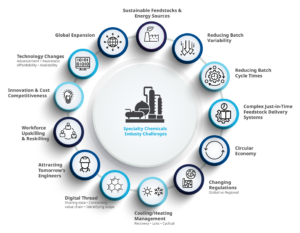
FIGURE 1. Specialty chemical manufacturers face a complex set of challenges, but today’s technologies offer solutions
Challenges specific to specialty chemicals tend to revolve around batch-manufacturing processes. Many sites manufacture multiple products, so flexibility, speed and quality control are critical due to many changeovers. Frequent formulation changes require complex inventory control to ensure feedstocks are available when needed. Reducing batch cycle times and ensuring every batch meets quality requirements repeatedly without rework or scrap are key to operational success and profitability. Such conditions often leave manufacturers struggling to balance flexibility, efficiency and safety —all while maintaining profitability.
There are practical solutions. This article looks at five critical areas where smart measurement instrumentation can deliver immediate impact.
Improving process flexibility while reducing variability
Process variability frequently stems from the ways that each manufacturing campaign can be slightly different. Production equipment may be more-or-less the same, but there can be variability in the way ingredients are added to a reactor, causing the proportion of each component to vary slightly (Figure 2). This can be due to the variability of ingredients themselves, but also to manual operations. Even when some steps are partially automated, batch processes often exhibit significant variability.
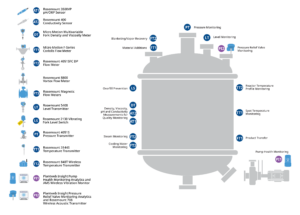
FIGURE 2. A reactor is normally outfitted with a variety of instruments designed to reduce batch variability
Variability can include erratic cycle times due to unexpected temperature changes and reaction rates, along with other factors. This can cause out-of-specification batches with unreacted feedstocks leaving a producer with unacceptable quality that must be downgraded, reworked or even scrapped entirely.
One major step a processor can take to ensure accurate ingredient addition is using a Coriolis mass flow meter to deliver several strategic advantages:
- Coriolis flow meters have a wide turndown range, so they are accurate at varying flow rates
- Since they measure mass rather than volume, in most cases, they provide a more accurate measure of the actual amount of a given ingredient
- They measure density and temperature, so if there is a change in the characteristics of a liquid ingredient, it may be reflected in a density change, detectable by the flowmeter
The batch control system can use these data to compensate for possible feedstock variations that affect density, as well as to provide a very precise measure of liquid ingredients being added to the reactor.
Enhancing inventory accuracy and supply chain visibility
Recently, it’s been difficult to find any segment of the economy unaffected by changes in supply chains, including specialty chemical manufacturers. Variability in product quality, as just mentioned, is certainly an issue, but so is basic availability. Few facilities have the storage capacity or capital to maintain large inventory cushions of feedstocks. Companies want to operate “just-in-time,” where feedstocks appear only as they’re needed.
But imagine a situation where operators believe they have all the required elements for a campaign, only to find their internal inventory picture is inaccurate. If the final ingredient unavailable after the others have been pumped into a reactor, it’s a major loss.
The ability for a facility to control its own internal inventories and material handling is hugely critical. Closing the gap between supply chain planning and operations execution requires smart automation solutions to gain production visibility and agility.
When tanker trucks or railcars deliver feedstocks, or when they take out finished products, custody transfer and internal storage-location management can mean the difference between profitability and loss (Figure 3). When products can’t be moved, or supply chains are opaque, interruptions and bottlenecks surely follow. Worse, safety incidents can occur due to tank overfilling or inadvertently mixing ingredients. So how does a facility monitor tank levels and inventories? There are two key elements to a solution: effective custody transfer measurement and tank level inventory management.
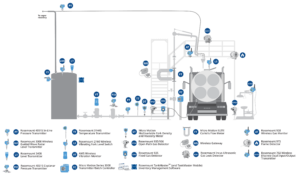
FIGURE 3. While a full liquid transfer and storage facility calls for a wide variety of instruments, available products provide accurate data on product inventory and movement
Facilities with effective custody transfer measurement systems can adapt quickly to evolving supply chain complexities, thereby ensuring accurate and timely product transfers with Coriolis metering solutions that enable improved digital planning and scheduling. Improved tank level monitoring using either wired or wireless radar level transmitters, along with tank inventory monitoring solutions, delivers full inventory control and monitoring of multi-tank assets, ensuring optimal product availability through real-time measurements and data logging. These tools provide better visibility into inventory management, production schedules, and final product quantity and quality to maximize margins.
Ensuring safety and compliance
Specialty chemical manufacturers face risks related to processing, storing, and transferring toxic, hazardous, and flammable materials on a daily basis. In addition to putting personnel, the environment, and nearby communities at risk, safety incidents also impact a company’s financial health and reputation.
Safety covers multiple areas within a facility, including:
- Process Safety — Since batch processes often include potentially dangerous conditions, safety instrumented functions (SIFs) are required to minimize hazards from pressure, temperature, or toxicity
- Containment Safety — Where chemicals are flammable, toxic and/or corrosive, it is critical to ensure that tanks and piping are not leaking or likely to fail. This calls for corrosion monitoring and detectors capable of monitoring vapor or liquid emissions. Safety capabilities must also ensure that tanks are not overfilled, causing spills (Figure 4). Where products are flammable, flame and gas detectors may also be necessary
- Occupational Safety — Plant personnel must be protected with safety showers, detectors for toxic or flammable product releases, and accessibility to equipment without putting workers at risk. For example, adding Bluetooth® technology to field instruments allows technicians to communicate with those instruments without the need to access a potentially hazardous area
- Functional Safety — Equipment monitoring the process and safety functions must also be monitored to ensure it is functioning properly. This calls for a variety of diagnostic capabilities and software to guide maintenance efforts
When producers adopt appropriate safety strategies and technologies to minimize their personnel’s exposure to hazardous materials, they are also ensuring more accurate, reliable, and regulatory-compliant operations, enhancing safety for both workers and the site.
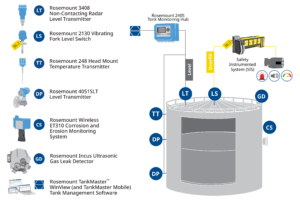
FIGURE 4. Maintaining containment safety requires effective level measurement and tank management
Fostering sustainability through energy efficiency and emissions reduction
While specific goals vary from place to place, efforts to reduce carbon footprint are challenging chemical producers to minimize energy use and emissions. With stringent environmental regulations and consumer demand for more recyclable products, the industry must develop strategies to adopt renewable feedstocks and energy sources.
Many batch processing steps require heat, often delivered via steam, since it can be controlled carefully via many types of heat exchangers. Producing steam (Figure 5) is energy-intensive and often accounts for a major component of energy consumption for a facility. Since sustainability aims at reducing energy use with its carbon emissions, finding ways to produce and use steam more efficiently is a major avenue for improvement.
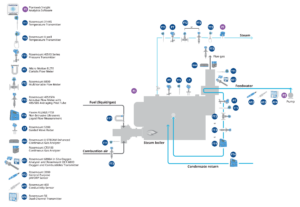
FIGURE 5. Reducing fuel use and emissions can begin by improving the efficiency of boilers, fired heaters and steam distribution systems. These efforts call for a variety of instruments to monitor the many variables involved
Generally, this begins with looking at boilers and fired heaters to ensure fuel use is as low as possible to achieve the required process heat. This extends to distribution systems and the heat exchangers to verify that heat is not being wasted due to poor transfer or outright leakage.
Three measurement points are especially critical to achieving optimal energy use and process efficiency. First, accurately measuring fuel flow for combustion processes is essential. Coriolis mass flowmeters are particularly effective because the heating value of fuel correlates more closely with mass flow than with volumetric flow. By using mass flow measurements, operators can optimize fuel consumption to a greater extent than with simple volume-based measurements.
Second, monitoring excess oxygen in fluegases is equally important. An effective combustion control strategy combines feedforward control based on fuel measurement with feedback control based on oxygen measurement. Stack gas monitoring, performed with in-situ oxygen analyzers equipped with zirconia O2 sensors, empowers operators to evaluate the air-to-fuel mixture. This evaluation further contributes to optimizing energy use, reducing emissions and improving combustion efficiency.
Third, precise steam flow control to individual applications is necessary to optimize steam usage and maximize overall process efficiency. Multivariable vortex flowmeters are well-suited for steam flow measurement because they compensate for changes in pressure and temperature. This capability allows them to determine the energy content of steam, providing a more accurate assessment than basic volumetric measurements.
Intelligent instrumentation is a solid foundation for renewable manufacturing. Instruments with predictive field analytics provide real-time visibility into process performance, and this information is necessary to meet sustainability goals.
Improving asset reliability with predictive analytics
A facility can’t produce when it isn’t operating. If equipment breaks down in the middle of a campaign, an entire batch may be lost. When maintaining equipment reliability is a core strategy, it helps producers optimize costs, mitigate risk, and increase availability. Facilities can improve output by using smart measurement technologies to improve operational performance through maximum production availability and throughput.
Emerson has found that when chemical producers build condition-based, planned maintenance programs, they have fewer equipment emergencies, less downtime, and substantially lower maintenance costs. Such programs frequently extend across a wide range of critical operating asset applications:
- Heat-exchanger monitoring
- Steam-trap monitoring
- Pump-health monitoring
- Corrosion and erosion monitoring
- Vibration monitoring
- Wireless sensing
- Mobility tools to bring control room data to the field
Such data-driven reliability programs are key to the digital transformation of chemical operations. They can help surface the causes of unexpected failures and identify ways to mitigate unplanned downtime, paving the way to operational excellence. A perfect example of such a use is monitoring heat exchangers (Figure 6), since they are operationally critical, and performance can deteriorate quickly when neglected. Heat exchangers require monitoring of multiple variables to ensure maximum throughput and efficiency. If fouling of either side builds up, efficiency falls very quickly, but maintenance is very labor-intensive, so effective monitoring is necessary to determine when attention is necessary.
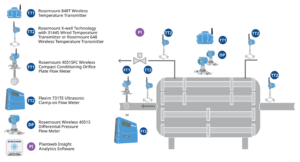
FIGURE 6. Non-intrusive instruments for measuring temperature can be added to heat exchangers, without the need for any piping modifications or process interruptions
Laying foundations for more agile, safer, and smarter operations
Specialty chemical producers face a unique set of challenges—balancing flexibility, safety, and sustainability while operating in highly competitive markets. Advanced measurement and automation technologies provide practical tools to address these issues, from improving batch consistency and energy efficiency to enhancing reliability and safety.
By leveraging intelligent instrumentation and data-driven strategies, manufacturers can make informed decisions, reduce variability, and optimize performance across the plant. These approaches not only help meet today’s operational demands but also lay the foundation for long-term resilience and growth in an evolving industry.
Edited by Scott Jenkins
All figures appear courtesy of Emerson
Author
 Michael Machuca is the chemical industry marketing director for the measurement instrumentation portfolio at Emerson. He has been with Emerson for more than 18 years in various product management and marketing roles supporting industrial process measurement applications in the oil & gas and chemical industries. Machuca holds a Bachelor of Science degree in mechanical engineering from the University of Houston.