Successful pilot operations are a necessary first step, but for bio-based processes, getting a product plant-ready requires navigating the gap between research environments and industrial plant settings
A successful pilot batch has a way of changing the mood in a company.
For months, perhaps years, a candidate material has lived in small vessels, laboratory notebooks and application tests. Then suddenly, there is enough of it to send to customers. Enough to pack into drums. Enough for a real trial. People start using different vocabulary. Scale. Validation. Commercial readiness.
That excitement is understandable. A successful pilot campaign is not trivial. It means the chemistry or materials science has survived its first encounter with larger equipment, longer runs and less-forgiving process conditions.
But the chemical process industries (CPI) know a more uncomfortable truth. A material is not plant-ready because a pilot campaign worked. It becomes plant-ready when it can be made repeatedly, with slightly different feedstock lots, by operators who may not have been present in development meetings, on equipment that has to run to schedule, with a quality test that predicts what the customer will actually see.
That is a very different test. It is also the test many advanced bio-based materials now face. Customers want sustainable alternatives to incumbent ingredients, additives and functional materials in coatings, personal care, food, pharmaceuticals, packaging and other sectors. The demand pull is real. But industrial buyers are not buying a sustainability story alone. They are buying supply, specification, repeatability and behavior in their own process (Figure 1).

FIGURE 1. Demand for bio-based products is real, but industrial end-users are looking for more than a sustainability story. They need materials that work in their processes
This is where many promising materials meet their hardest examination. The author has seen this pattern from both sides: in research environments, where the material is still being understood, and in industrial settings, where the same material has to meet specifications, schedules and customer expectations. The gap between those two worlds is often wider than it looks from the pilot plant.
What a pilot run does not prove
The pilot plant is one of the most useful places in materials development because it lets a team learn quickly. At pilot scale, the people running the process often know the material intimately. They know what the slurry should look like, when foam is harmless, and when a drying step is beginning to punish the structure.
That knowledge is valuable. It is also dangerous if it remains in the heads of development personnel.
In a pilot-plant environment, a process can be nursed along. A valve can be adjusted because someone sees something unusual. A batch can sit longer because the team wants another sample. A feedstock can be chosen because it is the cleanest available. A production run can be slowed down because learning matters more than throughput.
A commercial plant does not have those luxuries. At a larger scale, some of the most difficult problems are not the most scientifically interesting ones. Handling ton-scale quantities means thinking about flow, transfer, piping, pumps and hold times with a level of discipline that is rarely visible at laboratory scale. A material may be technically sound, but if it cannot move through the process reliably and within an acceptable cost structure, it is not yet industrially mature.
Industrial production has to turn judgement into rules. It needs operating windows, release tests and a process that trained operators can run without attachment to the invention. That shift is often underestimated. The question is not whether the material can be made by experts. The question is whether the process is robust enough to run without exceptional intervention.
Variability of feedstocks
With bio-based materials, the raw material is rarely just a raw material. It carries a history. Cellulose is a good example. Much of the author’s career has been spent working with cellulose fibers, nanoparticles and nanocrystals, and one lesson comes up repeatedly: cellulose is not a single, uniform industrial input. Its behavior not only depends on where it came from, but essentially on what has happened to it before it reaches the new process. All feedstock, whether organic or mineral, for instance, goes through interim processing to render it suitable for “new” manufacturing processes. Two feedstocks may both be called cellulose, but will behave differently in the new process, because they went through different preparations. One may disperse more easily. One may require more energy. One may filter differently. One may give a different particle structure after processing.
At laboratory scale, it is easy to hide from this reality. Here, the aim is to systematically understand varying processing parameters and conditions. Hence, developers choose a well-behaved feedstock because it is good science to do so. It is not yet, however, industrial reality. At plant scale, feedstock variation arrives whether you invite it or not. The question is whether the process knows what to do with it.
This is an area where many bio-based materials need a more honest language. A feedstock specification is not enough if it lists what is easy to measure, rather than what matters. A more useful concept is a feedstock envelope: the defined range of variation the process can absorb without damaging cost, quality or performance.
That envelope cannot be guessed. It has to be earned through runs, failures and uncomfortable data. For CPI companies looking at new bio-based materials, this is one of the first questions worth asking. The question is not “is it renewable?” That question matters, but it comes later. The first industrial question is: how much real variation has this process seen? One good pilot feedstock does not make a supply chain.
Chemistry is not the whole story
A familiar chemical can often be defined by composition and purity. Functional materials are less forgiving. Their value may depend on structure, particle size, shape, surface chemistry, porosity, redispersibility, optical response, rheology, moisture, how the compounds behave in a formulation, how the molecules behave after shipping, how they respond to shear in the customer’s mixer and so on.
This is where advanced bio-based materials can become difficult to scale. Bioprocess organizations are not only manufacturing a substance, they are manufacturing a behavior. For cellulose-derived particles, the distinction is critical. The underlying chemistry may look stable, but the performance can change if the process changes the structure (Figure 2). A different shear history may produce different aggregation. A longer hold time may change dispersion. A drying route may make the material easier to ship, but harder to redisperse. A small pH shift may alter interactions with other ingredients.
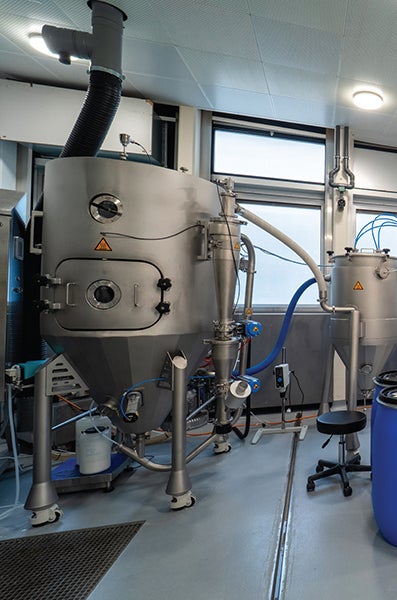
FIGURE 2. For cellulose-derived products, like those being processed here, the performance within the process can be different even if the underlying chemistry appears stable
The formula may be the same, but the customer experience may not be. That is why scale-up cannot be treated as a matter of merely making a larger batch. The plant has to preserve the architecture that gives the material its value. The material has to survive pumps, tanks, filters, dryers and packaging, as well as the customer’s own process. If it does not, the plant has not scaled the product.
Downstream economics
When a new material is presented, people usually talk about the function. Better opacity, for example, or better texture, better barrier performance, better stability, better sustainability profile. Then the plant asks a less glamorous question: how can it be separated?
Filtration, washing, drying, redispersion, packaging and cleaning can dominate the economics of a material’s commercialization. However, those processes rarely get much attention in early development because they are not key to the scientific headline. In production, though, it is these operations that will decide cycle time, energy use, yield, capital needs and operator frustration.
A fine-particle material may filter well enough at pilot scale because the quantity is small and the team has time. At industrial scale, a slow or compressible filter cake becomes a cost problem. Washing takes longer. Equipment gets bigger. Throughput drops. Housekeeping becomes the bottleneck.
Drying can be worse. In many bio-based systems, drying is not just removing water. It is another processing step that can change the product properties. Particles can collapse or fuse. Powders can dust. Redispersibility can suffer. A wet dispersion that performs beautifully may become an average powder after drying.
Customers may prefer a powder because it is easier to ship and store. The supplier may prefer a dispersion because it protects performance. Both may be right. The industrial answer depends on the cost-in-use, not convenience in one part of the chain.
Serious scale-up work has to look early at the unglamorous steps. If filtration kills throughput, deal with filtration. If drying destroys function, the product format may need to change. If cleaning takes too long, the process may not fit a shared manufacturing asset. If powder handling creates dust or safety issues, it is a manufacturing issue.
Measure what the customer feels
A certificate of analysis can look reassuring. It likely includes solids content, moisture, pH, particle size, viscosity, purity or appearance. All of these parameters may be useful, but the important question is whether those numbers predict the reason the customer is buying the material.
An average particle size may not capture shape, aggregation or redispersibility. A viscosity value at one shear rate may say little about behavior in a customer’s process. A color reading may not explain optical performance in a specific formulation. A moisture value may be within specification while storage behavior changes.
If quality control does not measure the attributes linked to performance, the supplier can release a batch that is technically within specification, but that is practically different. The customer will notice. The plant may not. Manufacturing readiness means building a quality system that connects process conditions, material attributes and application performance. That takes repeated batches, customer trials and enough failures to understand which variations matter.
The goal is not to measure everything. The goal is to measure what protects the customer. A test that takes days may be excellent for development, but useless for shipping decisions. A simple test may be valuable if it tracks the right attribute.
Scale up with end-user processes
A supplier may think a material is ready when it leaves the factory gate. The end user may disagree. Functional materials do not perform in isolation. They perform inside somebody else’s process. A coatings formulator may care about dispersion, gloss, opacity and stability. A personal-care formulator may care about sensory feel, whiteness and compatibility. A pharmaceutical or food customer may care about purity, documentation and process behavior.
Each customer brings equipment, habits and constraints. A material that works in the supplier’s application laboratory may need a different order of addition in the customer’s plant. It may require more shear. Or less. It may work in one formulation family and not in another.
This is why “drop-in replacement” should be treated as a technical claim, not a slogan. Sometimes it is accurate. Often, it depends on formulation design, process conditions, customer equipment and the performance attribute being protected. Customers are not frightened by complexity. They are frightened by hidden complexity.
Cost-in-use
Many sustainable materials enter the conversation with a strong story and a weak cost argument. That is not enough. Industrial customers may want lower-impact materials, but most cannot adopt them if the economics are vague. The relevant number is not always price per kilogram. It is cost-in-use. A material that costs more per kilogram may still make sense if it works at lower dosage, removes another ingredient, simplifies a formulation, reduces energy or solves a real customer problem. A cheaper material may be expensive if it needs long mixing times, special storage conditions, extra cleaning steps or constant technical support.
For suppliers, this means process economics and application economics have to be developed together. How much energy does the process use? Where is yield lost? Which unit operation dominates cost? What is the cleaning burden? Does the customer need to change equipment or process conditions in order to use the product?
A material that is sustainable in principle, but difficult to produce efficiently, will struggle. So will one that is technically impressive, but painful for customers to use. Technical elegance is not enough if the process is costly to run or difficult to adopt.
Toll manufacturing
Not every advanced materials company should build its own production plant early. Manufacturing partners, toll producers and existing industrial sites can be smart routes to capacity. But using a partner does not remove the scale-up problem. It moves it into someone else’s equipment.
A process developed in one pilot facility may not transfer neatly to a partner’s plant. Reactor geometry changes. Mixing changes. Dryers change. Utilities change. Cleaning rules change. A partner may have limits around solvents, dust, contamination, batch size or wastewater. The process has to fit the asset, not the other way around.
This is a place where tacit knowledge becomes a liability. In development, people often know more than the process documents say. They know what “good” looks like and when a batch is drifting. That knowledge is useful, but it cannot be the control strategy.
To transfer a process, the knowledge has to be written down, measured and trained. Critical parameters must be separated from preferences. Ranges must be defined. Deviation responses have to be practical. QC methods have to work outside the original laboratory. A process is not ready for a manufacturing partner if it still depends on its inventors being nearby.
What “pilot-proven” really means
The phrase “pilot-proven” should not be dismissed. It means something. It just does not mean enough by itself. For CPI companies evaluating advanced bio-based materials, a better set of questions is needed.
These questions should not be viewed as obstacles to innovation. They should be seen as preventing disappointment. They help separate promising samples from materials that can become dependable industrial supply.
Operationally reliable materials
The CPI are being asked to reduce environmental impact, replace legacy materials, secure supply chains and control costs. Advanced bio-based materials can help. Cellulose-derived materials, in particular, have enormous potential because cellulose is abundant, renewable and structurally versatile. It can be engineered into particles and functional ingredients for coatings, personal care, food, pharmaceuticals and other sectors.
But potential is not adoption. The next generation of lower-impact materials will not be adopted because they sound promising. They will be adopted when customers can specify, process, qualify and reorder them without wondering whether the next batch will behave differently.
The scientific appeal of cellulose is only the starting point. Its industrial value depends on controlling morphology, dispersion, quality, processability and cost at scale. It also depends on whether customers can use the material without rebuilding their processes around it, and whether supply can be trusted.
A pilot batch can open the door. But the work that follows decides whether a material becomes part of the industry or remains a promising sample with a good story.
For bio-based materials, that work now matters more than ever. The companies that succeed will make new materials behave reliably in old industrial realities: variable feedstocks, tight specifications, customer audits, plant schedules and procurement pressure. That is where the next phase of the bio-based materials industry will be won or lost. n
Edited by Scott Jenkins
Acknowledgement
Photos appear courtesy of the author and Seprify.
Author
 Wadood Y. Hamad is the chief technology officer at Seprify AG (Route de l’Ancienne Papeterie 180, 1723 Marly, Switzerland; Email: wadood@seprify.com; Phone: +41 78 21875 98; Website: www.seprify.com), a Swiss materials company developing high-performance cellulose-based materials for industrial applications. At Seprify, Hamad leads work scaling up production of cellulose-derived materials and translating the unusual properties of cellulose into ingredients that customers can specify, process and qualify. Hamad has 25 years of experience in scientific research and innovation. He holds a bachelor’s degree from McGill University and a master’s degree from the University of Manchester.