DuPont (Wilmington, Del.) announced that its Tedlar® polyvinyl fluoride (PVF) films manufacturing operations in Buffalo, NY, Louisville, KY and Fayetteville, NC are now powered by 100% renewable electricity through the purchase of Renewable Energy Certificates (RECs). This milestone reflects the DuPont commitment to renewable energy adoption and supports the company’s 2030 Sustainability Goals and ambition to achieve net-zero carbon emissions by 2050.
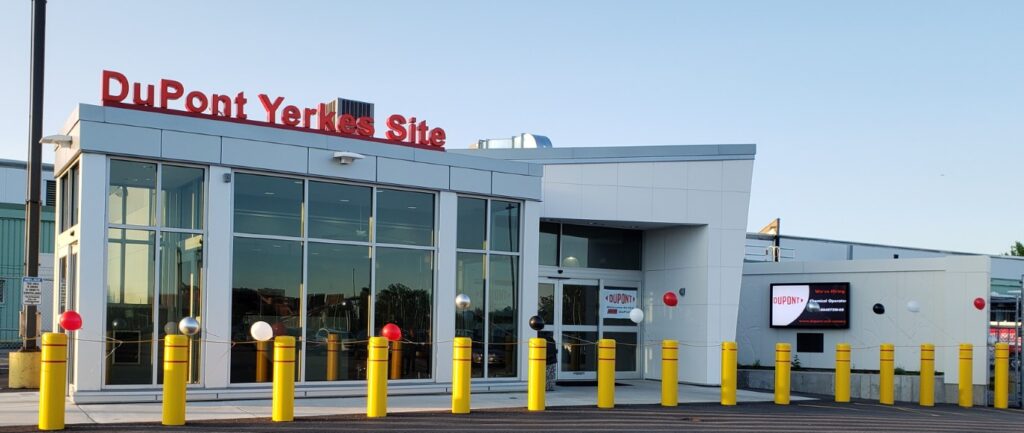
Tedlar® Manufacturing Facility in Buffalo, NY (Source: DuPont)
The renewable electricity claim is supported by the procurement of U.S.-sourced RECs, representing electricity generated from renewable resources. In total, approximately 42,000 megawatt-hours (MWh) of electricity consumption are matched annually with RECs, significantly reducing Scope 2 greenhouse gas emissions associated with grid electricity use.
“Fully integrating renewable electricity across our Tedlar® manufacturing footprint reflects how we are advancing sustainability across our operations,” said Tucker Norton, Vice President and General Manager, DuPont Printing & Films. “This achievement supports our decarbonization strategy while ensuring we continue to deliver the high-performance Tedlar® films our customers depend on.”
Tedlar® PVF films are non-PFAS materials and are made without the use of PFAS. They are manufactured exclusively in the U.S. They are widely used in aerospace, building and construction, outdoor graphics and signage, and industrial applications where material longevity can help extend product life cycles and reduce maintenance requirements. Powering Tedlar® manufacturing with renewable electricity further strengthens the environmental profile of these solutions.
DuPont continues to implement a range of decarbonization initiatives across its global operations, including energy efficiency improvements, on‑site renewable generation where feasible, and strategic renewable electricity procurement. The company remains committed to increasing renewable energy use, reducing greenhouse gas emissions, and supporting customers in their own sustainability objectives.