Bioprocessing facilities can achieve compliance, prevent downstream contamination and increase water reuse by using advanced oxidation processes
Wastewater generated from bioprocessing facilities is heavily regulated in the U.S. by the Environmental Protection Agency (EPA; Washington, D.C.; www.epa.gov) and various state laws. The primary goal of these regulations is to prevent contaminants and toxins that are present in bioprocessing-facility wastewater from entering sources of drinking water, which then must be treated by municipal water-treatment plants (Figure 1). An additional emerging area of interest focuses on water reuse — for both regulatory reasons and economic ones — because the cost to treat and reuse some wastewater can be far less than the cost of starting with untreated water.
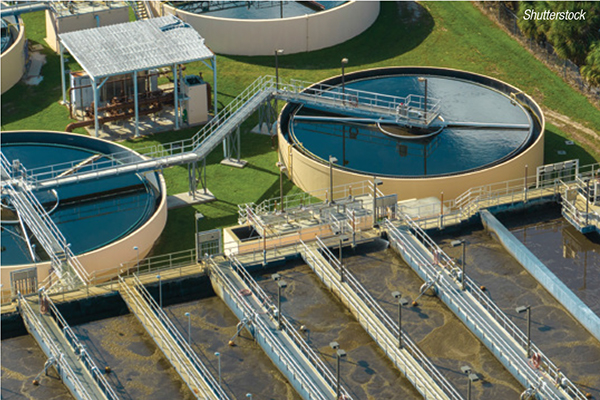
FIGURE 1. There are numerous federal regulations in place to prevent contaminants and toxins from manufacturing facilities from entering sources of drinking water that must be treated in municipal waste-treatment sites
Ozone advanced oxidation processes (AOP) offer exceptional benefits in achieving EPA compliance and reducing costs by recycling more water. Furthermore, AOP does an excellent job at preventing contaminants from leaching into groundwater and surface water, which can reduce a company’s environmental risk and enhance its sustainability profile.
Bioprocessing permits and standards
The Clean Water Act establishes the basic framework for regulating pollutant discharges into the waters of the U.S. Depending on the nature and source of the discharge effluent, bioprocessing facilities that discharge into surface waters will likely require a National Pollutant Discharge Elimination System (NPDES) permit from the EPA. As a component of the NPDES program, the National Pretreatment Program addresses the discharge of industrial wastewater to municipal wastewater treatment systems, with standards that vary from state to state and city to city [1]. In addition to bioprocessing activities, the EPA’s Effluent Limitations Guidelines currently apply to 59 industrial categories, such as pharmaceutical manufacturing and food processing [2]. In some cases, bioprocessing facilities may be subject to the Spill Prevention, Control and Countermeasure (SPCC) rule, if they store, transfer, use or consume oil or oil-based products, such as diesel fuel, gasoline, lubricant oil, hydraulic oil, adjuvant oil, crop oil, vegetable oil or animal fat [3]. There are also numerous state and local regulations that can affect bioprocessing wastewater.
An emerging area of regulation that bioprocessing facilities should monitor are the new standards on per- and polyfluoroalkyl substances (PFAS), which are currently under development by the EPA. These additions to the National Primary Drinking Water Regulations under the Safe Drinking Water Act (SDWA) may have implications for bioprocessing facilities, especially those that discharge to municipal wastewater treatment plants.
Contamination is a major liability
Because living materials and components such as cells, bacteria and fungi are used to create products or act as catalysts within a bioprocessing facility, wastewater from these facilities can be contaminated with nutrients, pathogens, organic compounds, chemicals and other contaminants of concern. To reduce risk, increase profitability and improve sustainability, bioprocessing facilities should invest in optimal wastewater-treatment methods.
By choosing not to fully treat their own wastewater, companies can expose themselves to litigation and regulatory fines, which have an immediate negative impact on profitability. Furthermore, certain methods of wastewater treatment enable significant water-recycling opportunities, which directly reduce operational costs and capital expenses. And finally, bioprocessing facilities that pass along contaminated wastewater to their local municipal treatment plants are pushing their external costs to governments and taxpayers, which can result in reputational and political damage.
In this day and age, there are zero upsides to not treating wastewater to the full extent available through technology and as required by regulation.
Recycling process water
Facilities that heat and treat water to make it ready for their manufacturing processes know full well the costs required. The cost of replacement water (which is increasing in many jurisdictions), the cost to prepare the water for the manufacturing process, the cost of chemical treatment and the cost to heat or cool the water all add up and represent a significant expenditure for the facility.
With the right technology and for certain parts of the process, process water can be reused, saving enormously on inputs required to prepare the water for the manufacturing process. As water availability continues to become less predictable around the world, companies that minimize their need for it also reduce their risk and increase their resiliency. And for the growing number of companies with sustainability commitments and goals, reusing water in manufacturing can help reach water targets and fulfill pledges to stakeholders.
Ozone AOP treatment
Ozone is a growing and appealing option for wastewater treatment. A pale blue gas, ozone is composed of three oxygen atoms (O3). It is generated onsite and introduced into the wastewater to eliminate a wide variety of inorganic, organic and microbiological impurities, including contaminants of emerging concern, 1,4-dioxane micropollutants and cyanobacteria mycotoxins.
Inside an ozone generator (Figure 2), O3 is produced when oxygen molecules are separated by an energy source into oxygen atoms, which react with other oxygen molecules to form ozone. A high-voltage alternating current is applied across a dielectric discharge gap that contains an oxygen-bearing feed gas.
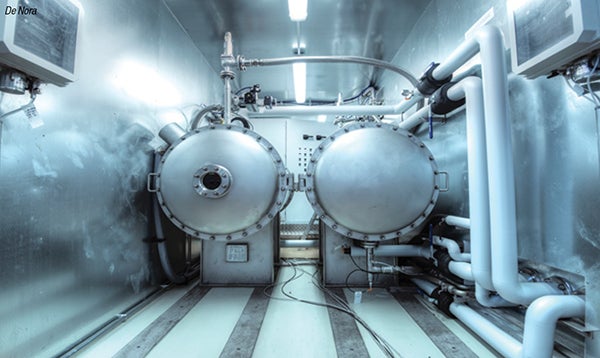
FIGURE 2. Ozone generators are used to produce O3 gas that can be used to eliminate contaminants of concern from wastewater streams
When ozone is dissolved in water, the free radicals that are formed have excellent oxidizing capacity on pollutants and molecules. This process is generally preferred over other AOP processes, such as ultraviolet (UV) AOP, when the water has low UV transmittance or high total organic carbon (TOC) content, when peroxide quenching is a concern or if a plant requires the application of ozone for additional reasons, such as the mitigation of pharmaceutical micropollutants.
Ultraviolet AOP treatment
UV light alters the DNA of harmful organisms without the use of chemicals, rendering pathogens unable to reproduce and cause harm. UV affects waterborne pathogens that can infect humans, including protozoa, such as Cryptosporidium parvum and Giardia lamblia; viruses such as poliovirus and hepatitis A; and bacteria, such as Salmonella typhi, Shigella, Escherichia coliand Vibrio cholera.
UV AOP is also proven effective at inactivating 1,4-dioxane, as well as other harmful contaminants frequently discovered in wastewater, such as N-nitrosodimethylamine (NDMA). There are essentially two kinds of UV AOP: UV plus hydrogen peroxide; and UV plus chlorine.
With UV/peroxide, hydroxyl radicals are generated by the photolysis of hydrogen peroxide. During photolysis, the energy of the UV photon splits the hydrogen peroxide into two hydroxyl radicals, which are highly unstable and react within microseconds with contaminants in the water. The hydrogen peroxide is dosed and mixed in ahead of the UV reactor, and after photolysis, the treated water is released in the effluent.
With UV/chlorine, the chlorine dissolves in water to form hypochlorous acid (HOCl), which dissociates to form OCl – at high pH — the higher the pH, the more OCl – is formed.
Both treatment methods absorb UV and form hydroxyl radicals, but OCl – is a significant hydroxyl scavenger, so even in small amounts, it can render the UV/chlorine process less efficient than using UV/peroxide. For this reason, UV/chlorine is used more often when the pH is lower, such as in potable reuse AOP where the pH of the reverse-osmosis (RO) permeate is normally less than 6.
AOP and 1,4-dioxane
Simply put, AOP is the best technology for treatment of 1,4-dioxane. The hydroxyl radicals generated by AOP are powerful oxidants that react with 1,4-dioxane contaminants and render them harmless. It is the most technically and economically feasible solution for treatment, because 1,4-dioxane is very soluble in water and therefore not effectively treated with granular activated carbon (GAC) or air stripping. Additionally, 1,4-dioxane will even pass through RO membranes, so AOP represents the most suitable treatment solution.
Toxicity testing protocols
Any industrial facility that discharges water directly into U.S. waters — oceans, wetlands, marshes, creeks, streams, rivers and lakes — is subject to oversight of the NPDES program according to the Clean Water Act. Part of this oversight requires that facilities regularly perform Whole Effluent Toxicity (WET) tests on their wastewater effluent.
The WET test measures the effects of facility wastewater on specific test organisms — specifically, their ability to survive, grow and reproduce. As opposed to testing for a specific chemical, WET is the aggregate toxic effect of an effluent. By observing the effect of a facility’s wastewater on living aquatic plants, vertebrates and invertebrates, it can be established what the larger impact on an ecosystem and the safety of its water would be. There are two basic types of WET tests: acute and chronic.
Acute tests measure the immediate impact (such as mortality) of effluent on life forms that act as representatives of a general aquatic setting, and the test duration is usually 24, 48 or 96 h. The EPA recommends the use of ≥0.5 dilution factor, five effluent concentrations and a control for both freshwater and marine/estuarine effluent (although different organisms are used for freshwater and marine settings).
Chronic tests measure the longer-term impact of effluent, such as survivability, growth, mobility, fecundity, reproduction and teratogenicity (embryonic abnormalities). For chronic tests in freshwater settings, the EPA recommends the use of ≥0.5 dilution factor, five effluent concentrations and a control with a test duration of between four and eight days. For testing on marine/estuarine organisms, the test includes five effluent concentrations and a control, with a duration of between one hour and nine days.
The required frequency of a WET test is determined by a facility’s discharge permit and can range from monthly to annually, depending on substances handled by the facility and their potential risk to surface waters. Only third-party certified laboratories can perform these tests. Ref 4. Includes a list of methods and their corresponding test organisms.
Piloting can minimize risk
Wastewater and water treatment systems are a significant investment, so it is usually advisable to pilot the treatment before committing to a permanent installation. Most reputable suppliers will have a containerized, plug-and-play version of their products (Figure 3) with laboratory-scale testing that facilities can use for a limited period of time to confirm that the process will produce the desired results.
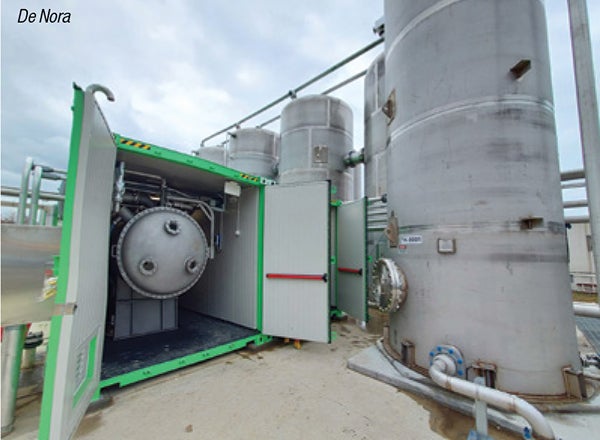
FIGURE 3. Before permanently installing a water-treatment system, it is helpful to vet the technology using an onsite pilot-scale skid system
Piloting can overcome the challenges of variability presented by seasonality, weather and many other factors that affect water quality over time, as well as provide the opportunity to adjust certain parameters to design a system that will deliver the right treatment for the specific application.
One size most certainly does not fit all when it comes to water, wastewater and process water treatment, and the various applications, regulatory requirements, space allotment and optimal performance of each unique bioprocessing plant demands a tailored approach. Piloting will ensure that a plant invests properly and for the long term.
For bioprocessing facilities seeking to ensure that their wastewater complies with federal and state regulations and does not contaminate the surface water into which it discharges its effluent, the advanced oxidation processes described here can offer exceptional benefits, including reducing costs, increasing profitability, lowering risk and improving reputation. ■
Case Study
A manufacturing facility in West Virginia was dealing with the following two issues:
1. An effluent with a toxicity level that needed to be reduced by 50% to meet state requirements for groundwater
discharge compliance
2. High costs for disposing of biological sludge
The site needed a disposal solution that could integrate with their existing plant, and they needed guidance on treatment strategies. Granular activated carbon (GAC) was considered, but rejected, due to high operating cost. UV was not applicable due to low UV transmittance and high organics content. The facility ultimately decided to pilot an ozone AOP treatment system. Among several reasons, ozone AOP was selected for its ability to oxidize the majority of the molecules causing toxicity, including surfactants, phenols, hydrocarbons, cyanide, pharmaceutical micropollutants, 1,4-dioxane and others.
The system dramatically reduced the toxicity of the plant’s effluent to as low as 0, far surpassing state regulatory requirements and reducing the risk of fines and litigation. Also, the plant will save between $100,000 and $150,000 per year thanks to a reduction in biological sludge disposal. The pilot has now been converted into a permanent installation. ❑
Edited by Mary Page Bailey
References
1. U.S. EPA Office of Wastewater Management, Introduction to the National Pretreatment Program, June 2011, www.epa.gov/sites/default/files/2015-10/documents/pretreatment_program_intro_2011.pdf.
2. U.S. EPA, Industrial Effluent Guidelines, March 2023, www.epa.gov/eg/industrial-effluent-guidelines.
3. U.S. EPA, Spill Prevention, Control, and Countermeasure (SPCC) for the Upstream (Oil Exploration and Production) Sector, March 2023, www.epa.gov/oil-spills-prevention-and-preparedness-regulations/spill-prevention-control-and-countermeasure-19.
4. U.S. EPA, Whole Effluent Toxicity Methods, August 2020, www.epa.gov/cwa-methods/whole-effluent-toxicity-methods.
Author
 Alex Bettinardi (Via Leonardo Bistolfi, 35, 20134 Milan Italy; Phone: +39 02 21291, Email: industriedenora@denora.com) is the global ozone and AOP product technology manager at De Nora S.p.A. in Lodi, Lombardy, Italy. He manages the technical and commercial bidding process, strategy definition, municipal and industrial market development, technical and sales training and knowledge transfer and support for representatives and distributors. Before joining De Nora, Bettinardi was the managing director at Ozono Elettronica Internazionale. He has a B.S. degree in biotechnology from Università degli Studi di Milano.