To inhibit fouling and H2S formation, chemicals like ferric chloride, ferric sulfate and aluminum sulfate are often used to reduce the concentration of phosphorus and sulfur in digesters at wastewater treatment facilities. While effective at isolating sulfides and phosphates, these chemicals carry distinct safety risks — they are extremely corrosive and can burn skin and eyes. A new treatment additive launched by Green Steel Environmental (Boulder, Colo.; www.greensteelenvironmental.com) simultaneously sequesters phosphorus and sulfur in digesters without concerns about corrosion or toxicity, while also improving the quality of resulting biosolids, which often are land-applied as fertilizer. “Unlike chemical treatment, Green Steel PSR™ sequesters phosphates and sulfides while protecting alkalinity and digester stability. It also mitigates corrosion caused by metal salts, which drives down operational costs. Furthermore, biosolids that contain Green Steel PSR release phosphorus and sulfur in a slow, plant-available manner in the digestate — a characteristic that growers and fertilizer producers prefer,” says Jon Teaford, chief executive officer of Green Steel Environmental.
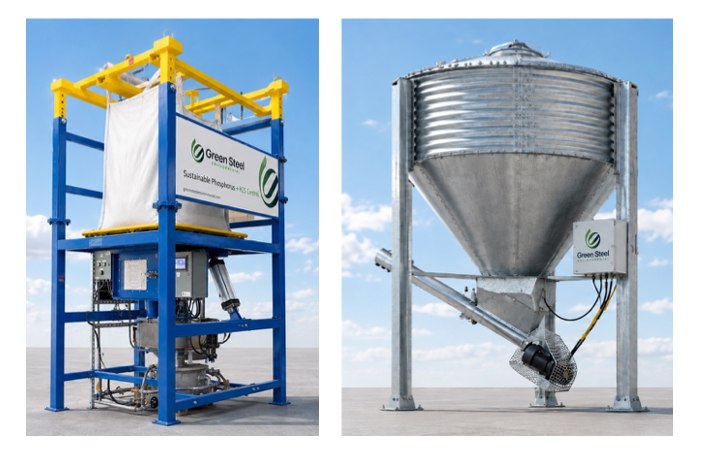
Source: Green Steel Environmental
The cost of Green Steel PSR is further driven down compared to chemical alternatives due to its unique makeup. It is an upcycled byproduct of steel manufacturing, which is milled to an optimized grain size. The company has licensed the intellectual property from the University of Colorado. “We do this milling process onsite at steel mills, so we can get as close as possible to our customers,” notes Teaford. The mineral-rich product includes iron, calcium, silica and magnesium, making it an effective digester additive and source of soil micronutrients.
The company is currently operating two full-scale pilots: the City of Boulder Water Resource Recovery Facility and the City of La Crosse Wastewater Treatment Plant. At the Boulder site, Green Steel PSR™ is being introduced to the solids stream as a slurry into a gravity thickener upstream of the anaerobic digesters. Since the pilot began in June 2026, the site has reported to date a 55% reduction in soluble phosphates and a 70% reduction in soluble sulfides. Previously, the site relied on large volumes of ferric chloride. “We also have nearly 50 full-scale municipal projects in various stages of planning and implementation. And while the municipal wastewater treatment market has been our focus, we have also started to make inroads in the biogas/renewable-natural-gas (RNG) market,” adds Teaford.