UPM (Helsinki, Finland; www.upm.com), a global leader in sustainable material solutions, has achieved an important milestone in the startup of production of commercial, wood-based chemicals in its Leuna biorefinery in Germany. The refinery, which is the largest industrial-scale investment in biochemicals in Europe, has started the production and commercialization of industrial sugars.
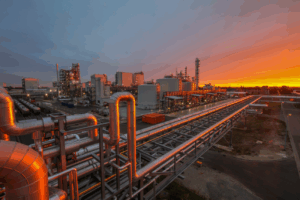
After successfully starting up the hydrothermal breakdown of wood on industrial scale earlier this year, the biorefinery has now reached stable operation in separating lignin and sugars. This critical process step is a prerequisite for the conversion of sugars to renewable glycols and lignin to renewable functional fillers.
“Leuna is significant proof of UPM’s commitment to scaling up innovative, high-performance bio-based material solutions. Our biochemical innovations enable us to enter new markets, create long-term value and reinforce our position as a leader in next-generation, sustainable materials. Reaching this milestone is a major step towards full operations at Leuna, which is the world’s first commercial-scale biorefinery turning wood into bio-based chemicals,” says Massimo Reynaudo, President and CEO of UPM.
Consumer brands are interested in renewable materials that offer significant CO2 saving potential compared to fossil products and existing recycled or renewable alternatives. Glycols can be used, for example, in PET packaging, polyester textiles, and cosmetics, while lignin-based renewable functional fillers offer a sustainable replacement for carbon black and silica in rubber and plastic applications.
UPM expects to enter the market with further commercial products from Leuna in the first half of 2026. Once fully operational, the facility will produce annually 220,000 tonnes of advanced biochemicals derived from sustainably sourced hardwood.
The Leuna biorefinery plays a key role in enabling the transition from fossil-based to renewable materials across multiple industries. UPM’s broader strategy aligns with the EU’s ambitions for decarbonization and industrial competitiveness, positioning bio-based innovation as a growth engine for Europe.