When scaling up from laboratory experiments to full-scale production, there are a strong set of reasons for constructing intermediate pilot-scale plants, but there are also some scale-up situations where it may pay off to skip the pilot studies
Pilot-plant studies often serve as critical intermediate stages between laboratory-scale experiments and full-scale production. However, it can be technically feasible to bypass pilot or demonstration plant studies in some cases. This article presents the main advantages associated with conducting pilot studies, then outlines several scenarios where it may make sense to skip them. Assessing the costs and benefits can help process designers decide how to proceed.
Advantages of pilot plants
Generally, pilot plants are crucial investments that safeguard against the financial risks associated with scaling up. They help provide clearer understanding of process requirements, operational costs and potential challenges for full-scale operations, and can often enhance the overall success and profitability of a project. Here are nine advantages to building pilot plants for scaleup.
Risk reduction. Laboratory studies are invaluable for proving the feasibility of an idea, but translating that idea into large-scale operations often reveals unforeseen complexities. A pilot-plant study is fundamentally about risk mitigation (Figure 1). It provides an opportunity to test the process on a smaller, yet realistic scale, allowing for the identification of issues that may not be apparent in the laboratory. These could include unexpected phenomena that emerge only with larger volumes, or challenges with specific equipment that do not perform as anticipated under operational conditions. The pilot phase is essential for uncovering such surprises before committing significant resources to full-scale deployment. Pilot plants also validate the process’s reliability at scale, minimizing the risk of costly financial and operational setbacks in the future.

FIGURE 1. Pilot plants safeguard against risks associated with process scaleup
Cost savings. Pilot plants can provide significant cost savings in the long run by helping to identify and address potential issues before scaling up to full production (Figure 2). Addressing issues — such as equipment bottlenecks, unexpected reactions or inefficiencies that were not apparent during laboratory trials — at the production scale can be extraordinarily expensive, involving downtime, wasted materials and costly redesigns.
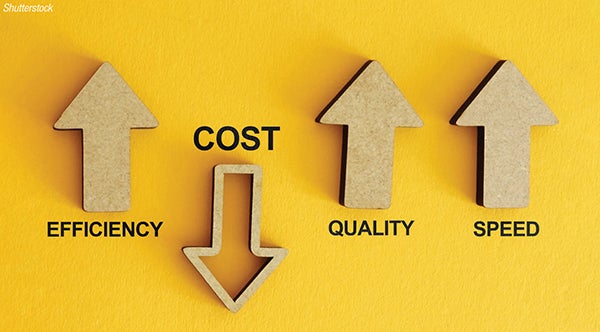
FIGURE 2. Well-executed pilot plants save scaleup costs in the long term by identifying issues early
One critical advantage of a pilot plant is its role in testing and selecting equipment for full-scale operations. The pilot phase allows for the evaluation of pumps, mixers, heat exchangers and other components under realistic conditions. This provides valuable insights into their performance and suitability, enabling informed decisions before committing to large-scale investments.
Additionally, operating on a pilot scale involves working with smaller quantities, reducing the financial impact of any adjustments or errors. Fine-tuning process parameters or replacing equipment is significantly easier and less expensive at the pilot level than at full scale.
The pilot or demonstration phase also offers opportunities to optimize the process, potentially leading to substantial long-term savings. For example, it can help identify ways to improve efficiency, reduce energy consumption or minimize waste — all of which contribute to lower operational costs at full capacity.
Process fine-tuning. At the pilot phase, processors are able to test and tweak temperatures, pressures, flowrates and equipment configurations to identify the optimal operating conditions, including yield, product quality and energy consumption.
Fine-tuning also allows troubleshooting potential hiccups that were not obvious in the lab. Scaling up can bring new challenges, like heat-distribution issues, mass-transfer limitations, unexpected side reactions, pressure drops, material buildup and others that could cause major headaches at full-scale production. Running the process at pilot scale uncovers these factors and allows necessary adjustments. Issues, including pressure drops, flow inconsistencies or material buildup, can be fixed more easily and cheaply than dealing with unexpected surprises in a full-scale manufacturing plant.
Pilot plants offer the opportunity for the engineering and operations teams to build hands-on experience with the process, helping to reduce costs at full-scale production.
Ensuring safety. Processes that operate safely at laboratory scale can behave unpredictably when scaled up, and these unforeseen challenges can pose significant safety risks. The pilot stage provides a controlled environment to identify and address these issues before they escalate. Scaled up processes introduce higher temperatures, pressures, enthalpy and larger quantities of chemicals, all of which can present unique safety challenges. For example, a reaction that appears stable in the lab may become more vigorous at scale, generating excessive heat or pressure and potentially leading to overheating, equipment failure, or even a runaway reaction. A pilot plant allows for the evaluation of such risks under controlled conditions, enabling the development and testing of mitigation strategies.
Mechanical issues also become more prominent at larger scales. Equipment that functions well in the lab, such as pumps or mixers, may struggle to handle increased flow rates or larger loads. Excessive vibration, wear and tear or leaks can occur, potentially compromising safety. The pilot stage provides an opportunity to identify and resolve these mechanical challenges before they affect full-scale operations.
The pilot phase allows the design and testing of safety protocols, such as emergency shutdown procedures, pressure-relief systems and other safety measures. Identifying and addressing gaps in safety systems at the pilot level is far less risky and costly than discovering them during full-scale production.
Maintaining product quality. A pilot plant plays a critical role in ensuring that product quality remains consistent as the transition is made from lab-scale to full-scale production. Among the primary scale-up challenges is identifying how changes in process conditions can lead to product variations. A reaction that performs flawlessly in a small glass beaker may behave differently in a large reactor, due to factors such as altered heat-transfer rates, mixing efficiency and residence times. These changes can significantly impact the final product. A pilot plant provides a controlled environment to test these conditions at an intermediate scale, allowing you to observe their effects on quality and make necessary adjustments. For example, you might find that mixing is less efficient at larger scales, leading to hot spots or uneven distribution of reactants, which could compromise product consistency. The pilot phase allows engineers to experiment with different stirring rates or alternative mixing equipment to ensure the product meets the quality standards achieved in the lab.
Another critical aspect of quality control is managing impurities. At larger scales, minor impurities can become more pronounced, or new impurities may be introduced by equipment, piping or other components that were not issues at small scale. Pilot studies enable close monitoring of quality, ensuring that impurities are identified, controlled and kept within acceptable limits before transitioning to full-scale production. A pilot plant allows the validation of critical parameters — such as temperature, pressure, flowrates and reaction times — so that product quality remains consistent to meet customer expectations and comply with regulatory standards at full production scale.
Regulatory approval. In many industries, obtaining regulatory approval is a critical step before proceeding to full-scale production. The pilot plant plays an essential role in generating the data required to demonstrate compliance with requirements that are expected by regulatory agencies. For instance, processors may need to prove that purification steps effectively remove impurities or that the final product maintains stability under specified conditions. Data collected during the pilot phase form the foundation of regulatory submissions.
In some industries, regulators must be assured that the equipment used at production scale will not introduce risks to safety or product quality. By running the process in a pilot plant, processors demonstrate that the selected equipment is capable of safely and efficiently handling the process. This is particularly crucial for potentially hazardous reactions, where pilot data can confirm that safety systems function as intended.
Environmental regulations often require evidence that emissions, waste production and effluent treatment meet acceptable standards. The pilot plant allows you to measure these factors and ensure that full-scale operation will not pose environmental risks. These data are crucial for securing permits and approvals from environmental agencies.
Inspiring management. Company management teams are tasked with making critical decisions about resource allocation, including investments in time, manpower and finances. A well-executed pilot plant study provides the concrete evidence needed to reassure decision-makers about moving forward with large-scale production. Witnessing a physical pilot plant in action can have a far greater impact than reports and presentations. The tangible setup makes the project feel real and creates excitement about the end goal.
A pilot plant also serves as a testament to the project team’s diligence and thoroughness. By conducting a detailed pilot study, the team demonstrates that they have meticulously tested the process, addressed potential challenges and fine-tuned operations. This level of preparation gives management confidence that the risks have been minimized and that the project is poised for success.
In addition to its visual and practical impact, a pilot plant generates invaluable data that management can use to justify their investment decisions. Key metrics, such as operating costs, energy consumption, product quality and potential bottlenecks, are quantified and presented, giving management a clear picture of the process’ performance. Ultimately, a pilot-plant study is a powerful tool for securing management buy-in.
Attracting funding and investment. External partners, including investors, collaborators or customers, are often interested in seeing tangible progress before committing time, money or resources. A pilot plant serves as a commercial-level proof of concept, demonstrating that the project has moved beyond a promising laboratory idea to something with real market potential. This validation can ease the process of securing partnerships, whether for licensing, joint ventures or co-development.
For investors, a pilot plant represents a critical milestone. The tangible progress reduces perceived risk, making the business case more compelling. Collaborators and potential customers also benefit from seeing the pilot plant in action. Witnessing the process firsthand allows them to better understand its capabilities and potential. Additionally, showcasing the pilot plant demonstrates a commitment to transparency and a willingness to address challenges in a controlled environment before scaling up. This openness fosters trust and enthusiasm among partners.
The pilot plant also serves as a unifying tool for aligning stakeholders. Successful pilot operations provide executives, investors, collaborators and customers with a shared foundation of trust and proof.
Securing intellectual property (IP) rights. Scaling up typically involves numerous tweaks and process improvements. For example, a novel method to address heat-transfer challenges may be identified or an efficient equipment configuration developed. These improvements, discovered during the pilot stage, can often be patented, bolstering your IP strategy (Figure 3). Documenting and securing such innovations add substantial value to a technology portfolio and enhances and organization’s competitive edge.

FIGURE 3. Improvements made during the pilot-plant stage may present opportunities for patents
Not all advancements need to be patented; some are better protected as trade secrets. Operational know-how, such as optimal configurations, proprietary conditions or unique process parameters, can be kept confidential. The pilot phase is critical for developing and documenting this proprietary knowledge.
In cases of IP disputes — such as defending against invalidation claims or addressing infringement — a well-documented pilot stage can be invaluable. Practical data, process adjustments and solutions to real-world challenges serve as evidence of the novelty and non-obviousness of an innovation.
A robust IP portfolio significantly enhances the value of a technology, particularly when pursuing licensing agreements. Licensees are more likely to invest when comprehensive protection can be demonstrated at every stage of scale-up. A pilot-plant study signals that scaling challenges have been thoroughly addressed and unique, patented solutions have been developed, increasing the appeal and financial value of licensing opportunities. Running a successful pilot plant makes patent claims more robust and defensible. Practical evidence makes it more difficult for competitors to challenge the validity of patents.
Minimizing financial risks and validating feasibility. The pilot plant serves as a testing ground not only for technical feasibility but also for economic viability. By running the process at a smaller scale, processors can evaluate the efficiency of energy usage, material consumption and waste management under real-world conditions. This validation ensures that the transition to full-scale production is financially sound and reduces uncertainties that might deter investors or stakeholders.
The pilot phase ensures that each dollar spent on a future full-scale plant is based on informed decisions. By fine-tuning the process at the pilot scale, insights are gained into the most effective equipment and configurations, helping to avoid unnecessary over-design or costly redesigns. This optimization maximizes the efficiency of capital investments and ensures the best possible return on investment (ROI).
One of the most valuable aspects of a pilot plant is its ability to provide real, actionable cost data. While lab experiments and simulations offer estimates, a pilot plant delivers hands-on experience with energy consumption, raw material use, waste generation and other critical cost factors. These data allow for more accurate predictions of operational expenses, enabling better financial planning and reducing the risk of unexpected costs that could jeopardize the project’s viability.
Situations for skipping pilots
In certain situations, bypassing a pilot project and moving to full-scale implementation might make sense and could save time and resources.
Well-established processes or supplier/partner guarantees. In scenarios where processes or systems have been successfully implemented multiple times in the past, skipping the pilot or demonstration plant phase may be a viable option. This is particularly true for technologies with a robust scientific foundation, well-understood engineering principles and extensive operational data. For example, standard water-treatment processes or conventional power-generation systems have been established for decades. Engineers possess deep insights into their scalability, potential issues and design principles, all of which are supported by comprehensive industry standards and guidelines.
Moreover, factors such as supplier, technology provider or partner guarantees can significantly mitigate the risks of proceeding directly to full-scale implementation. These guarantees often include performance assurances, where suppliers commit to achieving specific operational outcomes, such as production rates, efficiency levels or quality standards. Process guarantees may also be provided, ensuring the integrated system will function as intended within the broader operational context.
In this way, transitioning directly to detailed design and construction of a full-scale facility not only reduces time and costs, but also capitalizes on a foundation of established knowledge. However, this does not imply the complete elimination of testing. Simulations, calculations and targeted lab-scale experiments are still conducted to optimize parameters and refine design details. Additionally, the expertise and support provided by suppliers plays a critical role. Their involvement during the design, installation and commissioning phases ensures smoother transitions and more reliable outcomes.
Process replication from identical plants. When expanding or increasing the capacity of an existing process, building a pilot or demonstration plant may not always be necessary. This is particularly true when there is already a functioning model of the process in operation, providing valuable real-world data, operational insights and a clear understanding of how the system components integrate. If the process is well-understood and existing equipment can accommodate increased loads with some adjustments, scaling up directly to the full-scale plant may be feasible. In such cases, the need for a pilot phase diminishes as the focus shifts to implementing modifications based on proven performance.
The critical factor in this decision is the nature of the scale-up. If the scale-up is linear and does not introduce significant new complexities or variables, the risks are minimized (Figure 4). For example, certain chemical reactions exhibit predictable behavior during scale-up, particularly when they are not highly sensitive to factors such as temperature, pressure or mixing rates. When underlying science and engineering principles remain consistent across scales, the pilot phase can often be bypassed, leading to substantial time and cost savings.

FIGURE 4. When scaleups are linear and do not introduce significant complexity, the risks of transitioning directly from the bench scale to full scale are minimized
Ultimately, the decision to skip a pilot phase relies on the predictability of the process and the reliability of available data. With a strong foundation of operational experience and deep understanding of the process, direct modifications to the full-scale plant can streamline the path to increased capacity.
Non-critical applications. Processes classified as non-critical are those for which deviations do not result in severe consequences. If problems arise, they are unlikely to cause safety hazards, environmental damage or significant financial losses. Given this reduced risk profile, companies might opt to bypass the pilot or demonstration plant phase.
For example, consider a company manufacturing a consumer product using standard, well-established techniques. The materials involved are non-hazardous, and the production process is straightforward. In such cases, scaling up production directly to full-scale may be justified, because any minor issues encountered could likely be resolved quickly without major disruption or costs.
However, even in non-critical applications, it is crucial to avoid complacency. Skipping a pilot phase does not equate to skipping due diligence. Thorough planning and design are still essential to anticipate potential challenges. Utilizing proven technologies and equipment and investing in staff training ensure smooth operation of the full-scale plant.
Access to third-party pilot data. Through industry partnerships, collaborative agreements or published research, a company may have access to comprehensive and relevant pilot data that eliminates the need for independent pilot studies.
Leveraging third-party data offers several advantages. Building upon the experiences and findings of others can significantly reduce the time and resources needed for a new project. This approach accelerates the project timeline, minimizes costs associated with pilot plant construction and operation and frees processors to focus on refining and customizing the process for specific project needs, rather than validating already-proven fundamental concepts.
However, relying on third-party data requires careful consideration:
- Data should be directly applicable to a process. Differences in feedstock, equipment design, operating conditions or scale can impact the relevance of third-party data
- Data collected should rigorously and accurately represent the process performance
- Accessing and using third-party data may involve legal agreements to respect IP rights Ensure that permissions are in place and any restrictions on data use are understood
- Third-party data might not capture all variables relevant to a particular operation. Develop contingency plans to address unforeseen issues
Experienced developer teams. Experienced teams with project-development expertise have the ability to anticipate potential issues and implement solutions during the design phase. This allows them to approach full-scale plant development with confidence, often reducing the need for a pilot plant. These teams are typically proficient in using advanced simulation and modeling tools, enabling them to predict the performance of a full-scale plant in a virtual environment. By identifying potential bottlenecks or issues digitally, they can address problems before they manifest in the real world, further diminishing the necessity for a physical pilot plant.
Despite their expertise, experienced teams do not take unnecessary risks. They conduct comprehensive risk assessments and detailed engineering studies, leveraging their accumulated knowledge to make informed decisions. They rely on proven strategies, avoid repeating past mistakes and often draw on insights from a network of industry experts and consultants.
Even the most experienced teams are not infallible. Skipping the pilot plant increases the stakes, so teams should be diligent in planning and execution. Contingency plans should be in place and preparations made to address any issues that arise.
Low risk of process variation. When a process is characterized by minimal variation, meaning it consistently produces the same results under the same conditions, it reduces the uncertainties associated with scaling up. This consistency can make it feasible to skip the pilot phase. In such scenarios, the process behaves predictably, so it is reasonable to design the full-scale plant based on existing data and performance metrics. However, it is important to ensure that the factors contributing to the low process variation at a smaller scale remain consistent during scale-up. This might involve ensuring that raw-material properties and quality remain consistent when sourced in larger quantities. It may also involve designing equipment that can handle increased volumes without introducing new variables or inefficiencies, and replicating process conditions accurately at large scale. Even with a low risk of process variation, it is wise to implement robust monitoring and control systems in the full-scale plant.
Limited financial resources. Constructing and operating a pilot plant can be a significant financial undertaking. It involves costs for design, construction, equipment, staffing and operations for a facility that will not generate the revenue of a full-scale plant. In situations where financial resources are limited, companies might consider bypassing the pilot phase to allocate funds directly toward the full-scale operation. Here’s why and how they might do it:
- Funds can instead be invested in higher-quality equipment, better materials or more skilled personnel for the main plant, potentially enhancing its performance and reliability
- Use of well-known technologies and off-the-shelf components that have been proven in other applications can reduce uncertainties
- While not a perfect substitute for physical testing, advanced modeling and simulation tools can predict the behavior of a full-scale process
- Plants could be designed for scalability, starting operations at lower capacity and gradually ramping up production as the process is fine-tuned
- The potential benefits of skipping the pilot plant to get the project off the ground more quickly could outweigh the risks, and the potential challenges could be acceptable
However, skipping the pilot phase is not without its risks, especially when financial resources are scarce. These include unexpected technical problems disrupting operations, limited funds may make it difficult to address significant problems or delays, and if external funding is involved, investors might view the decision to skip the pilot phase as too risky.
Reducing the risks could involve spending extra time on design and engineering, bringing in experienced engineers and consultants who have successfully implemented similar projects without pilot plants and designing the plant to allow for adjustments and modifications without significant downtime or expense.
Regulatory flexibility. In certain industry sectors and geographic regions, the regulatory environment can be more accommodating, allowing companies to move forward without the strict requirement of building pilot or demonstration plants. When regulations are more adaptable, companies have greater autonomy in deciding how to validate their processes before going full-scale. For instance, some regulatory bodies focus more on end results — like product safety and environmental compliance — rather than prescribing the exact steps a company must take to get there. This means that if process designers can demonstrate through other means — such as advanced simulations, detailed engineering analyses, or leveraging data from existing similar operations — that a full-scale plant will meet all the necessary standards, a pilot might not be required.
Regulatory leniency can be particularly beneficial in fast-paced industries where speed to market is crucial. For example, in emerging technology sectors or renewable energy projects, being first can offer significant competitive advantage. Skipping the pilot phase under a flexible regulatory framework allows companies to expedite project timelines without getting bogged down in lengthy approval processes tied to pilot plant results.
However, regulatory flexibility does not mean a free pass to cut corners. Companies still bear the responsibility of ensuring that full-scale operations are safe, efficient and compliant with applicable laws and standards. They might need to provide alternative evidence to regulators, such as comprehensive risk assessments, third-party validations or contingency plans to address potential issues.
Moreover, regulatory environments can vary greatly among different countries or even regions within a country. Therefore, a thorough understanding of the local regulatory landscape is essential. Engaging with regulatory authorities early in the planning process can help clarify expectations and identify potential obstacles. Open communication also builds trust, making regulators more comfortable with projects with no pilot plant.
Time-sensitive market opportunities. Sometimes, a narrow window exists to bring a product or process to market. Maybe new technology is emerging, a competitor is gearing up to launch, or a sudden spike in demand has created a unique opportunity. In these cases, speed is of the essence and taking time to build a pilot plant could mean missing the boat entirely. Skipping the pilot phase accelerates project timelines and capitalizes on market conditions while they last. In time-sensitive situations, the potential rewards of skipping pilot plants can outweigh these risks. Mitigating the risks involves relying on extensive simulations, leveraging existing technologies where possible, assembling experienced teams who can troubleshoot on the fly and adopting modular designs that allow for adjustments and scalability as the project progresses.
Stakeholder risk tolerance. When stakeholders, including investors, company executives or partners, have high risk tolerance, they are more comfortable with the uncertainties that come with skipping the pilot phase. Driven by the potential for significant returns, competitive advantages or time-sensitive opportunities, risk-tolerant stakeholders are often willing to pursue projects that challenge the status quo, especially when they believe in the technology, the market potential and the team’s ability to deliver. For example, a startup backed by venture capitalists who are accustomed to high-risk, high-reward scenarios might decide to skip a pilot plant to accelerate product development and market entry. The investors understand that while this approach carries greater risk, it also offers the possibility of capturing market share quickly and generating substantial profits if successful.
Communication is key in managing stakeholder risk tolerance. It is important to provide stakeholders with comprehensive information about the risks and benefits of skipping the pilot phase. This includes detailed plans, risk assessments and mitigation strategies that demonstrate due diligence and preparedness. Addressing concerns proactively builds trust and can increase the comfort level in proceeding directly to full-scale implementation. Skipping pilot phase may align with objectives of stakeholders who prioritize rapid growth and are willing to accept the associated risks.
Edited by Scott Jenkins
Author
 Smith Wattanasoponvanij is experienced in the design and execution of experiments (DOE) and the development of customized laboratories, pilot-plants, and demonstration-scale facilities tailored to specific industrial needs (Email: s.wattanasoponvanij@gmail.com). His expertise extends to scaling processes both up and down, ensuring optimized performance and efficiency in numerous successful projects. Beyond technical design, he has accelerated process technology advancements to support various chemical industries. He has collaborated closely with R&D teams to align innovations with business goals, emphasizing speed-to-market strategies and continuous development of technological advancements into commercial operations. His dedication to bridging the gap between research and practical application has made him a trusted partner in advancing chemical process technologies.