Through a trunnion-free drum-screen technology, fine screening applications with high solids loading can achieve their goals while controlling costs and reducing risk
For fine screening and small-particle removal in applications like wastewater treatment, few technologies offer as much value as drum screens. They can reliably capture very small solids while supporting higher flowrates and minimizing splash and aerosol. Their one historical drawback has been the short life of the trunnion wheels, which are notoriously unreliable and carry a heavy maintenance burden.
Multiple moving parts and perpetual exposure to water and contaminants take a toll on the trunnion wheels. It is not uncommon for a trunnion assembly to need significant attention every six months, ranging from a bearing replacement to a complete rebuild. This work requires a crew of skilled workers often in a confined space with wastewater debris over one to two shifts, lifting heavy equipment, performing deep cleaning or parts replacement and executing high-precision repositioning to ensure the cleaned and rebuilt assembly is properly aligned. These jobs can result in a full day or more of downtime and halted production.
Trunnion-free drum screens
Together, these challenges have inspired an industry evolution in drum-screen design: a device that can effectively capture solids to achieve strict regulatory compliance while also eliminating the trunnion wheels and their heavy maintenance requirements (Figure 1).
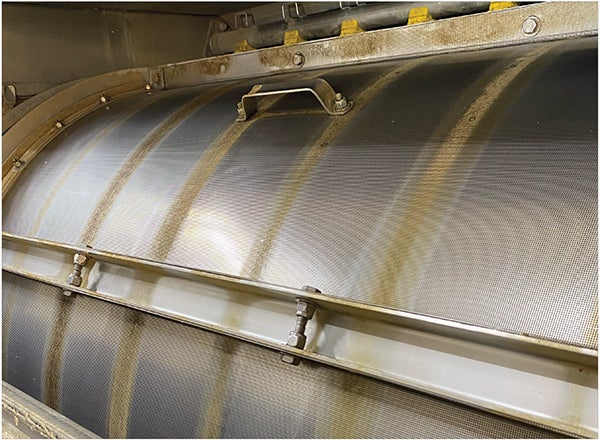
FIGURE 1. Completely removing the trunnion wheels from drum screens can deliver reduced downtime, lower costs and better maintenance conditions
This patented innovation is an internally fed rotary drum screen — without a trunnion wheel — for municipal and industrial applications. From the outset, the water inlet can be designed on either side of the drum screen, providing options for difficult installation scenarios.
In a simple, failure-resistant design, the drum is encircled on one end with a polyethylene water-lubricated wear strip that rides on two stainless-steel shoes. On the other end, the center of the drum is connected directly to the motor, eliminating the chain-drive system of conventional drum screens. With no additional components required to drive or stabilize the drum, this trunnion-free design sharply reduces wear points, increases reliability and extends product lifespan.
The maintenance burden also is reduced. A high-pressure spray bar inside the drum washes captured solids off the screen surface into a discharge trough, activated automatically based on customizable time or flow conditions. Drum design encourages smooth flow through the drum, reducing buildup and clog-prone zones common in older trunnion or chain-drive systems. Without trunnion wheels or internal bearings in the wet zone, grit and solids cannot accumulate in moving parts, which significantly reduces the places where cleaning would otherwise be needed. When manual cleaning is necessary, panels can be cleaned with a basic pressure washer in just a few minutes.
Modular screening panels remove easily for deep cleaning and to allow inside drum access without disassembling the machine or removing the entire drum assembly. All routine maintenance is done at chest level. Another benefit of this design is that it is simple to change out screen panels with different sized openings to adjust for debris conditions or flowrates — maintenance that can take an hour or less.
Increased reliability, lower TCO
With a substantially lower rate of failure, fewer replacement parts and reduced maintenance demand, the trunnion-free drum screen contributes to lower operating costs. These systems can last many years before needing service. in fact, pilot systems installed seven years ago have never failed. Capital costs also are reduced by simplifying fabrication and installation through the elimination of trunnion wheels and their heavy support assemblies, using a smaller direct-drive system, and reducing the need for precise civil modifications.
For facilities with limited staff or high downtime costs, the reliability and low-maintenance features of this innovation can deliver a much lower total cost of ownership (TCO). The reduced risk of worker injury further increases the long-term value of the trunnion-free design.
Use case: Paper recycling plant
Among the unique challenges of wastewater from paper-recycling processes are the minute bits of plastic and Styrofoam that end up in the effluent. Plastic and paper are often glued together in packaging and shipping materials, and consumers rarely separate these before throwing items into their recycling bin. While many processes are in place to separate paper from plastic, very small pieces of plastic and Styrofoam inevitably make it to the waste stream. Furthermore, the quality of the waste stream can be inconsistent because the contents of the inputs often vary.
The Wisconsin Department of Natural Resources (www.dnr.wisconsin.gov) administers the Wisconsin Pollutant Discharge Elimination System (WPDES), which regulates point-source discharges of pollutants into waters of the state, including rivers, streams, lakes, wetlands and groundwater. New state-discharge permit requirements include tougher limits on microplastics discharges to the environment, and violations come with significant fines that increase with repeat offenses.
To find a solution that would adhere to these new permit requirements, one paper recycling plant in Wisconsin executed a long-term pilot of a trunnion-free internally fed rotary drum screen. Its previous screening equipment was not capable of achieving new compliance demands, and plant operators were intrigued by the idea of a drum screen without trunnion wheels, having personally experienced the headaches of maintaining a trunnion wheel assembly.
With a flowrate of 1 million gal/d, the recycling plant installed two internally fed rotary drum screens in January 2024 to capture fine inorganic solids from its effluent before treatment and discharge to a nearby lake. Since installation, the new drum screens have achieved target solids-capture levels for microplastics, Styrofoam beads and very thin plastic films, which can often bypass other screens.
The ease of changing screening panels allows operators to size up or down without taking the system offline for an extended period of time and without hassle or risk to plant workers. In about an hour, staff can replace all panels at chest level without lying on the floor or getting wet, working in the dark or working with overhead lifting equipment (Figure 2).
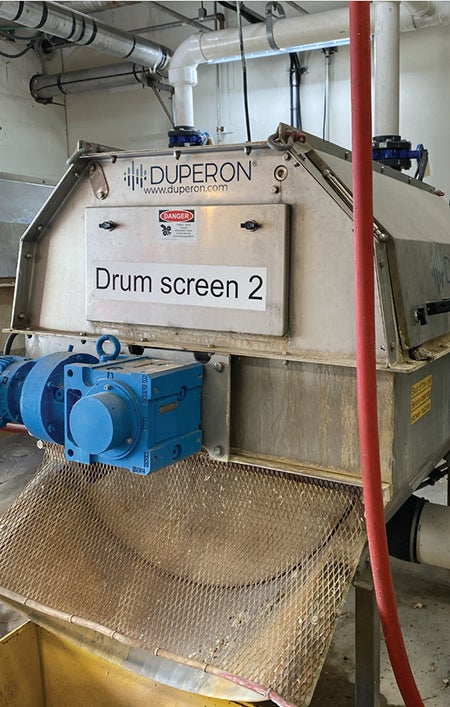
FIGURE 2. Easier access to screening panels simplifies maintenance requirements and reduces the need for downtime and difficult manual labor
A trunnion-free drum screen is helping this paper recycler adhere to increasingly stringent state regulations, avoid downtime and save maintenance costs and hassle.
The importance of piloting
While this technology is a suitable fit for many applications, it is not appropriate for every application. Piloting is therefore essential to help owners make an informed decision prior to purchase.
Pilot testing uses current, site-specific data and is based on actual process conditions. This includes the quality of the plant’s actual influent, including target contaminants, concentration, particle sizes and influent stream flow. Also unique to every plant are the existing processes that new technology must work with, and only a pilot can assess this compatibility. Not only does a pilot confirm that a certain technology will work as intended for a given application; it is also a chance to perfectly calibrate the technology and fine-tune its features for optimal efficiency and performance.
A long-term pilot minimizes investment risk and ensures that owners experience operational benefits including reduced maintenance and maximized uptime. For any facility evaluating advanced screening solutions, piloting is highly recommended and often required by a supplier. ■
Edited by Mary Page Bailey
Acknowledgement
All images provided by author.
Author
 Lorene Bruns currently serves as the national sales manager at Duperon Corp. (1200 Leon Scott Court, Saginaw, MI 48601; Phone: 800-383-8479; Email: info@duperon.com). She has nearly 20 years of experience in the water and wastewater industry, managing projects across both municipal and industrial sectors. Her broad range of expertise has equipped her with a deep understanding of the unique challenges and intricacies within each market. She is an active member of the WEFTEC Advisory Committee and the WEF Manufacturers & Representatives Committee.