For a long time, air-pollution control equipment was budgeted the way a company budgets for fire insurance: a necessary cost with no expectation of a return. That framing is outdated, and for a growing number of manufacturers, it is costing money they do not need to spend. A well-engineered VOC abatement or particulate control system does more than keep a facility inside its permit limits. It recovers heat that would otherwise be vented straight to the atmosphere, recovers solvent and product that would otherwise be purchased twice, and protects a facility from the much larger costs of an enforcement action or an unplanned shutdown. Hands-on engineering experience helps to illustrate that the operating cost side of this equation matters as much to a plant manager’s budget as the compliance side does to a plant’s air permit. The five examples below are not theoretical. Rather, they are the same categories of savings engineers outline when a project is still on the drawing board, before a single piece of steel has been fabricated.
Heat recovery turns a compliance requirement into an energy asset
Regenerative thermal oxidizers, a workhorse technology for VOC destruction in many industrial exhaust streams, can achieve thermal energy recovery of up to 95% [1], capturing heat generated during oxidation and reusing it to preheat incoming process air.
At that level of efficiency, a properly loaded RTO can reach what industry calls self-sustain mode [2], running with little or no supplemental natural gas once the VOC content of the exhaust stream is doing most of the work of maintaining combustion temperature on its own. Facilities that go a step further and add secondary heat recovery can redirect that reclaimed thermal energy toward space heating, process water heating, or steam generation elsewhere on site, turning a piece of compliance equipment into a genuine source of usable energy the facility would otherwise have to purchase from a utility. On a large installation running continuously, the difference between a moderately efficient oxidizer and a highly efficient one adds up to a meaningful line item in the annual utility budget, not a rounding error, which is exactly why heat recovery deserves the same scrutiny during equipment selection that emissions performance gets.
Recovering solvent instead of destroying it
Not every VOC stream has to be burned. Carbon adsorption systems can capture solvent vapor, desorb it, then condense and recover it as a usable liquid solvent, rather than destroying it as a waste stream, with recovery rates that regularly reach ninety-eight percent or better [3] in properly designed installations. For any process that exhausts a sizable quantity of a valuable solvent, whether that is toluene, hexane, heptane or acetone, the recovered material is utilized straight back into production, cutting raw material purchases instead of minimizing a number on an emissions report. The economics here are straightforward. A facility that recovers thousands of gallons of solvent each year is not paying to buy that solvent twice, once as feedstock and again, in effect, as waste.
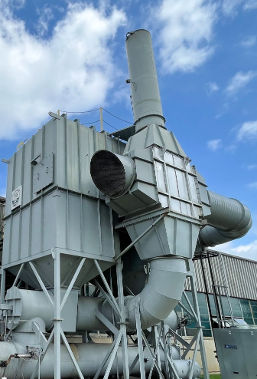
FIGURE 1. Recovering heat from thermal oxidation (air to air heat exchanger) isn’t just about emissions compliance anymore. It’s becoming a real lever for cutting energy costs across industrial operations
Turning captured dust back into usable product
The same logic applies to particulate control. In many manufacturing processes, from food powders to metal fines to pharmaceutical intermediates, the material captured by a baghouse or cartridge collector is not waste at all [4]. That captured material can often be recovered and returned directly to production rather than trucked offsite for disposal, cutting material losses at the same time it improves the air workers are breathing on the plant floor. A dust collection system specified with product recovery in mind, rather than treated purely as an emissions afterthought, can meaningfully reduce a facility’s raw material losses over the course of a year, on top of whatever it also saves on waste hauling and disposal fees. Getting this benefit usually comes down to a design choice made long before startup: air to cloth ratio, filter media selection and hopper design all affect how cleanly a collector releases its captured material back into a usable form, rather than as a contaminated blend that has to be discarded anyway.
Avoiding the cost of non-compliance
Operating costs are not only what a facility spends to run its equipment. They also include what a facility risks losing when its equipment fails to keep it in compliance. Civil penalties for Clean Air Act violations are adjusted upward for inflation nearly every year [5], and the EPA’s most recent adjustment pushed the maximum penalties for air, water and hazardous waste violations higher still [6], continuing a steady upward climb that has held for the past decade. Those maximums represent ceilings rather than typical fines, but they set the tone for how aggressively enforcement personnel pursue a case, and they do not capture the cost of the production downtime, legal fees, and corrective action plans that typically accompany an enforcement matter. A control system that reliably holds its numbers is, among other things, an insurance policy against a category of cost that can dwarf the price of the equipment itself many times over.
Closing the loop on water use
Wet scrubbers remain one of the most effective and lowest capital-cost options for a wide range of acid gas and particulate applications, but they consume water, and that water eventually has to go somewhere. Facilities that recirculate and treat scrubber blowdown in a closed-loop system, rather than drawing fresh water and discharging to sewer with every pass, lower their water and sewerage costs directly [7], while also reducing their exposure to future restrictions on water use and wastewater discharge. In regions where water costs are rising, or where water availability is becoming a permitting issue in its own right, that closed loop design decision increasingly pays for itself well within the equipment’s working life, not just over some distant horizon.
The real return on an environmental investment
The common thread across all five of these examples is that the environmental control system and the plant’s operating budget were never really separate line items to begin with. Heat, solvent, product, water and compliance risk all show up somewhere on a facility’s cost sheet, whether or not anyone in the building is looking for them. The manufacturers who get the most value out of their air pollution control investment are the ones who ask their equipment to do double duty, holding the compliance line while paying part of itself back in energy, material, and water the facility no longer has to buy from someone else. That is a very different conversation than the one most companies are used to having about environmental equipment, and it is worth having early, while a system is still being specified, rather than years later when the operating cost picture has already been locked in by a design decision nobody thought to question. The facilities that have this conversation early tend to look back on their control system as one of the better investments on the plant floor, not simply as the price of staying in business.
References
- U.S. EPA — Thermal Oxidizer Guidance.
- U.S. EPA — Reasonably Available Control Technology (RACT) Determinations .
- McChesney, J., Using nPB Solvent: Solvent Recovery Using Carbon Adsorption, Plastics Technology, 2007.
- Sly Inc., Baghouses & Cartridge Collectors: Industrial Dust Collection Solutions.
- Crowell & Moring, EPA Increases Fines for Civil Non-Compliance, Jan. 2025.
- Lion Technology, New Maximum Civil Penalties for Environmental Violations, Jan 2025.
- Eco Septic, “A Guide to Closed-Loop Wastewater Recycling Systems,” July 2024.
Author
 Anoosheh Oskouian is CEO of Ship & Shore Environmental, Inc. (2474 North Palm Drive, Signal Hill, CA 90755; Email: anooshehm@shipandshore.com; Phone: 562-997-0233). She spearheads innovative strategies to reduce industrial pollution and improve air quality globally. With a background in chemical engineering and a passion for sustainability, Oskouian is dedicated to advancing green technologies and advocating for environmental stewardship.