At Kaneka North America, replacing paper procedures and reports with guided digital workflows for operator rounds streamlined knowledge-sharing and improved process consistency
Kaneka North America LLC, a division of Kaneka Corp. (Osaka, Japan; www.kaneka.com), manufactures specialty chemicals and advanced polymer materials in processes that demand close attention to equipment condition, procedural compliance and cross-shift communication. Like most continuous manufacturing operations, the group depends on operator rounds: systematic walkthroughs of the plant to observe, measure and document conditions at critical checkpoints. When done well, rounds are a front-line defense against equipment failures, safety incidents and process deviations (Figure 1). Done poorly or inconsistently, they leave blind spots that are only discovered after a deviation becomes a failure point.

FIGURE 1. Operator rounds are essential in any manufacturing site to observe equipment condition and detect process anomalies, providing a firsthand account of plant status
For a specialty chemicals site, the stakes are high. Process deviations that go undetected across a shift handover can escalate. Equipment issues that aren’t documented clearly are harder to diagnose and slower to resolve. And when supervisors lack real-time visibility into what’s happening on the floor, they are managing by memory and assumption, rather than data. Getting rounds right — consistently, across every shift, every day — is a foundation of safe and effective operations. New tools for digital rounding are a part of how process manufacturers are adapting to a workforce in transition and an operational environment that can no longer depend on institutional memory alone.
The problem with paper
For years, Kaneka’s operators performed rounds on paper — handwritten notes on standard forms, or whatever was convenient when a proper form wasn’t nearby. The data existed, but it was inconsistent, hard to verify and invisible to supervisors until someone physically returned it to the control room. Deviations were not always documented at the time they were observed. Communication between shifts was uneven. And because there was no digital trail, supervisors had no real-time view of what had been completed, when and by whom.
The problem was not operator behavior. It was a system that made inconsistency easy and traceability hard. Paper checklists cannot enforce a sequence; an operator can skip a step, leave a field blank or complete items out of order, and none of that is visible until someone reviews the form, often hours later. When an anomaly was spotted in the field, flagging it required a separate note, a verbal handoff or a trip back to the control room. Technical manuals lived in binders, not in the hands of the operator standing in front of the equipment.
Guided workflows in the field
To bridge this data gap, Kaneka transitioned to a guided digital workflow using a mobile operator rounds platform. By leveraging the smartphones operators already carry, the site implemented the mobile version of the software to ensure every checkpoint is verified in real time.
The core capability is dynamic checklist guidance. The system routes operators step by step, with each prompt determined by the previous answer. If a reading falls outside normal range, the workflow adapts accordingly, directing the operator to a deviation-specific follow-up, rather than continuing as if everything is normal. Required steps cannot be skipped, and the sequence cannot be completed out of order. The platform also functions offline, syncing data when connectivity is restored, which was essential for areas of the site with inconsistent network coverage.
When operators encounter an anomaly, they can photograph it directly in the app, attaching a timestamped image to the specific checklist item. This gives maintenance teams clear visual context without relying on verbal descriptions or follow-up conversations (Figure 2). QR codes posted at equipment locations provide direct access to technical manuals within the same system, keeping reference materials in the field instead of in the control room.
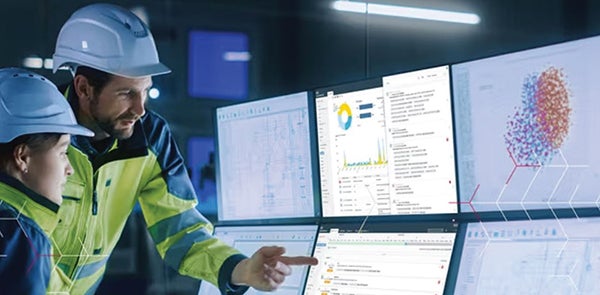
FIGURE 2. Information from operator rounds can be easily integrated into control-room applications, providing context and immediacy to maintenance teams
Visibility across shifts and roles
With mobile operator rounds in place, the gap between the field and the control room closed. Supervisors can see in real time which rounds have been completed, which are in progress and where deviations have been logged, without waiting for a paper form to be returned. Close to 250 team members now use the platform to support operator rounds and Gemba walks across the site. Gemba walks are a Lean management practice that empowers personnel to observe and engage with real-world processes and equipment firsthand and identify opportunities for improvement. Among the most significant operational improvements are the following:
- Real-time deviation capture, enabling earlier trend detection and faster response before issues escalate
- Stronger root-cause identification, supported by accurate, timestamped documentation and photo evidence captured at the point of observation
- Automated notifications and alerts, ensuring safety and maintenance concerns reach the right teams immediately
- Enhanced maintenance reliability, with all activities tracked and accessible in a single system
The mobile app is part of a broader set of tools for shift handover, process management and tier communication. Having a shared digital knowledge-management system creates a single source of record for operators, supervisors, maintenance teams and quality managers. Structured, shared reporting replaces verbal handoffs and informal notes, giving every incoming shift a clear and accurate picture of what happened before them. Knowledge that once lived in individuals’ heads or scattered binders is now centralized and searchable, reducing dependence on any single person and accelerating the onboarding of new team members in an industry facing increasing workforce turnover.
“With the Shiftconnector online rounds software system, our rounds are consistent, documented and visible. Operators like the convenience of completing them on their phones, and supervisors now have a true 360-degree view of what’s happening each shift,” commented Ken Froedge, senior director, digital technology and innovation, Kaneka North America.
Process manufacturing is facing a generational shift in its workforce. The institutional knowledge that once lived in experienced operators doesn’t transfer automatically; it has to be captured, structured and made accessible. Digital rounds platforms are part of how leading manufacturers are responding: replacing processes that depend on individual memory with systems that make operational knowledge visible, searchable and durable. For Kaneka, that transition is already delivering concrete results, every shift. ■
Edited by Mary Page Bailey
Acknowledgment
Images provided by author
Author
 Andreas Eschbach is the CEO of the global software company eschbach GmbH (Steinbrückstraße 10, 79713 Bad Säckingen, Baden-Württemberg, Germany; Phone: +49 (0) 7761 559 59-0; Website: www.eschbach.com) and inventor of the award-winning plant process management (PPM) platform, Shiftconnector (www.shiftconnector.com). The software is designed to help production teams streamline shift-to-shift communications and enable a safer and smarter environment through better data sharing and workforce collaboration. Holding a degree in computer science, Eschbach draws his practical experience from leading a variety of international software initiatives for major process manufacturing companies, especially in chemical and pharmaceutical industries. He holds a seat on the Forbes Technology Council and recently was named as one of the top 25 industry leaders to transform smart manufacturing by the professional association SME, both of which are committed to advancing manufacturing and developing a skilled and collaborative workforce.