The expectations placed on plant operators have never been higher. Regulatory frameworks are tightening, environmental accountability is under constant scrutiny and the margin for error in process safety is shrinking. At the same time, producers are expected to improve efficiency, reduce costs and remain agile in the face of shifting market demands.
Traditionally, instrumentation has been viewed as a necessary layer of plant infrastructure; critical, but largely passive. Flowmeters, gas analyzers, pressure transmitters and temperature sensors have long served as the eyes and ears of operations, measuring and reporting process conditions but leaving interpretation, decision-making, and optimization to operators and control systems.
Yet, as digitalization accelerates and process complexity increases, this perspective is rapidly changing. Smart, connected devices are evolving from passive data providers into active contributors to diagnostics, optimization and performance improvement.
Instrumentation is no longer just about measurement; it is becoming a strategic enabler, one that allows chemical plants to move beyond compliance and towards continuous optimization, resilience and innovation.
The expanding role of instrumentation in modern plants
Chemical processes are inherently sensitive systems. Small deviations in temperature, pressure or composition can cascade into significant operational, safety or environmental consequences. In such environments, visibility is everything.
In this context, modern instrumentation stands out as the key to providing that depth of process information. Not just as raw data points, but as contextualized, real-time insights into process behavior. Advanced sensors can now detect minute variations in chemical composition, identify early signs of fouling or catalyst degradation and monitor emissions with increasing precision.
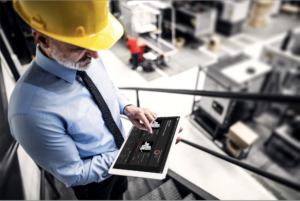
Condition monitoring, emissions measurement and reaction kinetics are important areas where instrumentation serve crucial and valuable roles in chemical processes
Source: ABB
For engineers, this shift means instrumentation is no longer a background utility. It is a frontline decision-making tool.
Reaction control should also be considered. Historically, adjustments were often reactive, based on laboratory samples or delayed feedback. Today, inline analyzers and high-frequency measurement systems allow operators to detect subtle imbalances in real time. This enables proactive intervention, reducing off-specification production and minimizing waste.
The same principle applies to safety. Early detection of abnormal conditions, such as pressure fluctuations, gas leaks or temperature excursions, can prevent incidents before they escalate. Instrumentation, in this sense, becomes a predictive safeguard rather than a reactive alarm system. This shift from reactive to predictive capability is also what enables a fundamental change in how plants approach compliance.
From compliance burden to operational opportunity
This shift in capability is particularly important when it comes to compliance. Traditionally, compliance has been viewed as a cost center. Meeting emissions limits, ensuring safety integrity levels and adhering to reporting requirements often require significant investment with little perceived return.
However, when approached strategically, instrumentation can transform compliance from a burden into a source of competitive advantage.
Take emission monitoring as an example. Continuous emissions monitoring systems (CEMS) are typically installed to satisfy regulatory requirements. But the data they generate can also reveal inefficiencies in combustion, leaks in process systems or opportunities for energy recovery.
By analyzing emission data alongside process variables, engineers can identify correlations that would otherwise remain hidden. For instance, a slight increase in NOx emissions may indicate suboptimal burner performance or air-to-fuel ratios. Addressing this not only ensures compliance but also improves energy efficiency and reduces operating costs.
Similarly, accurate flow and mass-balance measurements can support more efficient use of raw materials. In high-value chemical processes, even small improvements in yield can translate into substantial financial gains.
In this way, instrumentation bridges the gap between regulatory compliance and operational excellence. It enables plants to meet external requirements while uncovering internal opportunities for improvement.
Real-time insights: the foundation of process safety
Process safety is fundamentally about understanding and controlling risk. Yet, risk cannot be managed effectively without accurate, timely information.
Instrumentation plays a critical role in providing that information. But its true value lies in how that data is used. In many plants, safety systems are still largely based on predefined thresholds — alarms triggered when a parameter exceeds a set limit. While essential, this approach can miss the early warning signs of developing issues.
Modern measurement technologies, combined with advanced analytics, allow for a more nuanced approach. Instead of waiting for a threshold breach, engineers can monitor trends, patterns and deviations from normal operating conditions.
For example, a gradual drift in pressure readings across a heat exchanger may indicate fouling. A slight change in vibration or flow characteristics could signal equipment wear. By identifying these patterns early, maintenance can be scheduled proactively, reducing the risk of unplanned downtime or failure. Predictive maintenance can, in fact, reduce maintenance costs by 10-40% and unplanned downtime by up to 50%.
Gas analysis is another critical area. In processes involving hazardous or volatile substances, even trace concentrations can pose significant risks. This is particularly important, as unplanned downtime costs process industries an estimated $20-50 billion annually. High-sensitivity analyses can detect these conditions at an early stage, enabling swift corrective action.
Ultimately, instrumentation enhances situational awareness. It gives operators and engineers the confidence to act decisively, backed by reliable data.
Data-driven decision-making across the plant lifecycle
The value of instrumentation extends far beyond the control room. When integrated effectively, measurement data can inform decisions across the entire plant lifecycle, from design and commissioning to operation and optimization.
During the design phase, accurate measurement data helps engineers validate process models and ensure that systems are configured for optimal performance. In commissioning, real-time feedback accelerates troubleshooting and reduces time to stable operation.
Once the plant is running, instrumentation data becomes a continuous feedback loop. It supports not only day-to-day operations, but also longer-term initiatives, such as debottlenecking, energy optimization and sustainability improvements. By combining flow, temperature and pressure measurements with energy monitoring, plants can identify inefficiencies in heat integration, steam usage or compressor performance. By incorporating better process control and through optimization, the chemical industry can improve overall energy consumption by up to 50%.
Similarly, water usage and waste generation can be optimized through better measurement and control. In an era where sustainability is increasingly tied to both regulation and reputation, these insights are invaluable.
Importantly, the rise of digital platforms and industrial analytics tools means that data from disparate instruments can now be aggregated and analyzed at scale. This opens the door to more sophisticated optimization strategies, including predictive maintenance, advanced process control and even autonomous operations.
Enabling innovation
Without precise, reliable data, it can be difficult to push operating conditions closer to their optimal limits. Engineers tend to operate conservatively to avoid risk, which can leave performance on the table.
High-quality instrumentation reduces that uncertainty. It provides the confidence needed to explore new operating regimes, test alternative feedstocks or implement more aggressive optimization strategies.
For instance, in reaction engineering, improved measurement of concentration and composition can support tighter control of reaction kinetics. This can lead to higher yields, reduced selectivity for byproducts and more efficient use of catalysts.
In emissions control, advanced analyzers can support the development of new abatement strategies or the optimization of existing systems. This not only helps meet current regulations but also prepares plants for future requirements.
Turning insight into impact
Recognizing the value of instrumentation is one thing, translating it into operational improvement is another. In practice, the difference lies in how measurement is treated, not as a collection of devices, but as an integrated capability across the plant.
It starts with trust in the data. Reliable decisions depend on accurate, stable measurements, and when that confidence is in place, engineers can operate closer to optimal limits without building in unnecessary safety margins. Poor-quality data, by contrast, almost always leads to conservative operation and lost efficiency.
But accuracy alone is not enough. The real value emerges when measurement data is connected to the wider operational context — linked with control systems, energy usage and asset performance. This is where patterns become visible and where instrumentation begins to inform broader decisions, not just local adjustments.
Clarity of purpose is equally important. The most effective approaches are focused on solving specific challenges — whether improving yield, reducing emissions variability, or stabilizing energy consumption — rather than attempting to measure everything. When aligned to clear outcomes, instrumentation becomes far more than a monitoring tool; it becomes a driver of change.
Finally, instrumentation should be viewed as something that evolves alongside the plant. As processes and requirements shift, so too should measurement strategies. Continuous refinement, whether through targeted upgrades, better integration or improved use of data, ensures that instrumentation continues to deliver value over time.
The future of measurement in chemical processing
As the chemical industry continues to evolve, the role of instrumentation will only become more central. Emerging trends, such as electrification, circular economy models and stricter environmental regulations will place even greater demands on measurement and control. At the same time, advances in sensor technology, connectivity, and analytics will expand what is possible.
In this context, instrumentation is no longer just about seeing what is happening in the plant. It is about understanding why something is happening and what to do next.
By treating instrumentation as a strategic asset, rather than a technical necessity, chemical plants can move beyond simply meeting requirements. They can unlock new levels of performance and position themselves for long-term success in an increasingly demanding environment. ♦
Edited by Mary Page Bailey
Author
 Frank Frenzel is the Global Product Line Manager – Business Line Instrumentation, ABB’s Measurement & Analytics Division (CONTACT INFO). He has over 20 years of experience working in industry, and holds a degree in electrical engineering from Karlsruhe Institute of Technology (KIT).