PharmaWater Pro® is a modeling platform (part of this company’s consulting services) for pharmaceutical manufacturers planning new facilities or evaluating upgrades to existing water purification infrastructure. Pharmaceutical manufacturing plants depend on highly engineered systems to produce purified water (PW), water for injection (WFI), and pure steam. These systems represent a significant share of a facility’s utilities demand and can influence long term operating costs, maintenance requirements, and environmental performance. Yet key technology decisions are often made early in project development when limited information is available. PharmaWater Pro® is engineered to help address this challenge. The engineering platform can model pharmaceutical water systems at the conceptual stage, providing insight into how different technology choices affect utilities, sustainability metrics, and long-term operating performance before capital investments are made. The platform models systems from city water feed through purification, storage, and distribution to the point of use, enabling engineers to evaluate the full infrastructure rather than individual components in isolation. Using PharmaWater Pro®, engineers can size and configure water purification equipment, compare alternative technologies and estimate key operational parameters, including energy consumption, water usage, wastewater generation, carbon emissions, capital costs and operating costs.
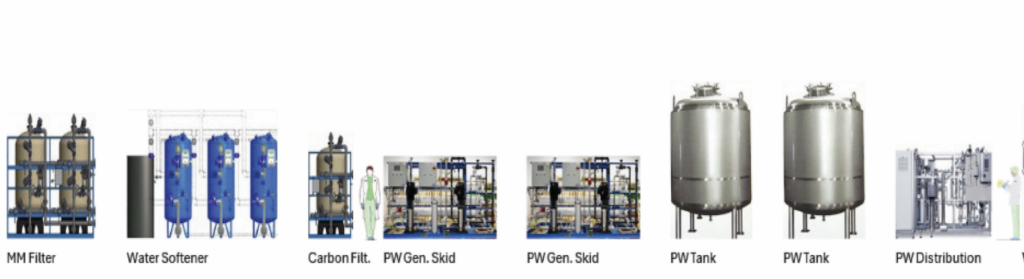
Source: Genesis AEC
The platform supports two primary evaluation approaches. In design mode, engineers generate conceptual configurations for new facilities, providing preliminary equipment sizing and utility requirements that can inform facility planning and layout development. In rating mode, the platform analyzes existing systems or vendor proposals by modeling actual equipment selections, allowing project teams to compare performance across different technologies or suppliers. This type of early modeling can reveal lifecycle considerations that may otherwise be overlooked during initial project planning. Different purification technologies, such as multi effect stills, vapor compression systems, and membrane-based processes, have distinct energy requirements, maintenance profiles, and service life expectations. Understanding these differences early can help engineering teams balance sustainability objectives, operational reliability and long-term costs. — Genesis AEC, Blue Bell, Pa.