OT/IT Integration in Chemical Plants: The AI Readiness Problem
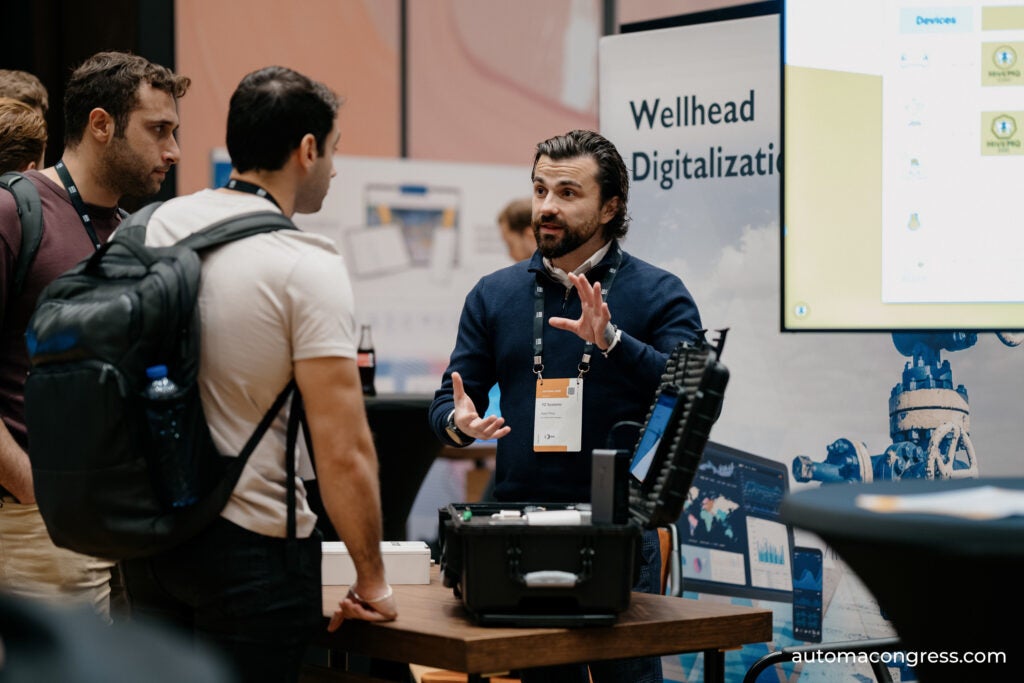
Your Plant Has the Data. Your AI Cannot Reach It. Here Is Why That Is the Core Problem in Chemical Manufacturing.
Every major chemical company is running AI projects. Most of them are quietly struggling. The issue rarely sits with the models. It sits with the data infrastructure underneath them – which was never designed for this purpose.
Ask any chemical engineer what is holding back digital transformation at their site and the answer is rarely a shortage of ambition or budget. It is infrastructure. Specifically, the persistent gap between operational technology (the PLCs, distributed control systems, SCADA platforms and process historians that run the plant) and information technology, the enterprise systems, cloud platforms and analytics tools where AI models are built and deployed.
These two domains grew up separately, governed by different engineering disciplines with different priorities. OT was designed above all for reliability and uptime. An instrument that has controlled a reactor for fifteen years does not get patched mid-campaign. IT, meanwhile, operates on update cycles, open standards and data portability. Connecting the two is not primarily a software problem. It is an architectural one – and it is the reason so many digital initiatives in the chemical process industries stall between pilot and production deployment.
The data on this is unambiguous. According to RAND Corporation, more than 80% of AI projects fail to reach meaningful production deployment – roughly twice the failure rate of traditional IT projects. S&P Global’s 2025 survey found that 42% of companies had abandoned most of their AI initiatives during the year, up from just 17% in 2024. Gartner attributes 85% of AI project failures to poor data quality or lack of relevant data. And McKinsey’s 2025 research found that organisations achieving significant financial returns from AI were twice as likely to have redesigned end-to-end data workflows before selecting any modelling technique. The pattern is consistent: the algorithm is rarely the bottleneck. The data foundation is.
It is a challenge that practitioners across the chemical process industries are actively working to resolve – and one that sits at the centre of the Chemical Automation and Digitalisation Congress (AUTOMA Chem) 2026 agenda in Berlin this October.
The Gap Between the Sensor and the Model
In a typical chemical plant, a process sensor may generate thousands of data points per second. That data flows into a historian – a time-series database optimised for OT – where it sits largely inaccessible to enterprise analytics systems. To train a predictive maintenance model, a data scientist needs to pull labelled historical data from that historian, match it against maintenance records from the CMMS, cross-reference it with production data from the MES and align it with quality records from the LIMS. In most plants, those systems do not speak the same language, operate on incompatible data models and may not have been designed to share data at all.
This is not a legacy problem unique to older sites. Even facilities built in the last decade routinely have OT and IT architectures that were procured independently, integrated minimally and governed by separate teams with separate reporting lines. The result is a fragmented data landscape where the raw material for AI (large volumes of clean, labelled, contextualised process data) is technically present but operationally inaccessible.
At industry forums and technical discussions in 2026, one of the dominant themes has been precisely this. BASF’s automation and process control manager characterised the challenge plainly: establishing a solid data foundation is a prerequisite for successful AI deployment in chemical manufacturing. Building trust and engagement with operations staff as AI tools are integrated is equally critical. Neither is a technology question. Both are engineering and organisational design questions.
What the Architecture Actually Requires
Solving OT/IT integration in a chemical plant involves several interdependent layers, each of which needs to be addressed in sequence rather than in parallel.
The first is connectivity – establishing reliable, secure, high-bandwidth communication between OT devices and higher-level systems. LyondellBasell’s deployment of private 5G across its global manufacturing footprint illustrates the scale of this investment. Working with NTT and Celona, the company built an enterprise-grade wireless network designed specifically to carry the OT traffic that underpins its digital transformation programme.
“Deploying private 5G networks across our manufacturing sites provides critical connectivity that enables our digital solutions, resulting in increased operating efficiency and enhanced safety measures,” said Kathy VanLandingham, LyondellBasell’s Vice President and Chief Information Officer.
The second layer is data standardisation. Raw OT data is heterogeneous – different vendors, different tag naming conventions, different time stamps, different units. Without a normalisation layer, every analytics project becomes a bespoke integration exercise. Evonik has addressed this systematically, building what the company describes as a norm-based data model implemented across all applications along the asset lifecycle. The intent is to give AI systems a consistent, governed view of plant data regardless of which DCS vendor or historian sits underneath.
The third layer is contextualisation. Sensor readings become useful for AI when they are linked to process context – which unit operation, which product grade, which operating mode, which operator was on shift. This context typically lives in multiple separate systems. Creating a unified data layer that connects process data with maintenance records, production logs and quality data is the engineering work that most pilots skip, and the reason most pilots do not scale.
The fourth layer is security. As OT and IT converge, the attack surface expands. A connected DCS is an asset and a vulnerability simultaneously. Managing this requires architectures that provide data visibility upwards into analytics platforms without exposing control systems to the broader network – a design challenge with no single correct answer and significant variation by process type, site age and regulatory context.
What Successful Integration Unlocks
When these layers are properly in place, the results are material.
LyondellBasell’s partnership with C3.ai (expanded to a five-year enterprise agreement in 2022) has focused on asset optimisation, supply chain and plant reliability.
“C3 AI is at the core of LyondellBasell’s digital transformation. Through an industry leading approach, we will leverage strategic relationships to accelerate our journey and continue to unlock trapped value, improve the safety and reliability of our assets, and increase efficiency across the entire value chain,” said Anup Sharma, SVP Global Business Services at LyondellBasell.
The company’s employee-driven Value Enhancement Programme has unlocked a cumulative $800 million in recurring annual EBITDA, with AI-driven operational improvements cited as a key contributor alongside broader efficiency initiatives.
At BASF, the integration of AI-enhanced digital twins with Siemens across its German chemical sites has enabled engineers to test process adjustments, optimise energy consumption and forecast deviations without interrupting live production. The company has also developed PlantGPT – an AI digital assistant for plant operations, trained on thousands of internal documents, safety procedures and engineering materials – which provides plant and engineering teams with real-time access to site-specific knowledge and accelerates onboarding for new personnel.
“We also work on novel AI concepts that have the potential to deliver groundbreaking solutions and redefine industry standards like agentic AI,” said Marcus Pospiech, Corporate AI Program Lead at BASF.
Evonik has taken a different approach in its research environment. The company’s fully automated laboratory in Essen operates without resident human operators, with AI tools such as AIChemBuddy – which uses Bayesian optimisation to guide experimental design – supporting researchers in identifying promising formulations and reducing experimental iterations. The underlying principle is consistent with OT/IT integration at the plant level: make accumulated data accessible and actionable, rather than leaving it locked in systems that cannot communicate with each other.
WACKER Chemie’s recently commissioned Etching Line Next facility at Burghausen represents the other end of the spectrum – a greenfield installation designed with automation and process stability as primary objectives from the outset. In a process where product purity is measured to twelve nines, high-level automation is not a digitisation strategy. It is a product quality strategy. The facility exemplifies what is achievable when the OT architecture is designed for integration rather than retrofitted for it.
It is worth stating clearly that OT/IT integration is not purely a technology project. The engineering challenges are real, but the organisational barriers are at least as significant.
“I don’t see the supply chain as a silo. It must be deeply aligned with production, commercial teams and the customer. Digitalisation ties all of this together,” said Shabnam Nejand, Global Director of Supply Chain at Evonik.
OT and IT teams in chemical companies have historically operated with different cultures, different vendors and different success metrics. Bringing them together around a shared data architecture requires deliberate organisational design – governance structures, shared ownership of data quality, and investment in the cross-functional skills that sit at the boundary between process engineering and data engineering.
This is one reason why companies navigating this transition successfully tend to treat it as a multi-year programme rather than a project. The technology decisions – which connectivity infrastructure, which data historian, which cloud platform, which AI tooling – are consequential, but they are downstream of the organisational decisions about how the plant engineering and enterprise IT teams will work together, who owns data quality, and how success will be measured.
Where the Conversation Is Happening
The architecture gap between OT and IT is not a niche infrastructure problem. It is the reason AI projects stall, digital twins stay disconnected from live operations and predictive maintenance remains a pilot that never scales. Solving it requires engineering rigour, organisational design and a willingness to treat data infrastructure as a strategic asset rather than a procurement line item. AUTOMA Chem 2026 brings together the engineers and digital leaders doing exactly that, and the conversations happening in Berlin this October are more specific, more technical and more useful than most.
Explore the AUTOMA Chem 2026 programme
Sources: McKinsey State of AI 2025; S&P Global Market Intelligence 2025; RAND Corporation; Gartner; LyondellBasell / NTT / C3.ai; BASF; Evonik; WACKER Chemie AG; Emerson; Chemical Engineering ARC Forum coverage, February 2026.