Several 2025 year-end reports and data releases paint a nuanced picture of the global chemical process industries (CPI) as we head into 2026. The complex picture reflects the diversity of industry sectors comprising the CPI, and the wide range of factors influencing CPI operations and end-use markets. Parsing the available data and comparing recent analyst insight, several themes emerge that will help to shape CPI operations and influence market conditions in 2026 and beyond.
Key themes for 2025
Challenging economic environment. Policy uncertainty, disruptions to global supply chains and weakened demand in several key end-use markets for CPI products helped create a challenging business environment in 2025. Several recent reports pointed out uncertainty as a prevailing force last year, especially intense in the first half of 2025.
In the American Chemistry Council’s (ACC; Washington, D.C.; www.americanchemistry.com) Year-End Situation and Outlook report [1], ACC chief economist Martha Moore said the uncertainty experienced by the U.S. chemical industry last year, in the form of shifting tariff policies, among other things, was a major challenge, but expressed optimism for 2026. “Despite unprecedented levels of uncertainty that challenged the industry and its customer markets this year, we anticipate a recovery emerging mid-year of 2026,” Moore writes.
Trade tensions also appeared in recent analysis of credit markets for the chemical industry. Credit-rating provider Fitch Ratings (New York, N.Y.; www.fitchratings.com) stated that trade tensions last year put pressure on the economic performance of chemical companies. “While tariff pressures have eased somewhat year to date, we believe volatility in protectionist measures will remain an overhang for overall sentiment in industrial markets,” the Fitch analysis states [2].
Another factor contributing to the difficult economic environment in 2025 had to do with overcapacity of several key building block chemicals globally. As a result of increased global capacity for basic chemicals, such as ethylene, propylene, benzene, butadiene and others, margins were tight, and, when combined with weaker product demand, placed downward pressure on operating rates and made profitability a challenge for producing companies.
Uneven industrial demand. Products of the CPI are sold into a large swath of industries, with around 95% of manufactured goods requiring CPI products as inputs or components. Due to the foundational nature of the CPI, demand among key end-use markets is predictive of the economic prospects of companies in this set of industry sectors. Among the key end-use markets experiencing sluggish demand are automotive manufacturing, housing construction and consumer goods. Flat vehicle sales impact chemicals like polyurethane, polypropylene, ethylene glycol and epoxy resins. Also, the expiration of federal electric vehicle (EV) incentives in the U.S. in September 2025 “may further reduce chemical demand, as EVs use more chemicals than traditional internal combustion engine vehicles,” according to the Deloitte 2026 Chemical Industry Outlook [3].
Meanwhile, slower consumer spending could reduce demand for surfactants, packaging polymers, food preservatives and others. And slower rates of construction, driven by still-high interest rates and building costs, will likely reduce demand for sealants, adhesives, coatings, concrete admixtures and others.
“We expect North American chemical demand to remain weak in 2026, reflecting the slowdown in US growth and ongoing softness in key consumer durables, construction, and autos markets,” says Fitch Ratings. “Leading indicators and management commentary suggest limited prospects for a meaningful near‑term uplift in these cyclical markets,” they add.
However, despite a weakened demand state across many industries, a few industry sectors are bucking the trend. This includes the semiconductor manufacturing industry. The push to build infrastructure for artificial intelligence (AI) is driving increased demand for semiconductors for data centers (Figure 1).

FIGURE 1. Semiconductor manufacturing is an active sector, driven by the expansion of AI infrastructure
Disciplined business strategy. Several sources of year-end assessments affirmed the sharpening of business models and capital discipline as industry-wide responses to the current economic environment.
“We expect companies, in this context, to be highly disciplined in 2026 to protect their balance sheets, taking the necessary measures to reduce costs and capex and adjust their financial policies,” says Fitch Ratings. “Most companies have implemented cost-cutting, project deferrals, asset closures and dividend reductions or suspensions, which will strengthen bottom-of-cycle cash generation. Further restructuring and consolidation appear likely to ensure resilience in an uncertain environment,” they add.
In December, PwC said chemical deals showed renewed energy in late 2025 “as global corporations continue to divest, sharpening their business models to better weather uneven industrial demand. Following a mid-year lull, this portfolio transformation is driven by shareholder pressure for capital discipline, investor demand for transparency, and a shift toward more focused business models.” [4] This is leading to larger, more complex carve-outs and selective divestitures from major chemical groups, PwC adds.
As Deloitte puts it, “Companies are reassessing portfolios across assets, products and geographies, rationalizing underperforming assets, and prioritizing high-cash-flow businesses.”
In search of higher margins, several companies are looking to expand into specialty chemicals, an area where there is less commoditization and hyper-competitiveness. “Commoditization has reduced margins for many chemicals, but specialized products can offer opportunities for tailored solutions,” the Deloitte report states. “Companies can look beyond incremental changes and develop transformative products that address unmet needs.”
Developing trends for 2026
Data centers drive electricity demand growth. Demand for computation has increased as the economy has digitalized. Over the last decade, the rise of expanded computational services has been accompanied by increased demand for associated cloud computing infrastructure. As remarked earlier, semiconductor manufacturing, driven by the construction of data centers, is an area of growth amid overall weakened demand. But data centers also have an impact on energy, water and materials consumption.
Material associated with applications in the energy transition, including lithium, cobalt, copper, rare-earth elements and others, show strong momentum, although it is somewhat tempered by a slowdown in decarbonization efforts in some regions amid broader economic headwinds.
Digital transformation continues. The industry’s digital transformation is expected to continue in 2026, with a focus on the integration of AI technologies into applications that require detection of patterns and anomalies, and the automation of simple, repetitive tasks. According to a 2025 survey by the National Association of Manufacturers (Washington, D.C.; www.nam.org), the majority (51% of manufacturers in the U.S. already use AI in daily operations, and 80% said AI would be essential to growing or maintaining their businesses by 2030.
Many current AI-related applications are aimed at improving operational performance and safety, but AI is also being leveraged for research and development projects and AI-based large language models are being used as a interface between humans and plant data.
Two intertwined trends can be found in the next stage of industry’s digital transformation: the application of artificial intelligence to processes will be important and the movement toward interoperability will continue. According to analysis by ABI Research, “Open standards that enable interoperability between server vendors and increase the modularity of Artificial Intelligence (AI) clusters will continue to gain importance in 2026. Such standards are important for building the next generation of AI data centers because they dismantle proprietary ecosystems and foster a more competitive environment.” [5]
Regarding AI, a 2025 survey [6] from industrial software firm Cognite (Tempe, Ariz.; www.cognite.com) and RT Insight shows that many industrial companies are moving from the early experimentation stage to a phase of real execution with AI (Figure 2). “Many now treat [AI] as a strategic priority, but scaling success remains uneven,” the survey says. “Most respondents view AI as critical to improving efficiency, productivity, and reliability, yet data readiness, workforce skills, and governance still present major challenges.”

FIGURE 2. Artificial intelligence technologies continues to be a major aspect of plant digitalization efforts
Reflecting developments in AI, cloud computing and interoperability, the survey says “Cloud adoption continues to expand, but more importantly, most organizations now report using multiple providers or hybrid environments. Even traditionally risk-averse sectors . . . are embracing public cloud . . . This shift reflects a growing recognition of the scalability, performance, and AI-readiness these platforms offer. As more vendors enter the space, integration and interoperability have become essential.”
Sustainability versus affordability. Amid the current downcycle of demand and high costs of goods and energy, the question of how sustainability efforts fit into business process becomes a question of long-term competitiveness.
Following the inflation of the past few years, and cost-of-living increases, affordability has emerged as a key political issue. For industrial players, this comes into play with the cost of energy. In some ways, the focus on affordability is at odds with sustainability initiatives, which generally requires upfront capital investment and often involves processes that remain more expensive than conventional methods of production. “The current emphasis on affordability means that some alternative [energy] sources, such as green hydrogen and some other sustainable fuels, may not be competitive with traditional fuels in the near term,” says McKinsey & Co. (New York, N.Y.; www.mckinsey.com) in an autumn 2025 report [7] (Figure 3).
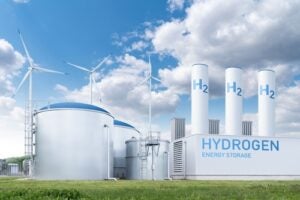
FIGURE 3. Low-carbon hydrogen is a key area of interest for decarbonization initiatives
A survey of decision makers in materials conducted by McKinsey revealed an overall reduction in willingness to pay premiums for “green” materials, such as aluminum, steel and copper, produced with more sustainable processes, but suggested that there is variability depending on a host of factors. “The variation in willingness to pay [green] premiums highlights the importance of customer segmentation in go-to-market approaches for sustainable materials,” McKinsey says.
“On this point, targeting the right customer segment with a win-win value proposition can improve the economics of decarbonization business cases,” they add.
Industrial decarbonization as business strategy. Despite the current tension between affordability and sustainability, a case can be made for how movement toward sustainability can align with good business. Many thought leaders envision a connection between investments in emissions-reduction technologies by the CPI and future opportunities for business growth.
For example, in November 2025, the ACC recently updated its sustainability report to include a section on the business case for sustainability in the chemical industry. The addition points out strategies to embed sustainability into core business strategies, not only to reduce environmental impact, but also to drive innovation, efficiency, and long-term resilience, ACC explains in a related blog post [8].
Also, a recent collaboration between Princeton University (www.princeton.edu), Deloitte and energy industry analyst OPIS (www.opis.com) produced a study [9] in 2025 that investigated several questions related to decarbonization by using a techno-economic model to evaluated different emissions-abatement trajectories. These questions included: What are plausible future scenarios that the industry will face, and what are the likely key drivers for those outcomes?; What is the capital expenditure required for the industry to achieve emissions reductions?; What are key abatement technologies that will enable the industry’s emissions reductions?; and How do regions differ in projected CapEx spend, abatement application, and other emission reduction approaches?
“To take full advantage of the economic opportunity and to make progress on the corporate commitments, a path is needed toward chemicals and materials that have a smaller, eventually zero, greenhouse gas emissions intensity, while at the same time being produced at scale — profitably. This transformation may require significant capital investment, innovation in the abatement solution space, and cooperation between industry players, governments, and other organizations,” the study states.
Among the study’s conclusions is that “The [techno-economic] model demonstrates a tremendous opportunity for growth and transformation in the chemical industry’s journey toward net-zero in second half of the century. While current investment levels in lower emissions technologies are below what will ultimately be needed for corporates to achieve their sustainability goals, the path forward is clear: With bold capital commitments and a persistent focus on innovation, the sector can achieve significant emissions reductions and unlock new sources of value.”
The path to meaningful emissions reductions will require significant capital investment that is above that for “business-as-usual” capital expenditures. The investments “underscore the period of capital-intensive transformation that lies ahead for the industry,” the study states. “There is, however, potential to take advantage of existing asset life cycles, and to strategically align investments in decarbonization with opportunities for growth and modernization to improve competitiveness.”
Another recent report [10], commissioned by the International Council of Chemical Associations (ICCA; www.icca.org), investigated pathways to climate neutrality for the chemical industry and pointed out a number of enablers for the success of this transition. These enablers highlight a few areas within the CPI that are likely to have continued elevated activity in 2026. Among these is the integration of advanced processes for the chemical-recycling of plastics with existing mechanical recycling approaches. Other enablers are the industry’s access to sustainably sourced biomass feedstock for chemical products, the advancement of low-emissions hydrogen production and the successful implementation of carbon-capture and storage (CCS) systems.
A final enabler mentioned is access to affordable low-emissions energy. Here, the development of renewable energy sources, particularly wind and solar power, along with nuclear power generation, will play a larger role in 2026. Power supply that is newly added will be disproportionately represented by wind, solar and natural gas. A number of sources, including the International Energy Agency (IEA; Paris, France; www.iea.org), have revealed data suggesting that 2025 was the first year in which power generation from renewable sources outstripped that generated by coal.

FIGURE 4. New power supply added in 2026 is anticipated to be disproportionately weighted to solar and wind
Optimism for the industry. Although most CPI sectors begin 2026 under less-than-ideal conditions, there is some optimism about an improved environment later in the year. Several of the reports mentioned an expectation of improving market conditions toward the back half of 2026. ACC, for example, anticipates that a recovery for the chemical industry will begin to emerge after mid-year 2026.
One definite is that the CPI will maintain their importance to all aspects of the economy in 2026 and beyond.
Scott Jenkins
References.
- Moore, M.G., Building the Foundation for Growth: ACC Year-End Situation and Outlook, American Chemistry Council, Dec. 16, 2025, blog post, americanchemistry.com.
- Deguerre, G., Deteriorating Outlook for Chemicals on Overcapacity, Fitch Ratings, Dec. 15, 2025 Press Release accompanying Global Chemicals Outlook 2026 Report, fitchratings.com
- Yankovitz, D., 2026 Chemical Industry Outlook, Deloitte Consulting, report, December 2025, deloitte.com
- PwC, Portfolio realignment drives carve-outs amid uneven industrial demand, U.S. Deals Outlook: Chemicals, PwC, Dec. 16, 2025, pwc.com
- Carlaw, S., 62 Tech Trends that will (and won’t) shape 2026, ABI Research, report, December 17, 2025, p. 5. abiresearch.com.
- Cognite and RT Insights, State of Industrial AI and Cloud Strategies 2025, survey, December 2025, cognite.com
- McKinsey & Co., Global Energy Perspective 2025, October 13, 2025, report
- Toomey, M., Why Sustainability Is Smart Business for the Chemical Industry, American Chemistry Council, blog post, Nov. 5, 2025
- Deloitte Consulting, OPIS Chemical Market Analytics and Princeton University Andlinger Center for Energy and the Environment, Pathways Toward Sustainability: A Roadmap for the Global Chemical Industry, report, December 2025.
- Hermanns, R. et al., Pathways for the global chemical industry to climate neutrality, ICIS and Carbon Minds Report, June 2024, commissioned by the International Council of Chemical Associations (icca-chem.org).