 In the chemical industry, accurate pH measurement is fundamental to safe operations, product quality, regulatory compliance, and process optimization. pH affects reaction rates, solubility, corrosion, separation efficiency, and environmental discharge quality. Because of its importance, pH sensors are widely deployed across chemical plants. However, pH sensors are also among the most maintenance-intensive field instruments. Automated pH sensor maintenance has emerged as a critical solution, helping chemical facilities improve reliability, efficiency, and overall operational performance.
The Challenges of Manual pH Sensor Maintenance
Traditional pH sensor maintenance relies heavily on manual inspection, cleaning, and (re)calibration. In chemical process environments, sensors are exposed to fouling, coating, abrasion, and chemical attack. Deposits from process fluids can accumulate on sensor electrodes, leading to drift, slow response times, or complete failure. Manual maintenance schedules are often based on fixed intervals rather than actual sensor condition, which creates two major problems.
First, sensors may fail or produce inaccurate readings between maintenance cycles, resulting in off-spec products, safety risks, or environmental non-compliance. Second, excessive maintenance increases labor costs and process downtime, particularly in facilities that operate continuously. Manual calibration also introduces human error, inconsistencies, and safety risks, especially when sensors are located in health-hazardous or hard-to-access areas.
What Is Automated pH Sensor Maintenance?
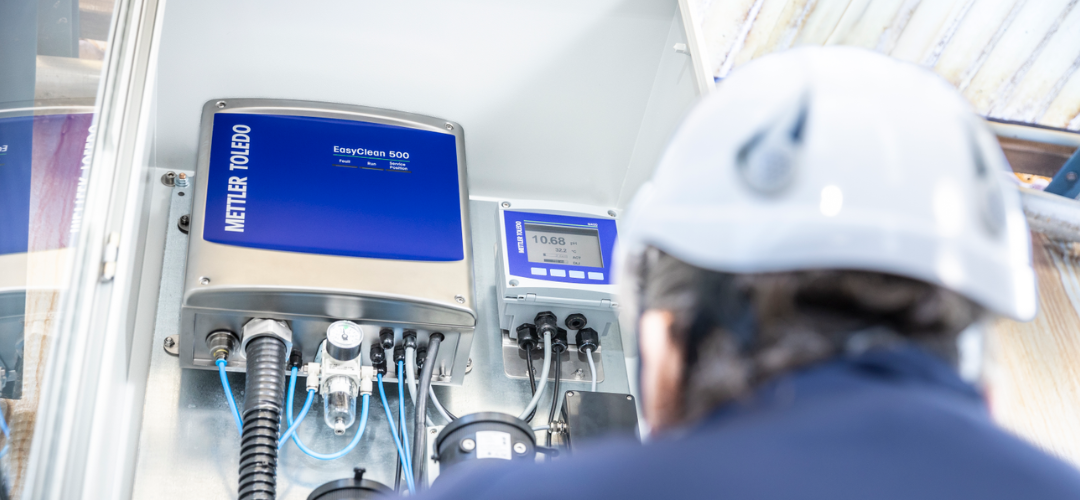
Automated pH sensor maintenance systems perform routine tasks such as cleaning and calibration without direct human intervention. Chemical cleaning is most effective and is possible through retractable assemblies in pipe or vessel-mount installations. These systems also allow auto-calibration using standard buffer solutions.
Modern automated systems are often integrated with digital pH sensors and plant control systems, enabling predictive maintenance strategies. Instead of reacting to sensor failure, facilities can identify performance degradation early and take corrective action before it impacts operations.
Improving Measurement Accuracy and Process Control
One of the most significant benefits of automated pH sensor maintenance is improved measurement accuracy. Consistently clean and properly calibrated sensors provide reliable data, which is essential for precise process control. In chemical reactions where pH must be tightly constrained, even small measurement errors can lead to reduced yields, unwanted byproducts, or batch rejections.
Automated maintenance ensures that sensors remain within specification, reducing drift and response delays. This enables control systems to make faster, more accurate adjustments, improving process stability and repeatability.
Increasing Operational Efficiency and Uptime
Automation directly improves operational efficiency by reducing unplanned downtime and maintenance interruptions. Automated cleaning and calibration can be performed while the process remains online or during optimal maintenance windows, minimizing production losses. This is particularly valuable in continuous chemical processes, where shutdowns are costly and disruptive.
By reducing the need for frequent manual intervention, automated maintenance also lowers labor requirements. Maintenance personnel can focus on higher-value tasks such as system optimization and troubleshooting.
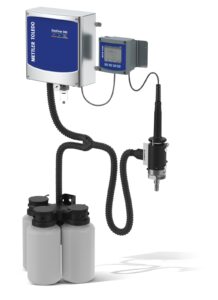
EasyClean 500 automated sensor cleaning and calibration system
Enhancing Safety and Regulatory Compliance
Safety is a top priority in the chemical industry, and automated pH sensor maintenance contributes directly to safer operations. Manual maintenance often exposes workers to hazardous chemicals, high temperatures, or toxic atmospheres. Automation reduces the frequency and duration of these exposures, lowering the risk of accidents and injuries.
Enabling Predictive and Data-Driven Maintenance
Advanced digital sensor technologies generate valuable sensor diagnostic data, based on process exposure, reference impedance, and calibration history to enable predictive maintenance strategies. This allows facilities to replace or service sensors based on actual condition rather than arbitrary schedules.
Predictive maintenance reduces spare parts inventory, avoids premature sensor replacement, and prevents sudden failures. Over time, this data-driven approach lowers total cost of ownership while improving system reliability.
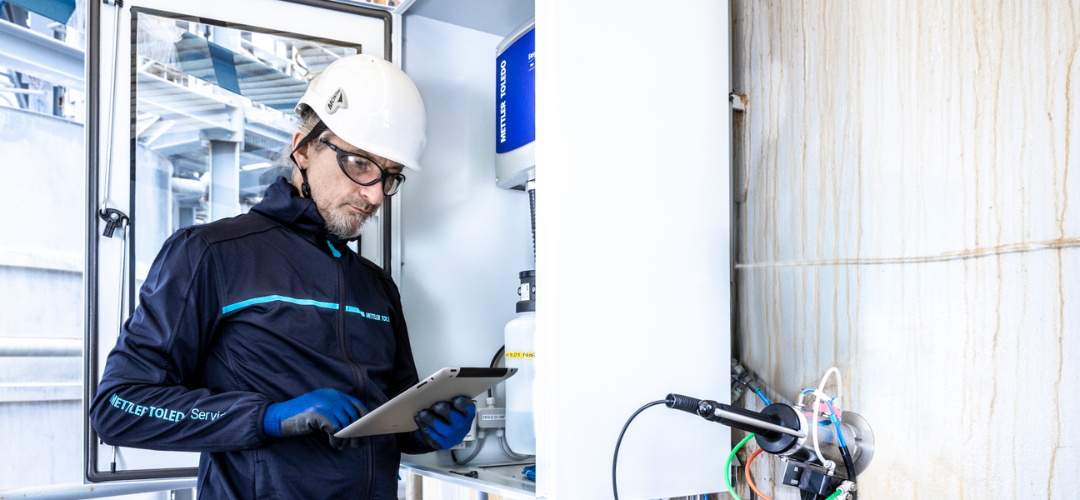
METTLER TOLEDO Process Analytics offers ISM, a process analytical platform that uses the power of intelligent, digital sensors to improve measurement performance and reduce maintenance to a minimum.

Supporting Digitalization and Industry 4.0 Initiatives
Automated pH sensor maintenance aligns closely with digital transformation and Industry 4.0 goals. When integrated with plant networks and analytics platforms, automated systems contribute to smarter, more connected operations. Reliable sensor data forms the foundation for advanced process analytics, optimization algorithms, and artificial intelligence applications.
As chemical plants become more automated and data-driven, dependable measurement infrastructure is no longer optional—it is essential. Automated pH sensor maintenance ensures that this infrastructure remains accurate and trustworthy.
METTLER TOLEDO’s fully automated maintenance solution, EasyClean 500, is in line with these goals, especially when combined with ISM technology. EasyClean 500 offers extensive customization options and various control methods. Cleaning and calibration programs run on demand, either periodically or triggered by ISM diagnostics. It is the most complete solution of its kind and is certified for hazardous area use.
Conclusion
Automated pH sensor maintenance is a strategic investment for chemical manufacturers aiming for greater efficiency, safety, and reliability. It improves measurement accuracy, reduces downtime, and enhances safety, thereby tackling key challenges in pH measurement. As the industry advances toward smarter, more sustainable operations, automated maintenance will be essential for long-term excellence.
Learn More at METTLER TOLEDO Process Analytics