New Products & Services
November 2025

The Engineering Copilot TIA autonomously executes engineering tasks (Source: Siemens)
Engineering Copilot TIA is a generative AI-powered assistant that operates alongside this company's TIA Portal software, enabling automation engineers to work smarter and faster by issuing natural language instructions that automatically generate and modify project elements. Delivered as a managed service, the beta version integrates seamlessly with TIA Portal versions 19 and 20, executing complex engineering tasks directly within the environment. Unlike traditional tools that merely offer suggestions, the Engineering Copilot TIA autonomously executes complex engineering tasks – automatically generating and modifying project elements, delegating time-consuming and repetitive work so engineers can focus on high-value activities. The Copilot offers a range of capabilities spanning code generation and testing, visualization development, project localization and workflow automation. Additionally, it provides configuration support for hardware and drives, as well as guidance and contextual assistance throughout the TIA Portal environment. Users can simply enable or disable these capabilities depending on their specific requirements. This company is currently testing the beta version together with pilot customers, for example the machinery manufacturer F. Zimmermann. — Siemens AG, Munich, Germany
Source: NewTek Sensor
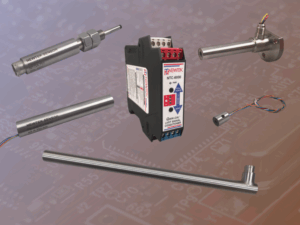
This company's NTC-6000 Qwik-Cal LVDT Signal Conditioner brings modern digital outputs to legacy LVDTs sensors, allowing facilities to upgrade to digital control systems without replacing their reliable mechanical sensors. With the NTC-6000, legacy LVDTs, RVDTs, and LVRT half-bridge sensors can integrate seamlessly into modern digital automation and IIoT platforms, while keeping the dependable performance of existing equipment. Many analog sensors can have trouble connecting to modern control systems. Older conditioners typically provide only basic outputs. The NTC-6000 Signal Conditioner solves this by converting raw sensor signals into standard modern outputs, such as: 4–20 mA loop; 0–5 V, 0–10 V; ±5 V, ±10 V; and Digital RS-485 (multi-drop). These outputs allow legacy sensors to connect directly to PLCs, SCADA, data acquisition systems and remote monitoring networks. Replacing LVDTs can be expensive and time-consuming, often requiring mechanical disassembly, rewiring, retesting and requalification. By using the NTC-6000, facilities can keep their existing sensors, reducing downtime and costs compared with full sensor replacement. The NTC-6000 Signal Conditioner also supports multi-drop networking for up to 16 devices and features low-noise electronics, stable excitation, and repeatable outputs. Users can access both analog and digital outputs simultaneously. Built-in self-diagnostics help detect sensor failures, disconnections and short circuits. Units also feature cybersecurity lockout and tamper detection for an added layer of protection. Older LVDT signal conditioners often require manual trimming and expert adjustment, making calibration time-consuming and error-prone. The NTC-6000 LVDT Signal Conditioner simplifies this process with front-panel null indicators and simple pushbuttons to set zero and full-scale output positions, making calibration faster and more accurate. Upgrading to the NTC-6000 Signal Conditioner gives systems modern performance without replacing expensive or hard-to-access sensors that still function well. It offers one of the most cost-effective and lowest-risk options for modernizing position-measurement systems used in factory automation, materials testing, dimensional gaging, turbine control systems, and more. — NewTek Sensor Solutions, Pennsauken, N.J.
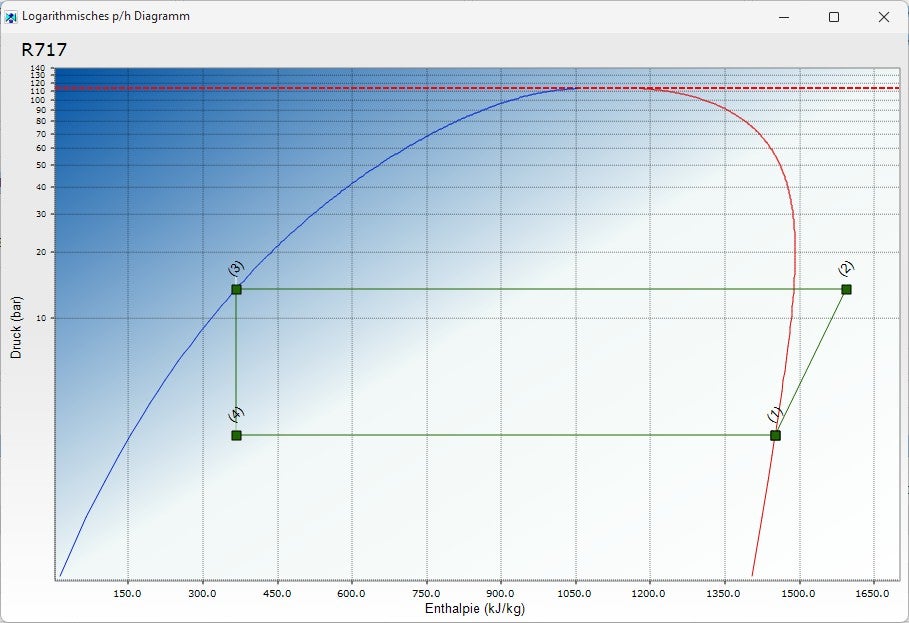
In addition to updating standards (for instance, DIN EN ISO 24664) and the integrated media database, the ValveCalc 9.0 design program for industrial refrigeration and heating technology also includes the new HSX high-pressure float product range in a separate calculation module. The introduction of a convenient project overview allows users to list all calculations within a project and enables direct access for adjustments to design parameters. Furthermore, intuitive operation in ValveCalc 9.0 has been made easier thanks to a modern layout with vector-based symbols.
Source: GEA
New convenience functions (such as search, fixation and color-coding) in the design tables make it easier for users to work. In the safety-valve design module, it is now possible, for example, to clearly display the blow-off capacities of series per nominal diameter in tabular form for a freely configurable pressure range. It is now easy to compare series across different nominal diameters. This data can be printed out conveniently and flexibly. In the catalog module, users now also have the option of directly accessing the necessary additional documents, such as certificates and operating instructions for the respective components. In the pipe design module, the new performance pressure loss diagram now allows pressure losses to be easily compared and visualized in relation to cooling capacity for each nominal diameter. Important system parameters are now also displayed directly in the diagram. In the pipe design module, pressure losses for different nominal diameters can now be easily compared in a clear table.
In addition to the new features mentioned above, version 9 will be available both as a downloadable and installable program and as a virtual desktop infrastructure in the cloud. Thanks to the innovative streaming technology used, ValveCalc 9.0 can be used via a browser. This eliminates restrictions imposed by security policies within company networks. — GEA AG, Düsseldorf, Germany