New Products & Services
May 2026
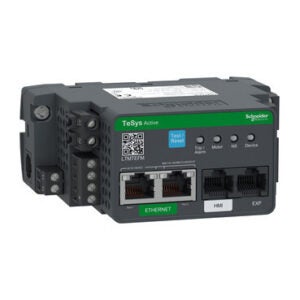
Source: Schneider Electric
TeSys Tera is a next-generation intelligent motor management system designed for demanding industrial environments, unifying protection, control and monitoring to reduce equipment failures, lower energy costs and extend asset life across industries including water and wastewater, metal, mineral and mining, chemical, petrochemical, pharmaceutical and oil and gas. The company introduced the system at Texas Water 2026, the largest regional water conference in the U.S. When motor failures occur, the impact is costly with unplanned downtime disrupting production, increasing maintenance costs, and straining a limited workforce. As a result, industrial operators are prioritizing solutions that improve visibility, enable early fault detection, and help maintain uptime. TeSys Tera combines motor protection, control and monitoring in a single modular device, engineered for seamless retrofits and new installations. It continuously monitors key parameters, including current, voltage, power and power factor, delivering real-time data to automation systems for greater visibility and control. Analog I/O capabilities allow integration with sensors to detect abnormal conditions, supporting predictive maintenance, and preventing failures without the need for additional hardware. Key capabilities include the following:
- Load shedding and auto-restart to keep pumps and blowers running during power disruptions and reduce manual intervention
- Predictive diagnostics with pre-fault alarms, trip logging and trend analysis to identify overheating, imbalance, electrical faults and mechanical degradation before they lead to outages
- On-unit programming through SoMove software that reduces reliance on PLC programming skills, lowering the training threshold for incoming technicians
- Motor-level energy monitoring of active and reactive power, consumption and power factor, giving operators data to target inefficiencies in motor-driven processes – often the largest share of an industrial facility's electricity costs
- Multi-protocol connectivity (EtherNet/IP, Modbus TCP/IP, Modbus RTU, PROFIBUS DP, PROFINET) for integration with existing SCADA and DCS environments. —
Schneider Electric SE, Paris, France
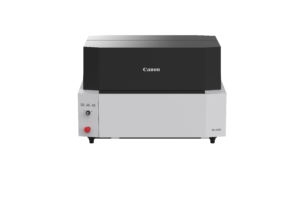
Source: Canon U.S.A.
The TR-A100 Raman plastic analyzer uses non-destructive laser technology to molecularly identify materials. Widely used across forensics, pharmaceuticals and materials science, it is designed to enable precise analysis of a material’s chemical composition. The TR-A100 helps enable accurate identification of plastic materials using Raman spectroscopy. Effective plastic recycling typically requires high material purity, meaning materials must be accurately identified. However, conventional near-infrared spectroscopy may have difficulty identifying black plastics due to their light-absorbing properties. Commonly found in electronics and automotive components, black plastics are often excluded from recycling streams because conventional sorting technologies struggle to identify them. This new technology is intended to directly address this issue, which could present a challenge for efficient recycling processes. The TR-A100 plastic analyzer employs an advanced laser scanning method that enhances material identification. This technique oscillates the laser irradiation position, even when analyzing multiple plastics on a tray, to reduce energy density. This is designed to enable the identification of plastics without causing damage from rising temperatures. By helping to ensure sufficient, tailored measurement time, the TR-A100 has the ability to accurately identify even black plastics, which typically present weak signals to other technologies. The system is capable of rapidly identifying plastic types and determining the proportion of target plastics present within a measured sample. Results from the Raman plastic analyzer can be used by recycling plants to help refine material purity by optimizing collection and sorting condition. — Canon U.S.A. Inc., Melville, N.Y.
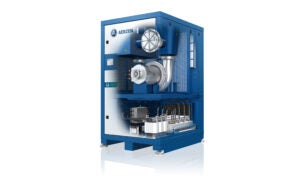
This company has launched the first sizes of its new G6 generation blowers, with the AT125-0.9S G6, the AT125-1.3S G6 and the AT250-0.9S G6. These units set new standards in terms of energy efficiency, turndown and digitization and open up new possibilities for future-oriented applications, the company says. The new generation-6 (G6) blowers contain a new turbo stage with maximum energy efficiency and a turndown of up to 1:5. The decisive factor here is the perfectly tuned interaction of impeller, spiral and all flow-guiding components, whose design is based on complex CFD-supported flow analyses and is precisely matched to the respective performance class, according to the company. Compared to conventional turbo technology, energy efficiency can be increased by up to 15%. The control system has also been completely redesigned and the operating display has been rated IoT-ready. This is complemented by a compact and space-saving design that reduces the machine footprint and facilitates the installation in machine rooms. The new Turbo AT125-0.9S G6 covers volume flows up to 83 m3/min and the new Turbo AT250-0.9S G6 up to 157 m3/min. Both turbo sizes are designed for nominal pressures of 900 mbar. The Turbo AT125-1.3 G6 version, on the other hand, achieves a volume flow of up to 70m³/min and a nominal pressure of up to 1300 mbar. A powerful and energy-saving permanent magnet synchronous motor, as well as the particularly aerodynamic design of the turbo impeller and spiral casing contribute to the high overall efficiency. The packages also deliver extraordinary performance in partial load operation. — Aerzen Maschinenfabrik GmbH, Aerzen, Germany
ProSimPlus Python API enables users to run the engine of ProSimPlus, a leading software dedicated to the design, simulation, and optimization of continuous industrial processes, directly from the Python environment. The product is a first in the field of process simulation, marking a major step forward by removing the limitations of graphical user interfaces. Python has become one of the leading programming languages in data analysis, process optimization, artificial intelligence, and, more broadly, in scientific and technical workflows. ProSimPlus Python API addresses the growing needs of process engineers, industrial data scientists and R&D teams who want to automate their analyses, expand their sensitivity studies, and integrate simulation into their internal tools. The architecture of ProSimPlus Python API removes the constraints of interactive use while preserving the full capabilities of the calculation engine. The API goes beyond simply running preconfigured cases: users can generate, execute, and leverage their simulations in a fully automated, faster way, without manual intervention, the company says. Unlike traditional approaches, ProSimPlus Python API provides fine control over computations and integrates naturally into data science, optimization and digital-twin development workflows, they add. The solution has been designed to meet high-performance computing needs, enabling the automated execution of a large number of scenarios and significantly reducing study times for complex cases by several hours per analysis. These computations can also be coupled with optimization algorithms or machine learning models. This approach allows teams to move from occasional use of simulation to continuous integration within their decision-making processes. — Fives ProSim, Labège, France

Two new GT8A series slim electronic timer relays have been introduced. The small form factor and extensive capabilities of the GT8A make it an appropriate choice for new, retrofit or replacement applications. Timing relays perform an essential hard-wired control function for pump stations, HVAC, material handling, building automation, machinery, equipment, and other control purposes. Compact electronic timers like the GT8A provide a high performance option as compared to analog and electro-mechanical products, with many benefits for designers and operational personnel.
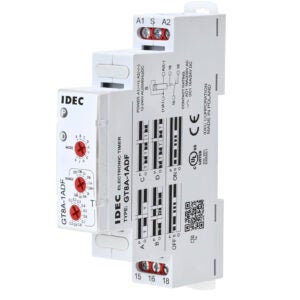
Source: IDEC
At just 17.5mm wide, and using direct DIN rail mounting without needing a socket, the GT8A requires less footprint space and can be installed more quickly than conventional devices, especially in applications where a combination of products would otherwise be needed to perform the function. The compact form factor helps users optimize limited control panel space, and this direct integration makes it easy to install, wire, and replace the relay. Ten timing functions—on delay, on for a set interval, flicker (starting off), flicker (starting on), off delay, single shot, once at a set interval, on and off delay, cyclical, and pulse—cover a variety of operational needs. In addition, ten timing ranges and ten time settings, including permanently on or off, let users choose operational timings ranging from 0.1 seconds up to 10 days. Configuration is easy to perform using three rotary selector switches, each of which is inset to prevent inadvertent operation.
The GT8A is available in both one-contact single pole double throw (SPDT) and two-contact, double pole double throw (DPDT) versions, and the contacts can handle up to 250V AC or 24V DC at 16A resistive load, depending on the model. Universal control power requirements accommodate 12 through 240V AC or DC. This exceptional flexibility enables users to minimize the number model types they need to purchase initially and as spares. With a mechanical life rating of 30 million operations minimum, an electrical life rating of 50,000 operations minimum at full current load, and an allowable operating frequency of 600 cycles per hour, the GT8A is designed to provide enduring trouble-free functionality. A finger-safe IP20 (IEC 60529) protection rating, and compliance with EN 61812-1, CE, UKCA, RoHS, EAC, UL/c-UL, ensures that designers and end users will obtain the best and safest performance with their applications. — IDEC Corp. USA, Carlsbad, Calif.

Source: Gasmet Technologies
The GT5000 Terra portable FTIR gas analyzer is now available with a new background measurement option. Unlike single‑gas detectors, gas analysis employing Fourier transform infrared (FTIR) spectroscopy measures the full infrared spectrum, enabling the simultaneous identification and quantification of a wide range of gases in a single measurement, including unexpected or unknown compounds. This makes FTIR particularly suited for complex and evolving field scenarios where the nature of the hazard is not known in advance. In FTIR gas analysis, the background spectrum forms the basis of all measurements, as all sample results are compared against the selected background. Traditionally, it has been recommended measuring this background using high‑purity nitrogen, which remains the appropriate approach for many other applications and measurement tasks. The new ambient air background option allows GT5000 Terra users to measure the background using clean ambient air just before entering the area of interest. In time‑critical safety and response scenarios, this reduces preparation steps and supports faster field deployment while maintaining the intended measurement performance when background and measurement conditions are similar. The approach is particularly relevant in applications where the operational focus is on identifying and quantifying hazardous compounds that are not normally present in ambient air, rather than monitoring predefined target gases alone. — Gasmet Technologies Oy, Vantaa, Finland
www.gasmet.com
Source: Groth
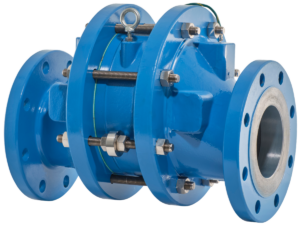
Models 76E-UF and 76E-AF flame arresters are engineered to inhibit flame propagation in gas piping systems and protect low-pressure tanks containing flammable liquids. Designed for critical industrial safety applications, the new models help safeguard low-flashpoint liquids from external ignition sources while improving operational reliability and fire protection. The Models 76E-UF and 76E-AF combine robust construction with advanced flame arrester element geometry that maximizes flame quenching capability while minimizing pressure drop. Their bi-directional design protects systems regardless of flow direction or ignition source location, offering greater installation flexibility across a range of industrial processes. The flame arresters are available in connection sizes from 2 to 12 in. 150# ASME, with DIN bolting options available. Standard housing options include carbon steel and stainless steel; flame elements are constructed from premium 316 stainless steel for enhanced corrosion resistance, and removable element housing simplifies inspection and servicing. Model 76E-AF is available with ATEX Certification in compliance with EN ISO 16852:2016. Built for applications involving flammable vapors and gases, the Models 76E-UF and 76E-AF are suitable for use with gases having MESG ≥ 0.90 mm, including IEC IIA and NEC D gas groups. Their spiral-wound, crimped ribbon flame element construction delivers dependable performance in harsh environments where safety and uptime are critical. — Groth Corp., Stafford, Tex.
Source: Flexicon
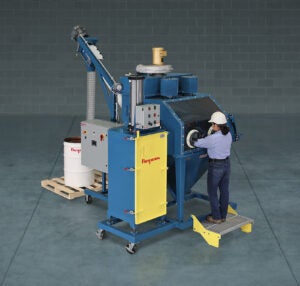
This company's new Mobile Bag Dumping Station (MBDS) is equipped with a glove box, a bag compactor and a flexible screw conveyor. The integrated MBDS transfers material manually dumped from hand-held sacks into elevated process equipment or storage vessels across multiple plant locations dust free. The system isolates bulk material from the operator and plant environment throughout opening, dumping and compaction of bags, and the conveying of material downstream. The self-contained system’s frame is equipped with locking wheel casters, ensuring stability during heavy load transfers while allowing the unit to be easily rolled into storage or for cleaning when not in use. Using built-in rubber gloves, operators retrieve bags through a hinged door on the hood’s sidewall, placing them onto a grate for opening and emptying without direct skin contact. Emptied bags are then passed through a second hinged door on the opposite sidewall into the integrated bag compactor, streamlining disposal. The dust collector maintains negative pressure within the enclosure, and a dual-cartridge filtration system captures dust generated during dumping, bag disposal, and compaction. Filters are easily accessible via a removable interior baffle and feature quick-disconnect fittings for fast replacement. The high-capacity cylinder on the bag compactor can compress up to 80 bags into a removable bin. Safety interlocks on the compactor’s main door and the flapper door linking it to the dust hood prevent operation unless the door is securely closed. Material flows from the hopper into the charging adapter of the screw conveyor. A stainless-steel screw with a specialized geometry effectively handles both free- and non-free-flowing bulk materials, including those prone to packing, caking, smearing, seizing or fluidizing — without causing blend separation. — Flexicon Corp., Bethlehem, Pa.
Source: LEWA GmbH
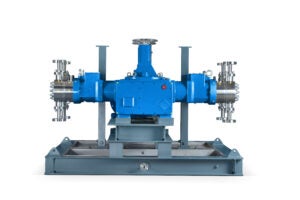
This company has significantly improved the efficiency performance of its ecoflow LDH Boxer (LDHB) process pump by 20%. This upgrade allows users to boost performance without resizing equipment or increasing system costs. For example, at a flowrate of 2,200 L/h, the maximum discharge pressure rises from 622 bar to 746 bars. Alternatively, at 75 bars, flow capacity increases from 18,000 L/h to 21,600 L/h. The LDHB is part of the ecoflow range of diaphragm and packed plunger metering pumps, which combines numerous drive sizes and pump heads for high application flexibility. Multiple materials and valve type options mean ecoflow pumps are highly customizable and can be configured for demanding media, including aggressive, abrasive, or toxic fluids across energy, chemical and process industries. Renowned for leak tightness, operational safety and reliability, ecoflow pumps provide high metering accuracy, even at high pressures. Their precise and reproducible flowrate can be adapted via stroke length and speed, offering a broad metering range of 1:100 for flexible adjustment to different tasks. — LEWA GmbH, Leonberg, Germany
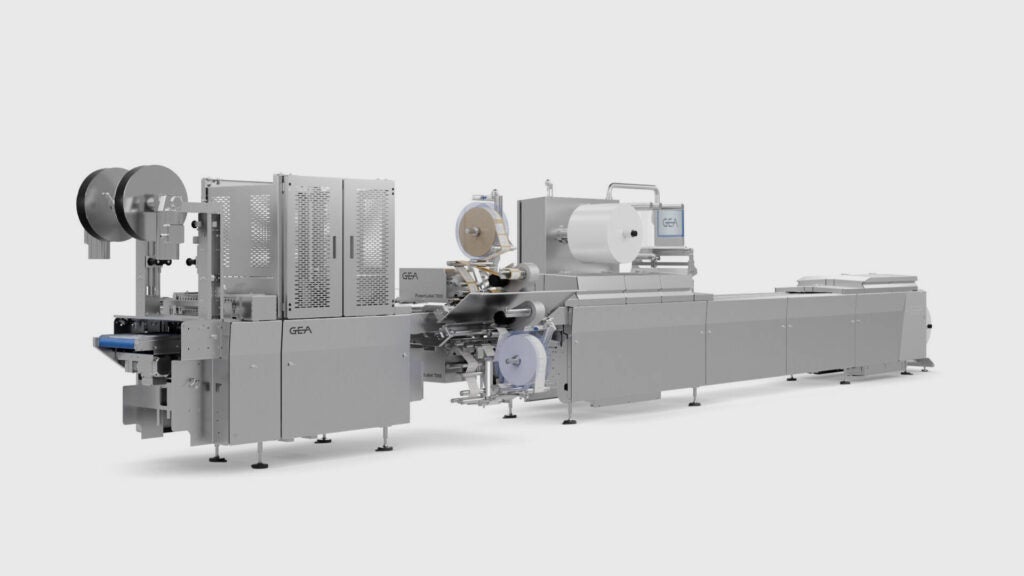
Launched at Interpack 2026, PowerPak 5000 is a new thermoforming packaging machine for medium-sized food producers that need several different pack sizes, reliable daily operation, and scalable automation in the mid-size performance range. The system replaces this company's former thermoformer models in the midsize segment and is designed for processors seeking a practical balance between performance, operational simplicity, and long-term cost control.
The PowerPak 5000 is intended for companies operating in competitive food markets where product variety, frequent changeovers, and pricing pressure require packaging equipment that can maintain output and product quality without unnecessary system complexity. The machine addresses applications in meat and poultry, fish and seafood, cheese and dairy, bakery, ready meals, and plant-based food categories. The PowerPak 5000 is positioned for standard and mid-range applications rather than highly specialized peak-output scenarios. The new model has been developed as a broadly applicable solution for the majority of thermoforming use cases, with emphasis on repeatable output, ease of operation, and predictable lifecycle costs.
Source: GEA
The machine supports a broad packaging range, including MAP, vacuum, skin and steam applications. By covering these formats on one machine, the PowerPak 5000 is designed to help processors manage multiple product categories while simplifying product and format changes. According to the manufacturer, the system has been developed for stable, everyday industrial use, with a service-friendly design intended to simplify cleaning and maintenance, reduce downtime, and support repeatable production across shifts and product runs. Tool-free changes are designed to shorten the time between batches.
The machine is equipped with SmartControl, the company’s control interface for operation and monitoring. In practical terms, this means the operator uses a centralized human-machine interface (HMI) to manage machine settings, production status, and process adjustments. The operating concept is intended to reduce dependence on highly specialized labor and support more consistent machine performance even when staffing structures change. — GEA Group, Dusseldorf, Germany
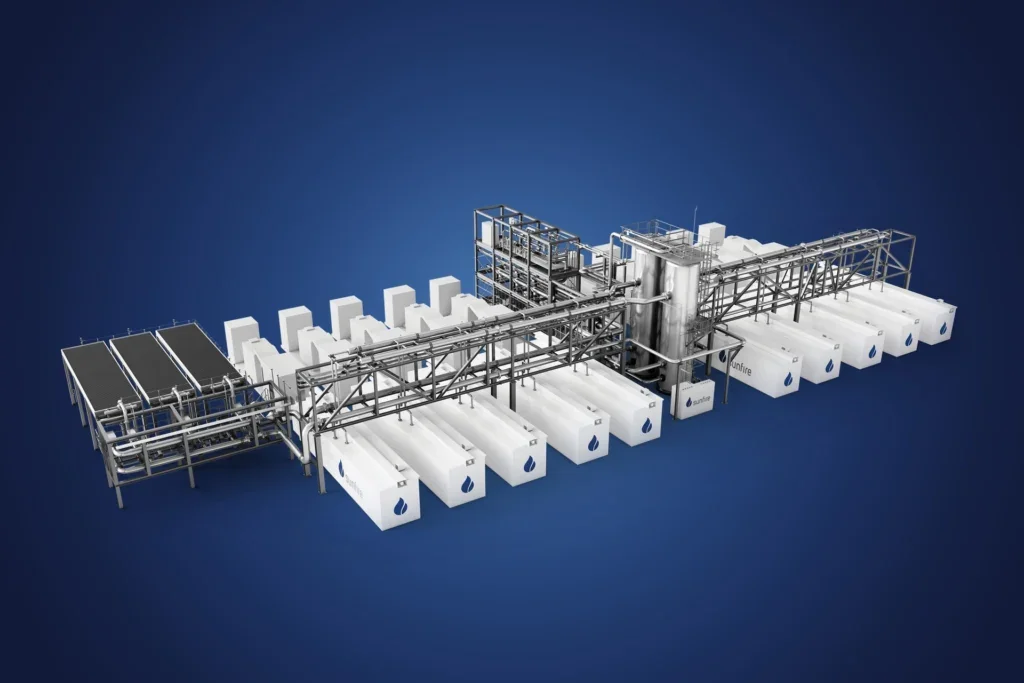
HyLink Alkaline 23 is a new outdoor pressurized alkaline electrolyzer system. The 50-megawatt electrolyzer module is designed for the implementation of triple‑digit megawatt projects and reduces total installed costs (TIC) on the customer side by up to 50%. At the core of HyLink Alkaline 23 is this company's proven second‑generation 30‑bar(g) pressurized alkaline stack. The higher operating pressure significantly reduces downstream hydrogen compression requirements. The stack technology is already in operation in industrial plants across Europe, where it has demonstrated reliable performance in the production of green hydrogen. The new 50 MW-module combines five times the installed capacity of the previous solution with a design fully optimized for outdoor deployment.
Source: Sunfire
As part of the new system design, key plant components have been centralized, additional components such as air cooling have been integrated as standard, and the level of prefabrication has been significantly increased. At the same time, system interfaces have been optimized. This substantially simplifies installation and commissioning while delivering significant cost reductions for the overall green hydrogen plant (TIC). In a 100-MW project scenario, the number of required electrolyzer modules is reduced from ten to two. The construction of a dedicated electrolyzer building is no longer necessary. HyLink® Alkaline 23 directly addresses the current requirements of large‑scale hydrogen projects in energy‑intensive industries such as refining, chemicals, and ammonia production, where hydrogen supply is being built up on an industrial scale with a lower carbon footprint. — Sunfire SE, Dresden, Germany
Source: Exair
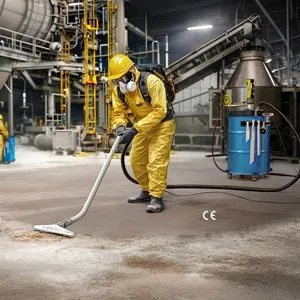
The ATEX EasySwitch® Wet-Dry Vac is engineered to provide safe, reliable industrial cleanup in hazardous environments, including ATEX Zones 1 and 21. Designed for use in areas with potentially explosive atmospheres, this pneumatic system eliminates the risks associated with electric vacuums while delivering powerful performance for wet and dry applications. With its ability to quickly switch between material types, the ATEX EasySwitch offers a versatile, compliant solution for maintaining clean and safe workspaces in critical industries. The ATEX EasySwitch is specifically constructed to meet strict safety requirements for explosive gas and combustible environments. Featuring a static-dissipative design and proper grounding, the system helps prevent dangerous electrostatic buildup that could lead to ignition. Because it operates solely on compressed air, it contains no electrical components or moving parts, removing common ignition sources such as sparks, heat or motor failure. Using a simple latch mechanism to switch between dry vacuuming and liquid recovery in seconds, the ATEX EasySwitch is capable of handling materials such as dust, powders, coolant, chips and absorbents. It provides a durable, low-maintenance solution for demanding ATEX-rated applications. — Exair LLC, Cincinnati, Ohio
Source: Binmaster
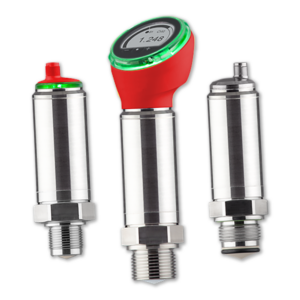
At just 6 in. length and 1.5 in. diameter, CNCR-400 compact non-contact radar level sensor are ideal for small processing vessels, including bins, tanks, hoppers and mixers with agitators. 80-GHz radar technology provides accuracy within 5 mm — even in turbulence, condensation, and buildup — ensuring precision and performance throughout sanitary processes.The CNCR-400 radar series are offered in three different models. Each hygienic sensor measures bulk solids and liquids within ranges up to 49 ft. (15 m):
- Digital Display (DD): Features a digital readout on the sensor face, plus a light ring with programmable colors for visual alerts
- Light Ring Indicator (LRI): Includes a light ring with ability to program colors to alert to critical high or low inventory conditions
- Stainless-Steel Only (SS): Ideal for vessels where local alerts or visual cues are not a requirement; a cost-effective option for continuous process monitoring
Compatibility with cloud-based inventory management software differentiates the CNCR-400 radars from other compact radar sensors. Users can view bulk material levels in real-time, from anywhere, on a phone, tablet or PC. From one site to multi-national operations, operators can view inventory for every bin and plant location from one login and easy-to-use interface. CNCR-400 sensors include 4-20 mA, NPN/PNP, and IO-Link outputs. Setup and configuration are simple using a Bluetooth application on a cell phone. Radars are rated IP66/67/69 for long-term durability, offer .75” and 1” NPT connection options. The compact level sensors include standard c-UL-US ordinary location approvals, plus FDA, 3A, and EHEDG worldwide hygienic approvals. — BinMaster Inc., Lincoln, Neb.
Source: Coperion GmbH
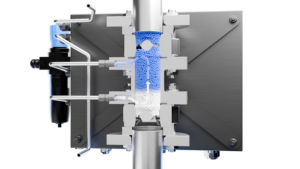
DewTector® is a new moisture-measuring device designed to provide reliable, automated online measurements of surface moisture content in bulk materials, particularly plastic pellets. The patent-pending device offers an economical, simple and reliable method to help plastic manufacturers and recyclers monitor moisture levels more efficiently. It addresses a critical challenge faced by processors in maintaining both product quality and maintaining compliance with industry standards. The DewTector introduces a partial flow of bulk solids into a pressure-tight product chamber. The system determines the moisture content by analyzing the moisture released into the airflow. As the air absorbs moisture, it is analyzed by a hygrometer that measures only water content. This targeted detection ensures reliable results unaffected by other substances or changes in material composition. The system neither requires extensive calibration, nor the use of chemicals for different materials or recipes, making it easy to operate and maintain. The system achieves an accuracy of +5% to −15% across moisture levels ranging from several thousand ppm to a few hundred ppm, with up to ten measurements per hour. Traditionally, moisture measurement has been labor-intensive and prone to inaccuracies, often relying on sporadic manual assessments of relative humidity in bags and containers. Existing automated methods, such as capacitive and microwave resonance techniques are typically complex, expensive and require extensive calibration for different formulations, making them impractical for many users. — Coperion GmbH, Weingarten, Germany
Source: Toray
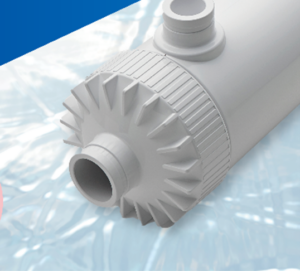
The F-HFUG Series ultrafiltration (UF) membrane module is designed for wastewater reuse, helping to improve lower-biofouling performance of reverse osmosis (RO) membranes and stabilize long-term operations. Proprietary micropore-control technology results in a nominal pore size of just 0.005 micrometers, among smallest in the industry, according to the company's research. The new UF membrane slashes the permeate volume of biopolymers to around one-third of that of its conventional counterparts. Biopolymers are normally hard to remove. Pilot tests at a wastewater-treatment plant demonstrated that the UF membrane suppresses biofouling of downstream RO membranes while maintaining UF permeate flow. The decrease in RO water production attributable to biopolymers is around one-third that of regular membranes. This advantage should reduce chemical cleaning frequency and RO operational issues, helping cut overall wastewater reuse operating costs while lowering water production expenses. — Toray Industries, Inc., Tokyo
Source: Cleanova
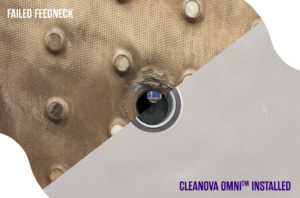
Cleanova OMNI is a patent-pending feed-interface system engineered to address one of the most critical and often overlooked sources of inefficiency in filter press operations: the point where slurry enters the press. Designed for universal compatibility across a wide range of filter press configurations, plate designs, and sizes, OMNI establishes a more durable, consistent, and high-performing foundation for filtration — enabling operators to improve reliability without requiring major equipment changes. In many filter press operations, performance challenges such as premature cloth failure, leakage, and inconsistent filtration results can be traced back to the feed interface; where high-velocity slurry, abrasion and sealing limitations place significant stress on the system. OMNI re-engineers the critical connection point at the feed interface to help make operation more predictable and controlled. By addressing performance at the source, OMNI improves filtration stability, extends cloth life and reduces unplanned downtime in demanding operating environments. Unlike conventional feed interface designs that are often limited to specific OEM equipment, OMNI has been developed as a universally adaptable solution. The system can be deployed across a broad range of plate sizes and is compatible with sidebar, overhead beam and quad press configurations This universal approach allows operators to standardize performance across assets, reduce variability, and simplify maintenance practices without requiring major modifications to existing equipment. OMNI enables the use of single-panel filter cloths, eliminating the need to pull cloths through the feed opening during installation. This design allows cloth replacement without removing filter plates, significantly reducing maintenance time, labor requirements, and operational disruption — particularly in high-throughput environments where uptime is critical. — Chattanooga, Tenn.
Source: Miura America
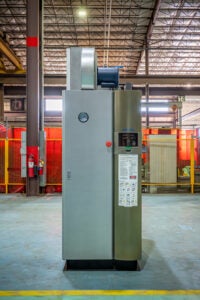
The LX-50 steam boiler delivers reliable, precise steam for pharmaceutical, biotech, and life sciences manufacturing environments. The LX-50 provides the performance and efficiency that facilities need to support cGMP-compliant utilities, validated clean steam generation and critical process heating while maintaining a low environmental footprint. The LX-50 is a standard-pressure boiler that produces approximately 1,730 pounds of steam per hour, giving facilities a compact yet capable option for process loads that demand consistent, high-quality steam. With a once-through, low-water-content watertube design, rapid startup in minutes, and an integrated economizer, the LX-50 delivers on-demand steam with strong fuel efficiency and reduced standby losses. Its compact footprint helps pharmaceutical plants maximize floor space and maintain high uptime in controlled environments. Engineered for low NOx emissions of 20 ppm on natural gas and 25 ppm on propane, and equipped with this company's BL Controller and advanced monitoring capabilities, the LX-50 supports both environmental goals and day-to-day operational reliability. Its modular scalability and precise load control help maintain steam consistency across production equipment, clean utilities, and sterilization lines, making it a strong fit for facilities prioritizing energy optimization and process stability. The LX-50 can be deployed in multi-boiler configurations that scale with production needs and maintain redundancy during service or validation events. This approach enables pharmaceutical manufacturers to sustain steam delivery without interruption, essential for batch integrity, autoclave operations, and continuous processing. — Miura America, Rockmart, Ga.
Source: Clariant
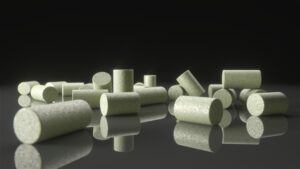
CATOFIN 1000 is the latest generation of propane dehydrogenation (PDH) catalyst, which builds upon the commercially proven CATOFIN 310 Series by delivering improvement in both selectivity and productivity, extended lifetime, and up to 20% lower tar precursors, resulting in significantly reduced fouling. This combination of performance enhancements provides an exceptional value proposition for customers seeking to maximize operational efficiency and returns. CATOFIN is a catalyst technology known for producing olefins, such as propylene, isobutylene and butylene/butadiene. The CATOFIN process combines tailor-made catalysts and Heat Generating Material (HGM) with Lummus' advanced process. The new CATOFIN 1000 catalyst represents the latest evolution in this proven technology platform, offering PDH operators enhanced performance that translates directly to improved plant economics and operational reliability. The up to 20% reduction in tar precursors is particularly significant, as it minimizes fouling-related downtime and maintenance requirements, allowing plants to operate more efficiently over extended periods. — Clariant AG, Muttenz, Switzerland
Source: Herma
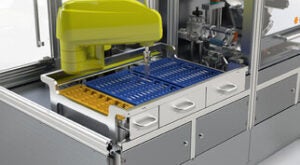
The new 152E HC wrap-around labeling system (photo) is well-suited for pharmaceutical contract packers. It handles a wide range of product formats while requiring only a minimal number of changeable parts. Many pharmaceutical requirements are already implemented as standard, including audit trail and batch reporting capabilities, laser coding, camera inspection, and reject handling via a dedicated conveyor. This is made possible by the standardized design based on this company’s new CleanDesign concept, which also enables shorter delivery times. The 152E HC achieves speeds of up to 200 products per minute while fully meeting pharmaceutical labeling requirements. Thanks to its compact footprint and ease of operation, it integrates seamlessly into existing production environments. — HERMA GmbH, Filderstadt, Germany
www.herma.com
This pressure transmitter works without a PLC
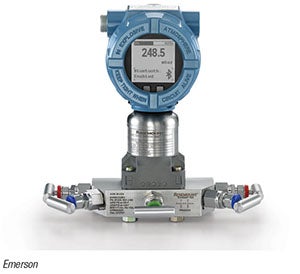 The 4051S pressure transmitter (photo) provides local real-time control, eliminating the need for a separate device, such as a programmable logic controller. This functionality is provided by two relay switches, each of which can be configured to provide on/off control of pumps, motors and other equipment. These switches can also provide alerts based on pressure, flow, totalized flow, level, volume or module temperature. The 4051S is engineered to withstand the harshest process environments, with a 20-year warranty and 20-year stability specification. The response time of 40 ms allows the 4051S to be used in the most demanding applications. The 800:1 turndown ratio reduces the number of unique models needed to be kept in stock. The instrument provides advanced diagnostics, with loop integrity continuously monitoring the electrical loop to detect potential failures. It can also detect plugged impulse lines and cavitation. The graphical, backlit display is larger than previous models, making it easier to read and allowing more descriptive warning messages. — Emerson, St. Louis, Mo.
An ideal pressure scanner for areas where space is limited
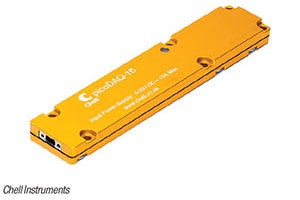 The picoDAQ (photo) is this company’s smallest digital pressure scanner, built to fit into even the most confined testing environments. Measuring 83.4 × 14.8 × 9.6 mm, the picoDAO is ideal for high-accuracy pressure testing in applications where space is limited but precision remains critical, the company says. Despite its ultra-compact size, the picoDAQ retains its measurement capabilities, delivering up to 0.03% FS accuracy output. As a fully configurable smart pressure scanner, the new device can output pressure data in engineering units over Ethernet and CAN, using both CAN-FD and ‘classic’ CAN. The picoDAQ makes use of 17 absolute transducers, which are thermally compensated and conditioned to provide 16 absolute or differential measurements relative to the one reference port. — Chell Instruments, North Walsham, U.K.
These pressure transmitters offer accuracy and ease of use
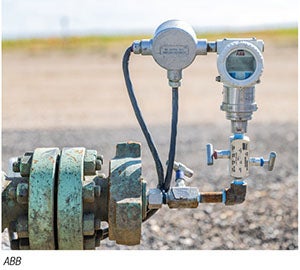 The P-300 pressure transmitter series (photo) ensures high accuracy and ease of use over a broad range of applications in the petrochemical, chemical, power and pulp and paper sectors. The P-300 measures pressure from 0.05 kPa (0.2 in H2O) in differential-pressure applications up to 105 MPa (15,000 psi) and on high-gage-pressure applications, with 0.055% accuracy levels. The P-300 series features a high-contrast backlit display for easy readability in all light conditions. With QR-code-enabled Digital Advanced Diagnostics, users get instant access to product documentation. The P-300 series also meets the latest hazardous-area requirements. — ABB Group, Zurich, Switzerland
Pressure transmitters designed for functional safety
The SITRANS P320 and P420 are pressure transmitters developed for applications that require functional safety. A key characteristic of both devices is the remote safety-handling function, which enables the digital transmission of all safety-relevant functions from the control room, without requiring onsite access to the device. This allows safety integrity level (SIL) commissioning and validation to be carried out centrally, reducing the time and personnel effort associated with onsite handling. Both models support a wide measuring range, from 20 mbar to 700 bars and feature automatic zero-point calibration and guided commissioning procedures. The proof-test interval extends to up to 15 years. Diaphragm materials include stainless steel, Hastelloy, tantalum, Monel, and gold, allowing operation across a wide temperature range from –40 to 100°C. The SITRANS P420 also includes a “Ready for Digitalization” function, which enables up to 1,500 measurement values to be stored directly within the transmitter via trend recording, supporting data availability at the device level without relying on external storage systems. — Siemens AG, Munich, Germany
A submersible pressure sensor for hazardous areas
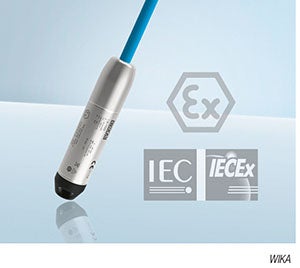 The LS-1000 submersible pressure sensor (photo) is now certified in accordance with the European ATEX and international IEC-Ex directives. The sensor continuously measures the level of liquid media in industrial environments. Thanks to the new approvals, companies can now also use it in hazardous areas of ATEX zone 0 and 1, as well as IEC-Ex zones 0, 1 and 2. This applies to applications in the process industries, wastewater and environmental technology and power generation. Typical applications include wastewater lifting stations, pumping stations and oil and fuel tanks. The LS-1000 measures levels hydrostatically from 1 to 10 m (3.28 to 32.81 ft). Optimal long-term stability of 0.2% ensures precise measured data and minimal signal drift. Thanks to its robust design, the stainless-steel submersible pressure sensor is permanently sealed in accordance with ingress protection IP68. A specially developed cable provides effective strain relief, and potting of the cable inlet provides additional protection. Each individual device undergoes a helium leak test during the final inspection. The submersible pressure sensor is maintenance-free, and can be operated with a 5-V battery. — WIKA Alexander Wiegand SE & Co. KG, Klingenberg, Germany
These pressure-relief devices simplify direct-mounting
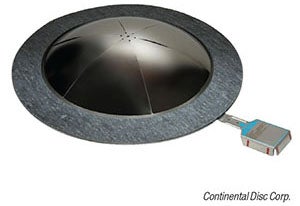 The CDC-CM™ and CDCV-DM™ composite rupture discs (photo) are advanced, holder-less differential pressure-relief devices are engineered to protect pressurized systems, equipment and vessels in critical applications in chemical processing, petrochemicals, oil-and-gas and energy production industries from potentially damaging overpressure conditions. Designed to provide instantaneous, full-opening pressure relief in both liquid and gas-vapor environments, the CDC-DM and CDCV-DM rupture discs provide reliability, corrosion resistance and high performance across a broad range of operating conditions. The new designs incorporate CDC’s proven composite rupture-disc technology with a simplified direct-mount configuration, reducing installation time while maintaining high safety standards. CDC-DM and CDCV-DM direct-mount rupture discs feature a preformed metallic top section with a unique seven-hole apex pattern that ensures non-fragmenting performance when paired with fluoropolymer seals. This construction allows for the use of more durable materials while still achieving an 80% operating-to-burst pressure ratio, one of the highest available in composite discs. Sizes available are 14–36 in. — Continental Disc Corp., Liberty, Mo.