As hydrogen infrastructure expands, existing material-qualification frameworks must keep pace with hydrogen-specific degradation risks, such as embrittlement, stress corrosion cracking, permeation and accelerated aging
Hydrogen infrastructure deployment is speeding up in the chemical process industries (CPI). However, the material qualification frameworks that support this growth were not made for the specific degradation mechanisms that hydrogen causes. This article presents a practical testing strategy that assesses hydrogen embrittlement, evaluates stress corrosion cracking (SCC), tests permeation, characterizes the electrochemical properties of electrolyzer components and examines the accelerated aging of polymer seals and membranes. The aim is to assist engineers in making sound material-selection decisions without under-specifying qualification protocols or wasting resources on unnecessary testing.
Testing gaps in hydrogen service
The failure of a hydrogen pipeline in Belgium in 2019 led to an incident that prompted the industry to take a closer look at hydrogen regulations, [1] reigniting an engineering debate dating back decades: are the material-qualification procedures currently used in the design of hydrogen infrastructure sufficient? In many instances, the answer is that they are based on code standards designed for natural-gas service (and subsequent over-conservative adaptations of said codes) rather than on a bespoke approach for hydrogen use in high-pressure applications.
It goes without saying that hydrogen infrastructure is no longer a thing of the future (Figure 1). As hydrogen production targets are met, fuel cells become prevalent in transportation and industry increasingly promotes decarbonization, pipelines, storage tanks and electrolysis will need to be deployed rapidly. Engineers in the CPI will regularly find themselves in the unenviable position of choosing materials for which existing codes do not yet account for the risks of hydrogen use. There is nothing wrong with industry codes from organizations like the American Society of Mechanical Engineers (ASME; New York, N.Y.; www.asme.org), ASTM International (West Conshohocken, Pa.; www.astm.org), the International Organization for Standardization (ISO; Vernier, Switzerland; www.iso.org) or NACE International (Houston, Tex.; www.ampp.org); for instance, ASME B31.12, ASTM F1459, ISO 11114, or a myriad of NACE protocols. The issue is selecting the right tests, relevant materials and appropriate conditions for testing.
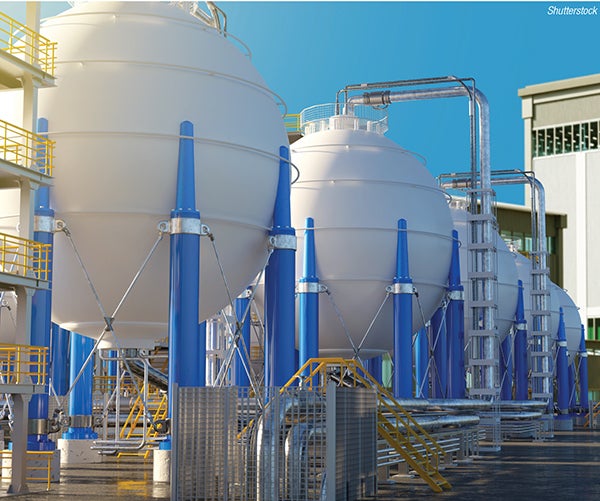
FIGURE 1. Hydrogen infrastructure is proliferating across the CPI, and engineers must understand the materials-selection implications for tanks, hoses, pipes, seals and more
Challenging material conventions
Hydrogen is chemically simple, but it is mechanically aggressive. The hydrogen molecule is small enough to move into metallic structures at normal temperatures. Once inside a steel matrix, dissolved hydrogen atoms interact with dislocations, grain boundaries and existing defects. This interaction reduces ductility, fracture toughness and fatigue resistance without causing any visible surface changes. A pipeline weld that passes visual inspection and standard tensile testing may still risk delayed fracture under constant tensile stress in high-pressure hydrogen gas service.
Three main degradation mechanisms require attention in hydrogen service. Hydrogen embrittlement (HE; Figure 2) causes a loss of ductility and toughness in metals because of absorbed hydrogen. This issue affects various steels, high-strength alloys and nickel-based materials. SCC occurs from the combined effects of tensile stress, a corrosive environment (which in electrolyzer and wet-hydrogen systems includes alkaline or acidic solutions) and a material microstructure that is prone to this type of damage. Long-term degradation of polymer parts, especially proton exchange membranes (PEMs) and elastomeric seals, involves chemical damage from reactive oxygen species, mechanical fatigue from pressure cycling and swelling from water absorption.
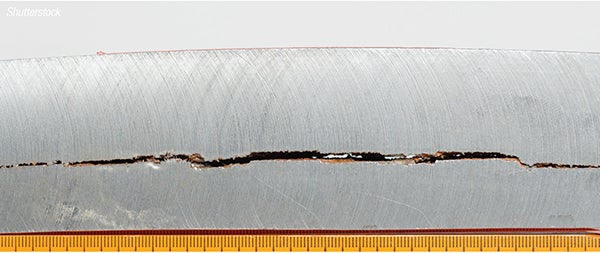
FIGURE 2. Hydrogen embrittlement — the absorption of hydrogen into metals that reduces ductility and toughness — is a concern across a range of materials, including various steels, high-strength alloys and nickel-based materials
Each mechanism requires different test methods. The challenge for engineers is choosing the right combination without conducting a qualification program that takes longer than the project schedule allows.
Mechanical testing for HE
ASME B31.12 is the main code for hydrogen piping and pipelines [2]. It refers to ASME Article KD-10 for high-pressure vessels. This code includes design requirements based on fracture mechanics that are not found in similar natural-gas codes. To qualify materials under this framework, it is important to understand fracture toughness in hydrogen gas environments, not just in ambient air.
ASTM G142, the Standard Test Method for Determination of Susceptibility of Metals to Embrittlement in Hydrogen Containing Environments at High Pressure, High Temperature, or Both; and ASTM F1459, the Standard Test Method for Determining the Susceptibility of Metallic Materials to Hydrogen Gas Embrittlement, offer two main approaches [3, 4]. G142 tests smooth or notched tensile samples in pressurized hydrogen gas. It measures the reduction in area and elongation at fracture compared to air baselines. F1459 uses a slow strain-rate method, which is more sensitive to cracking caused by the environment. Engineers should keep in mind that F1459 is especially valuable for screening potential alloys or weld consumables. In contrast, G142 is more effective for producing design-relevant property data.
For fracture-mechanics characterization, ASTM E1820 (Standard Test Method for Measurement of Fracture Toughness) tests conducted in hydrogen gas environments provide K-based or J-integral toughness values, which are used to denote stress intensity for brittle materials and ductile materials, respectively [5]. These values can be used directly in fitness-for-service assessments. A critical requirement for hydrogen service is that specimens must be pre-charged with hydrogen or tested in a pressurized hydrogen autoclave to account for environmental effects. Testing in air and applying a knockdown factor is not conservative for high-strength steels or hardened welds.
Fatigue-crack growth-rate testing according to ASTM E647 in hydrogen environments shows a surprising aspect of hydrogen service [6]. Crack growth rates in high-pressure hydrogen gas can be two to three times faster than in air for the same stress intensity range. This directly affects inspection intervals and flaw-acceptance criteria in pressure-cycling applications like hydrogen refueling stations.
For pipeline steels, the Sandia National Laboratories (Albuquerque, N.M.; www.sandia.gov) hydrogen materials compatibility database [7] offers empirical data on various API 5L and ASTM A106 steel grades. This information can help reduce the amount of testing needed for standard-service conditions. Engineers should view this resource as a starting point, not a final qualification. This is especially true for materials with non-standard processing histories or for uses above 100 bars.
SCC in aqueous systems
In alkaline electrolyzers and wet-hydrogen process streams, users need to assess the risk of SCC along with hydrogen embrittlement. NACE TM0177 [8], which tests metals for resistance to sulfide stress cracking and stress corrosion cracking in H2S environments, offers the most common protocol for environmentally assisted cracking in water-based environments (Figure 3). However, using it directly for alkaline hydrogen service needs some adjustments.

FIGURE 3. Engineers must test for stress corrosion cracking (SCC) in alkaline electrolysis systems and other wet-hydrogen processes
ASTM G129 (Standard Practice for Slow Strain Rate Testing to Evaluate the Susceptibility of Metallic Materials to Environmentally Assisted Cracking) is the right method for screening materials in simulated process solutions [9]. The slow strain-rate test (SSRT) applies a steadily increasing tensile strain at a controlled, very low rate, typically between 10–6 and 10–5 per second, while the specimen is submerged in the test environment. Fracture surfaces are examined using scanning electron microscopy to identify ductile failure versus intergranular or quasi-cleavage failure modes. Results are expressed as ratios of ductility parameters compared to inert environment controls.
For stainless steels used in PEM electrolyzer bipolar plates, engineers need to evaluate corrosion behavior in the acidic, oxidizing anode environment and the reducing cathode environment separately. Potentiodynamic polarization curves (ASTM G5 [10]) and electrochemical impedance spectroscopy (EIS) offer complementary information on passivation stability and corrosion rate. It is important to consider the potential range. Under normal PEM operating conditions, anode potentials can reach 1.8 V versus the standard hydrogen electrode during start-stop cycling. This potential is well above the passivation range for standard 316L stainless steel.
Permeation testing
Hydrogen permeation through containment materials is a safety concern and affects process efficiency. For metallic systems, the electrochemical hydrogen permeation technique created by Devanathan and Stachurski and standardized under ISO 17081 directly measures hydrogen diffusivity, solubility and permeability in steel membranes [11]. A thin specimen is placed between two electrochemical cells. The entry side is cathodically polarized to promote hydrogen absorption, while the exit side is anodically polarized to oxidize the hydrogen atoms that emerge. The resulting oxidation current, adjusted for specimen thickness and area, provides time-lag diffusivity and steady-state permeability coefficients. These coefficients can model hydrogen flux in actual service conditions.
For polymer-based components, such as seals, hose liners and composite overwrap pressure vessel liners (Figure 4), ASTM D1434 and ISO 15105-1 outline methods to measure gas transmission rates for hydrogen [12, 13]. The main challenge is hydrogen’s low molecular weight and high diffusivity. This requires well-sealed test fixtures and sensitive detection systems based on pressure or mass spectrometry. Engineers choosing seal materials should remember that permeation testing alone is not enough. Volumetric swell testing in high-pressure hydrogen environments is also needed. Use ASTM D471 as a baseline, making modifications for high-pressure gas exposure to assess the dimensional stability of elastomers in real service conditions [14].
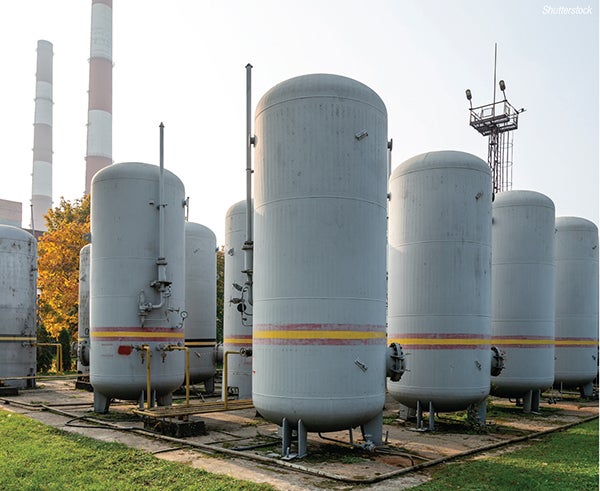
FIGURE 4. Polymeric materials used in hydrogen service may be found in composite storage tanks, hoses, seals, tank liners and more. Special testing protocols help to ensure the integrity of these materials under continuous hydrogen exposure
Permeation testing is especially useful for determining safety margins in composite pressure vessels. Hydrogen can seep through a polymer liner into the carbon-fiber-reinforced polymer (CFRP) overwrap, leading to delayed delamination. Using permeation rate data and diffusion modeling, we can identify the hydrogen concentration gradient across the vessel wall based on fill and discharge cycles. This information helps set inspection intervals and the maximum allowable refueling pressure.
Electrochemical characterization
Electrolyzers present a unique challenge in materials qualification. They function at the crossroads of electrochemistry, thermomechanics and process chemistry. The main failure modes in PEM electrolyzers include: membrane thinning and pinhole formation; catalyst layer dissolution and agglomeration; bipolar plate corrosion; and growth of contact resistance and seal degradation due to chemical attack and compression creep.
Membrane characterization starts with measuring proton conductivity using four-point EIS in a controlled temperature and humidity setting. This is usually set at 80ºC and 100% relative humidity, following IEC 62282 guidelines [15]. Engineers determine membrane equivalent weight and ion exchange capacity through acid-base titration. These measurements offer a compositional baseline for comparing post-service samples to assess chemical degradation.
Accelerated stress testing (AST) protocols created by the U.S. Department of Energy (DOE) Fuel Cell Technologies Office offer a clear way to assess membrane durability [16]. The open-circuit voltage (OCV) hold test exposes membranes to continuous high potential without current flow. This setup increases the generation of reactive oxygen species and can speed up chemical degradation to hours instead of years. Voltage cycling ASTs mimic the load-following behavior of grid-connected electrolyzers. The DOE aims for a PEM electrolyzer membrane lifetime of 80,000 hours. AST protocols are designed to condense this degradation into qualification test durations of 1,000 to 5,000 hours.
For bipolar plates, the key measurement is contact resistance based on compressive load and service time. A four-point contact resistance measurement setup, following the protocol in DOE/NREL/NIST technical reports [17], gives the most consistent data. Stainless-steel bipolar plates should also be tested for fluoride-ion release in acidic environments. Fluoride from membrane degradation speeds up stainless-steel corrosion in a self-reinforcing cycle, leading to premature stack failures in operating systems.
Accelerated aging protocols
Polymer seals in hydrogen systems face a qualification challenge that is different from metallic parts. The degradation mechanisms involved are thermally activated, chemically complex and may not be sped up by the same conditions that affect long-term field performance. Standard accelerated aging, following ASTM F1980 (Guide for Accelerated Aging of Sterile Barrier Systems for Medical Devices), uses the Arrhenius relationship to estimate how elevated-temperature aging relates to service life at normal temperatures [18]. This method works for purely thermal degradation but does not consider the impact of high-pressure hydrogen exposure, plasma radiation in certain electrolyzer setups, or wear from repeated pressurization cycles.
A practical accelerated-aging protocol for hydrogen service seals should include four main elements. First, thermal aging should occur at a high temperature that does not alter the degradation process. This is usually no more than 40ºC above the maximum service temperature for fluoroelastomers. Second, use high-pressure hydrogen exposure through rapid gas-decompression testing according to ISO 23936-2 [19] to assess resistance to explosive decompression. Third, measure compression set using ASTM D395 [20] before and after aging to evaluate how well the seals maintain their sealing force. Finally, implement mechanical fatigue cycling to mimic the pressure changes of a refueling or electrolysis cycle.
The rapid gas decompression test is crucial for seals used in high-pressure storage and dispensing applications. When a seal material is in contact with high-pressure hydrogen and then quickly depressurized, dissolved hydrogen gas can form blisters or lead to internal cracking if the material does not release hydrogen quickly enough. ISO 23936-2 outlines standard test conditions. However, engineers should keep in mind that the critical decompression rate depends on the material. It may need specific testing to find the threshold rate where damage begins.
For PEM membranes in electrolyzers, analyzing degradation modes needs a mix of monitoring fluoride emission rates during operation, which indicates the chemical degradation rate of the membrane. It also requires cross-sectional scanning electron microscopy (SEM) imaging to check for membrane thinning and small-angle X-ray scattering (SAXS) to observe changes in the ionomer nanostructure. Together, these three measurements offer insights into degradation. They can help identify whether the failure is due to chemical or mechanical issues, which is essential for figuring out the root causes and taking corrective action.
A risk-calibrated testing strategy
The most common mistake in qualifying hydrogen materials is not under-testing; it is misallocating test resources by using standard tests that fail to identify the relevant failure mechanisms. A pipeline made from API 5L X65 carbon steel for use in ambient hydrogen service at 70 bars does not need the same level of qualification as a high-strength connection fitting at 875 bars in a fueling station. An electrolyzer membrane working in a grid-connected variable-load application degrades differently than one operating at steady state. The test program should be based on the analysis of failure modes, not merely on a list of standardized tests.
A practical approach starts with grouping materials. Pipeline steels with a yield strength below 550 MPa in non-cycling service have a strong hydrogen compatibility record. These can depend on existing database evidence, along with weld qualification testing. High-strength steels above 690 MPa, no matter the service pressure, need complete fracture mechanics characterization in hydrogen environments. Electrolyzer components require electrochemical testing that is not similar to conventional CPI testing. This may need the development of laboratory capabilities if they are not already available.
Testing should be staged. Screening tests using SSRT or small-scale tensile samples in high-pressure hydrogen give quick go or no-go information at a low cost. Full fracture mechanics characterization and long-term fatigue testing should be saved for materials that pass screening and qualify for final specification. Accelerated aging for polymer components should start early in the project schedule. Even accelerated tests for 80,000-hour lifetime targets take months to complete.
Finally, the qualification data package should be seen as a living document. As hydrogen infrastructure gains service hours, field inspection data, fleet failure information and updated code requirements will improve the understanding of which material-environment combinations are truly limiting. Engineers who create connections between their qualification test data and their as-built material records will be ready to update their assessments efficiently as new knowledge comes in. Those who view material qualification as a one-time compliance task will have to conduct unplanned testing when the first generation of hydrogen infrastructure starts to age.
The hydrogen economy will rely on steel, polymer and catalyst materials that have been chosen and qualified with this kind of systematic effort. The testing methods are available. The codes establish a framework. What the industry needs now is engineering judgment to apply them where they are most needed.
Edited by Mary Page Bailey
References
1. European Hydrogen Incidents and Accidents database HIAD 2.1, European Commission, Joint Research Center.
2. ASME B31.12: Hydrogen Piping and Pipelines, 2023.
3. ASTM G142: Standard Test Method for Determination of Susceptibility of Metals to Embrittlement in Hydrogen Containing Environments at High Pressure, High Temperature, or Both, 2022.
4. ASTM F1459: Standard Test Method for Determination of the Susceptibility of Metallic Materials to Hydrogen Gas Embrittlement, 2017.
5. ASTM E1820: Standard Test Method for Measurement of Fracture Toughness, 2019.
6. ASTM E647: Standard Test Method for Measurement of Fatigue Crack Growth Rates, 2024.
7. Sandia National Laboratories, Hydrogen Materials Technical Database, https://www.sandia.gov/matlstechref/.
8. NACE TM0177: Laboratory Testing of Metals for Resistance to Sulfide Stress Cracking and Stress Corrosion Cracking in H2S Environments, rev. 2005.
9. ASTM G129: Standard Practice for Slow Strain Rate Testing to Evaluate the Susceptibility of Metallic Materials to Environmentally Assisted Cracking, 2021.
10. ASTM G5-14: Standard Reference Test Method for Making Potentiodynamic Anodic Polarization Measurements, 2021.
11. ISO 17081: Method of Measurement of Hydrogen Permeation and Determination of Hydrogen Uptake and Transport in Metals by an Electrochemical Technique, 2nd ed., 2014.
12. ASTM D1434: Standard Test Method for Determining Gas Permeability Characteristics of Plastic Film and Sheeting, 2003.
13. ISO 15105-1, Plastics — Film and sheeting — Determination of gas-transmission rate, Part 1: Differential-pressure methods, 2007.
14. ASTM D471: Standard Test Method for Rubber Property—Effect of Liquids, 2010.
15. IEC 62282-8: Fuel Cell Technologies standards.
16. U.S. Department of Energy Fuel Cell Technologies Office: Hydrogen and Fuel Cell Technologies Program Technical Plan, Electrolysis Section, 2022.
17. NIST, Four Dimensions 280DI Sheet Resistance Mapping System.
18. ASTM F1980, Standard Guide for Accelerated Aging of Sterile Barrier Systems and Medical Devices, 2021.
19. ISO 23936-2: Petroleum, Petrochemical and Natural Gas Industries: Non-Metallic Materials in Contact with Media Related to Oil and Gas Production, Part 2: Elastomers, 2011.
20. ASTM D395, Standard Test Methods for Rubber Property—Compression Set, 2025.
21. Somerday, B.P., and Sofronis, P. (Eds.), Hydrogen-Materials Interactions, ASME Press, 2014.
Author
 Pradyumna (Prady) Gupta is the founder and chief scientist of Infinita Lab Inc. and Infinita Materials (39899 Balentine Drive, Suite 200, Newark, CA 94560; Email: hello@infinitalab.com; Website: www.infinitalab.com), where he leads pioneering work in materials characterization, reliability engineering, and advanced manufacturing. With more than two decades of experience spanning semiconductors, electric mobility, and aerospace systems, he focuses on bridging material science with practical reliability needs. He holds a Ph.D. in materials science from Lehigh University.