Tosoh Corp. (Tokyo) has developed a hydrocarbon‑based polymer electrolyte for polymer electrolyte membrane (PEM) water electrolysis systems. Growing interest in hydrogen energy for carbon neutrality is increasing attention on PEM water electrolysis, a leading hydrogen production technology. Conventional PEM water electrolysis, however, uses fluorinated polymer electrolyte membranes, raising issues such as fluorine’s environmental impact and low gas barrier properties that limit hydrogen production efficiency and durability.
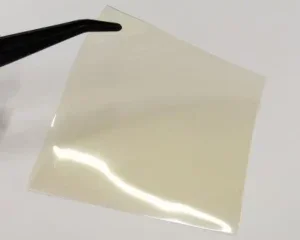
Electrolyte membrane fabricated using Tosoh’s newly developed material (Source: Tosoh)
Tosoh’s newly developed hydrocarbon‑based polymer electrolyte offers superior proton conductivity, higher gas barrier properties and lower hydrated state swelling compared with conventional fluorinated polymer-electrolyte materials. Tosoh anticipates that the use of its material to fabricate electrolyte membranes will improve the efficiency and durability of water electrolysis systems. The material’s proprietary molecular structure, moreover, can be flexibly modified to meet customized requirements.
Tosoh has begun providing samples of its new hydrocarbon-based polymer electrolyte to select users and is moving forward with evaluations for as early a market launch as possible. The company, meanwhile, continues its research and development on this product to further advance PEM water electrolysis.