Utilizing waste plastics as feedstocks in circular processes requires a systems-based approach. Presented here are the challenges that must be overcome to make circular hydrocarbons investable, scalable and repeatable
For more than a decade, the chemical process industries (CPI) has spoken about waste-to-feedstock pathways as if achieving scale for these operations were simply a matter of time. If we could pilot long enough, optimize yields a little further or secure one more subsidy, the thinking goes, then circular hydrocarbons would inevitably follow.
That framing is increasingly difficult to defend under current market conditions. Today, the CPI face a convergence of pressures: tightening regulation, increasingly explicit customer demand for circular materials, constrained capital and a growing recognition that linear feedstock models are structurally misaligned with long-term resilience.
According to McKinsey & Co. (New York, N.Y.; www.mckinsey.com), circular and bio-based polymers could account for 30–40% of global plastics demand by 2035 under ambitious decarbonization scenarios [1]. Meanwhile, the Organization for Economic Co-operation and Development (OECD; Paris, France; www.oecd.org) predicts that global plastic waste volumes could nearly triple by 2060 without systemic change (Figure 1) [2].
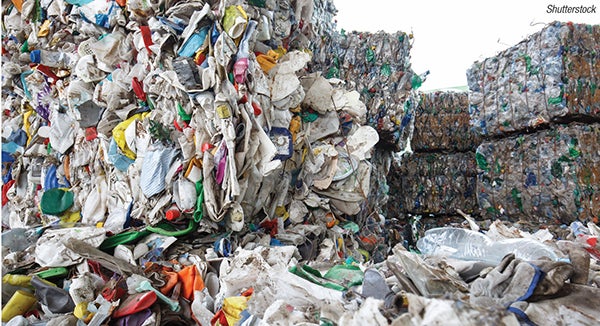
FIGURE 1. Global plastic waste volumes could triple by 2060 without systemic change to how these materials are handled
“Waste-to-feedstock” is therefore no longer a peripheral sustainability topic. It is a strategic industrial challenge. The question is not whether waste-to-feedstock pathways work technically, but whether they can be made investable, repeatable and scalable — and whether they can be integrated into existing chemical value chains under real market conditions.
In the experience of the author’s organization, one lesson stands out clearly: circular feedstocks fail not because the chemistry is broken, but because the system around them is incomplete.
Failure to scale
Most waste-to-feedstock technologies are no longer experimental. Pyrolysis, depolymerization, dissolution and emerging direct-conversion routes have all been demonstrated at pilot (or early commercial) scale. The operating envelopes for these processes are understood. Their technical risks are broadly known. Yet very few of these pathways achieve repeatable deployment. The reason is simple: scale in the chemical industry is not achieved by building a plant. It is achieved by embedding a pathway into existing assets, specifications, procurement systems and balance sheets — and doing so in a way that can be replicated across regions and cycles.
From the perspective of an investor or chief financial officer (CFO), three questions dominate every discussion in which the author has been involved: 1) Can feedstock quality be guaranteed at volume and over time?; 2) Can outputs be integrated into existing assets without disproportionate capex or operational risk?; and 3) Can the value chain align long enough to secure offtake, financing and regulatory certainty?
Most projects struggle not because these questions lack answers, but because no single actor can credibly answer all three of these questions at once. This is where the limits of standalone projects become apparent — and where coalition-based execution becomes a necessity, rather than a convenience. Coalition models bring together a wide range of stakeholders to execute transition projects. In the case of plastics circularity, such a coalition involves chemical producers, energy companies, converters, consumer goods companies, original equipment manufacturers (OEMs), technology providers and others.
Integration is the real innovation
Across all waste-to-feedstock pathways, one pattern repeats: integration beats invention. The chemical industry (and related process industries) are asset-intensive by nature. For example, steam crackers, refineries and downstream units are built for decades-long lifetimes and predictable inputs. Pathways that require wholesale replacement of assets face steep barriers — particularly in today’s capital-constrained environment.
According to BloombergNEF (London, U.K.; www.bnef.com), global investment in low-carbon chemical production must increase several-fold within this decade to align with net-zero scenarios. Yet since 2022, capital discipline has tightened markedly, with company boards of directors prioritizing cash preservation and balance-sheet resilience.
In this context, waste-to-feedstock pathways that leverage existing assets — through drop-in compatibility, mass-balance approaches, or incremental retrofits — are far more likely to scale effectively than those requiring greenfield infrastructure.
A smart project strategy then emerges: to consistently prioritize integration feasibility as a gating criterion. If a process pathway cannot demonstrate how it could fit into today’s plants, utilities and supply chains, it should not progress — regardless of how compelling it looks on paper.
Bankability: an alignment issue
Investors are often accused of lacking patience. In practice, they lack alignment. In the author’s experience engaging with project financiers, strategic investors and public funding bodies, three conditions consistently determine bankability: 1) Credible, long-term offtake anchored by industrial buyers; 2) Risk allocation aligned with who can realistically manage each risk; and 3) Governance structures robust to leadership changes and market cycles.
Standalone projects often struggle because they concentrate risk within a narrow set of actors. Coalition-based projects distribute the risk across feedstock providers, technology owners, asset operators and end-users — placing accountability where it belongs.
A coalition’s role is not to replace corporate decision-making, but to orchestrate alignment early enough that investment decisions become rational, rather than heroic.
Real-world findings
The following case studies have arisen from the work of the author’s organization, the Global Impact Coalition (GIC; Geneva, Switzerland; www.globalimpactcoalition.com), a membership-based group that brings together major industry players across the chemical value chain to co-develop breakthrough solutions and accelerate them to commercial scale. It is hoped that the lessons revealed through the work of the organization will help provide a path forward toward economically viable plastics circularity at scale.
Feedstock reality: waste is not oil. The first hard truth to realize is that waste is not a commodity — at least not yet. Post-consumer plastic waste is inherently heterogeneous. Polymer mixes, additive packages, contamination levels and collection practices vary widely, even within mature markets. This variability remains the single most important determinant of downstream performance.
In GIC’s Waste-to-Pyrolysis Oil (PyOil) workstream, this reality surfaced quickly. While pyrolysis technology itself has advanced significantly, downstream chemical producers consistently identified feedstock inconsistency, not conversion yield, as the principal barrier to integration.
Small deviations in chlorine, metals or oxygenates can render pyrolysis oil unsuitable for steam crackers or hydrotreating units without costly pre-treatment. The result is a familiar stalemate: technology providers optimize for yield, while asset owners optimize for risk avoidance.
Breaking this impasse required shifting the focus away from conversion technology and toward system-level feedstock governance. Under the auspices of the GIC, waste collectors, aggregators, pre-processors, pyrolysis operators and chemical producers aligned around shared quality envelopes, testing protocols and escalation mechanisms — much like crude assay specifications in petroleum refining.
Only once these parameters were jointly defined did discussions move from “can this work?” to “how do we replicate this?”
The lesson is straightforward but often ignored: Without upstream standardization and quality control, downstream integration remains bespoke — and therefore unscalable.
Automotive plastics circularity. If waste-to-feedstock is challenging, automotive plastics circularity is unforgiving. Automotive OEMs operate under some of the strictest material specifications in industry. Safety-critical components, long service lives, and global homologation leave little tolerance for variability. At the same time, regulatory and customer pressures — particularly in Europe — are accelerating demand for recycled and circular content.
GIC’s Automotive Plastics Circularity project was designed to test whether circular hydrocarbons could meet these constraints not in theory, but in production reality.
One insight emerged quickly: the bottleneck was not reluctance on the part of the OEMs, but the fragmentation of validation and qualification pathways across the value chain.
Material producers, converters, Tier-1 suppliers and OEMs each assessed risk differently. Testing regimes were duplicated. Timelines were misaligned. Even technically viable circular materials struggled to progress beyond limited trials.
By aligning all actors within a single execution framework — with shared testing protocols, decision gates and volume assumptions — the coalition helped compress multi-year qualification cycles into something closer to an industrial timeline.
This also reshaped investment discussions. Once downstream demand signals became concrete and time-bound, upstream players could justify investments in feedstock preparation, conversion capacity and quality assurance.
The broader takeaway message is clear: Circular feedstocks scale when qualification is industrialized, not when validation remains fragmented.
Direct-conversion routes. Beyond pyrolysis and mechanical recycling, direct conversion routes — such as catalytic or solvent-based processes that transform mixed waste streams directly into usable intermediates — are attracting increased attention. These technologies promise higher selectivity, reduced upgrading needs and potentially improved carbon efficiency.
Several GIC member companies are exploring such routes in collaboration with technology developers and academic partners, including world-renowned academic institution ETH Zurich (www.ethz.ch).
The opportunity for direct conversion is real, but so are the constraints. Direct conversion processes are often more sensitive to feedstock composition and impurities. While they may reduce downstream upgrading, they typically increase upstream requirements for sorting, preparation and monitoring. In other words, they shift risk rather than eliminating it.
From an investment perspective, success therefore depends less on technical elegance and more on integration readiness — the ability to plug into existing industrial ecosystems, including utilities, hydrogen supply, waste logistics and offtake structures. Here again, coalition models play a decisive role. By anchoring emerging technologies within broader cluster-level discussions, rather than isolated pilots, coalitions, such as GIC, enable developers to design processes that align with real asset constraints from the outset.
As one CEO of a GIC member company remarked during a recent GIC session: “The technology is exciting — but unless it fits what I already own, it will never make it past PowerPoint.”
Timing matters
It is tempting to view waste-to-feedstock as a long-term transition lever. In reality, the window to shape how these pathways scale is narrower than many assume.
Regulatory frameworks — particularly in Europe — are crystallizing. End-use markets are formalizing procurement requirements. And competition for circular molecules is intensifying, with regions that industrialize fastest likely to capture disproportionate value.
At the same time, the chemical industry faces a paradox: never has collaboration been more necessary, yet never has tolerance for unfocused collaboration been lower.
This is where execution platforms like industry coalitions matter most — not as conveners of dialogue, but as delivery mechanisms that translate collective intent into investable reality.
Necessary infrastructure
Waste-to-feedstock pathways will not scale just because the industry agrees they are desirable. They will scale because the industry builds the technical, commercial and organizational infrastructure that makes them unavoidable. That infrastructure includes the following items:
- Standardized specifications for feedstock materials
- Qualification pathways that are industrialized
- Integration-first project design
- Bankable, risk-aligned investment structures
None of these emerges organically. All require deliberate coordination across actors who do not naturally sit at the same table. Coalitions like the GIC exist precisely to fill that gap — not by replacing corporate leadership, but by enabling it.
As the chemical industry, and other related process industries, navigate one of the most complex transitions in its history, the question is no longer whether circular hydrocarbons will matter. The question is who will be ready to deploy them — at scale, at speed and under real market conditions.
Those who treat waste-to-feedstock as a side project may continue to pilot indefinitely. Those who treat it as core industrial infrastructure will define the next era of chemical value creation. And increasingly, that value will determine regional competitiveness, capital access and long-term asset relevance.
Edited by Scott Jenkins
References
1. Witte, C., Winkler, G. and others, Aligning the value chain to decarbonize plastics, McKinsey & Co., article, June 2025, www.mckinsey.com.
2. Organization for Economic Co-operation and Development (OECD), Global plastic waste to almost triple by 2060, OECD press release, June 2022, www.oecd.org.
Author
 Charlie Tan is the CEO of the Global Impact Coalition (GIC; Rue du Cloître 1, 1204 Geneva, Switzerland; Email: charlie.tan@wearegic.com; Website: www.globalimpactcoalition.com), an industry platform enabling structured collaboration across the chemical value chain to accelerate the implementation of scalable low‑carbon solutions. Prior to leading GIC since 2023, Tan was lead of low-carbon technology and ventures at the World Economic Forum. He also previously served as CEO of Envision SA. Tan was educated at Imperial College London.