HAZOP data management should be treated as a systemic process-safety issue, as it can be a significant and invisible source of inefficiency. This article describes the principles required to create HAZOP records that can stand on their own over time
Hazard and operability (HAZOP) studies are firmly embedded within process safety practices and are widely recognized as a systematic means of identifying hazards and operability issues in the chemical process industries (CPI). Considerable attention is given to the organization and conduct of HAZOP workshops, including the selection of a suitably experienced team, preparation of design documentation and the application of established guideword-based methodologies. However, less scrutiny is applied to the manner in which the outputs of these studies are recorded, preserved and subsequently used.
The data generated during a HAZOP study often persist long beyond the workshop itself. Study records may be revisited during later project phases, referenced during management-of-change activities, reviewed as part of audits or regulatory inspections or examined in the aftermath of incidents. In many organizations, HAZOP documentation effectively becomes part of the long-term safety record of an asset (Figure 1). Despite this, HAZOP data and results are frequently treated as transient artifacts of the study process, rather than as a safety-critical record requiring deliberate management and governance.
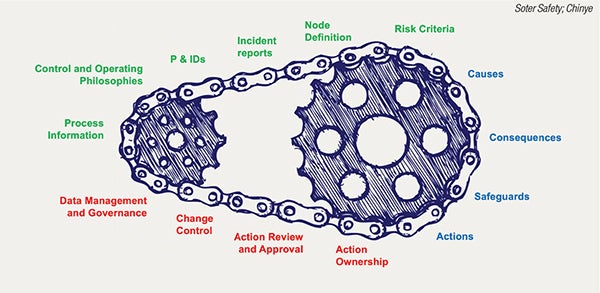
FIGURE 1. HAZOP studies are a cornerstone of process safety management in the process industries and are conducted with care, expertise and good intent. Yet the value of that effort is often eroded after the workshop through small, well-meaning changes
This mismatch between the longevity of HAZOP data and the rigor applied to data management gives rise to a range of well-recognized, but seldom articulated, issues. Recorded causes and consequences may lack sufficient specificity to be interpreted consistently by those absent from the workshop. Safeguards may be listed without clear definition of the assumptions or conditions under which they are effective. Over time, informal modifications are sometimes introduced in an effort to clarify wording, align conclusions with later design developments or correct perceived deficiencies in the original record. While often well-intentioned, such changes risk obscuring the context under which the original conclusions were reached.
These practices reflect a broader tendency to view deficiencies in HAZOP documentation as shortcomings of format or tooling rather than as systemic issues rooted in how HAZOP data can be conceptualized. In reality, the challenges associated with HAZOP data management arise from a combination of factors, including the time-bound nature of the workshop process, the reliance on collective expert judgement, and the absence of commonly accepted standards governing how causes, consequences and safeguards are described and articulated within otherwise well-established HAZOP recording structures. Addressing these challenges requires a clearer understanding of what HAZOP data represent and how these data differ from other forms of risk or design documentation.
This article examines HAZOP data as a distinct class of safety information, generated under specific conditions and for a specific purpose. It explores how such data are created, why context is essential to data interpretation and why post-workshop modification is inherently risky. Practical principles for managing HAZOP data responsibly are discussed, along with considerations for appropriate data use after the workshop.
What HAZOP data represent
The outputs of a HAZOP study are often viewed primarily through their immediate utility: the identification of hazards, the generation of recommendations or the demonstration of compliance with internal or regulatory requirements. While these functions are important, at the core, HAZOP data constitute a formal record of structured reasoning applied to a defined design at a specific point in time.
A HAZOP study is conducted under explicit and implicit constraints. The design under review reflects a particular stage of development, supported by a defined set of drawings, specifications and operating assumptions. The scope of the study is bounded by the selected process nodes, operating modes and parameters considered. The conclusions reached are shaped by the collective expertise of the participants present, the information available to them and the practical limitations of the workshop environment. The resulting data therefore capture not only what was identified, but also the context within which judgements were formed.
For this reason, HAZOP data should be understood as time-bound by design. The data do not represent a definitive or immutable assessment of risk, nor do they purport to remain valid irrespective of subsequent design changes or operational experience. Instead, the data record the outcomes of a disciplined analytical process applied to a particular configuration, using the best information available at the time. The value lies in making that reasoning visible and traceable, rather than in providing a perpetual statement of acceptability.
The collective nature of HAZOP analysis further distinguishes its outputs from other forms of engineering documentation. Causes, consequences and safeguards are not the product of a single author or calculation, but of discussion, challenge and consensus among a multidisciplinary team. The recorded conclusions therefore represent an agreed position reached through structured dialogue, rather than an optimization or worst-case analysis performed in isolation. This characteristic is central to the credibility of HAZOP studies, but it also introduces sensitivity to later reinterpretation when the original context is no longer readily apparent.
HAZOP data are frequently referenced well beyond the workshop in which they were generated. The data may inform subsequent risk studies, be used to support management-of-change decisions or be reviewed during audits and incident investigations. In such cases, the data are often read by individuals who were not present during the original HAZOP discussions and who may have limited visibility of the assumptions, compromises or uncertainties considered by the study team. The clarity with which those elements are captured in the record therefore has a direct bearing on how reliably the data can be interpreted and applied.
Understanding what HAZOP data represent is a prerequisite for responsible data management and avoiding inappropriate post-study reinterpretation or modification. Recognizing HAZOP data as a safety-critical record implies acknowledging its long-term influence on decision-making. Errors, ambiguity or loss of contextual information do not merely affect the quality of the original study; they propagate into future activities that rely on its conclusions and their interpretations. Ideally, a well-structured and well-preserved HAZOP record provides a durable reference that supports continuity of safety reasoning across the lifecycle of a facility, even as personnel and organizational knowledge change.
Why context matters
The integrity and long-term usefulness of HAZOP data cannot be separated from the conditions under which the data are generated (Figure 2). The data are created through a facilitated, time-bound process that relies on structured discussion, professional judgement and consensus. As a result, the context surrounding its creation is integral to correct interpretation.

FIGURE 2. In addition to understanding how HAZOP data are generated, it is critical for teams to understand the context in which the information was collected and analyzed
Understanding how HAZOP data are generated is therefore essential to understanding why ambiguity arises, why later reinterpretation is tempting and why seemingly minor later changes can undermine the credibility of the record.
Pre-workshop: Where HAZOP data management begins. Although HAZOP data is formally generated during the workshop itself, data quality is heavily influenced by decisions made beforehand. The study is anchored to a specific representation of the design, typically defined by a set of P&IDs, process descriptions and operating philosophies. The maturity, completeness and version control of these inputs establish the boundaries within which hazards and operability issues can be identified.
Key pre-workshop factors influencing data quality include the definition of study nodes, the selection of operating modes to be considered and the risk-ranking frameworks applied. Where node boundaries are poorly defined or operating assumptions are left implicit, the resulting HAZOP entries often reflect that ambiguity. Similarly, inconsistencies in severity definitions or risk-tolerability criteria can lead to conclusions that appear contradictory when viewed outside the workshop context.
From a data-management perspective, these conditions are rarely captured explicitly in the HAZOP record itself. As a result, later readers may treat the outputs as universally applicable, without appreciating the assumptions and exclusions that shaped them.
The workshop environment and its constraints. The HAZOP workshop is designed to balance thoroughness with practicality, bringing together a multidisciplinary team for a finite period of time to reach collective judgements on credible hazards and operability issues. The process relies on active discussion, challenge and agreement, facilitated to ensure coverage while maintaining momentum.
This environment introduces constraints that are inherent to the method. Time pressure limits the depth of analysis for individual scenarios, while professional judgement is relied upon to prioritize credible issues based on experience and operational knowledge. Information gaps are addressed through assumptions, deferrals or recommendations, and fatigue can influence framing and prioritization in lengthy studies.
The resulting data are therefore a pragmatic representation of what the team collectively judged to be credible and relevant under those conditions. Importantly, the workshop environment favors concise recording over narrative explanation, with the expectation that participants share a common understanding of the discussion that underpins each entry. Once that shared understanding dissipates, the written record must stand alone.
Recording HAZOP data: From discussion to permanent record. HAZOP data are typically recorded in structured formats that separate causes, consequences, safeguards and recommendations into discrete fields. This structure is well-established and widely understood. However, the translation of detailed technical discussion into brief textual entries carries the risk that context, assumptions or nuance are not fully captured.
Scribes are required to distill complex interactions, conditional reasoning and contextual qualifiers into concise statements that can be captured in real time. The resulting entries can prioritize brevity and clarity for those present in the workshop, rather than completeness for future readers. In many cases, the adequacy of a recorded statement relies on tacit knowledge — assumptions and background understanding — shared by the team at the time
This reliance on implicit understanding becomes embedded in the way HAZOP information is recorded, and can become problematic when the record is relied upon outside the original workshop context. Readers unfamiliar with the original discussion may struggle to interpret the scope of a cause, the conditions under which a consequence is credible or the assumptions underlying the effectiveness of a safeguard. Where records are reused across projects or revisited years later, this lack of explicit context can lead to inconsistent interpretation and inappropriate application.
Post-workshop ambiguity
The absence of explicit context and consistent phrasing in HAZOP records often gives rise to a perceived need for clarification after the workshop has concluded. Entries may be revisited to improve wording, increase specificity or align descriptions with subsequent design developments. While these actions are frequently motivated by a desire to improve clarity, they also introduce the risk of reinterpretation.
Post-workshop editing typically occurs outside the collective decision-making framework of the original study. Individual judgement replaces group consensus, and original assumptions may be unintentionally revised or removed. In doing so, the HAZOP record can begin to drift from its original purpose as a snapshot of collective reasoning, becoming instead a hybrid document that reflects evolving understanding without clear traceability.
This pattern reflects a mismatch between the way HAZOP data are generated and the expectations placed upon data later in the asset lifecycle. Where records are expected to function as durable references, the lack of shared standards for how information is articulated within established HAZOP structures becomes increasingly apparent, particularly in organizations operating across multiple sites or relying on different facilitators and study teams.
Addressing this mismatch requires procedural controls that extend beyond document revision to encompass how HAZOP entries are articulated and recorded, alongside a clearer understanding of how those entries can preserve meaning, reduce ambiguity and minimize the perceived need for retrospective modification.
Perilous post-workshop edits

FIGURE 3. Changes to HAZOP data may be intended to clarify ambiguous wording, reformat records or reframe actions, but in doing so, they risk losing the context, assumptions and reasoning behind the original entries. The consequence is not only an increase in latent safety risk, but also a significant and often invisible efficiency cost
Following the workshop, HAZOP data are frequently revisited, often with good intentions. Such post-study edits are usually driven by legitimate, yet occasionally misguided, concerns (Figure 3). Common reasons include the following:
Clarification of ambiguous wording. Workshop discussions are dynamic, and scribes often condense complex conversations into brief statements. Post-study, readers of the HAZOP record may find that entries that rely heavily on tacit knowledge or brevity are difficult to interpret, prompting edits intended to improve clarity.
Alignment with updated design or documentation. Engineering designs often evolve in parallel with the HAZOP study. Teams may update cause, consequence or safeguard statements to reflect changes in system configuration or instrumentation. While well-intentioned, these modifications can inadvertently overwrite the reasoning captured during the original discussion.
Preparation for review, audit or reporting. HAZOP outputs are frequently referenced in regulatory reviews and corporate risk governance. In these contexts, study teams may feel pressure to standardize language, correct perceived inconsistencies or reformat entries to align with external expectations.
Perceived need to formalize assumptions. During the workshop, assumptions about process behavior, human response or equipment performance may be implicit. Post-workshop edits are sometimes intended to make these assumptions explicit, particularly if the original wording appears too concise or relies on tacit knowledge.
While these motivations are understandable, each carries the potential to subtly alter the original meaning of the study. Over time, even small adjustments — made for clarity, formatting or alignment — can accumulate, creating a record that no longer faithfully reflects the workshop’s collective judgement.
Rewriting safety history
Even minor edits to HAZOP records can gradually change the meaning of the original study. What begins as clarification, alignment or formatting can accumulate into a situation where the record no longer faithfully reflects the reasoning applied by the study team. This loss of traceability introduces risk in several ways.
Firstly, decisions made after the workshop increasingly rely on a version of the record that is partially decoupled from the context in which it was created. Assumptions that were explicit in discussion may be omitted, condensed, or rephrased, making it difficult for subsequent readers to distinguish between original judgements and later interpretation. The consequence is that safeguards may be credited incorrectly, the scope of actions may be misunderstood or escalation paths may be misrepresented.
Secondly, the risk imposed by this loss of traceability is often hidden. Organizations may continue to use the HAZOP record for management of change, operational risk assessments or regulatory submissions, confident that the document accurately reflects the study’s conclusions. Yet the document may no longer capture the nuanced interplay between cause, consequence and safeguard that was considered during the original HAZOP workshop. This disconnect is rarely apparent until a decision is challenged by an unexpected outcome, at which point the underlying assumptions may be difficult or impossible to reconstruct.
Finally, even well-intentioned edits can contribute to incidents. By modifying the record to improve clarity or align with new information, users may inadvertently remove critical context, introduce ambiguity or overstate the effectiveness of safeguards. In this way, the very efforts meant to reduce risk can paradoxically create conditions where misinterpretation is more likely — a systemic hazard that can persist long after the original workshop.
The key insight is that HAZOP records are not simply documentation, but the preserved reasoning of a collective safety analysis. When traceability is compromised, organizations lose the ability to understand why decisions were made, increasing both operational risk and the potential for inefficient or inappropriate follow-up actions.
In addition to the safety implications, post-workshop edits are inherently inefficient. Revisiting discussions to clarify wording, align entries with evolving designs or standardize language consumes valuable time. These efforts often yield only marginal gains in clarity while increasing the risk of misinterpretation. In this way, poorly managed HAZOP data imposes a dual cost: it heightens operational risk by eroding traceability; and it diverts organizational resources toward repetitive and avoidable rework. Addressing this challenge requires a proactive approach that reduces the need for post-study modification while preserving the integrity of the original reasoning.
Long-term management
Maintaining the integrity of HAZOP data extends beyond the conclusion of the workshop. While clearly articulated entries reduce the need for post-study edits, organizations must implement deliberate procedures to preserve context, ensure traceability and provide clarity for future decision-making. Without such measures, even well-written HAZOP records can degrade over time, potentially introducing safety and or operability risks. Applied consistently, an approach that integrates the below considerations preserves traceability, protects data integrity and reduces the risk of inadvertent rewriting of safety history.
Establish clear ownership. A fundamental principle is that each HAZOP record should have a clearly identified owner, responsible for its ongoing management. The specific role that assumes this responsibility will vary depending on organizational structure and how the study was conducted. Where the HAZOP is led internally, ownership is often retained by the HAZOP chair. Where an external facilitator is engaged, responsibility commonly transfers to an internal role, such as the lead process engineer, project manager, or asset owner. Regardless of where it sits, ownership should be explicit and understood. Ownership typically encompasses responsibility for:
- Ensuring that any edits, annotations or clarifications are documented and technically justified
- Maintaining a versioned record of changes, including when and why they were made
- Acting as the primary point of reference for queries about interpretation, assumptions or original context
Implement change control. HAZOP data should be treated as a controlled record, comparable to other safety-critical documents, such as process and instrumentation diagrams or safety studies. Where practicable, it should be brought within established corporate document control arrangements, rather than managed as an informal or isolated deliverable.
Versioning. Each revision of the HAZOP record should be uniquely identifiable, with a clear record of what was changed, why the change was made and who authorized it.
Access control. Editing privileges should be limited to designated roles, with the rationale for any modification recorded in a manner suitable for later review or audit.
Approval mechanisms. Substantive updates — such as those reflecting design changes, resolution of actions or correction of material errors — should be subject to formal review and sign-off by the appointed action approver to confirm alignment with the original study intent.
Preserve context and rationale. Even with structured articulation, some context from the workshop discussion is essential for future users to interpret the HAZOP correctly. By embedding context systematically, the record remains intelligible even as personnel, organizational knowledge or system configurations change. Organizations should establish rules for preserving rationale, including:
- Capturing the assumptions, initiating conditions and reasoning behind each cause, consequence, safeguard and action
- Linking follow-up actions explicitly to the scenario from which they arise, for example through consistent referencing or associative numbering schemes
- Documenting any unresolved items or deferred issues with enough detail to avoid misinterpretation later
Minimize post-workshop editing. Minimizing post-workshop changes reduces both risk of misinterpretation and inefficient use of personnel time, aligning with the dual goals of safety and operational efficiency.
While minor clarifications may be unavoidable, organizations should aim to reduce post-workshop edits through the following actions:
- Clear workshop procedures and facilitator guidance for recording entries in real time
- Standardized templates for cause, consequence, safeguard and action statements
- Training participants to recognize when edits may obscure original reasoning rather than improve clarity
Integrate HAZOP records into organizational governance. Finally, HAZOP outputs should not exist in isolation. Where relevant, they should be actively referenced within the documents and processes that influence the overall safety and resilience of a facility, including:
- Management of change processes
- Operational risk assessments
- Safety case development
- Training and knowledge transfer
- Quality system records
Integrating HAZOP data into organizational governance frameworks reinforces its status as a safety-critical record, promotes consistent application of its conclusions, and reduces the likelihood of informal or untraceable modification over time.
By implementing these practical principles, organizations can preserve the integrity of HAZOP data, reduce the likelihood of costly or risky post-workshop modifications, and maintain a durable reference for long-term safety decision-making. Clear ownership, robust change control, preservation of context, minimization of edits and integration into governance collectively transform the HAZOP record from a transient workshop artifact into a reliable, actionable safety-critical asset.
The central lesson is straightforward: durable HAZOP data do not emerge from post-study clean-up. Such data are created during the workshop through disciplined articulation and preserved afterwards through deliberate governance. Cause, consequence, safeguard and action statements must be capable of standing on their own, without reliance on the tacit knowledge of the HAZOP team. Ownership, change control and traceability are essential safeguards against the gradual rewriting of safety history. ■ Edited by Mary Page Bailey
Read a companion piece to this article here: Consistent Articulation of Data is Vital for HAZOP Success
Author
 Ngozi Chinye (Email: nchinye@sotersafetyconsulting.com) is a chartered chemical engineer and safety specialist with experience in process safety, hazard identification, HAZOP facilitation and risk management across the energy and industrial sectors. She has led and advised on complex safety studies for both established operators and early-stage technology developers, with a focus on embedding robust safety practices throughout the lifecycle of new processes. Chinye founded Soter Safety Consulting to help startups and scale-ups navigate regulatory requirements, manage technical risk and accelerate innovation safely and responsibly. She is also the driving force behind HAZOP Edge®, a purpose-built software application designed to streamline HAZOP studies.