New Products & Services
February 2026
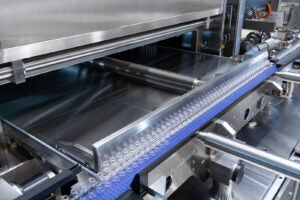
Source: GEA
When loading a freeze dryer, human intervention increases the risk of contamination by the operator or the product. ALUS® automatic loading and unloading systems minimize this risk while reducing processing times, improving productivity, and lowering operating costs through the use of state-of-the-art monitoring systems. Recent advances to the ALUS sustem include flexible, automatically guided transfer carts (AGVs) and the placement of a loading system within an isolator. ALUS® offers maximum flexibility in terms of containment, layout, and product flow, including loading and unloading from one or two sides (pass-through design). In addition, multi-purpose lines are available for a wide range of products and formats. Loading can be performed using a fixed push-pull system with an isolator or restricted access barrier systems (RABS) , and unloading can be performed using a transfer cart in open RABS-based systems (oRABS). ATEX-compliant versions and systems for handling highly effective products or those containing organic solvents are also available. In addition, ALUS® can integrate a variety of third-party filling and sealing options both upstream and downstream. Thanks to its compact and adaptable design, the space required for the system is significantly reduced, minimizing construction costs and greatly simplifying retrofitting. — GEA AG, Düsseldorf, Germany
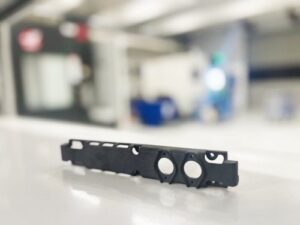
Source: Quickparts
DuraKor is a high-performance engineering plastic mechanically similar to polypropylene, and superior for applications where toughness, chemical resistance, and environmental durability are critical. Its properties include: high impact resistance and damage tolerance; strong resistance to fuels, oils, solvents, and industrial fluids; naturally watertight, low-permeability behavior; and suitability for functional, end-use, and production-oriented applications. DuraKor can be used for direct digital production as well as for validating designs that may later transition to molded resins. Additionally, DuraKor allows users to scale to high-volume production with confidence, knowing the material properties are mirrored in production resins. When paired with vapor smoothing, DuraKor parts achieve improved sealing performance and a refined surface finish, supporting applications such as fluid-handling components, enclosures, and ruggedized housings across automotive, industrial, aerospace and defense, medical, robotics, and electronics markets. This company offers vapor smoothing as a standard finishing option for additively manufactured and cast plastic parts. Vapor smoothing enhances both functional and aesthetic performance by: reducing surface porosity and improving sealing; enhancing fit and finish for assemblies and housings; and delivering a consistent, production-quality appearance. This finishing capability helps close the gap between early functional parts and end-use-ready components, supporting applications where surface quality, cleanliness, and consistency are critical. — Quickparts, Seattle, Wash.
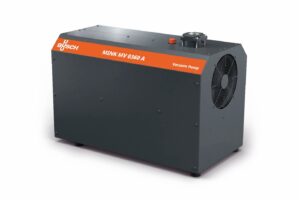
Source: Busch Vacuum
The new MINK MV 0360 A ECOTORQUE is an intelligent and energy-efficient addition to the MINK family of claw vacuum pumps. With integrated ECOTORQUE technology and an IE5 permanent magnet synchronous motor, the MINK MV 0360 A ECOTORQUE provides energy efficiency, reliability and ease of operation in industrial vacuum applications. The MINK MV 0360 A ECOTORQUE is the first claw vacuum pump worldwide equipped with an IE5 integrated permanent magnet motor, achieving up to 10% energy savings compared to conventional IE3 asynchronous motors. The integrated variable speed drive ECOTORQUE automatically adapts performance to process demands, further reducing energy consumption and operating costs by an additional 50% across the entire vacuum range. With a pumping speed of up to 360 m³/h and an ultimate pressure of 100 hPa (mbar), the new model delivers superior performance for customer processes. A speed-independent cooling fan ensures reliable temperature control even at low operating speeds. A pressure sensor replaces the mechanical vacuum relief valve, providing precise control and extending the operating range. The plug-and-pump design ensures the easy installation of the vacuum pump. The Harting connector and easily accessible interfaces further simplify setup and integration. Using this company's Vacuum Manager software, operators can monitor parameters, such as power consumption and pressure, switch between control modes, and activate eco mode for additional energy savings. Thanks to its reduced footprint compared to other vacuum pumps of its class, the MINK MV 0360 A ECOTORQUE requires minimal installation space. Its high efficiency and energy-saving options result in a rapid return on investment. Furthermore, the plug&pump design and intelligent control software ensure simple installation and use, while the pump delivers high performance with precise pressure control for reliable operation. Its compact, efficient, and low-maintenance construction makes the MINK MV 0360 A ECOTORQUE ideal for energy-conscious users in woodworking, pneumatic conveying, vacuum lifting, and pick-and-place applications. — Busch Vacuum Solutions LLC, Virginia Beach, Va.
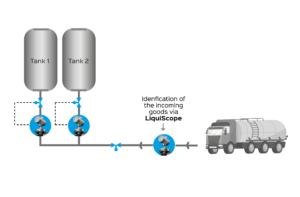
Image: SensoTech GmbH
A single misfill can contaminate inventory, halt transfers, and lead to safety and environmental incidents. This risk affects not only tank farms and tank terminals, but also on-site tank farms, storage tanks and process tanks at chemical and process plants - where chemicals are delivered, temporarily stored, or fed into production processes. The LiquiScope system provides a solution for automated, real-time liquid identification. It verifies incoming product inline and provides early alerts when deviations occur. LiquiScope is based on continuous ultrasonic measurement of sound velocity in the flowing liquid. The measured values are automatically compared with stored reference values — similar to a “digital fingerprint.” If the values deviate from the expected product, an alert is triggered immediately so filling or transfer can be stopped before a misfill occurs. The solution addresses applications where liquids must be clearly verified before storage, custody transfer, or feeding into the process, such as:
• Tank farms & tank terminals: verification at goods receipt before storage, and during transfers/product changeovers
• Chemical and process plants: incoming inspection at on-site tank farms (hazardous materials storage) as well as at storage/process tanks before feeding into the process
• Pipelines and loading/unloading points: monitoring the product before it reaches the tank farm or plant
In many applications, one defined liquid is assigned to each tank. Here, LiquiScope can be used as a setpoint-versus-actual check: a target sound-velocity value is stored; if the measured value falls significantly outside the tolerance, a deviation is detected and filling can be interrupted. Recorded data is available locally on the device display and centrally in the control system. This allows automatic product verification to be integrated into existing workflows, helping operators increase process safety, quality assurance and efficiency while reducing manual checks. — SensoTech GmbH, Magdeburg-Barleben, Germany

Source: i.Safe Mobile
IS380.1 is a 4G radio device that runs on this company's IS-OS 16 operating system (based on Android™). It is certified for Zone 1/21 hazardous industrial areas. The device bridges the gap between conventional radio communication and modern mobile networks. The IS380.1 offers the familiar ergonomics of traditional radio devices but with functionality designed for use in harsh environments in the logistics, transport, manufacturing and construction sectors. With compatible applications and network infrastructure, the device unlocks advanced digital capabilities including Push-to-talk over Cellular and Mission Critical Push-to-talk.
The IS380.1 represents a significant milestone in professional communication technology. It serves as a link between conventional PMR (Private Mobile Radio) systems and modern cellular-based Push-to-Talk solutions. The device combines the familiar look, feel, and operation of traditional two-way radios with the advantages of mobile networks. This enables organizations to embrace digital network transformation without disrupting established workflows. Extensive user retraining becomes unnecessary. Field workers can continue using the same intuitive radio-style interface they've relied on for years. Meanwhile, they benefit from the worldwide coverage and advanced features of 4G networks. The IS380.1 is specifically engineered to integrate effortlessly into existing communication ecosystems.
It supports 2G, 3G, and 4G networks. The touchscreen-capable IS380.1 features classic two-way radio design elements. A large, tactile PTT key is positioned on the side for natural thumb operation. A programmable rotary switch enables quick channel selection or volume adjustment. An emergency SOS button is located next to the external antenna. This familiar configuration ensures users experience no learning curve when transitioning from traditional radios.
The device's housing replicates the stable form factor of conventional two-way radios. This allows secure placement on work surfaces. Comfortable handheld operation is guaranteed throughout extended shifts. The front-facing amplified loudspeaker delivers exceptional audio clarity even in the noisiest industrial environments. Advanced noise cancellation technology enhances performance further. — i.safe MOBILE GmbH, Lauda-Koenigshofen, Germany
Source: Pulsenics
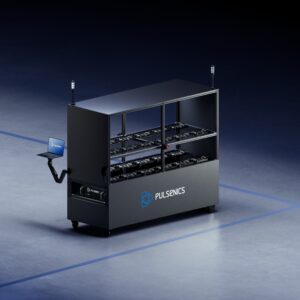
AccelaGrade™ is a new quality-control solution for lithium-ion battery remanufacturers. AccelaGrade represents a step-change advance in battery cell diagnostics that is designed to help remanufacturers scale. Remanufacturing battery packs means disassembling, testing and refurbishing used lithium-ion batteries to keep them safely operating longer. Remanufactured packs can return to their original vehicle or be repurposed for stationary storage. A thriving remanufacturing sector will reduce costs for battery manufacturers and fleet operators while keeping batteries out of landfills. Battery packs can contain dozens, hundreds, or thousands of lithium-ion cells, all of which must be individually tested and qualified during remanufacturing. Qualification typically takes the form of a letter grade, where “A” cells can be reused, “B” cells are diverted to less demanding use cases, and “C” cells are discarded. These letter grades generally reflect State of Health (SoH), which itself describes how much capacity a battery has retained. Remanufacturing has been slow to gain commercial traction due to a single bottleneck: quality control. It is impractical to individually test every cell in a battery pack with existing technology. Today, remanufacturers must choose between grading regimes that are thorough, but time consuming, or tests that are fast but incomplete. AccelaGrade unblocks the remanufacturing vertical with quality control that is fast, efficient, and comprehensive. AccelaGrade uses multiple scanning technologies, in tandem, to create a rapid and sophisticated readout. AccelaGrade combines partial-discharge cycling, temperature measurements, and rapid electrochemical impedance spectroscopy (EIS) to create a rich dataset. AccelaGrade uses that data to make State of Health evaluations that display on-screen as letter grades. This digital-first approach enables Pulsenics partners to instantly configure their grading criteria to their unique needs. Today, many remanufacturers rely on single-purpose cyclers, which can require up to eight hours to deliver a SoH readout. AccelaGrade produces an equally accurate letter grade, based on integrated datasets, in 25 minutes or less — a 19x improvement. — Pulsenics, Toronto, Ont., Canada
Source: NIBCO
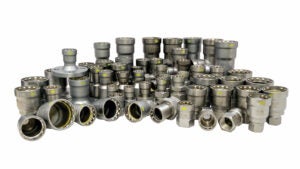
This company has added a number of new sizes and configuration to its BenchPress and Benchpress carbon-steel fitting product lines for carbon-steel pipe applications, as well as fuel and gas carbon-steel pipe applications. BenchPress and BenchPressG fittings allow for easy, clean and fast installation of residential, commercial and industrial carbon-steel piping systems. These heavy-duty fittings feature stainless-steel grip rings and separator rings to ensure premium performance. Sizes range from 1/4 through 2 in. and now include 148 SKUs of BenchPress and BenchPressG. The series has been significantly expanded with 17 new BenchPress and 16 new BenchPressG sizes and configurations. BenchPress and BenchPressG fittings can be installed within seconds and require no threading equipment and lubricants, while maintaining joint integrity and professional appearance. — NIBCO, Inc., Elkhart, Ind.
Source: Asahi Kasei
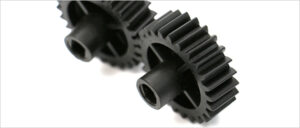
A new PFAS-free polyamide (PA) has been engineered specifically for demanding low-friction applications. For decades, PFAS additives have been relied upon to deliver low friction and wear resistance in engineering plastics. As regulatory pressure intensifies, industries ranging from automotive to industrial machinery are seeking alternative solutions. This newly developed PFAS-free PA addresses this shift by combining environmental responsibility with the advanced material performance required for next-generation components. The new PA exhibits excellent low-friction and sliding properties—crucial for applications where lubrication with oil or grease is not possible. It maintains stable performance under high-load and high-temperature conditions. These characteristics make it ideal for mechanical parts such as gears, chain guides and other sliding components that must operate reliably in dry environments. To meet the diverse needs of manufacturers worldwide, the PFAS-free PA is offered in both unreinforced and reinforced grades. These options allow engineers to select the optimal balance of strength, stiffness, and durability for their specific applications. Utilizing its unique processing control technology, the manufactuer can further tailor the material’s performance profile. Customized formulations can optimize filler content, heat resistance, stiffness and behavior under wet conditions — providing design flexibility that helps customers transition smoothly to PFAS-free solutions without sacrificing product performance. — Asahi Kasei Corp., Tokyo, Japan
Source: Hitachi Energy
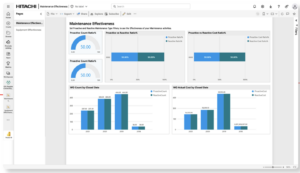
The Ellipse Enterprise Asset Management (EAM) platform has been refreshed with integration with Microsoft technologies, including Microsoft Dynamics 365, Microsoft Fabric, Microsoft 365 Copilot, and Microsoft Foundry. This combination builds a unified solution to manage data, analytics and business operations within a wide range of manufacturing facilities and other critical assets. By combining established critical-infrastructure management with Microsoft’s advanced artificial intelligence and data capabilities, operators can transition from reactive problem-solving to proactive, comprehensive, data-driven asset lifecycle management — addressing issues before they occur and reducing unplanned downtime. The solution leverages a combination of advanced digital solutions to integrate critical datasets supporting asset operations and provide unprecedented visibility of equipment across entire networks. It can recommend the best time for maintenance based on supply chain, HR, and financial data, ultimately helping organizations operate and plan investments more efficiently. This means more reliable services, safer operations and fewer emergency repairs, which are often the most expensive and disruptive. The integrated system enables end-to-end visibility, leading to a single source of truth for assets, financials, and operations enables better decision-making and compliance. Real-time data flow between EAM and ERP systems results in more accurate budgeting, forecasting and resource allocation. A unified workflow eliminates redundancies, accelerates work orders and improves customer service. Finally, the integrated reporting functionality supports environmental, social and governance (ESG) goals and regulatory compliance. — Hitachi Energy Ltd., Zurich Switzerland
Source: LiqTech
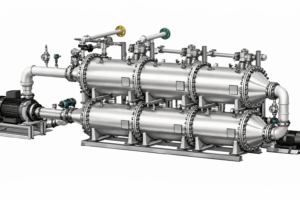
This company recently launched QureFlow Max, the largest and highest-capacity system within QureFlowTM platform. The system is purpose-built for upstream produced-water applications, where water volumes, variability, and uptime requirements exceed the limits of conventional treatment technologies. Designed specifically for large-scale reuse operations, the system addresses a critical challenge in produced-water strategies: reliable removal of oil and suspended solids under highly variable operating conditions. The system enables recycling and reuse and also serves as pretreatment ahead of desalination where required. QureFlow Max does not desalinate water. Instead, it operates in the oil and total suspended solids removal layer where treatment technologies are most actively evaluated, and where reuse strategies most often succeed or fail. Designed for very high flow and uptime-critical operations, QureFlow Max is available in high-capacity, skid-based configurations with four or six installed membrane vessels per skid. Each skid delivers feed capacities of 80-120 m³/h, equivalent to 350-530 gal/min or 12,000-18,000 barrels of water per day, supporting large-scale produced-water reuse where throughput, stability, and operational reliability are essential. QureFlow Max is built on silicon carbide ceramic membrane technology, offering high chemical resistance, mechanical strength, and durability in harsh produced-water environments. The system is designed to operate reliably in waters characterised by high total dissolved solids, elevated temperatures, variable oil content, and fouling and fouling-prone feed streams, making it well suited to reuse-focused North American operations. — LiqTech International Inc., Ballerup, Denmark
Source: PPG
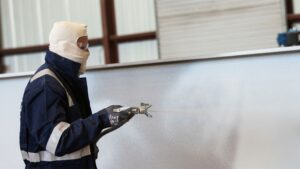
Steelguard 652 is a high-performance, water-based intumescent fire protection coating designed specifically for interior general-purpose structural steelwork. Available in North America, the product combines long-lasting protection and aesthetic appeal. The Steelguard 652 cellulosic passive fire protection (PFP) coating delivers up to two hours of fire protection. Its United Laboratories (UL) 263 certification gives users confidence in the coating’s performance and compliance with industry standards. The low volatile organic compounds (VOC) waterborne formulation supports more sustainable construction practices. Key features of PPG Steelguard 652 coating include: long-lasting protection, offering up to 20 years of performance; low-VOC emissions allow efficient trade stacking at complex construction sites; and easy on-site application with standard PFP airless spray equipment ensures smooth, consistent coverage. Other physical-property benefits include low certified thickness, high bond strength and high impact resistance. — PPG, Pittsburgh, Pa.
Source: Ross
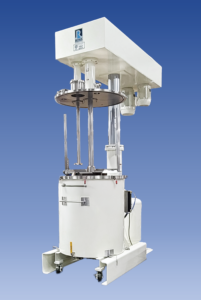
The CDA-200 Dual Shaft Mixer is a versatile and cost-effective solution for processing formulations that require both thorough agitation and high-speed dispersive mixing. Used in applications such as coatings, adhesives, and sealants, the CDA-200 can handle dispersions, suspensions, and emulsions with viscosities reaching up to around 500,000 centipoise. Two independently driven agitators work together to achieve uniform mixing and dispersion in viscous, dense, and demanding applications. A two-wing anchor agitator, powered by a 10 HP explosion-proof motor, provides continuous movement of high-viscosity materials, while a 12-in. diameter high-speed disperser, driven by a 20 HP explosion-proof motor, induces vigorous turbulent flow at a speed range of 160–1,600 rpm. Capable of processing up to 200 gal per batch, this dual shaft mixer supports efficient, high-volume production. The CDA-200 change can design features a hydraulic lift that allows for the use of multiple jacketed mix cans which are constructed of stainless-steel type 304 and can be used for heating or cooling temperature-sensitive products. This system is capable of minimizing air entrapment and improving finished product quality with the application of vacuum up to 29.5” Hg. Teflon scrapers on the anchor agitator continuously remove material from the vessel walls, helping to keep vessel walls clean, improve batch uniformity, and enhance heat transfer across jacketed surfaces, particularly during cooling cycles when viscosity increases.
— Charles Ross & Son Co., Hauppauge, N.Y.
Source: Sensirion
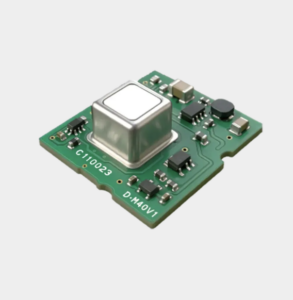
The SCD52 is a highly stable CO2 sensor designed to address an increasingly relevant challenge in gas sensing: maintaining accuracy long-term without relying on costly manual recalibration or regular exposure to outdoor fresh air. Many sensors currently apply automatic baseline calibration algorithms to maintain their accuracy over time. These assume regular exposure of the sensor to air at the atmospheric baseline concentration. However, not all applications can guarantee fulfillment of this condition, including demand-controlled ventilation (DCV) systems for permanently occupied spaces, exclusively mechanically ventilated buildings, or smart greenhouses. The SCD53 combines photoacoustic NDIR sensing with advanced laser technology for excellent long-term stability independent of fresh-air based recalibration algorithms. Furthermore, the sensor provides best-in-class accuracy, with robustness against dust, vibrations or mechanical forces. Integrated humidity and temperature compensation, as well as optional pressure correction, enable reliable readings across a demanding range of environmental conditions. On-demand measurements, compact sensor size and a reflow solderable LGA package make integrating SCD53 simple, flexible and cost-efficient. — Sensirion AG, Stäfa, Switzerland

Source: Atlas Copco
The X-Air⁺ 800-20 is the latest addition to the DrillAir family of portable air compressors. Building on the concept introduced with the established X-Air⁺ 750-25 model —delivering full air power in a significantly more compact canopy — the X-Air⁺ 800-20 combines higher flow at a practical pressure with a compact canopy. This makes transport and logistics easier without compromising performance, giving customers more choice for demanding applications like drilling and blasting. The X-Air⁺ 800-20 delivers 11% greater fuel efficiency than its predecessor, ensuring a low total cost of ownership and optimized operations across the DrillAir range. The X-Air⁺ 800-20 is optimized for jobs that operate comfortably at 20 bar, such as foundation drilling, abrasive blasting, and pipeline services. By avoiding unnecessary ultra-high pressure, this model reduces energy consumption and wear, making it a cost-effective choice for customers who value speed and efficiency without over-specifying their equipment. Delivering flow of up to 800 ft3/min, the X-Air⁺ 800-20 accelerates operations where air volume is essential. At its core, the compressor is powered by a highly efficient 6.7-L Cummins engine, ensuring durability and performance in demanding environments. The Dynamic Flow Boost feature further enhances performance by increasing flow during the most demanding phases of drilling, such as flushing and drill stem refilling. This innovation ensures quicker borewell completion and streamlined operations. To maximize operational control, the X-Air⁺ 800-20 comes equipped with the Xc2004 controller, a next-generation interface designed for intuitive operation and future-ready connectivity. — Atlas Copco Group, Stockholm, Sweden
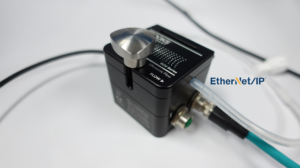
Source: Brooks Instrument
This company's BCU Series is a new, non-invasive clamp-on ultrasonic flow meter with EtherNet/IP™ that is designed for easy integration into bioprocessing applications. Engineered specifically for the demands of modern single-use or hybrid bioprocessing, BCU Series flowmeters allow users to accurately measure liquid flow through flexible tubing — without penetrating the line or contacting the process fluid — thus preserving sterility and reducing contamination risk. According to the manufacturer, it is the first clamp-on ultrasonic flow meter in its class with built-in EtherNet/IP, enabling it to provide real-time visibility, advanced diagnostics and plug-and-play integration with automated skid systems. Compatible with common single-use flexible tubing sizes, the compact, cleanroom-ready construction makes the BCU Series flow meter ideal for upstream and downstream GMP applications ranging from media preparation and perfusion to chromatography to final fill. With native EtherNet/IP protocol, no gateway or converter is needed so OEMs can integrate the digital-ready instrument into modern PLCs and SCADA systems with minimal engineering effort. For end users, it offers the flexibility to move the instrument between lines and accurately monitor dynamic bioprocesses right out of the box. The unit features advanced flow alarms, diagnostics and trending capabilities for predictive maintenance to reduce downtime and improve reliability and process yield. Advanced diagnostics include high/low flow and temperature warnings, bubble detection, calibration due, and more. An embedded web-based interface allows for easy in-situ flow meter commissioning, alarm and diagnostics configuration and faster troubleshooting if needed. — Brooks Instrument, Hatfield, Pa.
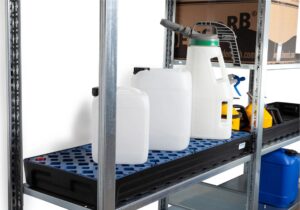
Source: DENIOS
This company’s spill-containment trays are designed to catch material drips and spills, thus enhancing workplace safety and efficiency. They prevent contamination by catching and containing substances to keep them from spreading. Better containment, especially of hazardous materials, minimizes the need for extensive clean-up and reduces overall cleanup costs, while protecting floors and adjacent machinery and equipment. The products are OSHA- and EPA-compliant and also help prevent slip-fall accidents. The spill-containment trays are available in a wide variety of sizes, shapes and capacities. They can also be made from a variety of materials, depending on whether they are required to resist hazardous, corrosive or aggressive chemicals. Capacities range from 4 to 36 gal, with or without grates. The trays are ideal for a wide range of industries and applications, including manufacturing, warehousing, laboratories, food and beverage processing and others. — Denios, Louisville, Ky.

Source: Emerson
This company has redesigned the mobile app for its DeltaV software-as-a-service (SaaS) supervisory control and data acquisition (SCADA) software to allow operators and technicians to do more in the field from their mobile devices. Operators and field technicians increasingly rely on mobile applications for SCADA solutions to help them monitor and manage production on the go, manually input data, change settings and issue commands and simplify the work of recording chart estimates from anywhere across a plant or facility. More robust mobile applications and a user-friendly interface allows operators to be effective in the field without the need to bring a laptop with them. The rebuilt DeltaV SaaS SCADA mobile app provides an entirely redesigned user interface (UI) for more intuitive viewing of critical operations information. Via the new UI, users can create and customize their own reports, allowing them to compare multiple sensors and locations to have better visibility into how operations are working in the field. The new UI also delivers alarms via push notifications, helping ensure operators and technicians are made aware of problems as quickly as possible. Users also gain access to new route planning features. They can create and manage routes/runs on the fly directly from the mobile app, making it easier to customize runs to their specific schedules and daily plans. An operator or technician can view the stops on the route at any time to quickly see which are in alarm and can seamlessly pass location information directly to the mobile device’s mapping app to be guided to locations. DeltaV SaaS SCADA’s mobile app also features new widgets to simplify operation, making it easy for users to quickly see total alarms for selected locations and comparison of volumes produced. — Emerson, St. Louis, Mo.
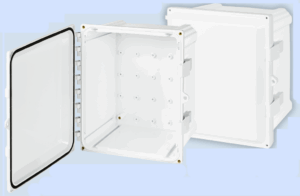
Source: Stahlin
PolyStar® White Series is a new line of enclosures designed for superior durability and versatility with a clean, modern aesthetic. The series was developed to support OEMs and system designers who require lighter-colored enclosures without sacrificing structural performance, configurability or compliance. Featuring a molded-in white polycarbonate finish, these enclosures help reduce heat absorption compared to darker-colored alternatives while preserving the system-level flexibility that defines the PolyStar platform in demanding environments. Available in standard sizes, including 12×10×6, 14×12×6, and 16×14×8, the PolyStar White Series offers flexibility for applications requiring reliable protection, compliance and clean aesthetics. Lightweight, high-impact-rated polycarbonate material with a molded-in white finish provides durability — it does not chip, scrape or fade, providing long-term performance in demanding environments including marine applications. A built-in panel management system with sliding T-nut design, molded-in DIN rail mounting embosses and side-mount capabilities allows full use of interior space and maximizes component placement flexibility. Exterior multi-directional mounting feet and interior T-slot sidewall mounting support a wide range of installation configurations and angles. The enclosures are rated Type 4X and 6P and certified to IP66/IP68, providing protection against rain, hose-directed water, submersion, UV exposure and harsh environmental conditions. The Series is available with opaque or clear covers that are easily interchangeable in the field to meet application-specific needs. — Stahlin Enclosures, Belding, Michigan
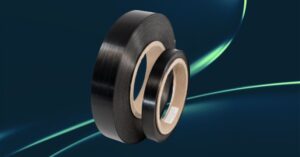
Source: Envalior
This company is launching a new high-performance thermoplastic unidirectional (UD) tape for high-pressure all-thermoplastic hydrogen pressure vessels. With UDea® EcoPaXX®Q20HTC60, the manufacturer of high-performance plastics is offering a continuous fiber-reinforced tape, which can be used to wrap and mechanically reinforce polyamide liners. Thanks to the tape, the tank systems can withstand high pressure loads that occur during tank filling and storage. The new grade is based on polyamide 4.10 and reinforced with 60% by weight of UD continuous carbon fibers. The alternative carbon fibers used in the composite increase the tape’s tensile strength in fiber direction by more than 15% to around 2.2 gigapascals (GPa) compared to equivalent materials reinforced with lower strength carbon fibers. One method to apply the thermoplastic tape is via laser assisted tape placement. This can be done using the start-stop principle, reinforcing the liner only in those areas that are essential to withstand the high pressure. Non-load-bearing carbon fibers can be removed from the composite structure, which cannot be done with the incumbent wet-winding thermoset processing method. This results in weight and cost savings of up to 20%. A key advantage of the thermoplastic based composite material is its sustainability. Not only is the polyamide 4.10 partly bio-based, but as a thermoplastic composite it is also easy to recycle, in contrast to thermosetting epoxy systems used for pressure vessel winding. These must be landfilled or incinerated at the end of the pressure vessel’s service life. Also, wrapping the liner with the tape does not require any curing or handling of thermoset chemicals for which special occupational safety measures and cleaning protocols are required. Applying a polyamide 4.10 based tape to a liner made from a polyamide 6 compound causes the laser-generated melts of both polyamides to form a melt-melt contact at the interface, creating a monolithic structure with a strong material bonding. — Envalior, Düsseldorf, Germany
Source: IPCO
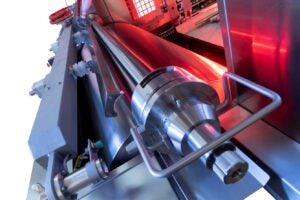
The latest addition to the Rotoform flagship chemical-solidification technology range is the Rotoform XG, a high-capacity pastillation system for fertilizer finishing. Designed for applications such as sulfur bentonite and urea mixes, as well as NPK (nitrogen, phosphorus and potassium) and other fertilizers, this new model can convert melts containing solid particles into consistent, high-quality pastilles from 2–4 mm diameter. Offering twice the throughput rates of the base model Rotoform 4G, the XG is capable of processing slurries with melt viscosities lower than 100 mPas. It incorporates productivity-enhancing innovations, including a sliding base frame for easy access, a new stator design for much easier cleaning and maintenance, and a new bearing system with fewer parts and increased wear resistance. — IPCO AB, Sandviken, Sweden