New Products & Services
March 2026
The RF400 roller feeder is designed specifically to enhance the efficiency and consistency of electrode dry-material feeding in battery manufacturing processes. As the demand for high-performance batteries continues to surge, manufacturers face increasing challenges in ensuring the precise and reliable delivery of the electrode blend directly into the calender gap in dry battery electrode coating processes. The RF400 addresses these challenges head-on, by offering a state-of-the-art feeding system that provides consistent material distribution, reduces waste, and improves overall production efficiency. It utilizes a unique, advanced roller technology to ensure a consistent and uniform deposition of electrode dry blends, minimizing variations that can lead to production inefficiencies. The combination of grooved feed roller and smooth scraper roller ensures gentle, consistent feeding without material bridging in the outlet, as well as uniform material distribution on the calender roller below across a coating width adjustable up to 400 mm. The RF400 is perfectly suited for use in laboratory and pilot scale production environments. Designed with user-friendly controls and adjustable settings, the roller feeder allows operators to easily customize parameters for their specific applications. The RF400 is engineered for durability and reliability, ensuring long-term performance in demanding manufacturing environments.
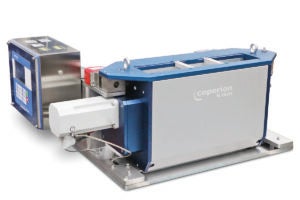
Source: Coperion
The new roller feeder integrates with existing proven KCM-III controls and Smart Force Transducer (SFT) weighing technology, ensuring unparalleled accuracy and reliability in material handling. This combination allows for real-time monitoring and adjustments, enabling manufacturers to maintain precise feed rates and adapt to varying material characteristics. Using this advanced technology, the RF400 not only enhances operational efficiency but also supports manufacturers in achieving their quality and production goals. By optimizing material usage, reducing waste, and lowering energy consumption, the RF400 helps manufacturers adopt more efficient and environmentally responsible production methods, supporting the industry's move toward advanced technologies.— Coperion K-Tron Salinas, Inc., Salinas, Kan.
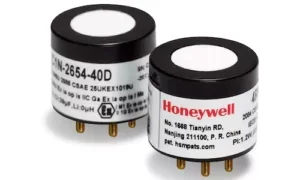
Source: Honeywell
The 4-Series NDIR hydrocarbon gas sensor uses optical non-dispersive infrared (NDIR) technology to detect flammable gases, such as methane, propane and butane, in industrial settings. It is designed to integrate into fixed and portable gas detectors carried by workers in the field, deep underground or within a processing facility. It is vital for these detectors to use advanced and accurate sensors that can alert workers to potential exposure to hazardous gases. Because the NDIR sensor will be exposed to harsh conditions, such as dust in mines, methane leaks or extreme indoor versus outdoor temperature fluctuations, it is designed to be durable and reliable in a wide range of settings. The sensor has an integrated condensation reduction system, allowing it to clear excess moisture and maintain performance in humid environments and confined spaces like refineries. Unlike traditional pellistor or catalytic bead sensors that can degrade or become “poisoned” in harsh environments, the NDIR sensor has high poisoning resistance, limiting the risk of sensor failure and reducing instances of false positives. With infrared technology, the NDIR sensor is also able to consume less power than traditional flammable gas sensors, extending the operational lifespan and prolonging a portable gas detector’s battery. — Honeywell International, Inc., Charlotte, N.C.
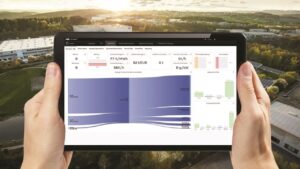
Perfect Batch is an AI-powered manufacturing analytics solution designed to optimize batch production processes by empowering manufacturers to standardize and consistently replicate their best performing or “golden batches”. Unlike legacy systems that rely on passive alerts and static manual settings, Perfect Batch applies industrial AI to dynamically identify ideal batch profiles from historical data and actively recommend actions for increasing efficiency. This enables organizations to rapidly shift from reactive firefighting to proactive optimization in a matter of weeks – not months or years. Perfect Batch connects to existing batch execution systems and automatically interrogates past data to build digital twins and apply models in hours.
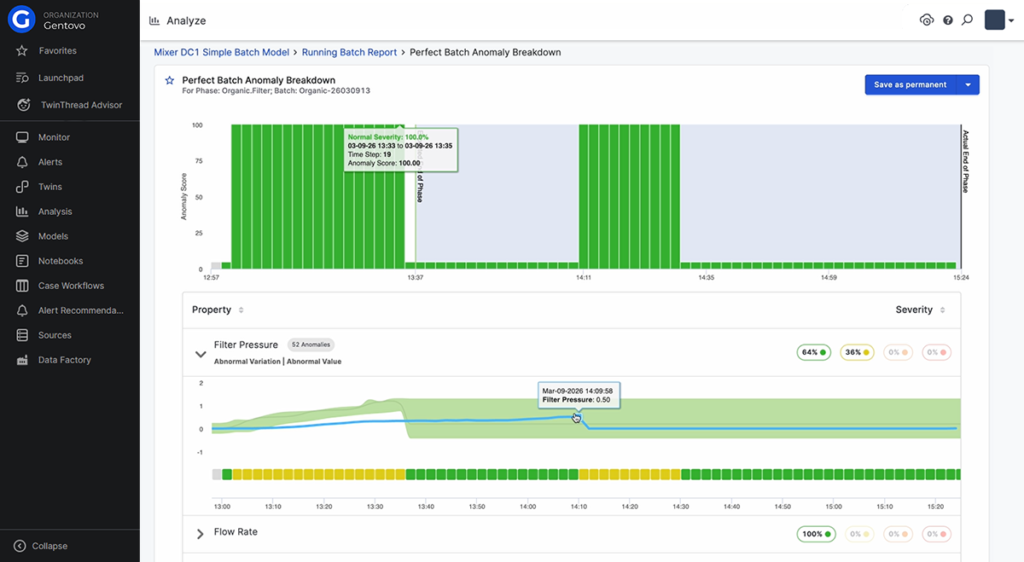
Source: Twin Thread
Instead of setting limits manually, Perfect Batch dynamically learns ideal control limits and process centerlines, based on actual process capability and historical performance. Granular cycle time analysis identifies bottlenecks and lost production time, facilitating capacity improvements from existing assets without new capital investment. Automated alerting and issue diagnosis empowers operations teams to focus on solving problems, without getting bogged down with endless troubleshooting and investigations. Tailored for regulated industries, Perfect Batch provides automated material tracking, quality and yield conformance, and audit-ready histories. — TwinThread Inc., Charlottesville, Va.
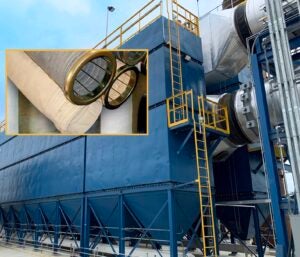
This company has debuted a new line of industrial bag filters for gas volumes up to 880,000 actual ft3/min. These bag filters are suitable for the broadest range of dust types, loadings and flow ranges. Bag filter elements consist of a fabric bag, and a support cage which is mounted from the clean gas side. Filter elements fit precisely in the housing, providing a perfect seal against bypass without the use of screws. Incoming gas flows through the textile filter from outside to inside; particulate is retained on the outside. A key advantage is fully optimized distribution of the cleaning energy over the entire filter surface. The bag filters are engineered for low mechanical stress on the filter fabric, a factor which contributes to long service life. Material options include PTFE and PTFE membrane, polyester needlefelt, Nomex, acrylic felt, fiberglass and Aramid felt. The unique design of these vertical, circular bag filters accommodates filter lengths up to 30 ft. Filter elements are easy to handle and are supplied with split cages where indicated. The bags are suitable for flowrates from 588 to 880,000 ft3/min. Higher dust loadings can be managed with pre-separation cambers. — Tri-Mer Corp., Owosso, Mich.
This company has launched a software-as-a-service (SaaS) option for its energy management and optimization platform, Ability™ OPTIMAX® 7.0, alongside improved advanced process control software. This allows industrial and energy operators greater flexibility in how they deploy, scale and operate energy and process optimization software across complex plants and sites. With the new SaaS option, installation, deployment, system monitoring and software updates are managed by the software provider, so operators can access OPTIMAX without being responsible for local installation and maintenance. In addition to SaaS enablement, OPTIMAX can now harness AI-driven forecasting capabilities that predict load demand, energy generation and energy pricing. These forecasts support more accurate and efficient energy planning, energy market interaction and enhance grid compliance. OPTIMAX and APC are now powered by Kubernetes, a system for automating deployment, scaling and management of applications, to deliver flexibility, high availability, robust security, observability, and maintainability - whether deployed on the edge, cloud or hybrid. — ABB Ltd., Zurich, Switzerland
Source: Shimadzu
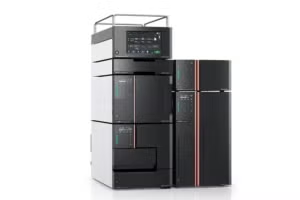
The Nexera X4 ultra high-performance liquid chromatograph (UHPLC) system combines what is said to be the industry's highest level of separation performance with ultrafast analysis, contributing to improving the quality and speed of R&D and quality control operations. As a response to growing demand for highly reliable analysis that clearly separates and detects target components from impurities in analytical applications, the xera X4 system is equipped with industry-leading low-diffusion design that delivers sharp peaks and unprecedented separation performance. In addition, the state-of-the-art fluid control technology provides high solvent flow stability even during high-speed analyses under ultra-high pressure, increasing laboratory productivity by up to 14 times, says the company. This level of analysis is especially vital in research and development in the fields of pharmaceuticals, food, environmental science and chemistry, which have become increasingly diverse and complex. In particular, drug discovery requires rapid screening of candidate compounds and evaluation of impurities. In quality control, impurities and quality attributes must be consistently managed from raw materials to final products. In the environmental field, it is also important to accurately measure trace components in order to ensure safety and comply with regulations. As a result, there is increasing demand for liquid chromatographs that can reliably capture trace components and exhibit stable performance and reproducibility even under high-speed conditions. — Shimadzu Scientific Instruments, Inc., Columbia, Md.
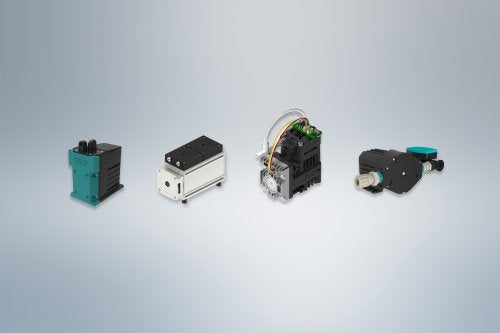
This company has introduced four new models into its family of diaphragm pumps, with new features focused on flow, pressure and vacuum control, as well as versatile dosing. For liquid metering applications, the company has developed the FMS-FC 1.400. This diaphragm pump with integrated flow-control functionality uses a precise flow sensor and ensures precise, accurate and stable liquid delivery. It achieves a maximum flowrate of 3.4 L/min, a maximum pressure of 6 bars (rel.) and offers a maximum suction height of 3 mH2O. Another liquid diaphragm pump, the FD 1.200 with versatile dosing, delivers precise and repeatable volumes for demanding applications. For these tasks, it uses advanced stepper-motor technology and actively actuated valves. It offers a maximum flowrate of 40 mL/min, a maximum pressure of 6 bars (rel.), and a suction height of at least 4.5 mH₂O. Compact, chemically resistant, and customizable, it sets a new standard for accurate dosing. The new MGP 75 diaphragm gas pump with intelligent -ressure control maintains precise and consistent gas pressure even under changing conditions. Using the latest motor technology, it achieves a maximum flowrate of 78 L/min, a maximum pressure of 1 bar (rel.), and a maximum vacuum down to 25 mbar (abs.). Finally, equipped with the intelligent vacuum-control feature, the new micro-vacuum pump NVC 830 maintains exact vacuum levels in demanding environments. This compact pump delivers a maximum flowrate of 4.7 L/min and a maximum vacuum down to 55 mbar (abs.)
Source: KNF
Each pump integrates modern sensor technology and proprietary motor control to maintain exact setpoints, even under dynamic conditions like changing pressure or media temperature. This integrated closed-loop control reduces engineering efforts to a minimum. It makes the potentially difficult integration of external sensor and development of new control logic from scratch obsolete. The pumps can operate autonomously or can be controlled via analog signals such as control voltage. For use in complex systems, the pumps also support modern communication protocols like UART, enabling seamless integration into smart environments. Based on a modular design, the pumps can be customized quickly and cost-effectively. Options include material selection, electrical and line connections, and digital settings such as output setpoint, ramp-up speed or maximum motor speed limits, depending on the pump. This flexibility makes the pumps an ideal choice for critical applications in industries including medical technology, analytical systems, and industrial processes. — KNF DAN GmbH, Hamburg, Germany
Source: Hapman
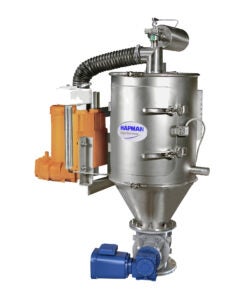
At the heart of this company's vacuum conveyors is the regenerative blower technology, which enables effective material transport without relying on plant air, significantly reducing operational costs. The conveyors also feature a reverse-pulse filter cleaning system, ensuring maximum filter efficiency and minimizing downtime. The line of vacuum conveyors includes three models. The MiniVac model utilizes dilute-phase vacuum technology, and is designed so that pipes can be routed around obstacles, offering flexibility in installation and operation. MiniVac is available in painted carbon or stainless steel. The LP Series model is designed for installation in very tight spaces. And the E-Line model is designed with safety in mind, protecting people and equipment from dust explosions. E-Line is rated for pressures up to 14.5 psi. — Hapman, Kalamazoo, Mich.
Source: Continental Disc.
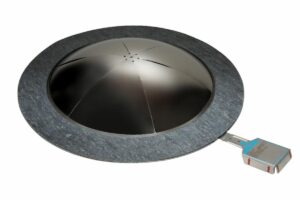
New CDC-DM™ and CDCV-DM™ direct-mount composite rupture discs are advanced, holder-less differential-pressure relief devices that are engineered to protect pressurized systems, equipment and vessels in critical industrial applications. Designed to provide instantaneous, full-opening pressure relief in both liquid and gas/vapor environments, the CDC-DM™ and CDCV-DM™ rupture discs provide exceptional reliability, corrosion resistance and high performance across a broad range of operating conditions. The new designs incorporate The proven composite rupture disc technology with a simplified direct-mount configuration, reducing installation time while maintaining the highest safety standards. The rupture discs feature a preformed metallic top section with a unique seven-hole apex pattern that ensures non-fragmenting performance when paired with fluoropolymer seals. This robust construction allows for the use of thicker, more durable materials while still achieving an 80% operating-to-burst pressure ratio, one of the highest available in composite disc technology. The CDC-DM model is optimized for standard operating conditions not requiring vacuum protection, while the CDCV-DM incorporates a dedicated vacuum support for applications requiring reliable performance under full vacuum. — Continental Disc. Corp., Liberty, Mo.
Source: Finish Thompson
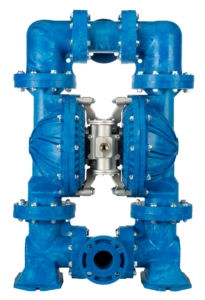
The FTI Air Model FT30P is a 3-in., plastic air-operated double diaphragm (AODD) pump designed with fewer parts, a stall-resistant air valve and polypropylene wetted construction, making it suitable for transferring aggressive and abrasive fluids efficiently while reducing unplanned downtime. The stall-resistant air valve that eliminates the need for separate pilot valves or mechanically operated pilots, reducing wear points and simplifying the air distribution system. This streamlined architecture supports consistent on/off performance and dependable cycling, even under challenging operating conditions where conventional AODD pumps may be prone to stalling or sticking. To support leak-free operation and environmental protection, the FT30P features bolted construction and precision-molded liquid chambers that help maintain gasket compression over time. Polypropylene wetted components provide resistance to alkalis and strong acids, while diaphragm, ball, seat, and O-ring options enable users to tailor the pump to specific chemical, temperature, and abrasion requirements. This material flexibility helps enhance safety and extend service life in applications involving corrosive or hard-to-handle liquids. The FT30P delivers maximum flowrates up to 300 gal/min, with a maximum air supply pressure and outlet pressure of 120 psig (8.3 bars). It offers a displacement per stroke of approximately 0.98 gal (3.7 L) and supports maximum suction lifts up to 28 feet (8.5 m) wet and over 19 feet (6 m) dry, depending on diaphragm material. Adjustable center porting and 3-inch ANSI/DIN/ISO 150 flanged suction and discharge connections simplify integration into existing systems and piping layouts. Thanks to its gentle pumping action and broad material compatibility, the FT30P is suited for transferring dewatering streams, acids and bases, plating solutions, wastewater, paints, inks, solvents, ceramic slip and glaze, lubricants and oils. — Finish Thompson Inc., Erie, Pa.
Source: Endress+Hauser
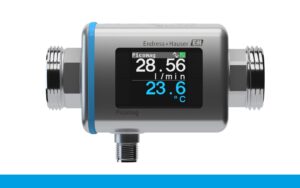
This company has launched a new OEM‑configured variant of the Picomag electromagnetic flowmeter that is purpose‑built for liquid cooling applications in data centers and OEM cooling systems, providing users with a factory‑configured option designed for environments where instrumentation without wireless connectivity is required. Picomag devices are designed for accurate measurement of conductive fluids in small‑diameter pipelines, combining flow, temperature and conductivity measurement in a single device While the standard Picomag includes industry‑leading Bluetooth® technology that meets rigorous global cybersecurity standards, many data centers and OEM partners operate under policies that prohibit wireless communication of any kind. The OEM variant meets this operational preference by offering a Picomag model delivered with Bluetooth® deactivated from the factory, ensuring alignment with facility policies while maintaining all core Picomag performance capabilities. In this configuration, the device integrates seamlessly through IO‑Link or standard signal outputs — 4–20 mA current, pulse, switch or 2–10 V — offering a controlled starting point ideal for secure or regulated environments. Available in 1- and 2-in. sizes, these devices are ideal for compact rack or subsystem cooling circuits, while retaining a bright and auto‑rotating display, intuitive commissioning and built‑in diagnostic capabilities. — Endress+Hauser Group, Reinach, Switzerland
Source: Nord Drivesystems Group
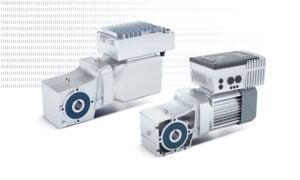
IE5+ permanent-magnet synchronous motors deliver constant high efficiency and torque over a wide speed range, reducing system variants and total cost of ownership. Permanent-magnet technology utilizes high-strength permanent magnets to create a constant magnetic field, eliminating the need for external excitation and resulting in extremely high efficiency of up to 95%, high power density, and significant energy savings. This company offers IE5+ motors in sizes 71 and 90, as well as the newly released size 112, extending the power range from 0.5 to 15.0 hp and torque up to 387 lb-in. Unlike other motors, IE5+ synchronous motors deliver constant torque and efficiency over a wide speed range, even at partial load and low speeds. This enables reduced system variants, minimized administrative expenses, and leaner manufacturing, logistics, storage, and service processes. Ventilated versions (TEFC) are available in all 3 frame sizes and feature a finned housing that provides advanced heat dissipation ideal for continuous duty intralogistics applications. Smooth body, non-ventilated versions (TENV) are available in motor sizes 71 and 90 and offer a corrosion resistant option in hygienic environments such as food and beverage applications. IP69K Protection Class is additionally available with TENV versions for an easy-to-clean surface that can withstand harsh environments.
IE5+ motors significantly exceed the highest-defined energy efficiency class, considerably reducing their energy consumption and CO2 emissions. In addition to considering energy efficiency, the motors also consider material efficiency. They feature an innovative 8-pole Interior Permanent Magnet (IPM) design that reduces the number of active motor parts, resulting in material savings regarding the sheet metal and magnets. The stator can also be manufactured with single-tooth winding, reducing the use of copper in the winding head. Drive solutions from NORD are always configured to individual application requirements, creating the ideal system for each project. IE5+ synchronous motors further expand their system capabilities with compatibility across their product range of gear units and electronic control projects. The motors themselves are equipped with a standard incremental encoder and feature additional options including an integrated mechanical brake, motor connectors, absolute or magnetic encoders, and various flange mountings for gear unit attachment as well as direct mounting. — NORD Gear Corp., Waunakee, Wis.
Source: IVC
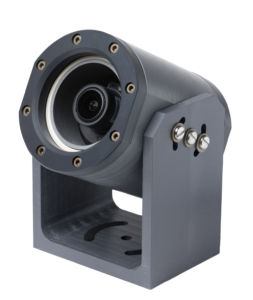
The MZ-HD39-1 is a corrosion-resistant IP camera designed specifically for chemically aggressive, high-moisture and washdown environments common in chemical processing facilities. The MZ-HD39-1 is built using a durable non-metallic composite housing that offers inherent corrosion resistance in environments where airborne acids, caustics and chemical vapors rapidly degrade conventional metal enclosures. The housing is rated IP68, ensuring long-term reliability in washdown and high-humidity environments. The camera captures 5-MP high-definition video and features a 5x motorized optical zoom lens, enabling precise visibility into chemical feed systems, processing lines, tank farms and hazardous or hard-to-access areas. Its design supports detailed monitoring without exposing personnel to corrosive atmospheres. The MZ-HD39-1 supports multiple stream configurations (H.264/H.265), seamless integration with existing VMS platforms, and flexible mounting options for both indoor and outdoor process areas. — Industrial Video & Control (IVC), Newton, Mass.
Source: Deitz
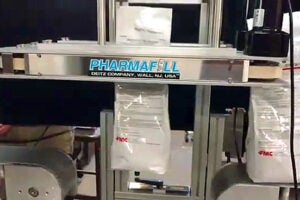
The Pharmafill BCV1 Bottomless Conveyor enables lot traceability data, expiration dates, QR codes, recycling logos and other information to be printed automatically on the underside of flexible packaging pouches. Suitable for stand-up pouches, gusseted pouches, and other flexible packaging configurations, the clever bottomless conveyor automatically accepts the filled pouches from a standard conveyor, gently grips them between dual hugger belts, then suspends the pouches over a printer for automated printing, and releases them downstream without tipping over or smearing the ink. The entire bottom printing process occurs seamlessly without stopping the packaging line or diverting the flow of the bags. Ideal for food, chemical, pharmaceutical and other manufacturers seeking increased filling and packaging line speed and efficiency, the bottomless conveyor is often specified for printing on the bottoms of bags of coffee, tea, protein powder, dried nuts and fruits, pet treats, lawn and garden powders and other products. The conveyor is compatible with a wide range of thermal and continuous inkjet printers, laser marking devices, and other printing and coding systems. The bottomless conveyor is manufactured at the company's Wall, New Jersey, headquarters. Testing is offered on the company's on-site testing and training line to verify the conveyor is compatible with a particular bag, pouch, and printer. — Deitz Co., Wall, N.J.
Source: Pall Corp.
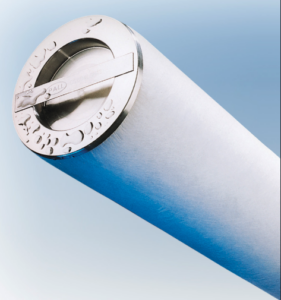
This company has launched two new products, the SepraSol™ Plus Horizontal Liquid/Gas (HLG) Coalescer and High Flow Gas (HFG) particle filtration solution. These solutions are designed to reduce capital expenditure and total cost of ownership by using significantly smaller vessels with fewer filter elements without compromising filtration quality or efficiency. Liquid aerosols and solid particulates are primary contaminants in process gas streams, contributing to premature equipment wear and expensive unplanned downtime. High Flow Gas filters provide effective particulate control in high volume applications while enabling more compact vessel designs. The SepraSol Plus coalescer delivers high efficiency aerosol removal in a new horizontal configuration engineered to maintain performance while reducing system size and complexity. Each solution can be deployed independently or together. ‑volume applications while enabling more compact vessel designs‑efficiency aerosol removal in a new horizontal configuration engineered to maintain performance while reducing system size and complexity. The HLG and HFG solutions are designed to support improved reliability, downstream equipment protection and more efficient management of footprint and capital investment in gas processing applications. — Pall Corp., Port Washington, N.Y.
 The EOS 500 Burner Control System is an innovative parallel positioning system with integrated flame safeguard capabilities. Designed to deliver precision, scalability and adaptability, the EOS 500 sets a new standard in combustion control technology for applications of any size. Powered by a microprocessor-based control, the EOS 500 provides precise, independent channel management for combustion systems. Its unmatched positional accuracy across the firing range eliminates inefficiencies associated with traditional single-jackshaft systems. The system also supports cutting-edge flame-sensing technology, utilizing fail-safe ultraviolet and infrared sensors for reliable, continuous operation without the need for mechanical self-checking scanners. The EOS 500 is highly customizable and supports up to four fuel profiles for gas or oil fuel trains. It allows configurations for up to four actuators and one variable frequency drive (VFD) for combustion air fans. Integrated safety features include proof of closure monitoring, valve proving and low-fire hold. Equipped with a built-in PID load controller, the EOS 500 provides seamless connection to steam pressure sensors or hot water temperature transmitters, enabling precise firing rate management. Its user-friendly 7-inch touchscreen interface, available in multiple languages, simplifies configuration and diagnostics.
With Modbus TCP/IP communication, the EOS 500 integrates effortlessly into building and plant automation systems. This connectivity supports simultaneous monitoring by Prometha®, which leverages IoT technology for real-time boiler system access via a smart device, enabling data-driven decisions to enhance efficiency, sustainability and system performance. The EOS 500 suits new installations or modernization projects. With streamlined wiring and straightforward installation, the EOS 500 is the ideal solution for modernizing burner systems, whether transitioning from traditional linkage controls or upgrading an existing parallel positioning system. For Cleaver-Brooks boilers and burners without oxygen trim, the EOS 500 offers a cost-effective, pre-configured solution. Available in three sizes with extensive parameterization options, the EOS 500 burner control system can be easily customized for virtually any application. — Cleaver-Brooks, Thomasville, Ga.
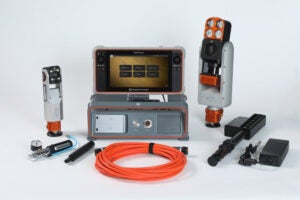
Mentor Zoom is a new pan-tilt-zoom (PTZ) camera system designed for nondestructive testing (NDT) applications, purpose-built for visual inspection of confined spaces or hard-to-reach industrial environments. Designed for applications ranging from pressure vessels in chemical plants and petroleum refineries, to piping, as well as underground and storage tanks, sewers and nuclear facilities, the Mentor Zoom is engineered to perform in harsh conditions, including remote inspection and monitoring of repairs and maintenance operations up to 40 m underwater. The system comes with two full-HD camera heads, one 70-mm (10x optical zoom), one 130-mm (30x optical zoom). Both offer outstanding image and 60fps video signal quality as well as faster camera head movement. The 130-mm camera incorporates 4,000‑lumen built‑in illumination, delivering enhanced visibility and significantly extending inspection distance. The control unit features a removable touch screen with an integrated joystick and a 3-meter cable for easy handling during inspections. The cameras can be controlled with the joystick when protective gear such as heavy gloves are required. In normal operating conditions, the touchscreen’s touch-aim and zoom-to-rectangle function adjusts the pan, tilt and zoom parameters with effortless speed and its to-focus functionality allows operators to focus the camera with great precision.
Source: Waygate Technologies
Mentor Zoom delivers reliable and repeatable industrial inspections by capturing accurate, textured 3D environmental views and automatically generating detailed 3D models for verification with digital twin features. With built‑in localization and advanced 3D scanning tools, it helps standardize workflows across technicians and sites, delivering consistent results that improve comparisons, reduce errors, and strengthen asset‑integrity decisions. The Mentor Zoom also sets new standards for documentation and reporting processes with on-device report generation and cloud connectivity, which save cost and time. Inspection results can be documented conventionally or marked and reported in 3D based on the automatically generated 3D mesh of the confined space environment. — Waygate Technologies, a Baker Hughes business, Houston
Source: Emerson
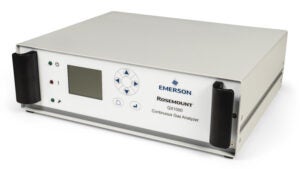
The Rosemount QX1000 continuous gas analyzer is well-suited for use in continuous emissions monitoring systems (CEMS), but also is a good fit in many other types of applications. The QX1000 uses paramagnetic detection for O₂ and quantum cascade laser direct absorption spectroscopy for all other gases to meet stringent performance requirements. This integration of different technologies and a modular approach provide a flexible, single-system solution tailored to diverse application needs. The QX1000’s robust design with low maintenance requirements also reduces lifecycle cost and downtime. The QX1000 uses cold/dry technology, with a sample conditioning system transporting gas extracted from the process to the analyzer through a thermoelectric chiller to reduce the temperature to about 4°Celsius (39°F), so most moisture condenses and drops out. Users can easily integrate the QX1000 into existing plant infrastructure, or it can be provided as part of an integrated Emerson system solution, including the sample conditioning system. Measurements made by the QX1000 are ideal for CEMS applications due to the analyzer’s high selectivity and accuracy. CEMS are required at most sites with a stack emitting gases to atmosphere, and they are widely used in chemical, oil and gas, power generation, pulp and paper, refining, water/wastewater and other industries. Leveraging the intrinsic high selectivity of laser-based measurement, this new analyzer provides precise monitoring of complex gas streams while delivering continuous, real-time data. Off the shelf, it supports measurement of key regulatory gases, including CO, CO₂, O2, NO, NO₂ and SO₂, with different configurations typically offering detection of one to four gases. Measurement of additional gases, such as CH₄and N₂O, is also available. Designed with reliability in mind, the QX1000 eliminates moving parts that are prone to failure and frequent replacement, minimizing maintenance and reducing total cost of ownership. Its low-consumable technology is especially critical in the CEMS market, where ongoing operational costs can be a barrier. By reducing system downtime and maintenance needs, the analyzer helps end users avoid costly penalties associated with taking systems offline, ensuring continuous compliance with regulatory requirements. — Emerson, St. Louis, Mo.

Source: Henkel
Loctite Stycast UV 7998 is the latest formulation in the company’s line of conformal coatings. Uniting sustainability, UL 94 V-0 certification and cost efficiency, the new material is designed for electronics protection at a competitive price-performance ratio. The material is well-suited for many applications, including home appliances, lighting, consumer electronics and automotive. Conformal coatings are thin polymeric materials applied to printed circuitboards (PCBs) and components and are ubiquitous for electronics applications that require a shield against moisture, dust, chemicals, and other environmental conditions that may limit performance and reduce product lifespan. Loctite Stycast 7998 provides this vital protection while lowering costs and enhancing safety, health, and the environment with its solvent-free composition. The material is easily applied, offering self-leveling across the PCB assembly, excellent wetting, and uniform coverage with no voiding. Once coated, curing takes place in seconds with energy-efficient UV light followed by a secondary moisture cure, after which the PCB is shielded from harsh environmental conditions and contaminants. Importantly, Loctite Stycast UV 7998’s strong attention to sustainability can enable electronics manufacturers to reduce CO2 emissions by up to 40% (versus solvent-containing formulas), prioritize operator health and realize significant cost improvements. Compared to solvent-based conformal coatings, the VOC-free, solvent-free Loctite Stycast UV 7998 requires as much as four times less sprayed volume to achieve a similar thickness. In addition to eliminating environmental volatiles, the material is tin-free, halogen-free, BPA-free, and RoHS- and REACH-compliant. — Henkel AG & Co. KGaA, Düsseldorf, Germany
Source: Proteus Industries
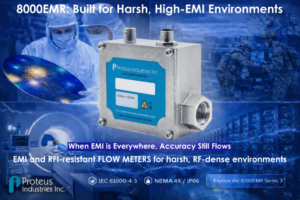
800EMR Series flowmeters have been engineered to provide accurate interference-free flow measurement in environments affected by high levels of electromagnetic interference (EMI). As modern industrial facilities and critical infrastructure systems become increasingly powered by high-frequency electronics, including variable frequency drives, RF power supplies, converters, and high-voltage equipment, EMI has become a growing threat to measurement stability. Standard flowmeters operating in these environments may experience unstable readings, communication errors, or data. The 8000EMR Series is designed specifically to address these challenges, delivering consistent performance where electromagnetic noise is unavoidable. The 8000EMR Series also meets the IEC 61000-4-3 electromagnetic interference standard, offering exceptional resistance to radiated EMI in harsh electronic environments. Key design features include: Full metal shielding that acts as a Faraday barrier against radiated emissions; Isolated grounds and power circuits to prevent conducted noise and current loops; Differential signal paths to reject common mode interference; Digital filtering and conditioning to remove spikes while preserving response time; and low-emission internal electronics to minimize electromagnetic footprint. These enable the 8000EMR Series to maintain stable, accurate flow measurement without calibration drift, even near high-power electronic equipment. The flowmeters are also designed for robustness in harsh manufacturing environments, with NEMA 4X / IP66 stainless steel construction for wet and industrial conditions; Shock and vibration resistance; Operating liquid temperature ranges from –40 to 90 C; Accuracy of ±3% of full flow range; and Compatibility with many advanced heat-transfer fluids. These capabilities make the 8000EMR Series ideal for mission-critical flow monitoring for semiconductor manufacturing, industrial automation systems, laboratory equipment and data center thermal management. — Proteus Industries, Mountain View, Calif.
Source: Lutz Pumps
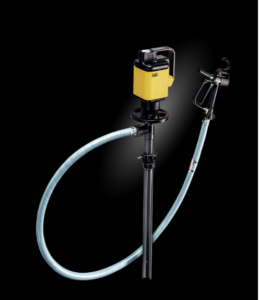
To improve safety in the handling of hazardous substance, a new pump tube made of chlorinated polyvinyl chloride (CPVC) aims to help reduce the risk of spills and injuries. The pump tube is designed as a vertical immersion pump. With an immersion depth of 39 in., it can be inserted directly into drums and canisters. An electrically or pneumatically operated motor can be attached on top. The motor drives a radial impeller via a shaft, which guides the medium into a conveying line through centrifugal force. This enables the safe conveying of up to 25 gal/min (95 L/min) without any risk of spillage. An optional dispensing nozzle and flowmeter enable targeted dispensing. The pump tube is made of chlorinated polyvinyl chloride (CPVC). This makes it resistant to chemicals and ideal for transporting not only sodium hypochlorite, but also alkalis (including caustic soda and potash lye), precipitating and flocculating agents (including iron or aluminum salts), and cleaning and rinsing chemicals. Additional safety is provided by the fact that the design does not use any seals on parts that come into contact with the medium. This reduces the risk of leaks. While PVDF versions offer similar chemical resistance, the CPVC model is significantly more economical (often 20–30% lower in price based on market comparisons) without compromising performance for suitable media. This makes it an ideal choice for budget-conscious operations that demand durability and safety. — Lutz Pumps, Inc., Norcorss, Ga.
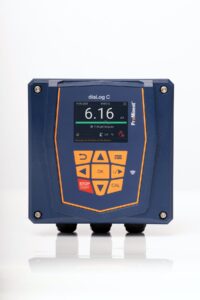
Source: Prominent
The new DULCOMETER diaLog C controller is designed for water treatment applications. The entry-level controller supports all of this company's sensors and can be used as either a transmitter or a two-way controller. It also performs two-way control tasks and precisely controls two pumps — for optimum dosing in industrial water treatment. The single-channel controller thus simplifies the control of dosing tasks in everyday operations and helps to use resources in a targeted manner. The DULCOMETER diaLog C can be flexibly integrated into different systems and works with various sensor types. Operation is intuitive: a graphical display and clear menu navigation make it easy to use, even without prior experience. The new controller is aimed at operators and planners of water treatment plants, engineering firms and industrial and municipal users. It is suitable for applications in beverage production, chemicals, semiconductor manufacturing and wastewater treatment. The DULCOMETER diaLog C can be optimally combined with the new DULCOEYE LT optical sensor for low turbidity, which will launch in March 2026. The sensor detects even minimal changes in the water and sends the measurement data directly to the controller, which adjusts the dosage accordingly. This allows users to remain in control even under changing conditions or when performing more complex tasks. The interaction between the DULCOMETER diaLog C and DULCOEYE LT supports reliable process control and creates transparency with regard to relevant water values. — ProMinent GmbH, Heidelberg, Germany