To ensure that wastewater discharge meets all compliance requirements, plants should adopt a multi-tiered approach, rather than assuming that the downstream treatment facilities can handle all potential contaminant loads
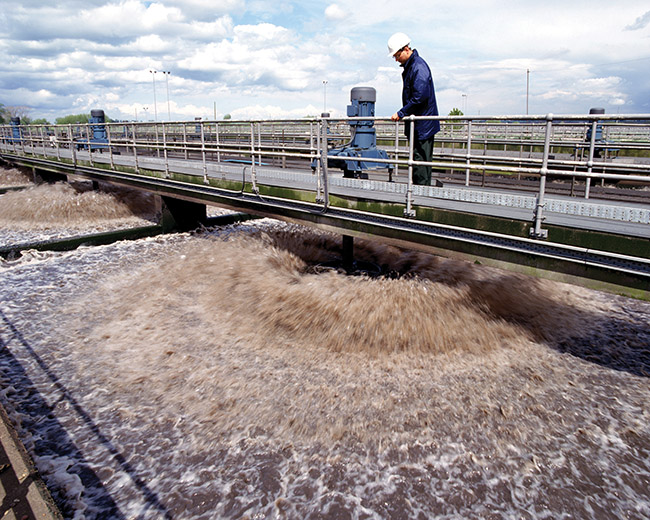
FIGURE 1. A typical wastewater treatment facility is not designed to handle all possible combinations of contaminants, so a multi-stage treatment regimen may be helpful in achieving discharge requirements
Most industrial manufacturing facilities are required to meet strict limits on various contaminants in order to discharge wastewater. Wastewater treatment facilities (Figure 1) remove the specified contaminants, but achieving compliance with local and federal regulations involves more than just installing and optimizing wastewater treatment units. Treatment, or contaminant removal, is just the last stage of a three-step strategy to ensure compliance. A wastewater treatment facility can rarely be designed to successfully treat all possible combinations of flow and contaminant concentrations that could come from a manufacturing operation. Cost expenditure and space requirements alone would make this single-stage approach prohibitively expensive. Reliable environmental compliance can only be achieved by adhering to a regimen combining the following stages:
- Good source control
- Equalization and isolation
- Contaminant removal
Stage 1: Source control
Source control, or waste minimization, is the first stage of the process of preventing the discharge of process contaminants from wastewater. Historically, process operations were not considered part of this strategy. The belief was that the wastewater treatment plant (WWTP) had to handle whatever was released from the manufacturing units. This has often been proven to be a failing strategy. From a plant-operations perspective, waste minimization also makes sense. These materials represent an operating cost to the facility, and overall profitability requires minimizing the waste of valuable raw materials.
From a wastewater troubleshooting perspective, identification of the source of the release is important. Knowing the source helps to rapidly identify the potential contaminants, greatly helping with downstream handling. It will also facilitate root-cause analysis, which decreases the chance of future releases. To do this, appropriate monitoring instrumentation should be installed early in the wastewater handling system — for instance, at sumps at each manufacturing unit. This provides an early warning for the next stage, as well as notifying process operators that a release is occurring. Too many plants still rely on manual communication of manufacturing upsets to the WWTP staff — an approach that is often inadequate.
The choice of instrumentation will depend on the nature of the process at each unit. It could include simple instruments — such as devices to monitor and control temperature, conductivity or pH — or more complex devices like total organic carbon (TOC) analyzers. This allows identification of the specific source of each release, allowing minimization efforts to be targeted cost effectively. It also provides an early warning to downstream processes of the nature and quantity of the release.
Stage 2: Equalize and isolate
The second stage of the process to prevent non-compliance comprises one or both of inline equalization and offline isolation of excessive contamination. This stage is necessary to smooth out the variability in loading to the third stage of contaminant removal, and is typically implemented as tankage that stores and dilutes short spikes of contamination, smooths out flow surges, neutralizes pH extremes or temporarily stores offline high-contaminant loads.
This storage-focused stage is often overlooked, but it is a critical component of an environmental compliance strategy and should be maintained and operated as such. Each type of tank serves a somewhat different objective, and the original design of each should be understood.
Classic inline equalization can be one of two types: contaminant smoothing or flow smoothing. Operation for the former objective is best achieved using a tank setup with a large hydraulic retention time and good mixing. This allows the loading surge to be immediately diluted, providing a steady outlet concentration to the next stage, the WWTP. These tanks can accumulate solids if mixing is inadequate, reducing retention, and thus equalization time. Regular cleaning is required if solids accumulation is a problem.
Flow smoothing, on the other hand, requires spare volume capacity to allow storage of the extra flow volume, with controlled release at normal flowrates. This is important because it allows downstream WWTP equipment to operate within design conditions. The two objectives can be in conflict and so two or more tanks may be required if both situations can occur.
Another type of surge-contaminant handling is offline storage, or isolation. The approach here is to capture and store streams with very high contaminant loads and then either dispose of them separately (offsite), or eventually carry out a controlled release back to the wastewater stream, so that contaminant loading stays within the capabilities of the WWTP.
Stage 3: Contaminant removal
The third and final stage in achieving reliable environmental compliance is the classic wastewater treatment plant itself.
Assuming that the first two stages of contaminant control are working well, the contaminant loadings should be within the design ranges of the WWTP equipment. However, in many cases, manufacturing processes have been expanded, which means they potentially may be releasing higher contaminant loadings than what was assumed in the original WWTP design. Examples of increased loading can be found in the overall flow and the amount of solids (TSS, oil) or soluble organic materials (oxygen demand).
In such cases, reliable performance can still often be obtained with adjustments to operation, chemical feed or supplemental equipment. It is recommended that the original design of each unit be clearly understood, so that the optimal operational revision can be implemented.
The flow and solids-handling capabilities of solids-separation units, such as clarifiers, can often be extended with the use of modern chemical-clarification aids, such as coagulants and flocculants. Close control of chemical additives is essential to the optimization of contaminant removal, especially when units are operating at or above design levels. Best practices include pacing all chemical feed systems to flow, ensuring that dosage amounts remain constant as flow changes. Other chemical-feed automation practices include feed-forward and feed-back control, for instance, using TSS or turbidity as the controlled parameter. Not all additives can be easily automated, however, so manual testing often still has to be completed on a regular basis to ensure optimal treatment. Jar testing is one such manual method.
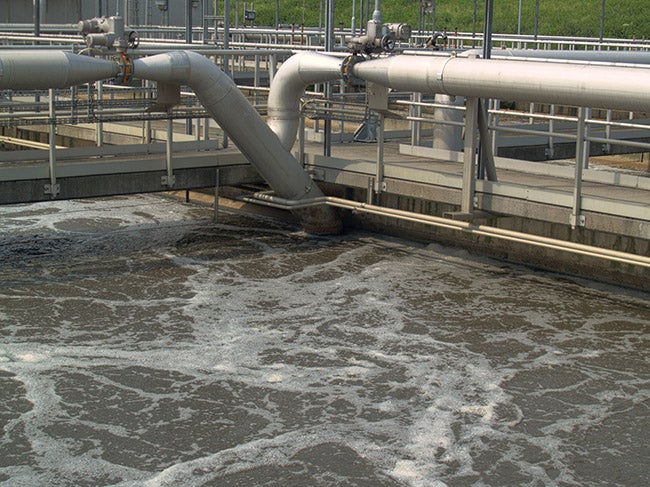
FIGURE 2. Secondary treatment systems, such as an activated-sludge process, can be vulnerable to contaminant overloading from upstream processes, especially if the plant has been expanded or altered over time
Secondary treatment systems, such as activated-sludge biological systems (Figure 2), are often the most vulnerable to overloading and variability in loading. This vulnerability poses the largest risk to environmental compliance because it is typically the last step before discharge.
Better monitoring is also useful in optimizing the WWTP. Advanced instrumentation allows faster response when parameters start drifting away from control. For example, many primary treatment units are solids separation devices that can benefit from online effluent-turbidity monitoring.
Secondary systems are harder to bring back to optimal conditions after upsets. As such, these systems benefit more than any other part of the WWTP from comprehensive monitoring. The monitoring of critical operating parameters like pH and dissolved oxygen should be online. Other parameters, such as sludge settleability, can be done by operators using grab samples on a daily or shift basis, where instrumentation is not implemented. Biological parameters can be very useful in spotting early signs of stress. These include the routine use of microscopy, as well as more modern monitoring techniques, such as those based on adenosine triphosphate (ATP) measurements.
It can take weeks to recover from a major toxic load to a secondary system, which is the last line of defense before discharge. Therefore, good Stage 1 and Stage 2 operations are integral parts of achieving reliable operation in the secondary system and the entire WWTP.
Effective and reliable permit compliance and pollution control depend on a comprehensive three-stage strategy of waste minimization, or source control, waste equalization or isolation, and contaminant removal in the wastewater treatment plant. In addition, comprehensive monitoring of water quality and operational parameters, utilizing online instrumentation where feasible, are critical to providing reliable compliance.
Author

Peter E. Norman
Peter E. Norman is a senior product applications engineer for SUEZ – Water Technologies & Solutions (Email: peter.norman@suez.com). He has spent 37 years in the industrial water treatment space focusing on wastewater for over 25 of those years. His areas of specialization include clarification, flotation, metals removal, biological treatment and sludge dewatering. He is a member of the Water Environment Federation and is the author of several papers and articles on wastewater treatment and advanced monitoring. He holds a B.S. degrees in chemical engineering and chemistry from The City University, U.K. and an M.S. degree in environmental pollution control from The University of Leeds, U.K.