New Products & Services
October 2026
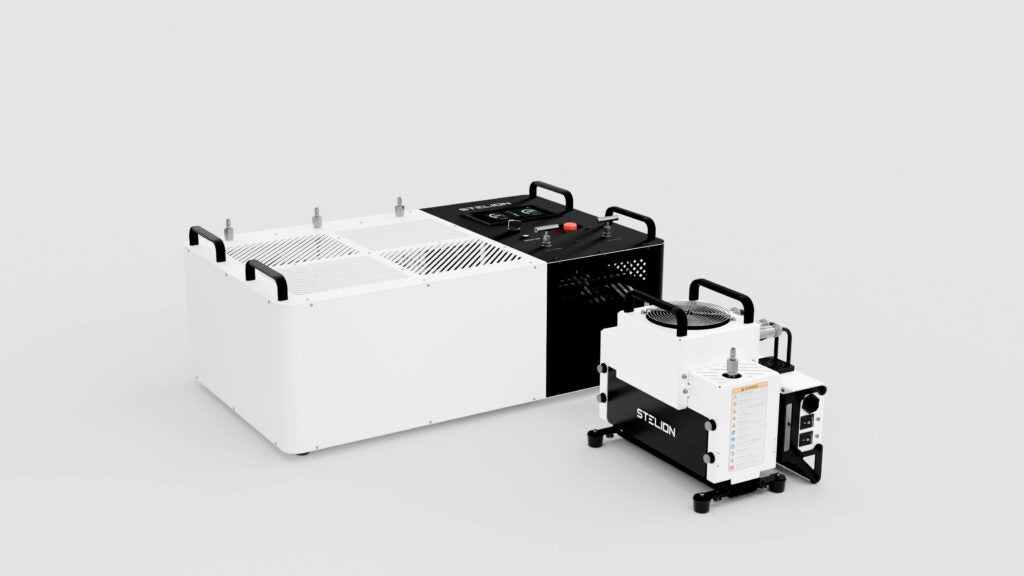
Source: Hydros Power
The new STELION Gas Cooler is a compact gas cooling unit designed to reduce hydrogen temperature after compression. The unit provides a cooling stage before storage, testing, refuelling or other processes that require gas temperature conditioning. Developed primarily for hydrogen, the STELION Gas Cooler can be integrated with the STELION Booster Station and other compatible compression systems. It provides a dedicated cooling stage within the installation, tailored to the requirements of the downstream process. The STELION Gas Cooler is connected in series between the compressor and the end-use application. It receives gas after the compression stage and cools it before directing it to the process where it is needed. Applications include R&D laboratories, test benches, gas storage processes and hydrogen refuelling systems, including those used for drones. The unit uses electrically powered Peltier thermoelectric technology and is designed to operate at pressures of up to 700 bar. Its suitability for each application also depends on the flow rate and the required inlet and outlet temperatures. In a test conducted at Hydros Power’s facilities at 700 bar, temperatures of 50°C at the compressor outlet and 15 °C at the STELION Gas Cooler outlet were recorded. These results reflect specific test conditions, and thermal performance may vary depending on ambient and operating conditions. In addition to hydrogen, the STELION Gas Cooler can be adapted for other compatible gases and fluids, depending on the application requirements. Its compact format allows rack mounting and layout adjustments to suit the available space. The power supply can be repositioned on either side of the unit, allowing users to adapt the layout as the arrangement of other components in the installation changes. The unit measures 386 × 272 × 335 mm and weighs 18.3 kg. Depending on the configuration, it features quick couplings or 1/4-in. male NPT connections for connection to the compression system and the line carrying cooled gas to the end-use application. — Hydros Power, Madrid, Spain
The ChemSCAN+ is an advanced parallel reactor platform designed to provide greater flexibility and automation in catalyst screening and reaction optimization. Catalyst development often requires researchers to evaluate numerous reaction conditions, including temperature, pressure and gas composition, to identify suitable catalysts and optimise chemical processes. Parallel reactor systems with shared gas-handling controls or common operating sequences can restrict the conditions and procedures that researchers investigate simultaneously.
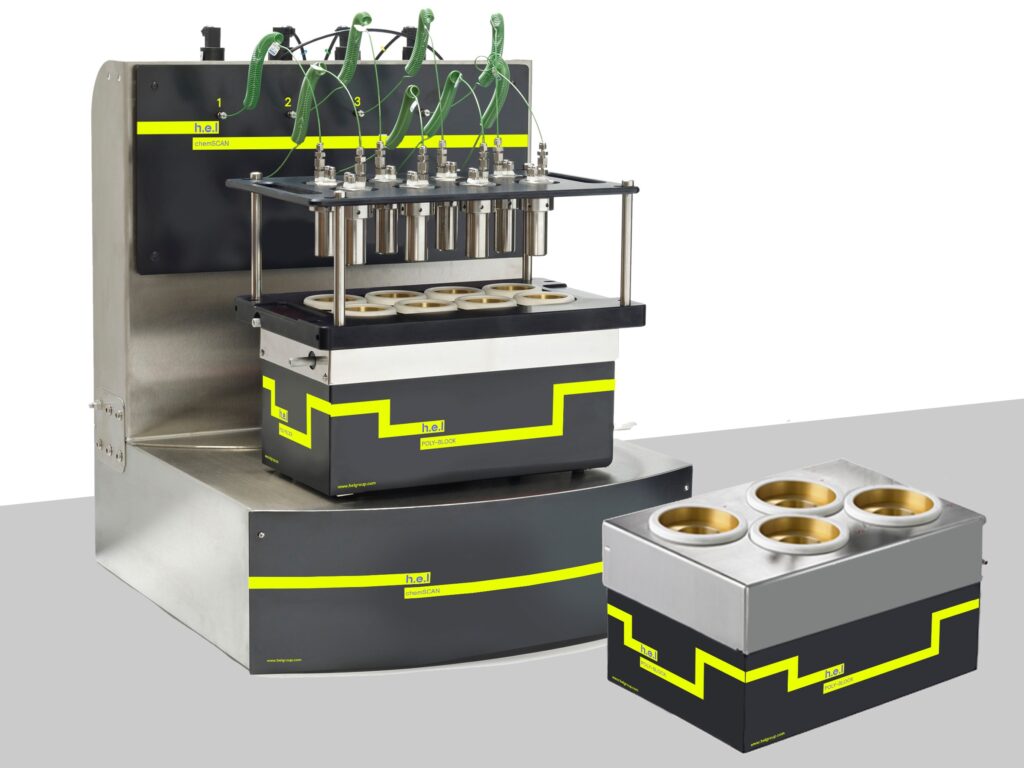
Source: H.E.L. Group
The ChemSCAN+ addresses these limitations by providing fully automated, independent gas handling for each reactor. Available in four- or eight-reactor configurations, the system allows researchers to independently start, feed, vent and purge individual vessels, with up to three dedicated gas feeds per reactor. This enables multiple catalytic reactions to be investigated simultaneously under different operating conditions, without requiring each experiment to follow the same sequence.
The system also provides independent temperature and pressure control, alongside real-time gas uptake measurements that provide an indication of reaction progress. The ChemSCAN+ accommodates working volumes from 2 mL to 400 mL and operates at temperatures up to 200 °C, with operating pressures up to 200 bar, depending on the reactor configuration. This makes the system suitable for a range of demanding catalytic applications, including hydrogenation, carbonylation and syngas chemistry. — H.E.L. Group, Hemel Hempstead, U.K.
The Sampo™ Cell represents a breakthrough in coarse particle flotation that enhances recovery of coarse particles without compromising fine particle recovery, helping mining companies improve the efficiency, profitability and sustainability of their operations.
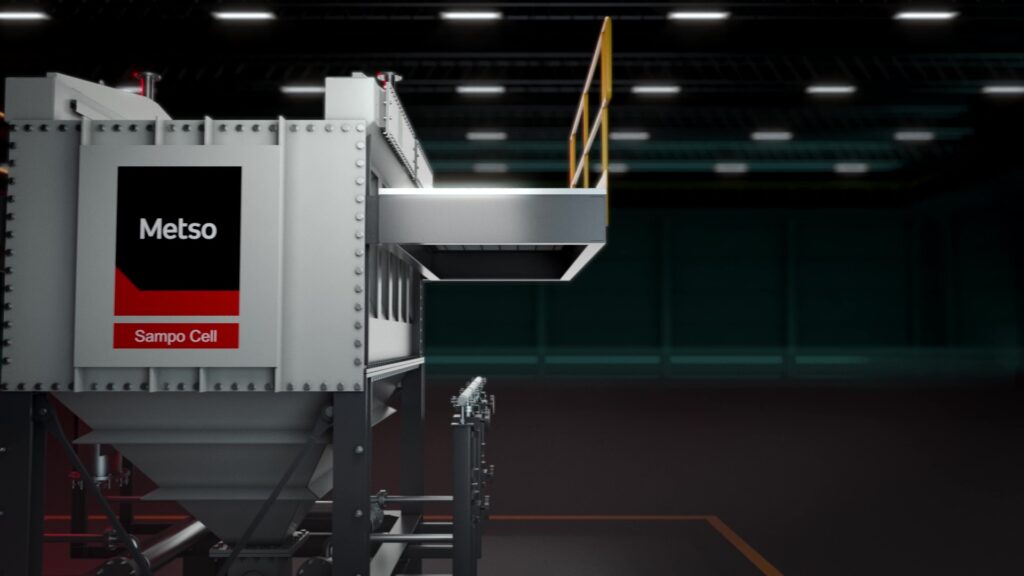
Source: Metso
Traditional flotation circuits typically require extensive grinding to bring particles into an optimal range for efficient recovery. The coarse particle flotation changes this paradigm by expanding flotation performance to significantly coarser and less liberated particle sizes. Based on a froth-feeding principle, the Sampo Cell technology gently feeds slurry directly into the froth phase, where separation takes place under low-turbulence conditions. This minimizes particle detachment and enables efficient recovery of particles that are typically lost in conventional flotation circuits. The Sampo Cell can be applied for front-end gangue rejection or as a scavenger stage to recover valuable particles from intermediate or final tailings.
The design also simplifies coarse particle flotation flowsheets compared to other solutions. It operates without feed classification, fluidization water, or additional concentrate dewatering stages, reducing equipment requirements, and supporting easier integration into existing plants. The Sampo Cell uses familiar flotation controls and instrumentation, making implementation straightforward for plant operators.
Since March 2026, the Sampo Cell has been in continuous 24/7 operation in industrial-scale scavenger duty at a copper mine in Chile. Operated by the customer, the technology has demonstrated a significant increase in total plant recovery by capturing particles typically lost in conventional flotation cells. The implementation has proven the value of coarse particle flotation under real operating conditions. — Metso Corp, Espoo, Finland

Source: Orion
PRINTEX® chroma 450 BEADS represent a high-jetness carbon black product line designed for engineered plastics. PRINTEX® chroma 450 BEADS deliver an excellent balance of jetness and surface smoothness. The material, which has E.U. food-contact approval, is produced at Orion’s ISCC PLUS-certified plant in Cologne, Germany. The product was developed for applications that require high dispersion, and the grade maintains a strong performance profile that provides flexibility for demanding plastics applications, says the company. The series also includes PRINTEX® chroma 500, designed for high-jetness applications, particularly in engineered plastics. It combines exceptional jetness with a strong bluish undertone. — Orion S.A., Luxembourg
The TOUGHBOOK 34 and TOUGHBOOK G3 2-in-1 mobile devices are targeted at mission-critical workers including those working in utilities, field services, public safety, warehouse and distribution and more. The two devices deliver AI-ready performance, modular flexibility, advanced connectivity,and an intelligent user experience without increasing complexity for IT teams. Both the TOUGHBOOK 34 and TOUGHBOOK G3 come with security and services options, such as TOUGHBOOK Total Defense, for reliable, compliant operations from the first day of deployment. Additionally, building on Panasonic Connect’s position as the first rugged device manufacturer to achieve Red Hat Device Edge certification, the new TOUGHBOOK 34 is now certified to run Red Hat Device Edge (RHEL), while the TOUGHBOOK G3 is undergoing certification. TOUGHBOOK 34 and TOUGHBOOK G3 share core capabilities in two distinct form factors, giving organizations greater computing choice across roles, environments and workflows.
TOUGHBOOK 34 features an expanded 12.4-inch display compared with previous generations, delivering more screen real estate for information-rich workflows while maintaining portability. Designed for use inside and outside vehicles or command centers, the device offers four modular expansion areas, including two user-replaceable xPAK areas, as well as an optional dual hot-swappable battery configuration.
TOUGHBOOK G3 has a compact 10.1-inch form factor in a lighter and thinner chassis over prior generations. It offers portability for highly mobile workers and space-constrained environments, including public safety personnel working in smaller vehicles, federal personnel carrying technology into the field, and warehouse and logistics workers managing inventory and shipments. Two expansion areas with configurable I/O, along with three battery capacity options, provide choice based on specific workflow and runtime requirements.
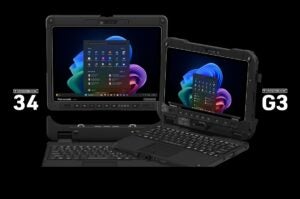
Source: Panasonic Connect
As digital transformation reshapes essential industries, intelligent and reliable mobile technology is needed to support workers and deliver better outcomes. In utilities and field services applications, TOUGHBOOK 34 and TOUGHBOOK G3 streamline work order management, inspections, asset tracking, troubleshooting, maintenance, and repair in the field. Powered by Intel Core Ultra processors, the devices combine AI-ready performance with edge computing to enable advanced diagnostics and remote repairs, reducing repeat visits. Support for 5G, CBRS, and B106 private cellular networks enables secure, reliable connectivity when responding to outages. Both devices offer digitizer pen functionality, while the TOUGHBOOK 34’s auto-detect touchscreen recognizes fingers or gloves. IP65-rated designs, sunlight-readable displays, and optional hot-swappable batteries help crews stay productive across field conditions. — Panasonic Connect North America, Newark, N.J.
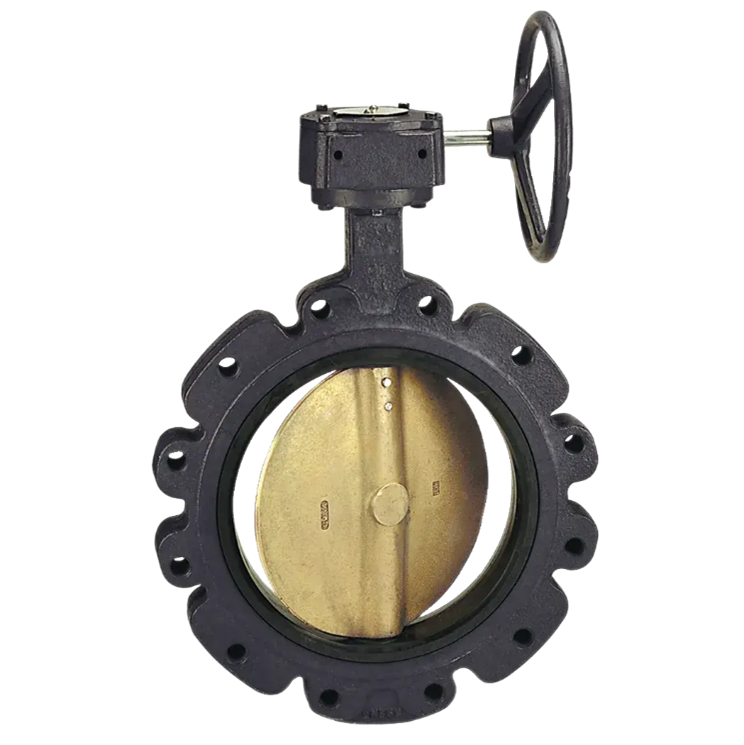
Source: Nibco
This company has expanded its large-diameter ductile iron butterfly valve offering with the introduction of a molded-in liner for its LD-2000 Series, now available in sizes 14 through 36 in. The enhanced design improves sealing integrity and consistency while reducing field installation challenges, enabling reliable full-pressure, end-of-line service in demanding applications. The LD-2000 Series is designed for commercial and industrial applications, helping these valves provide bi-directional and dead-end isolation with pressure ratings up to 200 psi. The addition of the molded-in liner helps reduce common field installation challenges while delivering dependable, long-term performance. Combined with durable construction, the updated design supports efficient installation and reliable operation. The LD-2000 Series features a ductile iron, epoxy-coated body designed for enhanced corrosion resistance, an extended neck that accommodates up to two inches of insulation and a one-piece, high-strength stem engineered for precise disc positioning and reliable performance. — NIBCO, Inc., Elkhart, Ind.
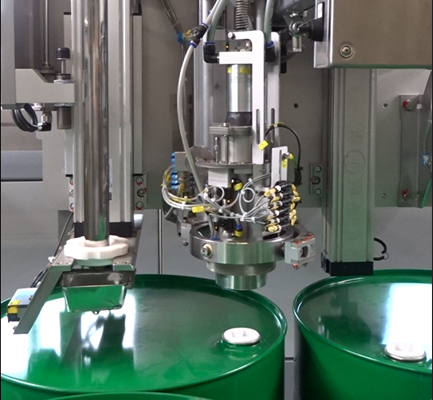
Source: GREIF-VELOX
VeloDrum SafeClosure is a patent-pending solution that fully automates a previously manual step in drum filling: opening and closing fine-thread bung caps before and after filling. Until now, fine-thread bung caps in drum filling have largely been opened by hand and closed again after filling—a time-consuming step that is difficult to standardize. VeloDrum SafeClosure turns this step into a fully automated, monitored sequence. Positioning, tool engagement, and screwdriving take place without manual intervention, resulting in repeatable processes and greater process reliability. The monitored process comprises six steps. First, a vision-based system determines the position of the bung opening. A centering ring then moves onto the opening before a positive-pressure test confirms correct seating and sealing. The tool subsequently engages with the cap and opens it under torque control. After filling, the system repositions the cap and tightens it automatically. Finally, monitored torque and screw-in depth parameters confirm correct closure. If the system detects incorrect engagement, integrated reject technology places the plug next to the bung opening. A special feature of the system is its controlled handling of plastic caps, whose material properties place particular demands on reliable automated screwdriving. A springless pneumatic system holds the cap securely in the cap holder and reduces the risk of snagging as the tool retracts. The system can be integrated into automated line concepts, is designed as a retrofit for existing systems, and can also be used in hazardous areas. Typical applications include the chemical and food industries, contract filling, and drum manufacturing. — GREIF-VELOX Maschinenfabrik GmbH, Lübeck, Germany
Source: Hapman
Unveiled at PACK EXPO 2026, the new CablePro tubular drag conveyor is designed for the gentle, clean and efficient transport of delicate products, including cereals, grains, nuts, frozen foods, pet food and other bulk materials. Featuring FDA-approved components and polished stainless steel tubing, CablePro helps maintain product integrity while supporting the stringent sanitation requirements of food and beverage operations. Its self-lubricating UHMW disks are injection-molded directly onto a pre-stretched, food-grade stainless-steel braided cable with a nylon coating, providing long-lasting durability and consistent performance. This versatility is coupled with a reputation for gently moving delicate and friable materials. Especially in food manufacturing environments with stringent sanitary requirements, the CablePro™ cable conveyor excel by safeguarding product integrity while maintaining cleanliness and hygiene while minimizing spillage and avoiding areas of food harborage. — Hapman, Kalamazoo, Mich.
ChargePoint Actis is an aseptic transfer system that enables isolator-level regulatory confidence in a single compact system. As a result, it has the potential to transform Annex 1-aligned facility design, reduce infrastructure costs and accelerate processing. ChargePoint Actis introduces an entirely new level of confidence in aseptic transfer, combining proven principles – isolation, rapid transfer ports, split valves and steam sterilization – into a single, compact, fully automated system. Traditionally, achieving sterility assurance at this point has required significant investment of capital, infrastructure, space and operational complexity, in order to manage a critical vulnerability where two transfer surfaces meet and separate: the ring of concern. High-grade cleanrooms, isolator barriers, laminar air flow systems and complex decontamination processes have been among the necessary compromises, until now. ChargePoint Actis is designed to bypass the ring of concern and eliminate reliance on additional infrastructure by building validated sterility assurance and both primary and secondary containment into the transfer connection itself.
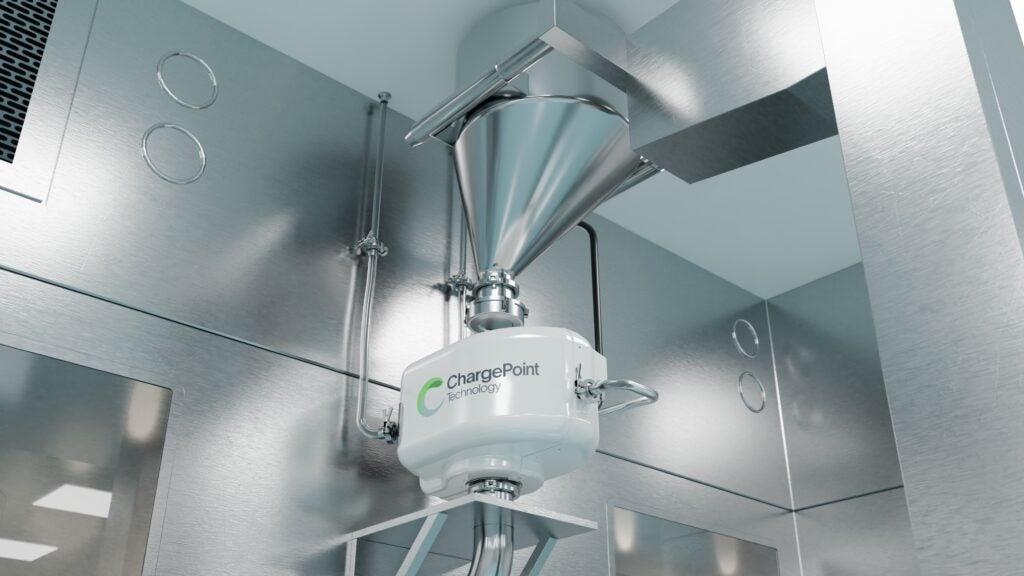
Source: ChargePoint Technology
The system enables direct aseptic transfer of material through a steam-sterilisable chamber without ever exposing product to the surrounding environment. This directly addresses multiple requirements for aseptic transfer outlined in EU GMP Annex 1, including closed-transfer, penetrative sterilisation for product contact surfaces, reduced manual handling and negated first air disruption. As a result, ChargePoint Actis supports the downgrade of cleanroom classifications and eliminates reliance on transfer process isolators, delivering meaningful savings in capital, floor space and operational costs while maintaining or strengthening compliance confidence. Furthermore, a single steam in place (SIP) sterilization cycle supports multiple consecutive transfers. Combined with automated direct transfer that bypasses intermediate handling steps and manual intervention, this translates to faster and more efficient processing. — ChargePoint Technology, Liverpool, U.K.
Source: Pulsafeeder
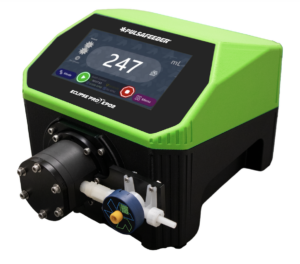
Eclipse Pro is a new chemical dosing solution for dosing for water and wastewater applications that replaces complex, multi-component systems with a single, fully integrated system. Combining the pump, motor, and controller into one rugged NEMA 4X/IP66 enclosure, Eclipse Pro eliminates the need for external VFDs, calibration, and common maintenance-intensive components. Designed to solve persistent operator challenges, Eclipse Pro leverages advanced gear technology to deliver precise, pulse-less flow while handling off-gassing chemicals like sodium hypochlorite without losing prime. Its “Enter & Go” interface simplifies setup, enabling fast deployment and reducing reliance on skilled labor. With predictive maintenance, real-time performance monitoring, and repair-in-place serviceability, Eclipse Pro minimizes downtime and reduces total cost of ownership. By streamlining operations and improving reliability, Eclipse Pro empowers utilities to move from reactive maintenance to confident, efficient process control. — Pulsafeeder, Inc., Rochester, N.Y.
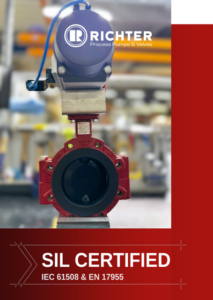
This company's valve portfolio was recently assessed and certified in accordance with IEC 61508 and the new EN 17955 standard. According to independent functional safety specialist exida, this is the first EN 17955 certification of a manufacturer of lined valves that exida has evaluated to date, making this valve portfolio among the first to provide substantiated evidence for the use of automated industrial valves in Safety Integrity Level (SIL) applications. Published in November 2024, EN 17955 closes a key gap in functional safety. While IEC 61508 provides the foundation for SIL, it contains only limited specific requirements for mechanical components such as valves and actuators. Until now, this has resulted in different assessment methods, varying failure rates and limited comparability of manufacturers’ data.
Source: Richter Chemie
For the first time, EN 17955 establishes a consistent assessment framework for safety-related automated industrial valves. The standard defines how mechanical components are to be evaluated in terms of design, qualification, testing, operation, maintenance and documentation. This makes SIL data more traceable, improves product comparability and significantly facilitates the selection of suitable valves for safety-related systems. This clarity is particularly valuable to operators in the pharmaceutical, chemical, petrochemical and specialty chemical industries. In these sectors, stringent requirements for process safety, documentation and traceability coincide with aggressive, toxic or particularly sensitive media. — Richter Chemie-Technik GmbH, a unit of IDEX Corp., Kempen, Germany

Source: Teledyne Flir/MentorAPM
The MentorLens asset lifecycle management platform is expanding its asset intelligence capabilities with thermal imaging through an integration with Teledyne Flir's iXX-Series of thermal-imaging cameras. Adding thermal data to the condition assessment process gives asset-intensive organizations another source of information to better understand physical assets and support maintenance, reliability and asset management decisions. By adding thermal information to MentorLens’ AI-assisted visual condition assessments, teams can capture nameplate, visual condition and thermal information from the same device and bring it into the asset record. This helps build more complete and current asset information to support maintenance, reliability and asset management decisions. That information can feed into MentorAPM’s native enterprise platform or work alongside an organization’s existing EAM or computerized maintenance and management system (CMMS), allowing teams to add asset intelligence without replacing their core system.
In industrial operations, the value of a thermal inspection is determined less by the image itself than by what happens to it afterward. Files are moved from an SD card to a laptop, thermal metadata is altered or lost along the way, and findings end up in a folder rather than in the system where maintenance work is actually planned. Running natively on the iXX-Series, the MentorLens app removes that handoff. Images upload from the camera directly to the asset record with their thermal data intact, and technicians can create new assets or update existing ones without leaving the camera. All Flir imaging and hardware controls remain available, including MSX, palette selection, lamp and laser, so the same device that captures the thermogram also captures the nameplate photo and the condition photo. — MentorAPM, Phoenix, Ariz.; and Teledyne Flir, Wilsonville, Ore.
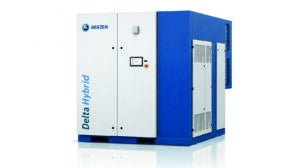
The Delta Hybrid series of direct-drive screw blowers is being further expanded with the new D100S and D120S models. This provides additional flexibility for cost-effective and energy-efficient process air generation in higher performance ranges. Delta Hybrid series screw blowers are characterized by high energy efficiency, minimized lifecycle costs, 100% pure process air, high operational reliability and a long service life. The D100S package is designed for a volume flow of up to 6,060 m³/h, the D120S covers volume flows of up to 7,320 m³/h and adds a further, precisely graded performance stage to the portfolio. This gives plant operators and manufacturers significantly increased flexibility in design, as well as the opportunity to customise systems accurately to specific process requirements. The two new sizes provide a reliable supply of process air that is 100% oil- and PFAS-free. The packages operate consistently with high efficiency and cost-effectiveness across an extended turndown of up to 1:5. Compared with conventional blowers, the direct-drive Delta Hybrid series enables energy savings of up to 37%, says the manufacturer. The screw blowers are rated to withstand maximal loads, enabling a high level of process reliability and a long service life. Key factors include, amongst others, bearings with a theoretical service life of more than 60,000 operating hours, pressure lubrication of the anti-friction bearings, extended oil change intervals of up to 16,000 operating hours and an oil cooler. These modifications enable long-term operation with minimal maintenance requirements and result in a significant reduction in the total cost of ownership for the operator.
Source: Aerzen
The basis of the thermodynamic efficiency is the innovative compressor stage, which combines newly designed, highly efficient screw rotor profiles with optimised internal flow guidance. The drive package consists of a direct drive connected with motors in efficiency class IE5 (Ultra Premium). Thanks to the VFD, which is integrated as standard, the delivered volume flow can be adjusted continuously and precisely to the specific process requirements. Furthermore, these packages set the standard for noise reduction and are among the quietest systems on the market in their performance segment. — Aerzen Maschinenfabrik GmbH, Aerzen, Germany
Source: Metrohm USA
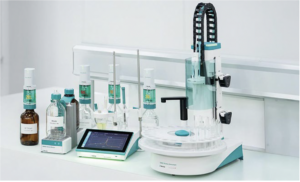
The IONIC Titrator brings direct cloud connectivity to standalone titration operations. At the center of the IONIC system is an industry-leading 10-in. touchscreen. Users can build methods with drag-and-drop functionality, access frequently used workflows with a single touch and navigate using familiar swipe and zoom gestures, making everyday interaction with the instrument simpler and more intuitive. IONIC features an integrated mobile communication module that connects the titrator directly to the Metrohm Data Service without requiring a separate computer. Through the secure cloud environment, laboratories can access and share titration data and methods through a web browser while receiving status notifications on mobile devices. IONIC supports potentiometric and Karl Fischer titration in a compact, modular platform that can be configured with additional dosing and measuring capabilities as laboratory needs evolve. The new Dosino Module provides a dosing resolution of 250,000 pulses, supporting highly precise liquid handling across a wide range of titration applications. — Metrohm USA, Riverview, Fla.
Source: Duperon
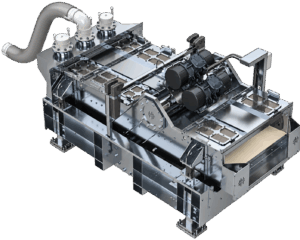
The SmartWave septage-receiving screen is built around controlled-vibration technology to address the challenges of unpredictable septage loads coming into treatment facilities. The SmartWave Septage Receiving screen gives facilities a more reliable way to manage what arrives at the receiving station by increasing solids capture, reducing downstream loading and improving overall plant performance. Its controlled vibration creates a wave-like screening motion that separates liquids from solids and keeps captured material moving, providing consistent screening without brushes, scrapers or augers to replace or maintain. The SmartWave’s patent-pending screening technology minimizes FOG smearing and blinding during challenging septage conditions. The system also eliminates the need for a separate rock trap, helping reduce maintenance, manual debris removal and operator effort. Built to handle variable septage conditions, the SmartWave offers reliable performance with a streamlined design that can help reduce maintenance demands and lifecycle costs. Each system is engineered around site-specific flows, solids loading and operational goals. — Duperon Corp., Saginaw, Mich.
Source: ROSS Engineering
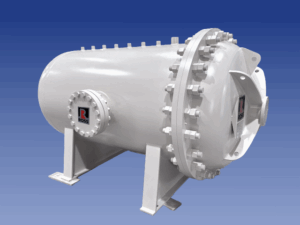
This pressure vessel has a 600-gallon full holding capacity and rated for 300 psi at 200 F. Fabricated from SA516 Grade 70 carbon steel, the vessel is designed, built, stamped according to ASME Section VIII, Division 1. The cylindrical shell measures 4 ft in diameter by 6 ft seam-to-seam and is fitted with ASME 2:1 elliptical heads. The vessel is hydrotested prior to shipment to verify pressure integrity. A flanged left head allows convenient access to the vessel interior for inspection, cleaning, and maintenance. Carbon steel guide rods assist with head removal, while a center-mounted lifting flange simplifies handling during servicing. The vessel is supplied with threaded tie rods and spare threaded rods for assembly and maintenance. Process connections include a 10-in. raised-face slip on flange with blind flange and instrumentation ports, along with threaded inlet, outlet, and gauge connections to accommodate a variety of process requirements. Interior welds are ground to remove high spots, while interior surfaces are sandblasted to remove mill scale and discoloration. Exterior welds are also ground smooth before the vessel is finished with a coat of primer. The vessel is supported on two carbon steel saddles and includes lifting lugs for handling during installation. Designed for demanding industrial applications, the ROSS pressure vessel provides a durable and code-compliant solution for pressure processing, storage, and related operations. — ROSS Engineering Tank & Fabrication Division, Savannah, Ga.
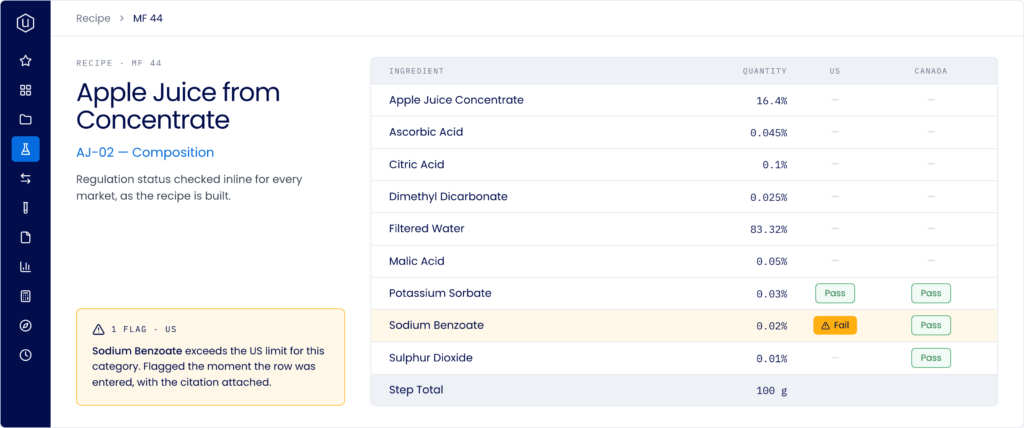
The Uncountable product-development artificial intelligence (AI) platform has launched the new Regulatory Management capability, designed to support regulatory compliance for formulation teams across food and beverage, cosmetics, specialty chemicals, and advanced materials industries. Regulatory Management checks recipes against ingredient regulations within the product development platform, rather than in a separate system after formulation work is complete. Every recipe ingredient shows a pass or fail for each intended market, alerting formulators to potential compliance problems early in the product development process. The Uncountable platform unifies ELN, LIMS, PLM, and Quality in a single structured data model, supporting product development from early R&D through pilot and production. The Regulatory Management capability operates within this system, showing pass or fail status for every recipe ingredient in each target market, with the jurisdiction, product category, permitted level, link to the official source and date it was last checked. Uncountable maintains its own regulations database using official sources, so customer teams do not need to update regulations manually. Regulatory Management provides more than a check against a banned-ingredients list. Regulatory limits are matched to the formulation's product category rather than to the ingredient alone because permitted levels can vary by application. Regulatory teams can override or edit any determination to match how their organization interprets a provision, and scheduled regulatory refreshes will not overwrite their edits.
Source: Uncountable
A failing result can be configured to prevent a recipe from being locked or published, keeping regulatory issues from moving downstream unnoticed. Catching problems early matters because replacing a color or preservative can affect a product’s stability, shelf life, and manufacturing process. When ingredient regulatory screening happens in a separate system after formulation is complete, it is too late for the results to shape formulation decisions. In contrast, Uncountable’s Regulatory Management capability brings regulatory checks into the formulation workflow, giving teams visibility into requirements for each target market while recipes are being developed. — Uncountable, San Francisco, Calif.
Source: Centrisys-CNP
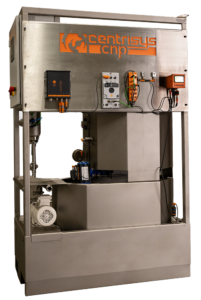
The new PPS polymer preparation system is a complete, automated polymer preparation and dosing system designed to deliver consistent polymer activation before it ever reaches the sludge. Field-proven in the North American wastewater and biosolids markets, the technology made its debut at the WEFTEC 2026 conference and tradeshow. PPS addresses a critical but often overlooked part of the dewatering process: how polymer is prepared and activated before being introduced to sludge. Polymer can represent 30 to 50% of sludge processing costs, making effective preparation an important opportunity for facilities looking to control operating expenses. When polymer is not fully activated, facilities may compensate by increasing the dose, paying for additional chemistry without addressing the source of inconsistent performance. The PPS Polymer Prep System is engineered around the polymer preparation process itself, controlling the conditions that influence polymer dispersion, maturation and solution consistency. Automatic flow measurement and ratio control for water and polymer metering help maintain a consistent working solution concentration. A dedicated injection ring rapidly and uniformly disperses polymer into the water stream to support effective activation. An engineered octagonal tank and specialized mixing promote polymer hydration and chain extension while limiting excessive shear. Solution development is monitored to help verify readiness rather than relying on a fixed timer alone.Instrumentation monitors polymer and water flow, pressure, temperature, tank level, valve position, compressed-air supply and leakage, with remote access and diagnostics available. The PPS Polymer Prep System is available in multiple sizes and can support municipal and industrial wastewater treatment, sludge thickening, centrifuge and decanter dewatering, belt and screw press applications, dissolved air flotation sludge handling, and packaged or mobile treatment systems. — Centrisys/CNP, Kenosha, Wis.
Source: Toyo Engineering
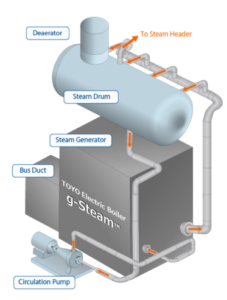
g-Steam™ is a industrial electric boiler for manufacturing applications. It is based on the tube-type electric boiler technology that has been refined over many years through auxiliary boiler systems for nuclear power plants. When powered by electricity derived from renewable energy, g-Steam helps reduce the carbon intensity of steam supplied to manufacturing facilities and supports manufacturers' efforts to achieve carbon neutrality. g-Steam generates steam through Joule heating by applying electricity directly to the steam-generating tubes. It is suitable for medium- to large-scale steam requirements, with an equivalent evaporation capacity of 2 to 25 ton/h per unit. Since g-Steam™ generates steam using electricity without burning fuel, it supplies steam without producing fluegas emissions from the boiler itself. When powered by electricity derived from renewable energy, g-Steam™ helps reduce the carbon intensity of steam supplied to manufacturing facilities. With its wide load-control range and rapid response, g-Steam can respond flexibly to fluctuations in steam demand and in power variations generated by renewable energy sources such as solar and wind. This flexibility enables both efficient energy use and a stable steam supply. The system has a simple design that minimizes auxiliary equipment. By reducing maintenance and inspection tasks, the system can help lower maintenance costs. The boiler can also be operated using simple push-button controls, reducing the workload for operators. g-Steam is applicable to a broad range of manufacturing industries that use steam, including pharmaceuticals, cosmetics, food and beverage manufacturing. — Toyo Engineering Corp., Chiba, Japan
Source: Pfeiffer Vacuum
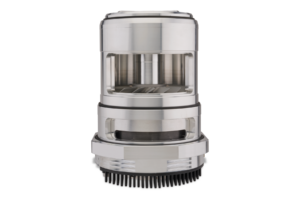
The new SplitFlow 350 turbomolecular vacuum pump combines high pumping speed with low power consumption. Like all vacuum pumps of the SplitFlow series, it consists of multiple stages separated by rotor stacks. This configuration allows these turbopumps to achieve progressively higher vacuum levels with each stage, eliminating the need for multiple turbopumps. This makes them ideal for use in high vacuum systems with limited space, such as mass spectrometers. Designed for stable and reliable operation under varying process conditions, the SplitFlow 350 features an integrated sensor system that continuously measures rotor temperature, keeping the pump within its ideal operating range to prevent overheating and protect critical components. Thanks to this integrated sensor system, the turbopump is intrinsically safe while delivering consistent performance and long-term reliability. The SplitFlow 350 incorporates a hybrid bearing system. This bearing type, which combines a ball and a permanent magnetic bearing, ensures a long service life: The permanent magnetic bearing uses the forces of electromagnets to stabilize and balance the rotors without physical contact, minimizing wear inside the vacuum pump. A newly developed high-performance lubricant for the ceramic ball bearing adds to the durability and reliability of the SplitFlow 350. Its improved aging resistance, optimized lubrication properties, high temperature stability, and low outgassing ensure consistent performance. The lubricant is contained in an operating fluid reservoir that continuously supplies it to the ball bearings, reducing wear and maintaining efficient operation. As a result, the Splitflow 350 is more cost-effective to maintain and allows operation for up to five years without maintenance. — Pfeiffer Vacuum, Asslar, Germany
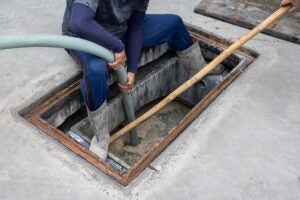
ENVIA Essential is a ready-to-use enzymatic concentrate designed to help food service, food processing and waste processing facilities manage organic buildup in hard-water drain and disposal systems. The three-enzyme formula targets the breakdown of fats, proteins, and starch residues, which contribute to the formation and stabilization of hard-water deposits, helping loosen accumulated buildup during routine drain or grease trap maintenance. When hard water is present, high volumes of organic residues bind together with minerals such as calcium and magnesium, forming a tough complex of solids that block the system.
Source: Bionetix
Enzymes present a preferable alternative to harsh acid cleaners or cumbersome, expensive mechanical methods of scale removal. The three enzymes of ENVIA Essential —protease, amylase and lipase, target three types of food waste deposits commonly found in grease traps and restaurant drains, working synergistically to degrade organic residues that bind together with minerals and create large blockages. This breakdown loosens the scale structure, making it easier to remove buildup via the normal drainage flow.
Scale is inevitable in systems with hard water, but it does not have to be debilitating. With routine application of ENVIA Essential to grease traps, industrial floor drains, lift stations, and sewer pipes, restaurants and commercial kitchens can clear out the organic waste that aggravates scale buildup—keeping an annoying problem from becoming serious. — Bionetix International, a subsidiary of Cortec Corp., Sainte-Anne-de-Bellevue, Queb., Canada
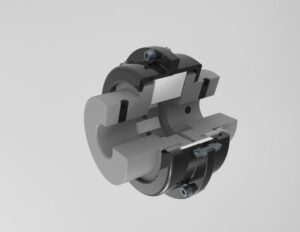
The Quick Flex HighTemp series is a low-maintenance coupling solution for applications operating at temperatures up to 177 °C. Quick Flex HighTemp extends the advantages of elastomeric couplings into demanding environments near industrial furnaces, superheated steam systems and steam turbines, as well as steel and metal processing plants.
Source: R+L Hydraulics
The coupling design combines opposing, non-interlocking teeth with a central elastomer insert. This avoids metal-to-metal contact between the coupling components and the associated wear on the hubs. Because the coupling requires neither oil nor grease lubrication, routine oil checks and relubrication are not needed.
This low-maintenance design is particularly valuable in high-temperature applications, where access for maintenance can require extended cooling periods. The elastomer insert can be replaced quickly, helping operators reduce maintenance time and restore machine availability sooner. The HighTemp configuration uses a white, heat-resistant elastomer insert that provides high damping while accommodating shaft misalignment. Depending on the coupling configuration, nominal torque ratings range from 93 Nm to 601.5 kNm, with momentary torque peaks of up to 1,200 kNm.
Flexibility extends beyond temperature and torque. Across the Quick Flex range, bore diameters from 10 mm to 500 mm are available. Spacer configurations accommodate shaft separations from 25 mm to 3,000 mm, while shortened hubs support applications where installation space is limited. The modular design allows engineers and plant operators to combine hubs, covers and elastomer inserts according to the requirements of the application. Hubs can also be modified to integrate components such as brakes, auxiliary drives and sensors. This configuration flexibility helps customers match the coupling more closely to their equipment while drawing on a common product platform. — R+L Hydraulics GmbH, Werdohl, Germany