When it comes to supply-chain and logistics considerations, there are a variety of activities and service options available to help chemical manufacturers improve their sustainability balance sheet.
It’s clear that there is not one single component that ensures the most sustainable supply chain, but rather the best possible combination of many individual elements. To achieve the most effective result, close and early collaboration and communication between the manufacturer and the logistics provider — as early as during the front-end engineering design and preliminary FEED (FEED or pre‑FEED) phases of a project — are paramount.
In this regard, it is furthermore essential that the logistics provider not only has practical experience and theoretical know‑how to reduce emissions while ensuring reliability and safety, but also has a well‑selected network of partners based on sustainability criteria and with state‑of‑the‑art equipment and transport solutions. If these conditions are met, it is often possible not only to reduce emissions, but at the same time to lower costs and increase cargo safety as these not rarely go together.
The following sections describe some of the most important sustainability-related considerations with regards to chemical-industry logistics.
Low‑carbon transportation and modal diversification
To reduce reliance on high-emission trucking, chemical industry logistics providers can prioritize intermodal and multimodal freight solutions, for instance rail, barge or short sea transport. This prioritization lowers the carbon footprint and further improves resilience against fuel price volatility.
When smartly combined, such logistics concepts, such as using barges (Figures 1 and 2) instead of trucks, can also have a positive impact on project budgets, costs or the safety of everyone involved, as well as the integrity of the cargo itself.
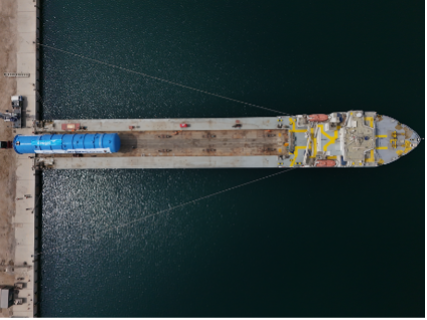
FIGURE 1. Barge transport was used for six critical deaerator vessels for the Wave C1 seawater desalination project
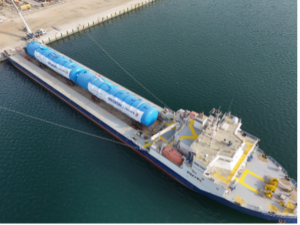
FIGURE 2. Barge transport often results in an improved sustainability footprint for heavy-duty transport when compared to rail or trucks
Another lever for reducing maritime emissions lies in speed (or slow sailing), especially with chartered ocean vessels. If the schedule and charter party allow, carbon emissions can be reduced by operating at a lower speed.
Use of greener vehicle and energy options
Biofuels, liquefied natural gas (LNG) and alternative‑energy transport options, along with carbon‑offset programs, can be utilized to reduce emissions associated with freight transport.
This also applies to the use of the most modern, state‑of‑the‑art means of transport and equipment that comply with the latest environmental standards. Compared to older models, these generally have reduced and optimized carbon emissions. Consequently, a partner network equipped with the latest and well‑maintained equipment and vehicles is also an essential component for supply chain sustainability.
Efficient routing
Efficient route planning can also have a positive impact on the carbon balance — for example, through an emissions‑optimized selection or combination of different transportation modes, such as road transport instead of air freight, or waterways or rail instead of road.
In specially engineered route surveys, the technically maximum possible cargo-transport envelopes can also be determined, together with the best suited routes (Figure 3). This allows for the identification of the most efficient cargo dimensions, and helps to minimize or prevent congestion, wait times, bottlenecks, infrastructure work along the route, transport management measures and transport risks along the route — all parameters that influence the sustainability balance.
In this context, the cargo design can also play a role, with the cargo being designed and built from the very beginning in such a way that — together with the transport carriers and equipment used along the defined routes — it achieves the greatest possible sustainable effect.
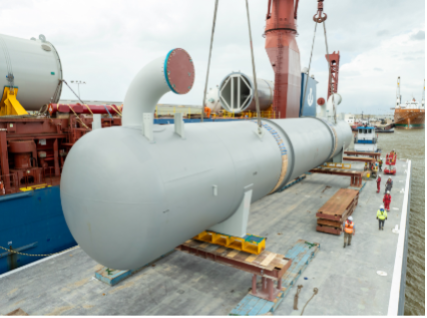
FIGURE 3. Delivery of over 85,000 cubic meters of equipment for a large petrochemical project in the U.S. included the use of barges for last-mile transportation of various heavy and oversized components
Cargo consolidation and modularization
The efficient consolidation, combination and/or stowage of cargo across different transportation modes can positively impact the emissions balance, because they can reduce the number of transports. Likewise, transporting large, modularized and partially pre-installed components can potentially reduce the number of individual transports (Figure 4).
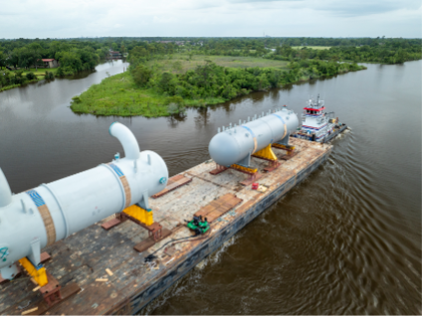
FIGURE 4. Consolidation of transport modes, along with efficient routing, can help to reduce the carbon footprint for logistics and transport operations
Digital visibility and emissions tracking
Users can enable shipment‑level visibility to make fine‑grained adjustments that improve efficiency, reduce waste and support emissions reporting. Tracking and visibility apply, on the one hand, to the preliminary assessment of expected emissions based on planning with different transport vehicles, routes, schedules and so on, in order to design the most sustainable transport chain in advance. On the other hand, visibility applies to the precise recording of completed transports for accurate documentation and reporting purposes, and as a basis for decision‑making for future transports and supply chains. Especially in combination with artificial intelligence (AI) systems, which can monitor even more parameters faster, make correlations and detect and reduce inefficiencies even more precisely, there is still significant untapped sustainability potential within the supply chain.
Sustainable warehousing and packaging solutions
Warehouses are increasingly optimized using energy‑efficient systems and designed for lower emissions. Packaging innovations, such as recyclable or reduced‑waste packaging, also support sustainability goals.
Trends shaping manufacturers’ sustainability needs
There are a number of global factors impacting manufacturers’ individual approaches to supply-chain sustainability, and ultimately, what they require from logistics suppliers.
Growing regulatory pressure driving urgency
Governmental regulations are forcing more rigorous emissions tracking, leading manufacturers to expect logistics suppliers to provide auditable emissions data and lower‑carbon transportation options.
Sustainability shifting from “add‑on” to core strategy
Manufacturers are no longer simply trying to “offset” logistics emissions. They now prioritize sustainable logistics (such as low‑emission freight, warehousing, route optimization, cargo consolidation or modularization) as a pillar of their business strategy.
Demand for higher transparency, traceability and visibility
Stakeholders are increasingly requiring proof of decarbonization. Companies now demand real‑time traceability and digital product passport–style visibility from logistics partners.
Increased interest in resilient, diversified transportation networks
To reduce both emissions and disruption risk, such as driver shortages and fuel costs, manufacturers increasingly want multimodal options — especially rail and intermodal.
Relocation of production closer to project sites
Mitigating rising risks in current geopolitics, manufacturers are rethinking their supply chain and building production facilities closer to the demand markets.
Emerging digital technologies
AI, machine learning and autonomous decision-making
AI and machine learning (ML) support accurate demand forecasting, dynamic routing, emissions‑optimized planning and proactive exception management. As the capabilities of AI continue to advance rapidly—and as the reliability of these applications increases, even though they still do not provide fully dependable solutions in every area and detail today—even greater potential to enhance supply chain sustainability will be achievable in the future.
Blockchain for traceability and compliance
Blockchain ensures verifiable emissions reporting, secure chain‑of‑custody tracking and transparency across supply networks.
Robotics and automation in warehouses
Autonomous mobile robots (AMRs) and automated picking reduce energy waste and enable high‑efficiency, low‑impact warehouse operations.
Supply-chain sustainability success story
As an example of real-world sustainability benefits stemming from logistics updates, a European energy company has implemented biofuel-based sea freight solutions, lowering emissions significantly. The company’s local distribution is also fully carried out by electric trucks, which further improves the company’s carbon balance.
Moreover, against the backdrop of rising demand for inland waterway transportation concepts in India, driven by increasing government investments in the development of greener and sustainable coastal and inland waterways, and a lack of providers in India operating suitable barges for oversized heavy-lift (OSHL) cargo transportation, a dedicated provider with its own barges (Figure 5 and 6) and special trailers was established to offer more sustainable transportation solutions along the coast and into the hinterland — especially for the chemical/petrochemical industry. In particular, the smaller of the two barges allows extensive access to the Indian inland waterway network, which provides significant advantages to clients by offering a sustainable alternative to road transportation. ♦ Edited by Mary Page Bailey
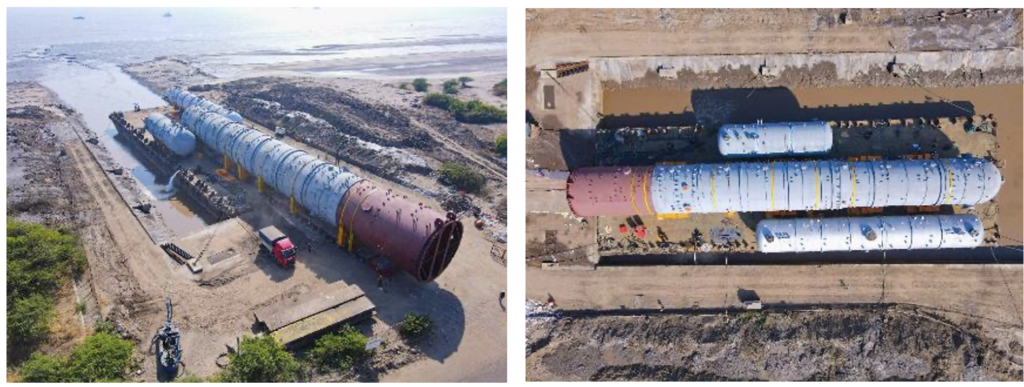
FIGURES 5 and 6. Barge discharge of cargo units weighing up to 1,060 metric tons in India
Acknowledgement
All images provided by deugro
Author
 Christian Schulz is the Vice President – Global Strategic Accounts at deugro. He has 23 years of experience in the project logistics industry across various senior roles. Having overseen a wide range of major turnkey projects and multimodal break bulk shipments, he has a wealth of experience across all transport modes — by sea, air, road, rail and inland waterway.